
How to Remove Stains From a Car Seat: A Complete Cleaning Guide
Quick Answer
To remove stains from a car seat, blot fresh spills, vacuum loose dirt, and gently clean the affected area using a product approved for your upholstery. Remove cleaning residue with a lightly dampened microfiber cloth, then allow the seat to dry completely. Always check your vehicle’s cleaning instructions, such as these manufacturer upholstery-care recommendations, before applying any cleaner.
5 Quick Steps to Remove Car Seat Stains
- Blot the stain: Absorb fresh liquid with a clean microfiber cloth without rubbing.
- Remove loose debris: Vacuum crumbs, dust, and dried dirt before adding moisture.
- Choose the right cleaner: Use a fabric upholstery cleaner for cloth or an approved leather cleaner for leather.
- Clean gently: Apply a small amount to a cloth and work carefully without saturating the padding.
- Dry completely: Blot away residue and ventilate the cabin until the seat is fully dry.
Important Safety Tips
- Test first: Check every cleaner on a hidden section of upholstery.
- Avoid soaking: Excess water can reach seat foam and electrical components.
- Protect airbags: Never spray cleaning products directly into seat seams or side-airbag areas.
- Child safety seats: Follow the child restraint manufacturer’s instructions, especially for harness straps and buckles.
Spilled coffee, muddy shoes, greasy food, and everyday use can leave stubborn marks on car upholstery. Learning how to remove stains from a car seat properly can save you from replacing an otherwise good seat cover.
I’ve always found that the most important part of interior cleaning isn’t scrubbing harder. It’s choosing the right method for the stain and the material underneath it.
This guide explains how to clean cloth, leather, vinyl, and removable seat covers. I’ll also cover old stains, water rings, odors, drying, and the mistakes that can cause permanent damage.
In This Guide
- What Should You Do Before Cleaning Car Seat Stains?
- How Do You Remove Stains From Cloth Car Seats?
- Which Cleaning Methods Work for Different Stains?
- How Do You Clean Leather, Vinyl, and Car Seat Covers?
- How Do You Remove Old Stains, Water Rings, and Odors?
- What Car Seat Cleaning Mistakes Should You Avoid?
- Frequently Asked Questions
What Should You Do Before Cleaning Car Seat Stains?
Before removing a car seat stain, identify the upholstery material and check the manufacturer’s instructions. This determines which cleaners and methods you can use safely.
Car seats aren’t all made from the same material. A cleaner that works on ordinary polyester upholstery could damage suede-like fabric or coated leather.
Identify Your Car Seat Material
Car seat upholstery is the material covering the seat’s foam and supporting structure. It may be permanently attached or made as a removable seat cover.
Common seat materials include:
- Cloth upholstery: Woven or knitted fabric that can absorb spilled liquids.
- Genuine leather: Natural leather, often protected by a factory-applied finish.
- Synthetic leather: A manufactured leather-like material requiring compatible cleaners.
- Vinyl: A synthetic surface commonly used in commercial and everyday vehicles.
- Suede-like microfiber: Specialty upholstery that may require specific cleaning products.
- Removable seat covers: Separate fabric or synthetic covers fitted over the original upholstery.
Check the owner’s manual if you’re unsure about the material. Visual appearance alone isn’t always reliable.
Gather the Right Cleaning Supplies
You don’t need an expensive detailing machine for most light surface stains. A few basic supplies are usually enough.
- A vacuum cleaner with an upholstery attachment
- Two or three clean microfiber cloths
- A soft upholstery brush, if approved for the fabric
- A small bowl of clean water
- A cleaner suitable for your seat material
- Dry absorbent towels
- A fan or good cabin ventilation for drying
A soft brush helps lift dirt from compatible cloth upholstery. Avoid stiff brushes on leather, delicate fabrics, and damaged seat covers.
Always Perform a Spot Test
Test the cleaner on a concealed area, such as a hidden section near the seat base. Apply a small amount and follow the product’s directions.
Allow the test area to dry before checking for discoloration, stiffness, or texture changes. If the material reacts badly, stop using that product.
For 2026 vehicles and older models alike, the owner’s manual should take priority over generic internet cleaning recipes.
How Do You Remove Stains From Cloth Car Seats?
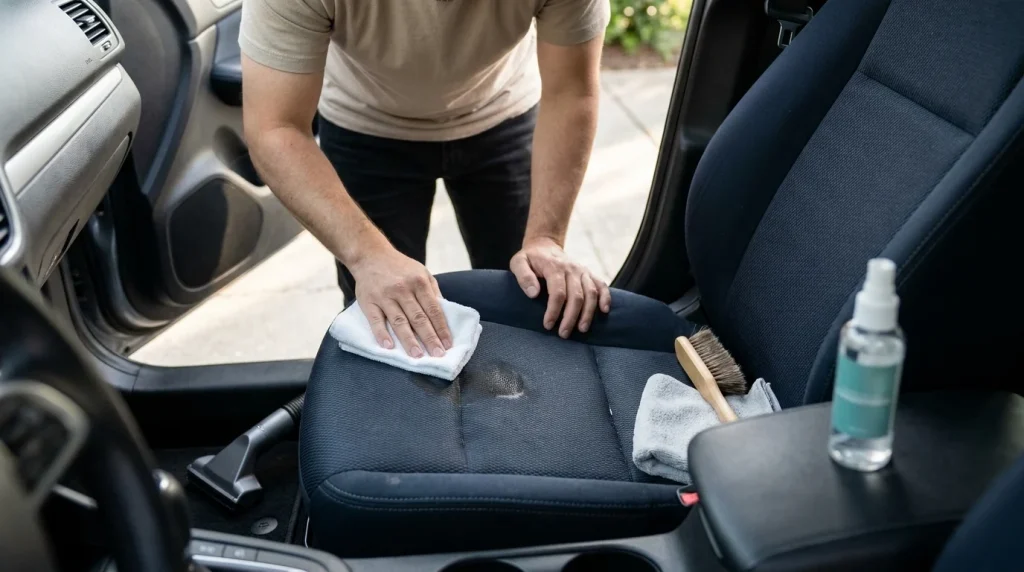
The safest starting method for most ordinary cloth seats is gentle surface cleaning with a manufacturer-approved upholstery solution. Remove the stain without soaking the seat cushion.
Cloth seats often hold more liquid than their appearance suggests. The outer fabric may look dry while moisture remains deeper in the padding.
Step-by-Step Cloth Car Seat Cleaning Method
- Blot any fresh spill. Press a clean towel against the wet area to absorb liquid. Avoid rubbing because it can spread the contamination.
- Vacuum the seat. Remove loose dirt, crumbs, and dust from the surface and seams. This prevents gritty particles from being rubbed into the fabric.
- Apply an approved cleaner. Put a small amount of suitable upholstery cleaner onto a microfiber cloth. Follow the product’s dilution and application instructions.
- Work the stain gently. Use light pressure to loosen the contamination. Avoid aggressive scrubbing that could damage the weave.
- Lift the cleaning residue. Blot with a separate, lightly dampened cloth if the cleaner’s directions call for rinsing. Avoid adding unnecessary water.
- Dry the seat thoroughly. Blot remaining moisture with a dry towel. Leave the vehicle ventilated until the upholstery and padding are completely dry.
For ordinary fabric, this approach follows the general principles in Ford’s interior upholstery-cleaning guidance. The recommendations include vacuuming, mild cleaning solutions, and avoiding excessive moisture.
How Much Cleaner Should You Use?
Use the smallest amount that adequately wets the dirty fibers. More product doesn’t automatically improve stain removal.
A heavily saturated cushion can take much longer to dry. It may also leave water rings, detergent residue, or persistent odors.
As a practical starting point, try one light cleaning pass. Allow the material to dry and inspect it before repeating the treatment.
How Long Does a Cloth Car Seat Take to Dry?
Drying time depends on the fabric, foam thickness, humidity, ventilation, and amount of water used. A lightly dampened surface can dry much sooner than a saturated cushion.
To improve drying conditions:
- Park somewhere safe and well-ventilated.
- Open the windows or doors when conditions allow.
- Direct a fan toward the cleaned surface.
- Blot excess moisture using dry microfiber towels.
- Check the seams and cushion before driving.
Avoid placing concentrated heat against the upholstery. Hair dryers, heat guns, and portable heaters may damage fabric or nearby components.
Section Takeaway: Gentle cleaning and complete drying matter more than the amount of product you apply. Never saturate upholstery just to remove a small mark.
Which Cleaning Methods Work for Different Stains?
The best cleaning method depends on what caused the stain. Coffee, grease, mud, and ink don’t respond equally to the same treatment.
Use this comparison table to choose a starting method for ordinary vehicle upholstery.
| Stain Type | Recommended Approach | What to Avoid |
|---|---|---|
| Coffee or tea | Blot quickly; use an approved fabric or leather cleaner. | Scrubbing the liquid into the padding |
| Food and juice | Lift solids, blot moisture, then clean gently. | Spreading sticky residue |
| Grease or oil | Blot excess oil; use a material-safe grease remover. | Unapproved solvents |
| Mud | Let ordinary mud dry; vacuum before spot cleaning. | Grinding wet grit into fabric |
| Ink | Blot carefully; consult a suitable specialist cleaner. | Alcohol without manufacturer approval |
| Pet accidents | Absorb immediately; use an upholstery-safe treatment. | Soaking cushions with deodorizer |
| Dye transfer | Use a compatible leather or fabric cleaning product. | Abrasive pads and harsh chemicals |
How Do You Remove Coffee and Food Stains?
Start by absorbing as much liquid as possible. If the spill contains milk or sugar, removing the remaining residue matters for odor control.
For cloth seats, use a compatible upholstery cleaner and blot with a lightly dampened cloth. For leather, use the cleaner specified for that leather finish.
Don’t pour water directly onto the seat to flush the spill. This can push contamination farther into the cushion.
How Do You Remove Grease and Oil Stains?
Grease requires more careful treatment than an ordinary water-based spill. Begin with an absorbent cloth to lift any oil remaining on the surface.
Choose a grease-removing upholstery product specifically approved for the material. Test it in a hidden area before treating the stain.
Don’t automatically use kitchen degreasers or strong solvents. They can damage upholstery coatings and leave visible discoloration.
How Do You Remove Mud Stains?
If ordinary mud is already spread across a cloth seat, allow the loose mud to dry before vacuuming. This usually removes more grit without driving it deeper into the fabric.
Then treat any remaining mark with a compatible upholstery cleaner. Take extra care around stitching and decorative panels.
What About Ink and Dye Transfer?
Ink and clothing dye can be difficult to remove completely. The wrong solvent may spread the pigment or damage the seat’s finish.
For delicate leather or expensive upholstery, professional treatment may be safer than repeated home cleaning attempts.
Section Takeaway: Treat the stain according to its source, but never ignore the seat material. A compatible cleaner is more important than a powerful one.
How Do You Clean Leather, Vinyl, and Car Seat Covers?
Leather, vinyl, and removable covers need different cleaning methods from ordinary cloth seats. Follow the material’s care label or the vehicle manufacturer’s instructions before cleaning.
How to Remove Stains From Leather Car Seats
Most modern automotive leather has a protective surface finish. Harsh cleaners can damage this coating even when they appear to remove the stain.
For routine leather cleaning:
- Remove loose dirt with a soft cloth or suitable vacuum attachment.
- Apply an approved leather cleaner to a clean microfiber cloth.
- Wipe gently without soaking the material.
- Remove residue according to the cleaner’s directions.
- Dry the surface with another soft cloth.
Avoid aggressive brushing and unapproved alcohol-based products. Don’t use steam cleaning unless your vehicle manufacturer specifically allows it.
Volvo’s leather and vinyl cleaning guidance emphasizes approved products, gentle cleaning, and complete drying.
How to Clean Vinyl and Synthetic Leather
Vinyl and synthetic leather usually have surfaces that resist light moisture. However, their coatings can still react badly to unsuitable cleaning chemicals.
Begin with a soft cloth and a cleaner approved for the exact material. Pay attention to textured areas where dirt may collect.
Don’t assume that a conditioner intended for genuine leather belongs on synthetic leather. Check the product label before applying any treatment.
Can You Clean Suede-Like Car Seat Upholstery?
Suede-like microfiber and similar materials require extra care. Excess moisture or aggressive brushing can change their surface texture.
Use a manufacturer-approved upholstery cleaner and the recommended application method. If the material is delicate or unfamiliar, consult a professional automotive detailer.
Can Removable Car Seat Covers Go in the Washing Machine?
Some removable aftermarket car seat covers are machine washable, but others require hand cleaning. The care label determines which method is appropriate.
Before removing a cover:
- Check whether removal is permitted.
- Read the washing and drying instructions.
- Inspect attachments around seat controls and airbag areas.
- Confirm that the cover can be safely reinstalled.
- Ensure the cover is completely dry before refitting.
Never assume an original factory seat cover can be removed like a household cushion cover. Its attachment system may be integrated with safety equipment.
What If the Stain Is on a Child’s Car Seat?
A child restraint is different from ordinary vehicle upholstery. Its fabric cover, harness, buckles, and internal components form part of a safety system.
Follow the specific restraint manufacturer’s cleaning instructions. Some removable pads can be machine washed, but harness straps and buckles often have strict cleaning restrictions.
The American Academy of Pediatrics advises families to follow manufacturer directions when cleaning child car seats. Disinfectants and other products may affect the protection provided by the seat and harness.
Pro tip: Never soak child restraint harness straps, use bleach, or put the harness in a washing machine unless the manufacturer explicitly permits the procedure. If you’re unsure about a heavily contaminated safety component, contact the seat manufacturer.
How Do You Remove Old Stains, Water Rings, and Odors?
Older car seat stains may require more than one careful cleaning attempt. The goal is to lift the remaining contamination without damaging the upholstery or soaking the foam.
How to Remove Old or Dried Car Seat Stains
First, vacuum the affected area to remove loose residue. Then apply a small amount of approved upholstery cleaner according to its instructions.
Allow the cleaner’s recommended contact time before gently lifting the dirt. Don’t increase the concentration or scrub harder simply because the stain is old.
Repeat only if the material tolerates the treatment. Some permanent discoloration cannot be removed through ordinary cleaning.
How Do You Remove Water Rings From Cloth Seats?
Water rings can appear when cleaning moisture and dissolved dirt dry unevenly. Concentrated spot cleaning sometimes makes the contrast more noticeable.
For compatible fabric, carefully clean the entire affected upholstery panel rather than only the visible ring. Keep the moisture level low and dry the section evenly.
Manufacturer instructions may vary, so consult your manual before treating the whole panel. Hyundai’s interior fabric-care recommendations also emphasize suitable cleaning products and prompt stain treatment.
How Do You Remove Bad Smells From a Car Seat?
Seat odors can come from spilled drinks, food residue, moisture, or biological contamination. Cleaning the visible surface won’t always remove the underlying source.
To address odors:
- Remove visible contamination as quickly as possible.
- Use a compatible upholstery cleaner.
- Consider an approved odor-treatment product for the affected material.
- Keep the cabin ventilated while the seat dries.
- Inspect the surrounding carpet if the smell continues.
Some enzyme-based cleaners are designed for organic residue, but they aren’t suitable for every upholstery material. Confirm compatibility before using one.
If a persistent musty smell suggests trapped moisture or mold, arrange a professional inspection. Avoid simply covering the smell with perfume or air freshener.
Should You Use a Steam Cleaner or Upholstery Extractor?
An upholstery extractor sprays cleaning solution into fabric and removes much of the liquid through suction. It can help with some heavily soiled cloth seats when the manufacturer permits its use.
However, an extractor may leave moisture inside the cushion if used incorrectly. Steam can also damage certain coatings and materials.
Seats containing heating elements, ventilation systems, sensors, or electrical components require additional caution. For these seats, consult the owner’s manual or a professional detailer before using extraction equipment.
Section Takeaway: Persistent stains need careful treatment, not increasingly aggressive chemicals. If contamination has reached the seat padding, professional cleaning may be the safer option.
What Car Seat Cleaning Mistakes Should You Avoid?
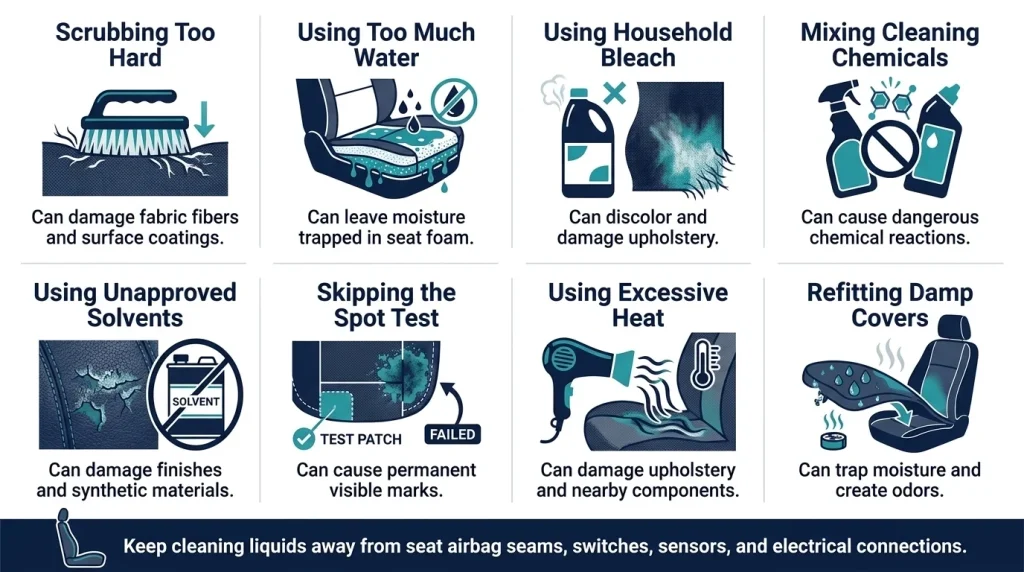
The biggest car seat cleaning mistakes involve harsh chemicals, excess moisture, and aggressive scrubbing. These can turn a removable stain into permanent upholstery damage.
Common Mistakes That Make Stains Worse
- Scrubbing too hard: Heavy pressure can wear down fabric fibers or damage surface coatings.
- Using too much water: Saturated seat foam can retain moisture and develop odors.
- Using household bleach: Bleach can discolor fabric and damage materials.
- Mixing cleaning chemicals: Some combinations can release dangerous fumes or cause unpredictable reactions.
- Applying unapproved solvents: Strong chemicals may damage leather coatings, synthetic materials, or fabric treatments.
- Skipping the spot test: A cleaner that seems harmless can still leave a permanent mark.
- Using excessive heat: High temperatures may damage upholstery or nearby components.
- Reinstalling damp covers: Trapped moisture can create unpleasant smells and other problems.
Be Careful Around Side Airbags and Electrical Components
Many modern vehicles have side airbags built into the front seats. Cleaning products should never be sprayed directly into the seat’s airbag deployment areas.
Seat-mounted controls, sensors, ventilation fans, and heating elements also need protection from liquid exposure. Keep cleaners away from electrical connectors and openings.
Pro tip: Check your vehicle’s owner’s manual for seat-mounted airbag and electrical-system warnings. If a stain affects airbag seams or electrical components, consult a qualified technician before deep cleaning.
When Is Professional Car Seat Cleaning Worth It?
Professional detailing becomes more useful when ordinary spot cleaning doesn’t address the problem. Severe contamination may require specialized equipment or upholstery repair.
Consider professional help when:
- A stain remains after appropriate cleaning attempts.
- A large spill has soaked into the seat foam.
- Strong odors return after drying.
- Mold or mildew is suspected.
- The upholstery is delicate, expensive, or damaged.
- Cleaning would involve seat electronics or airbag areas.
Ask the detailer which products and methods they intend to use. The procedure should be compatible with your specific vehicle.
Section Takeaway: A stubborn mark is usually less costly than damaged seat upholstery. Know when to stop cleaning and seek professional help.
Frequently Asked Questions About Removing Car Seat Stains
1. What is the easiest way to remove a fresh stain from a car seat?
Blot the fresh spill immediately with a clean microfiber cloth, then remove remaining residue using a cleaner approved for the upholstery. Avoid rubbing or soaking the seat, and allow the cleaned material to dry completely.
2. Can I use baking soda to remove car seat stains?
Baking soda is sometimes used for odor control, but it isn’t a universal upholstery stain remover. Fine powder can become trapped in seat seams and fabric, so check the manufacturer’s care instructions before applying it.
3. Is dish soap safe for cleaning cloth car seats?
A mild soap solution may be permitted by some vehicle manufacturers, but ordinary dish soap isn’t automatically suitable for every seat. Use the cleaner recommended in your owner’s manual, test a hidden area, and avoid excessive detergent residue.
4. Can vinegar remove stains from car seats?
Vinegar is not a reliable all-purpose solution for automotive upholstery. Its acidity may be unsuitable for certain coatings and finishes, particularly leather, so choose a manufacturer-approved cleaner instead of experimenting with homemade mixtures.
5. How do I remove stains from a car seat without leaving water marks?
Use minimal moisture and avoid concentrating too much cleaning solution in one spot. Where the manufacturer’s instructions allow, clean the affected fabric panel evenly and dry it with good ventilation to reduce the chance of visible rings.
6. Can old car seat stains be removed completely?
Some old stains respond to careful cleaning, while others permanently discolor or damage the material. Success depends on the stain’s source, how long it has remained, the upholstery type, and previous cleaning attempts.
7. Is it safe to use a wet vacuum on car seats?
A suitable upholstery extractor may be used on certain vehicle fabrics when permitted by the manufacturer. Avoid excessive liquid and take special precautions around heated, ventilated, electrically adjustable, or airbag-equipped seats.
Final Takeaway: Clean Gently and Protect Your Upholstery
Knowing how to remove stains from a car seat starts with identifying the upholstery and acting before a spill spreads. A suitable cleaner, microfiber cloth, and careful drying can handle many everyday stains without harsh chemicals.
Start with the gentlest approved cleaning method and inspect the result before repeating the process. Protecting the seat’s original material is always more important than forcing out a stubborn mark.
Keep a clean microfiber towel in your car for unexpected spills. That simple habit can make future stain removal much easier.

Daniel Brooks is an automotive writer and product researcher focused on car accessories, car tech, maintenance, and practical driving guides. At Plug-in Car World, he helps drivers make smarter automotive decisions through honest reviews and research-driven content.
