
How to Keep a Baby Warm in a Car Seat Safely
Quick Answer
To keep a baby warm in a car seat safely, dress them in thin, close-fitting layers, secure the harness snugly, and add a blanket over the buckled straps. Never place a bulky winter coat, thick snowsuit, or padded insert beneath the harness. The American Academy of Pediatrics winter car seat guidance recommends this approach to maintain both warmth and crash protection.
Six essential safety steps
- Dress in layers: Use a bodysuit, comfortable clothing, and thin fleece when needed.
- Avoid bulky coats: Thick padding can compress during a crash and loosen the harness.
- Check harness fit: Tighten the straps until you cannot pinch excess webbing at the shoulder.
- Add warmth afterward: Place a blanket or coat over the secured straps, below the baby’s face.
- Choose covers carefully: Avoid inserts beneath the baby and never restrict breathing or airflow.
- Watch for overheating: Remove extra coverings as the vehicle becomes comfortable.
Remember: A properly fitted harness comes first. Add removable warmth without changing how the straps protect your baby.
Cold-weather drives with a baby can be stressful. You want your little one cozy, but you also need the car seat to do its job in an emergency.
I approach winter car seat safety with one simple rule: never sacrifice harness fit for warmth. This guide explains what to dress your baby in, which covers to avoid, and how to handle freezing-weather trips.
In This Guide
Why Are Bulky Winter Coats Unsafe in a Car Seat?
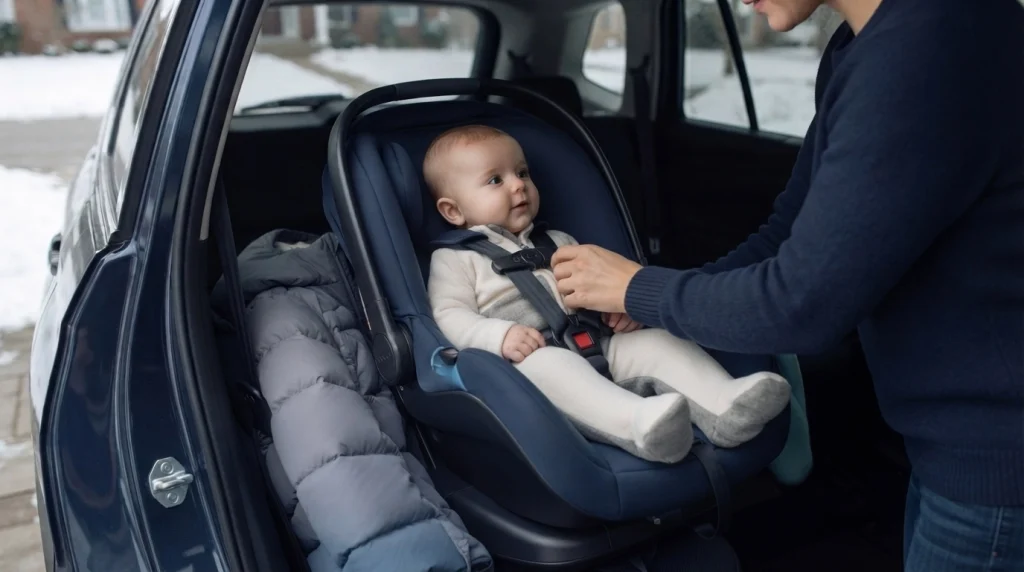
Bulky coats and padded snowsuits can prevent car seat harness straps from fitting close to a baby’s body. Their soft filling may compress during a collision, creating dangerous slack.
A harness that initially feels tight can therefore become too loose when it matters most. This is why winter clothing choices affect car seat safety.
What happens to a puffy coat during a crash?
Imagine tightening a harness around a thick, air-filled jacket. The straps press against the jacket rather than fitting closely around your baby’s body.
During a collision, that padding can flatten rapidly. The extra space can allow more movement and increase the risk of injury.
Common clothing items that create this problem include:
- Puffer jackets: Thick insulation adds compressible material beneath the shoulder straps.
- Padded snowsuits: Bulky fabric around the shoulders, hips, and crotch buckle interferes with harness fit.
- Thick winter overalls: Heavy padding can affect how the baby sits against the seat.
- Oversized fleece outfits: Several thick layers can create bulk even without a traditional winter coat.
- Thick swaddling blankets: Wrapping a baby beneath the harness prevents proper strap positioning.
Can a winter coat make the harness look tighter than it is?
Yes. A bulky coat may make straps feel snug while leaving excessive space around the baby beneath the insulation.
For a practical comparison, adjust the harness correctly while your baby wears thin clothing. Adding a thick coat without loosening the straps often makes the buckles difficult to fasten.
That difference reveals how much space the coat occupies. It does not mean you should loosen the harness to accommodate the coat.
How should the harness fit?
A properly adjusted five-point harness secures the baby at both shoulders, both hips, and between the legs. It should lie flat against appropriate, non-bulky clothing.
For a rear-facing infant seat, check the following:
- Shoulder straps enter the seat at or below the baby’s shoulders.
- The baby’s back and bottom rest against the car seat.
- The harness straps lie flat without twisting.
- The chest clip sits at armpit level when the seat uses one.
- You cannot pinch excess shoulder harness webbing between your fingers.
The National Highway Traffic Safety Administration’s infant car seat instructions explain proper harness positioning and the pinch test.
Pro tip: Always follow your specific car seat manual. If the harness position or buckle fit seems incorrect, ask a certified child passenger safety technician to check the setup.
Section Takeaway: Bulky insulation can hide dangerous harness slack. Thin clothing and correctly tightened straps provide a safer foundation for winter travel.
How Should You Dress a Baby for a Winter Car Ride?
Dress your baby in several thin, comfortable layers that allow a snug harness fit. Add removable warmth over the secured straps when necessary.
The exact number of layers depends on the weather and vehicle temperature. There is no single winter outfit that works for every drive.
What clothing works best under a car seat harness?
Start with soft clothing that fits closely without restricting movement. Choose materials that provide warmth without significant padding.
A practical winter outfit might include:
- Base layer: A long-sleeved cotton bodysuit or other close-fitting infant clothing.
- Middle layer: Comfortable pants, footed pajamas, or a thin thermal outfit.
- Optional outer layer: A lightweight fleece jacket or thin fleece suit that does not interfere with the harness.
- Feet: Warm socks or soft booties that do not affect buckle positioning.
- Hands: Lightweight mittens during cold outdoor transitions, if needed.
Not all fleece garments are equally thin. Check the harness fit rather than assuming a garment is safe because of its fabric label.
Is a thin fleece jacket safe in a car seat?
A thin fleece jacket can be appropriate when it does not create significant padding beneath the harness. The straps still need to pass the pinch test.
Look for these features:
- Lightweight construction without thick insulation
- Flexible fabric around the shoulders and hips
- A close but comfortable fit
- No bulky hood trapped behind the baby’s head
- No thick seams interfering with the harness or buckle
If the fleece prevents proper tightening, remove it. A blanket over the secured harness provides another way to maintain warmth.
Should babies wear hats in the car?
A soft hat can help during a cold walk from your home to the vehicle. It should fit securely without covering the baby’s eyes or face.
Remove the hat when the heated vehicle becomes comfortable, particularly if your baby seems warm. Do not rely on hats or heavy head coverings inside a warm car.
What does the one-extra-layer rule mean?
The general rule suggests dressing infants in approximately one more layer than an adult needs in comparable conditions. It is a starting point, not a fixed requirement.
A warm car may require fewer layers than a freezing sidewalk. Always adjust removable clothing and coverings to your baby’s comfort.
For example, a baby may need a blanket during the first minutes of a cold drive. Once the cabin warms up, that blanket may no longer be necessary.
Section Takeaway: Use thin, flexible clothing beneath the harness and adjust removable coverings as temperatures change. Never use thick padding simply to compensate for cold weather.
How to Keep a Baby Warm in a Car Seat Safely: Step by Step
The safest routine starts before you place your baby in the vehicle. Preparing clothing, the car seat, and the cabin reduces rushed decisions in freezing conditions.
Step 1: Keep the infant carrier indoors when possible
If you use a removable infant carrier, store it inside your home when it is not in use. A room-temperature carrier feels more comfortable than one left in a freezing vehicle.
Check the seat before carrying it outside. Make sure the harness, buckle, and padding remain clean, dry, and correctly positioned.
Step 2: Prepare the vehicle safely
Warm the passenger compartment when practical before bringing your baby outside. Keep the ventilation system operating normally and avoid excessive cabin heat.
Never run a vehicle inside a garage, even with the garage door open. Carbon monoxide exposure can be deadly.
If you park outside in snowy conditions, ensure the exhaust pipe is clear before starting the engine. Never leave your baby alone in the vehicle while it warms.
Step 3: Dress your baby in thin winter layers
Put on the appropriate base and middle layers before buckling your baby into the seat. Remove any bulky outdoor jacket or snowsuit.
Use a warm blanket for the short outdoor transition, keeping it away from the baby’s face. Remove or reposition it before fastening the harness.
Step 4: Position your baby correctly
Place your baby with their back and bottom resting against the seat. Their head should remain in a safe position with the airway unobstructed.
Check the rear-facing recline indicator against the car seat manual. The correct recline angle helps maintain an open airway.
Step 5: Buckle and tighten the harness
Bring the shoulder straps into position, fasten the buckle, and secure the chest clip. Tighten the harness until it fits properly.
Use the pinch test at the shoulder:
- Locate the harness webbing near the baby’s shoulder.
- Try to pinch a horizontal fold of the strap between your fingers.
- If you can grasp excess webbing, tighten the harness.
- Repeat until the strap is snug without causing discomfort.
- Check that the chest clip remains at armpit level.
The Safe Kids Worldwide harness-fitting guidance offers further help with this important check.
Step 6: Add a blanket over the secured harness
After buckling your baby correctly, place a lightweight blanket over their body and the harness. Keep the blanket below the shoulders and well away from the face.
Make sure it cannot slip upward and cover the nose or mouth. Never tuck bulky fabric under the baby or between the body and straps.
Step 7: Adjust coverings as the cabin warms
Once the vehicle reaches a comfortable temperature, reassess your baby’s clothing. Remove the blanket or other extra covering if your baby seems too warm.
Check your baby safely when the vehicle is stopped or have another adult monitor them. The driver should remain focused on the road.
Step 8: Recheck the setup after each adjustment
Whenever you remove clothing or reposition your baby, confirm that the harness remains correctly fitted. Check the chest clip, shoulder straps, and buckle again.
Section Takeaway: Warm the environment, secure the harness over thin clothing, and add removable warmth afterward. Rechecking the fit helps prevent mistakes during hurried winter trips.
Are Blankets and Car Seat Covers Safe for Babies in Winter?
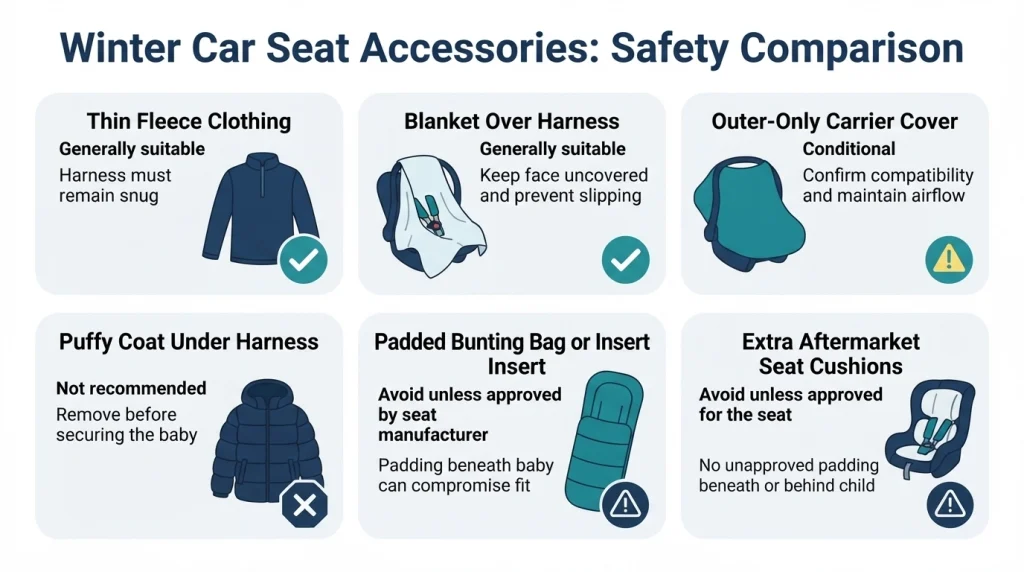
Blankets placed over a correctly secured harness can provide warmth. Certain car seat covers may also be suitable, but their design and compatibility matter.
The key distinction is whether an accessory changes the baby’s position, affects the harness, or creates a breathing hazard.
What is a winter car seat cover?
A winter car seat cover is an accessory designed to shield an infant carrier from cold air, wind, or light weather exposure. Some stretch around the outside of the carrier, while others include padding or fabric beneath the baby.
These designs are not equally safe. A cover that interferes with the seat or harness should not be used.
Which winter accessories are safer?
| Accessory | Safety assessment | Important precaution |
|---|---|---|
| Thin fleece clothing | Generally suitable | Harness must remain snug. |
| Blanket over harness | Generally suitable | Keep the face uncovered and prevent slipping. |
| Outer-only infant carrier cover | Conditional | Confirm compatibility and maintain airflow. |
| Puffy coat under harness | Not recommended | Remove before securing the baby. |
| Padded bunting bag or insert | Avoid unless specifically approved by the car seat manufacturer | Padding beneath the baby can compromise fit. |
| Extra aftermarket seat cushions | Avoid unless specifically approved for the seat | Do not add unapproved material beneath or behind the child. |
Are shower-cap-style car seat covers safe?
Some outer-only covers stretch around the carrier opening without placing material beneath the baby. This design avoids one major problem associated with padded inserts.
However, an outer-only design does not automatically make every cover safe. Check the car seat manufacturer’s instructions and the cover’s compatibility requirements.
Before using a cover, confirm:
- Nothing passes between the baby’s body and the harness.
- The cover does not alter the car seat installation or carrying handle requirements.
- The baby’s face remains completely uncovered.
- Fresh air can circulate freely.
- The cover can be opened or removed as the vehicle warms.
Do not create a sealed, enclosed space around the baby. Avoid leaving any cover positioned where it could restrict breathing or visibility.
Are car seat bunting bags safe?
Many bunting bags include a padded section that sits underneath the child. Such accessories can change the baby’s position and interfere with harness performance.
Do not use aftermarket bunting inserts unless the car seat manufacturer specifically approves them for that seat. Stroller accessories are not automatically appropriate for vehicle use.
Can you put a coat on backward over the harness?
Yes, a coat can sometimes provide additional warmth when placed backward over an already secured harness. It must not interfere with the buckle, straps, or baby’s face.
This approach works better for larger children who can wear a coat loosely over their arms. For a small infant, a lightweight blanket is often easier to position and remove.
Pro tip: Never assume a product is crash-tested with your specific seat simply because its packaging says “car seat compatible.” Check the actual car seat manufacturer’s accessory instructions.
Section Takeaway: A blanket over the buckled harness is a straightforward choice. Use carrier covers cautiously, and avoid unapproved products that place padding beneath the baby.
How Can You Tell Whether Your Baby Is Warm Enough in the Car Seat?
Check your baby’s chest or upper back for a more useful indication of overall warmth. Hands and feet can feel cooler without necessarily meaning the baby is too cold.
Your goal is a comfortably warm baby, not one bundled in as many layers as possible.
What are signs that a baby may be too cold?
Cold exposure can be especially concerning for newborns and young infants. Look at your baby’s overall condition rather than relying on a single symptom.
Possible warning signs include:
- A chest or upper back that feels unusually cool
- Persistent discomfort combined with signs of cold exposure
- Unusual tiredness, poor feeding, or reduced responsiveness
- Abnormally low body temperature when measured accurately
A baby who seems unusually sleepy, weak, or difficult to wake needs prompt medical assessment. Suspected hypothermia requires urgent medical attention.
What are signs that a baby is overheating?
Babies can become overheated when heavy clothing, blankets, and cabin heating combine. Excess heat is not a safer alternative to cold exposure.
Watch for these signs:
- Sweating or damp clothing
- A hot chest or upper back
- Flushed skin
- Unusual discomfort or restlessness
- Excessive warmth beneath blankets or covers
If your baby seems overheated, safely stop and remove extra coverings. Adjust the vehicle temperature and reassess your baby’s condition.
Seek medical care immediately if your baby becomes seriously unwell, unusually lethargic, or has difficulty breathing.
What temperature should the car be for a baby?
There is no universal car cabin temperature recommended for every baby. Appropriate warmth depends on clothing, health, age, and individual comfort.
Set the climate controls to a comfortable level rather than turning the heater excessively high. Avoid directing strong, hot airflow at the baby’s face.
Sunlight can also warm the rear seat, even during cold weather. Reassess clothing and blankets as driving conditions change.
Should you keep a blanket on throughout the trip?
Not necessarily. A blanket that helps during the first few cold minutes may become unnecessary after the cabin warms.
Remove or adjust it when your baby no longer needs extra insulation. Never allow loose fabric to cover the face or interfere with breathing.
Section Takeaway: Check your baby’s chest or upper back, observe their behavior, and adjust removable layers. Avoid both excessive cold and overheating.
How Do You Keep a Newborn Safe During Long Winter Trips and Emergencies?
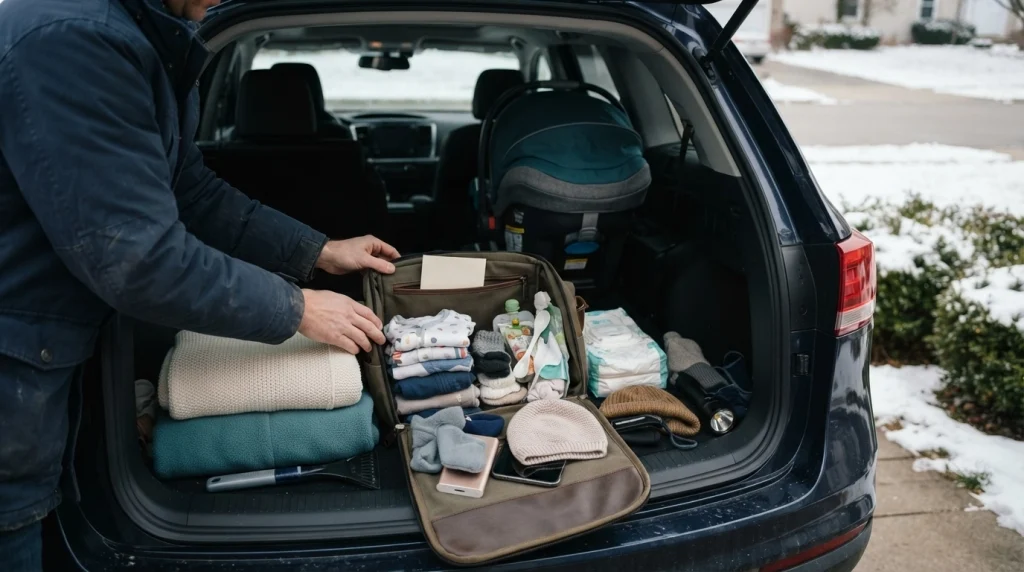
Newborns, premature babies, and infants with medical conditions may require additional care during cold-weather travel. Long journeys also introduce challenges beyond choosing clothing.
The safest plan considers feeding, rest breaks, vehicle conditions, and emergency supplies.
How should you keep a newborn warm on the ride home from the hospital?
A newborn should travel in a properly fitted rear-facing car seat that meets the manufacturer’s size requirements. Use thin clothing beneath the harness and add a blanket over the secured straps if needed.
A practical going-home routine includes:
- Choose a long-sleeved bodysuit and comfortable infant clothing.
- Add thin, appropriate layers based on the weather.
- Remove thick outerwear before fastening the harness.
- Secure the baby according to the car seat manual.
- Place a blanket over the harness without covering the face.
- Monitor warmth and remove unnecessary layers inside the heated car.
Premature babies or babies with medical concerns may need a hospital car seat tolerance assessment or an individualized travel plan. Follow the medical team’s instructions before discharge.
What about long-distance winter road trips?
Long drives require planned stops, especially for young infants. They need opportunities for feeding, diaper changes, and breaks from the semi-reclined seat.
The American Academy of Pediatrics suggests breaks approximately every 2–3 hours during daytime travel and every 4–6 hours at night, with individual needs taking priority. See its guidance on traveling with babies in car seats.
Some newborns and medically vulnerable infants need more frequent breaks. Ask your pediatrician about suitable travel intervals when necessary.
During longer journeys:
- Plan stops at warm, safe locations.
- Take the baby out of the seat during appropriate rest breaks.
- Feed the baby only when safely stopped.
- Keep extra dry clothing accessible.
- Check the harness after every diaper or clothing change.
- Avoid unnecessary travel during severe winter warnings.
What if your baby falls asleep in the car seat?
Babies often fall asleep during car rides. A correctly installed car seat is designed for travel, but it is not a substitute for a safe sleep space.
Once you arrive, transfer your sleeping baby to a firm, flat, non-inclined sleep surface as soon as possible. Remove loose blankets and follow safe sleep guidance.
The AAP safe sleep recommendations explain why infant car seats should not be used for routine sleep outside travel.
What should you pack for a winter car emergency?
Unexpected delays can become serious during freezing weather. Keep a small baby-specific emergency kit in your vehicle.
Useful supplies include:
- Two or more spare blankets, depending on your climate
- Dry infant clothing and extra socks
- Diapers, wipes, and changing supplies
- Appropriate feeding supplies
- Extra mittens and a soft hat
- A charged phone and backup power bank
- Emergency contact information
- General winter vehicle emergency equipment
If your vehicle breaks down, seek a safe, warm location and request assistance. Do not rely on an idling engine inside an enclosed space or when snow blocks the exhaust.
Can you use heated blankets or portable heaters near a baby?
Avoid placing electric heated blankets, heating pads, or hot-water bottles against your baby in the car seat. These can create burns or overheating risks.
Portable heaters also introduce electrical and fire hazards inside a vehicle. Appropriate clothing, safe vehicle heating, and ordinary blankets over the harness are preferable.
Section Takeaway: Winter travel safety goes beyond clothing. Plan appropriate stops, provide a safe sleep space at your destination, and prepare for unexpected cold-weather delays.
Frequently Asked Questions
1. Can a baby wear a winter coat in a car seat?
A baby should not wear a bulky winter coat beneath the car seat harness. Thick padding can compress during a crash and create dangerous slack.
Use thin, fitted layers instead. After tightening the harness correctly, add a blanket or suitable outer covering for warmth.
2. Can I use a blanket under the car seat straps?
No. Placing a blanket between the baby’s body and the harness can interfere with proper restraint and may prevent the straps from tightening correctly.
Fasten the harness over appropriate clothing first. Then place the blanket over the secured straps, keeping it away from the baby’s face.
3. Are winter car seat covers safe for newborns?
Some outer-only covers may be appropriate when they do not interfere with the harness, installation, or airflow. However, not every cover is compatible with every infant seat.
Check the manufacturer’s instructions. Avoid padded inserts, enclosed face coverings, and any product that places extra material beneath the newborn.
4. How many layers should a baby wear in a car seat?
The number depends on the weather, clothing thickness, and cabin temperature. A common starting point is approximately one more layer than a comfortable adult needs.
Choose thin layers that maintain harness fit. Add or remove a blanket over the harness as the cabin temperature changes.
5. Is a fleece snowsuit safe for a baby in a car seat?
A lightweight fleece outfit may be appropriate when it allows a snug harness fit. Thick or heavily padded fleece suits can create the same problems as bulky coats.
Check the shoulders, hips, and crotch buckle carefully. Remove the garment if it prevents correct positioning or tightening.
6. How do I know if my baby is overheating in the car?
Check for sweating, flushed skin, or unusual warmth around the chest and upper back. The baby’s overall condition matters more than the temperature of their hands or feet.
Remove excess coverings when needed. Seek urgent medical attention if your baby shows serious symptoms such as difficulty breathing or reduced responsiveness.
7. Can I leave my baby in the car seat with a blanket after arriving home?
No. An infant car seat should not serve as a routine sleeping place outside the vehicle, and loose blankets can create additional hazards.
Move your baby to a firm, flat, safe sleep surface as soon as possible. Keep the sleeping space free of loose bedding, pillows, and soft objects.
Final Takeaway: Warmth Should Never Compromise Car Seat Safety
Keeping a baby warm in a car seat safely does not require bulky winter gear. Thin clothing, correct harness positioning, and removable blankets provide a practical approach.
As of 2026, the central advice from major child passenger safety authorities remains clear: keep bulky padding out from beneath the harness. Confirm accessory compatibility with your car seat manufacturer.
Before every cold-weather drive, check the clothing, tighten the harness, and add warmth over the straps. Monitor your baby’s comfort as the vehicle heats up.
Make the harness your first priority, and adjust the warmth around it. That simple habit can make winter travel safer and more comfortable for your baby.

Daniel Brooks is an automotive writer and product researcher focused on car accessories, car tech, maintenance, and practical driving guides. At Plug-in Car World, he helps drivers make smarter automotive decisions through honest reviews and research-driven content.
