
How to Clean Car Seat Straps Correctly: A Safe Step-by-Step Guide
Quick Answer
To clean child car seat straps correctly, gently wipe the harness webbing with a damp, soft cloth and mild soap only if your car seat manufacturer permits it. Never soak, machine wash, bleach, or heat-dry harness straps. Follow your specific seat manual and the Graco car seat cleaning guidance for examples of safe surface cleaning.
Safe Cleaning Steps
- Check the manual: Confirm which cleaning products and methods your seat manufacturer allows.
- Remove loose dirt: Lift away crumbs and debris without pulling or scraping the webbing.
- Wipe gently: Use a slightly damp microfiber cloth and manufacturer-approved mild soap if permitted.
- Remove residue: Wipe the surface again with a clean, lightly damp cloth when allowed.
- Air dry completely: Keep the harness away from hair dryers, heaters, and direct high heat.
- Inspect before use: Check for damaged fibers, twists, stiffness, and proper harness operation.
Important Safety Warning
- Stop and contact the manufacturer if the straps are soaked, badly contaminated, frayed, or damaged. Cleaning cannot reliably restore compromised harness webbing.
A sticky child car seat harness can turn an ordinary cleanup into a frustrating job. Knowing how to clean car seat straps correctly matters because those straps are safety equipment, not ordinary upholstery.
I’ve found that the smartest approach to child-seat care is usually the gentlest one. This guide covers everyday spills, difficult stains, drying, common mistakes, and when replacement becomes necessary.
In This Guide
- Why Do Car Seat Straps Need Special Cleaning?
- What Can You Use to Clean Car Seat Straps Safely?
- How Do You Clean Car Seat Straps Step by Step?
- How Do You Handle Stains, Vomit, and Other Spills?
- Which Car Seat Strap Cleaning Mistakes Should You Avoid?
- When Are Car Seat Straps Safe to Use Again?
- Frequently Asked Questions
Why Do Car Seat Straps Need Special Cleaning?
Car seat harness straps require careful cleaning because their woven fibers help restrain your child during a crash. Aggressive washing, harsh chemicals, and incorrect handling can damage the webbing or affect its performance.
What is car seat harness webbing? Harness webbing is the strong, woven strap material that holds your child securely in a child safety seat. It forms part of the seat’s crash-protection system.
Harness Straps Are Different From Seat Covers
A removable car seat cover provides cushioning and surrounds the child restraint. Harness straps perform a different job by controlling movement and holding the child in position.
That difference changes how you clean each component. A washable cover does not mean the harness underneath can tolerate the same treatment.
- Harness webbing: Usually requires careful surface cleaning under manufacturer instructions.
- Removable fabric cover: May allow hand washing or machine washing, depending on the model.
- Harness adjuster strap: May have different cleaning restrictions from the shoulder straps.
- Buckle mechanism: Needs separate cleaning instructions to avoid affecting its locking operation.
- Lower-anchor straps: Secure the child seat to vehicle anchors and may require water-only cleaning.
Why the Manufacturer’s Instructions Matter
Even two car seats from the same brand may have different care requirements. Some manufacturers allow mild soap on harness webbing but prohibit soap on adjuster straps.
The American Academy of Pediatrics advises following the manufacturer’s cleaning directions. Its car seat safety guidance also cautions that disinfectants may reduce the protection provided by a seat and harness.
As of 2026, the safest general approach remains simple: identify the exact seat model and follow its current instructions. If those instructions are unavailable, contact the manufacturer before attempting a deeper cleaning.
What Can You Use to Clean Car Seat Straps Safely?
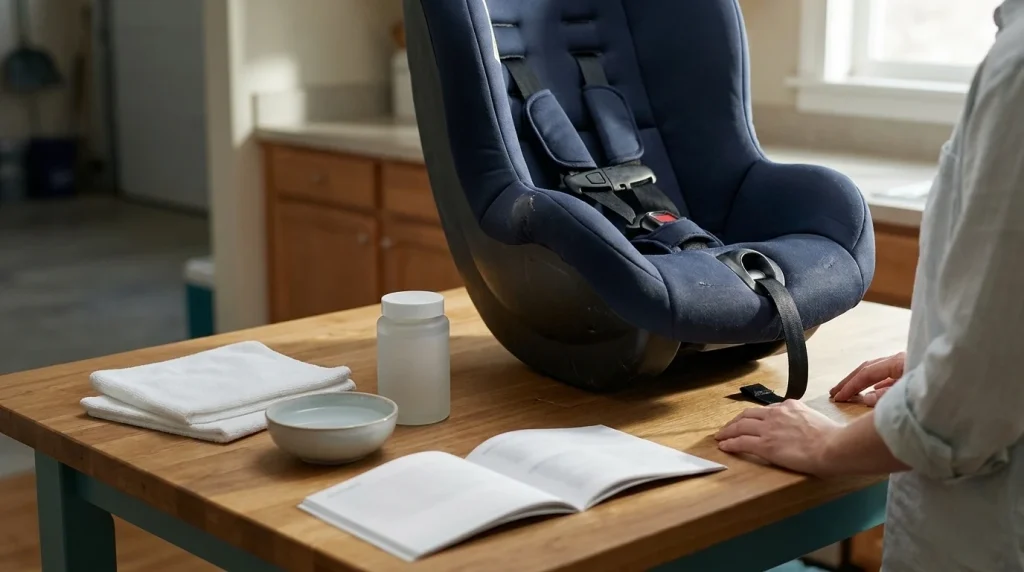
A soft cloth and a small amount of water are the starting point for most harness-cleaning jobs. Use mild soap only when your specific car seat instructions approve it for that component.
Recommended Cleaning Supplies
You don’t need an expensive detailing kit. In fact, fewer products usually mean fewer opportunities to damage safety-critical materials.
- A clean, soft microfiber cloth
- A second clean cloth for removing approved soap residue
- A small bowl of clean water
- Mild soap, only if permitted by the car seat manual
- A dry, well-ventilated place for air drying
- The car seat’s instruction manual or official digital copy
Avoid treating child safety harnesses like ordinary fabric seats. Automotive upholstery shampoos and household stain removers are not automatically safe for harness webbing.
Cleaning Methods Compared
| Cleaning Method | Suitable for Harness Straps? | Important Detail |
|---|---|---|
| Lightly damp microfiber cloth | Generally appropriate | Use minimal moisture and follow the manual. |
| Mild soap and water | Model-dependent | Use only on components where the manufacturer allows soap. |
| Manufacturer-approved wipes | Model-dependent | Check ingredients and approval before using. |
| Machine washing or soaking | No, unless expressly instructed | Most child harness webbing must not be immersed. |
| Bleach, solvents, or harsh disinfectants | Avoid | These products may damage safety materials. |
| Hair dryer or clothes dryer | Avoid | Heat can damage or alter materials. |
Is Regular Dish Soap Safe?
Some manufacturers permit mild soap, but that does not automatically approve every dish detergent. Dish soaps can contain additives that your particular seat manufacturer may not allow.
Choose a cleaner only after checking the specific instructions. If the label is unclear, water-only surface cleaning is a more cautious temporary approach while you seek guidance.
How Do You Clean Car Seat Straps Step by Step?
Clean the harness while it remains attached unless the manufacturer specifically instructs you to remove it. This reduces the risk of incorrect rethreading or disturbing important restraint components.
Step 1: Identify the Car Seat Model
Find the manufacturer’s label on the shell, base, or another location identified in the manual. Record the model number and date of manufacture.
Open the correct manual and locate the cleaning and maintenance section. Pay attention to any separate instructions for the shoulder harness, adjuster strap, and lower-anchor webbing.
Step 2: Prepare the Seat
Remove your child from the car seat and position the seat where you can inspect it safely. You may leave the seat installed if you can clean and dry the harness properly.
Loosen the harness using its normal adjustment mechanism. Don’t disconnect straps or remove the seat cover unless the instructions permit those actions.
Step 3: Remove Loose Debris
Pick away visible crumbs, dried food, and loose dirt with your fingers or a soft cloth. Work gently around the buckle tongues and harness slots.
Use a vacuum only on areas where the manufacturer allows it. Keep strong suction and rotating brushes away from exposed harness webbing.
Step 4: Gently Surface Clean the Straps
Lightly dampen a clean microfiber cloth with water. If approved, add a small amount of the recommended mild soap.
Wipe the dirty area gently, following the strap’s length rather than scrubbing across its edges. Avoid saturating the material or forcing liquid into harness openings.
Step 5: Remove Any Cleaner Residue
When the manual permits, use a second lightly damp cloth to wipe away visible soap residue. Repeat with gentle pressure rather than adding more detergent.
Do not pour water over the straps to rinse them. The goal is surface cleaning, not washing the entire webbing.
Step 6: Let the Harness Air Dry
Allow the straps to dry completely in a ventilated area before using the seat. Keep them away from heaters, direct concentrated sunlight, and hair dryers.
Drying time varies with airflow, moisture, and humidity. A lightly wiped harness may dry sooner than a heavily dampened one, but never rely on a fixed time alone.
Step 7: Inspect the Harness
After drying, examine both sides of the visible webbing. Look for cuts, loose fibers, unusual stiffness, twisting, and signs of damage.
Operate the harness adjuster and buckle according to the manual. If anything feels abnormal, stop using the seat and contact its manufacturer.
Pro tip: If cleaning requires disconnecting the harness, follow the factory instructions exactly. When in doubt, a certified child passenger safety technician can help check the seat’s setup.
Section Takeaway: Gentle surface cleaning, minimal moisture, complete air drying, and a careful inspection are the foundation of safe car seat harness maintenance.
How Do You Handle Stains, Vomit, and Other Spills?
Different messes require different decisions, but stronger cleaning products are rarely the solution. If contamination extends deep into the webbing, contact the manufacturer rather than attempting aggressive cleaning.
Milk, Juice, and Sticky Food
Handle fresh spills before they spread through the straps. Gently blot liquid with a clean cloth instead of rubbing it deeper into the fibers.
- Remove loose food without scraping the strap surface.
- Blot visible liquid with a clean, absorbent cloth.
- Use manufacturer-approved surface cleaning.
- Let the harness dry completely.
- Check for remaining contamination or unusual stiffness.
Repeated wiping may help with light surface residue. Persistent stickiness needs manufacturer advice rather than repeated soaking or heavy scrubbing.
Vomit and Urine
Vomit and urine can spread through harness webbing and create lasting odors. Cleaning the visible stain does not guarantee that deeper contamination has been removed.
First, remove surface contamination gently using the manufacturer’s approved method. If the liquid has soaked through the straps, contact the manufacturer about replacement or whether the seat remains usable.
Don’t apply enzyme cleaners, disinfectant sprays, or concentrated deodorizers unless the manufacturer specifically approves them. Their cleaning effectiveness on ordinary fabrics doesn’t establish harness compatibility.
Mold or Mildew
Visible mold deserves more caution than an everyday food stain. It may indicate prolonged moisture exposure, including contamination beneath the surface.
Avoid bleach, vinegar treatments, and heavy scrubbing. Stop using the affected seat until its manufacturer advises whether the harness or entire restraint needs replacement.
Persistent Odors
A lingering smell does not automatically mean stronger cleaning is safe. Fragrance sprays may cover the odor without removing the source.
If approved surface cleaning and complete drying don’t solve the problem, ask the manufacturer about replacement parts. Don’t assume a fresh-smelling harness is a safe harness.
Which Car Seat Strap Cleaning Mistakes Should You Avoid?
The biggest mistake is treating the harness like removable upholstery. Many ordinary car-cleaning techniques are inappropriate for child restraint straps.
Common Mistakes That Can Damage a Harness
- Soaking straps: Immersion can violate manufacturer instructions and potentially compromise webbing.
- Using a washing machine: Mechanical agitation and repeated wetting may damage harness materials.
- Applying bleach: Harsh chemicals can weaken or alter safety-critical components.
- Scrubbing with stiff brushes: Abrasive action may damage the woven surface.
- Using hot steam: High heat and heavy moisture may affect straps and surrounding components.
- Applying vinegar or baking soda: Homemade cleaning mixtures are not automatically manufacturer-approved.
- Using a hair dryer: Concentrated heat can affect synthetic materials.
- Removing the harness without instructions: Incorrect reassembly can create a dangerous fit or restraint problem.
What if You Already Washed or Soaked the Straps?
Stop using the affected child restraint until you get model-specific guidance. Do not assume drying alone will reverse any changes caused by prohibited cleaning.
Write down how the straps were cleaned and which products you used. Contact the manufacturer with that information and the seat’s model number.
Follow the company’s recommendation about replacing the harness or entire seat. Some models offer approved replacement straps, while others have components that cannot be replaced separately.
Should You Replace Damaged Straps Yourself?
Only use genuine, manufacturer-approved replacement parts that match the exact car seat model. Never substitute generic webbing, sewing repairs, or unrelated harness components.
Britax explains appropriate cleaning and replacement considerations in its official car seat cleaning instructions. Its recommendations illustrate why specific manufacturer guidance matters more than general detailing advice.
Pro tip: Before ordering replacement components, confirm the seat’s model, manufacture date, and approved replacement procedure directly with the manufacturer.
When Are Car Seat Straps Safe to Use Again?
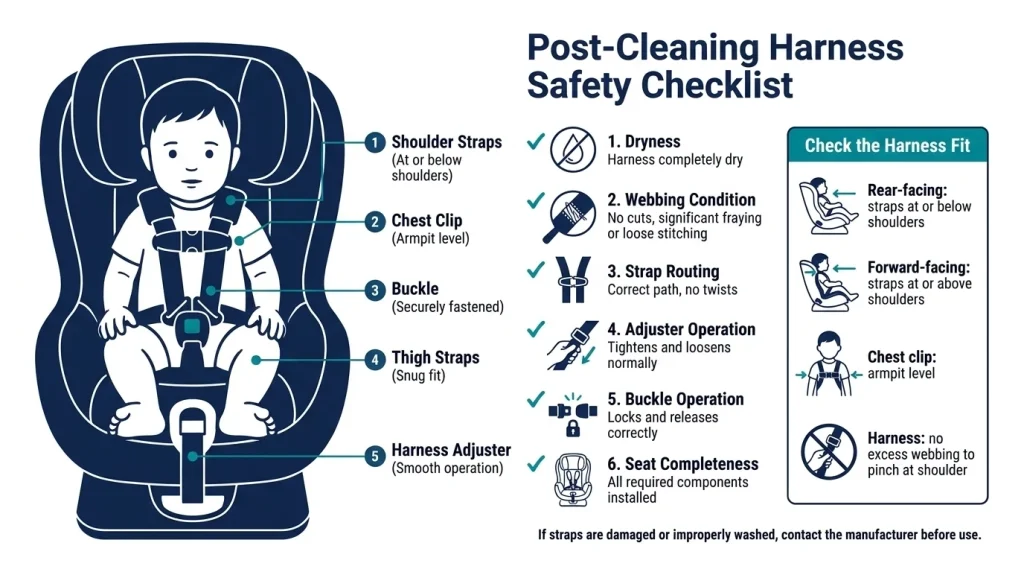
Use the car seat again only when its permitted cleaning is complete, the harness is fully dry, and every component functions normally. If the straps were damaged, soaked against instructions, or heavily contaminated, obtain manufacturer guidance first.
Post-Cleaning Safety Checklist
- Dryness: The harness feels completely dry throughout the cleaned areas.
- Webbing condition: No cuts, significant fraying, loose stitching, or other visible damage.
- Strap routing: The harness follows the correct path without twists.
- Adjuster operation: The harness tightens and loosens as described in the manual.
- Buckle operation: Buckle tongues lock securely and release normally.
- Seat completeness: All required original components and pads are correctly installed.
Check Harness Fit Before Driving
Cleaning time offers a useful chance to confirm your child’s fit. Children grow, and shoulder-strap positions may need adjustment.
According to the National Highway Traffic Safety Administration’s installation guidance, rear-facing harness straps should be at or below shoulder level. Forward-facing harness straps should be at or above the shoulders.
For seats with a chest clip, position it at armpit level. Tighten the harness until you cannot pinch excess webbing at the child’s shoulder.
Also check that the installed child seat moves no more than 1 inch side-to-side or front-to-back at its belt path. That movement test does not replace the full installation instructions.
What About Strap Pads and Accessories?
Removable harness pads may have different washing instructions from the straps themselves. Check whether your particular pads can be hand washed or machine washed.
Don’t add aftermarket strap covers simply to conceal stubborn stains. Safe Kids Worldwide warns that extra harness padding can interfere with proper restraint fit.
Its car seat purchasing and safety advice recommends using appropriate original components rather than adding unapproved accessories.
When Should You Seek Professional Help?
A certified child passenger safety technician can help assess harness routing, fit, and installation. However, the seat manufacturer is the appropriate authority for determining whether contaminated or improperly washed webbing must be replaced.
Keep the model number and purchase information accessible. This makes future maintenance, replacement-part requests, and recall checks easier.
Section Takeaway: A clean-looking strap is not enough. Confirm the harness is dry, undamaged, correctly routed, and operating properly before traveling.
Frequently Asked Questions
1. Can You Clean Car Seat Straps With Baby Wipes?
Some manufacturers allow gentle baby wipes for surface cleaning, but approval varies by car seat model. Avoid wipes containing alcohol, disinfectants, fragrance additives, or other unapproved ingredients.
Check the instruction manual first. When wipes are not specifically approved, follow the manufacturer’s recommended cloth-and-water cleaning method instead.
2. Can You Soak Car Seat Straps in Water?
Most child car seat harness straps should never be soaked or submerged. Manufacturers commonly require surface cleaning because immersion may affect the webbing.
If you accidentally soaked the straps, stop using the seat and contact its manufacturer. Do not assume the straps are safe simply because they have dried.
3. Can You Use Vinegar and Baking Soda on Car Seat Straps?
Vinegar and baking soda are not generally recommended for child harness webbing. Household cleaning methods may leave residue or affect materials, and their safety has not been established for every restraint.
Use only approved cleaning products. Consult the manufacturer if odors or stains remain after permitted cleaning.
4. Can You Put Car Seat Straps in the Washing Machine?
Do not machine wash harness straps unless the manufacturer explicitly instructs you to do so. Most harness-cleaning directions prohibit machine washing.
Removable seat covers often have separate laundering instructions. A machine-washable cover does not make the harness machine-washable.
5. How Long Do Car Seat Straps Take to Dry?
Drying time depends on moisture, airflow, humidity, and the amount of cleaning performed. There is no universal drying time suitable for every car seat.
Allow the straps to air dry completely before use. Never speed drying with a hair dryer, clothes dryer, or concentrated heat source.
6. How Do You Remove Vomit Smell From Car Seat Straps?
Gently remove surface contamination using the manufacturer’s approved cleaning process. Avoid masking the odor with perfume, deodorizing sprays, or unapproved chemical cleaners.
If vomit soaked through the webbing or the smell persists, contact the manufacturer. Replacement may be safer than repeated cleaning attempts.
7. When Should Car Seat Harness Straps Be Replaced?
Seek manufacturer guidance when straps are cut, frayed, heavily contaminated, incorrectly washed, or otherwise damaged. Replacement also depends on the seat’s design and whether approved harness parts are available.
Never make homemade repairs or install universal replacement straps. Some restraints require replacement of the entire seat when specific components become unusable.
Final Takeaway: Learning how to clean car seat straps correctly means knowing when to clean gently and when to stop. The goal is a clean harness that remains safe, not simply one that looks spotless.
Before your next drive, check the manual, inspect the harness, and confirm your child’s fit. If contamination or damage raises doubts, contact the manufacturer before using the seat again.

Daniel Brooks is an automotive writer and product researcher focused on car accessories, car tech, maintenance, and practical driving guides. At Plug-in Car World, he helps drivers make smarter automotive decisions through honest reviews and research-driven content.
