
Why Winter Coats Can Affect Car Seat Harness Safety
Quick Answer
Winter coats can affect car seat harness safety because thick insulation creates space between your child and the straps. During a crash, that padding can flatten, leaving a dangerously loose harness even when it seemed tight beforehand. The American Academy of Pediatrics winter car seat guidance recommends thin layers beneath the harness and warmth added over it.
What keeps a winter ride safer?
- Skip bulky coats: Remove puffy jackets and snowsuits before buckling.
- Choose thin layers: Use fitted thermals, sweaters, or light fleece that does not prevent a snug fit.
- Check the harness: Tighten until you cannot pinch excess webbing at the shoulder.
- Add warmth afterward: Place a blanket or reversed coat over secured straps.
- Avoid extra padding: Do not put unapproved inserts or thick covers behind your child.
A puffy jacket feels like the responsible choice on a freezing school morning. But the safest way to keep a child warm in a car is different from dressing them for a walk outside.
I look at this as a harness-fit problem, not a ban on winter clothing. Here is how the risk develops, how to check a coat, and what works instead.
In This Guide
- Why do winter coats interfere with a car seat harness?
- How can you tell if a winter coat makes the harness too loose?
- Which winter clothes are safer under car seat straps?
- How do you keep a child warm without loosening the harness?
- Are car seat covers and winter accessories safe?
- What winter car seat mistakes should parents avoid?
- Frequently asked questions
Why Do Winter Coats Interfere With a Car Seat Harness?
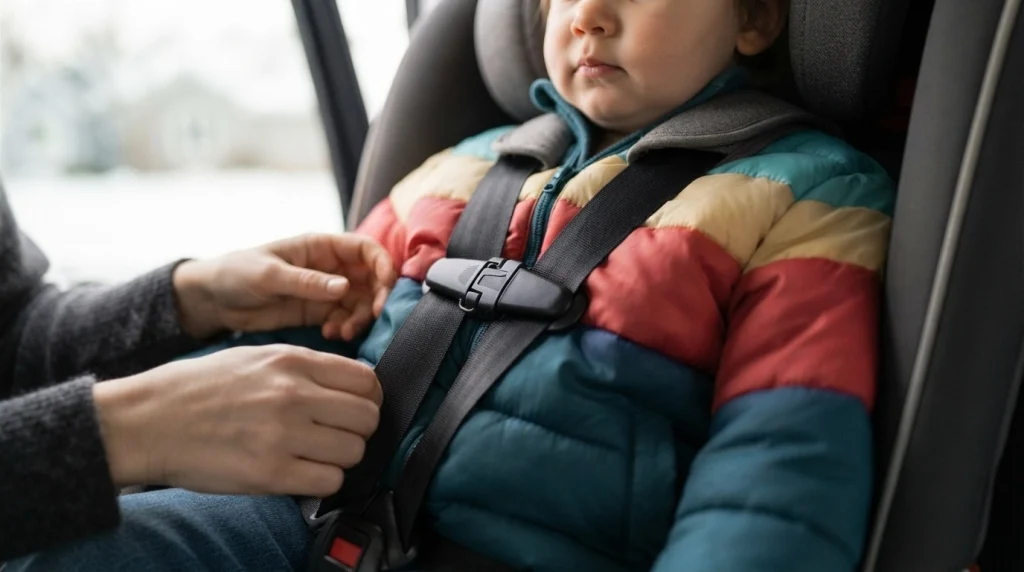
Thick winter clothing can hide looseness in a five-point harness. Its soft filling takes up space that the harness should occupy close to the child’s body.
What happens to coat padding during a crash?
A five-point harness is the restraint system with shoulder straps, hip straps, and a buckle between the legs. It works best when its webbing fits snugly against the child.
Imagine adjusting the straps around a quilted coat rather than the child’s torso. The webbing looks firm, yet much of that tightness comes from squashing fluffy fabric.
- Before impact: Lofty insulation holds the straps farther away from the chest and shoulders.
- During impact: Crash forces compress that insulation much faster than a caregiver can adjust the straps.
- After compression: The extra room can let the child’s body move farther and increase injury risk.
In severe circumstances, excessive slack may contribute to a child slipping out of the restraint. You cannot judge that risk from how cozy the coat looks.
Why a tight-looking harness can still be unsafe
The harness should restrain the child, not the coat. A coat’s thickness can make the adjuster feel tight before the straps reach the child’s body.
That distinction matters with down-filled puffers, thick polyester insulation, and padded snowsuits. A child’s small frame can make even modest padding a significant obstacle.
The National Highway Traffic Safety Administration’s winter car seat advice recommends lightweight fleece layers rather than puffy outerwear. Add the coat or blanket over the fastened harness instead.
Section takeaway: A secure harness must fit the child beneath the clothing, not merely look snug over a thick jacket.
How Can You Tell if a Winter Coat Makes the Harness Too Loose?
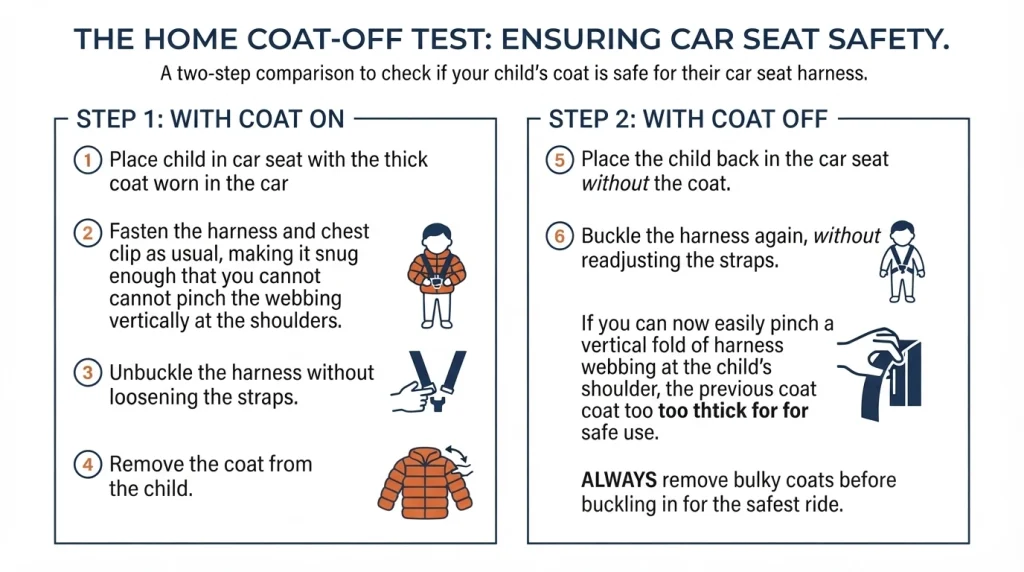
Use the shoulder pinch test to check harness snugness. For a particular coat, compare the harness fit before and after removing it without changing the strap adjustment.
Try the coat-off comparison at home
Choose a calm moment in your parked vehicle. This is easier than discovering a problem while rushing through a cold parking lot.
- Buckle with the coat on: Position your child in the correctly installed seat and tighten the harness as much as possible.
- Unbuckle without loosening: Leave the harness adjuster exactly where it is.
- Remove the coat: Place your child back in the same seat wearing the thinner layers underneath.
- Rebuckle the straps: Do not tighten them yet; check how much slack the coat had concealed.
- Check at the shoulder: If you can pinch a horizontal fold of harness webbing, the coat prevented a properly snug fit.
- Reset for travel: Tighten the harness correctly over the thin layers before driving.
This comparison is a useful screening check, not a certification that a jacket is crash-safe. Always follow the car seat manufacturer’s instructions when deciding which clothing is acceptable.
What does a correctly fitted harness feel like?
The shoulder straps should lie flat without twisting. After tightening, you should not be able to pinch excess strap material vertically at the shoulder.
Place the chest clip at armpit level when your seat uses one. Make sure the child’s back and bottom remain against the restraint as the manual directs.
- Rear-facing seats: Shoulder straps generally enter the shell at or below shoulder level.
- Forward-facing seats: Shoulder straps generally enter at or above shoulder level.
- Both directions: Confirm the seat’s harness height rules and any special slot requirements in its manual.
These placement rules appear in NHTSA’s rear-facing harness instructions. Do not loosen an already snug harness simply to accommodate a heavy coat.
Section takeaway: If removing a coat exposes slack, leave the coat off and retighten the harness before the trip.
Which Winter Clothes Are Safer Under Car Seat Straps?
Close-fitting base layers and thin fleece are better choices than thick, compressible outerwear. No fabric label alone guarantees safety; the finished harness fit is what counts.
Compare common cold-weather clothing choices
| Clothing option | Harness concern | Practical choice |
|---|---|---|
| Puffy down or insulated coat | Padding compresses and creates slack | Remove before buckling |
| Bulky snowsuit | Adds thickness behind and around the torso | Remove for the ride |
| Fitted thermal layers | Usually low bulk if not bunched | Good option with a snug harness |
| Thin fleece jacket | Can still affect fit if layered thickly | Use only if the harness fits properly |
| Blanket over fastened straps | Does not add padding beneath the harness | Useful warmth; keep face clear |
What about hoodies, sweaters, and fleece suits?
A lightweight hoodie may work, but inspect its fit. Thick seams, oversized folds, or a hood bunched behind the shoulders can interfere with positioning.
Thin fleece is not automatically safe in every configuration. Two or three loose fleece garments can create as much unwanted bulk as one jacket.
As of 2026, the dependable shopping rule remains simple: choose warmth without unnecessary thickness. Ignore marketing phrases such as “car seat friendly” unless the clothing also meets your seat manufacturer’s requirements.
Before a purchase, look at the garment’s actual loft and how it sits under straps. Fit matters more than an impressive product label.
How Do You Keep a Child Warm Without Loosening the Harness?
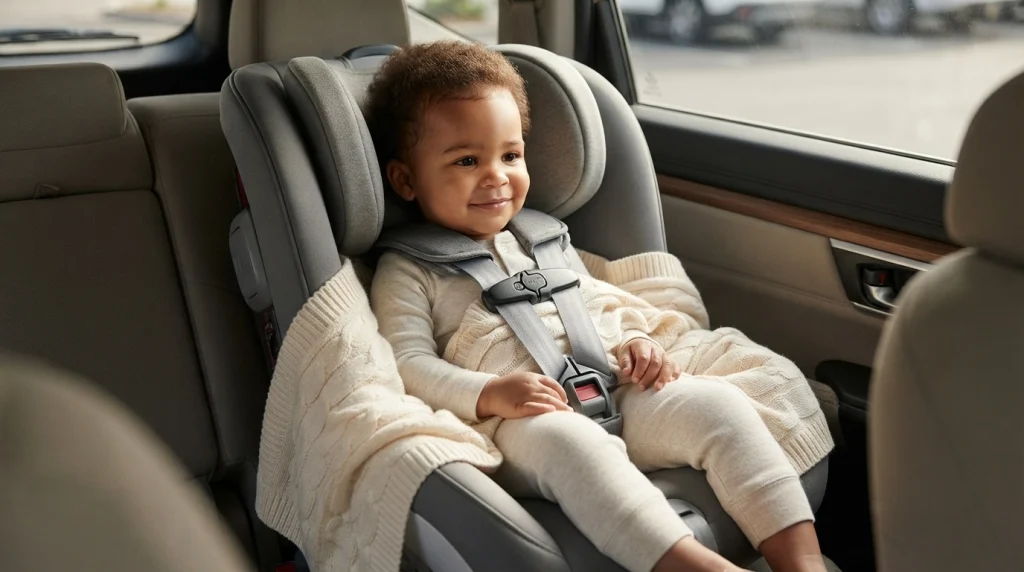
Dress the child in light layers, fasten the harness securely, then add warmth on top. This order protects restraint fit while keeping winter travel manageable.
A practical routine for cold mornings
- Prepare indoors: Dress your child in a base layer, pants, warm socks, and a fitted top.
- Keep outerwear handy: Use a winter coat for the walk to the car, then remove it before buckling.
- Secure the child: Check strap routing, chest clip placement, and shoulder pinch-test snugness.
- Cover the harness: Lay a blanket across the child or reverse the coat over the buckled straps.
- Adjust during travel: Remove extra covers if the cabin warms up or your child seems overheated.
In my driveway checklist, I treat the coat as the final warming layer, never part of the restraint. That one change makes the buckle routine easier to repeat consistently.
How should you handle infants and very cold weather?
Infants need special attention because they lose heat easily and cannot adjust their clothing. Use thin, close-fitting layers and a hat that does not block the face or affect positioning.
A blanket placed over the secured harness can provide additional warmth. Keep it away from the nose and mouth, and monitor the baby for overheating.
- Store a removable infant carrier indoors when the manufacturer permits, rather than leaving it in a freezing vehicle.
- Use a coat during the outdoor transfer, then remove it before securing the child.
- Keep extra dry clothes, blankets, and a phone charger in the vehicle for winter delays.
- Never leave a child unattended in a vehicle, even when the weather seems mild.
A parent should not have to choose between warmth and proper protection. The right order of layers solves much of that conflict.
Section takeaway: Buckle first, warm second, and keep every child’s face clear.
Are Car Seat Covers and Winter Accessories Safe?
Some covers can be used safely, but accessories that add fabric beneath the child or between the child and harness are a serious concern. Compatibility is specific to the child restraint.
What is the difference between a shower-cap cover and an insert?
A shower-cap-style infant car seat cover stretches around the outside of the carrier opening. It can keep out some wind without placing fabric behind the infant.
However, it must not restrict airflow or cover the baby’s face. Check the infant seat manual and remove or open any cover as needed to prevent overheating.
A padded insert or sleeping-bag-style liner is different. It can change the child’s position, affect harness routing, and introduce compression under the straps.
- Potentially suitable: A manufacturer-permitted cover that attaches outside the carrier and does not touch the harness path.
- Avoid: Thick head supports, aftermarket harness pads, and bunting that passes behind the child’s back unless expressly permitted by the seat manufacturer.
- Check carefully: Car seat ponchos and special jackets must allow the harness to lie directly and snugly on approved clothing layers.
Does a product label prove crash safety?
No. A product sold online with “crash tested” in its description is not automatically approved for your car seat model.
Ask whether the car seat manufacturer allows that accessory with your exact restraint. If the answer is unclear, use ordinary thin layers and a blanket over the harness.
Pro tip: Keep your car seat manual accessible, and ask the manufacturer or a certified child passenger safety technician when an accessory’s compatibility is uncertain.
What Winter Car Seat Mistakes Should Parents Avoid?
The most common mistake is judging safety by how firmly a coat fills the straps. Winter routines also invite shortcuts that make harness fit harder to verify.
Six mistakes worth checking before every ride
- Leaving a puffer under the straps: Remove compressible outerwear before securing the harness.
- Loosening the harness for clothing: Change the clothing instead of sacrificing restraint fit.
- Skipping the pinch test: Check for excess webbing at the shoulder after tightening.
- Setting the chest clip too low: Position it at armpit level if your restraint uses a clip.
- Adding padding behind the child: Avoid aftermarket inserts or thick blankets under the body.
- Leaving heavy covers on too long: Adjust warmth as cabin temperatures change.
Also watch for bulky clothing at the hips or crotch buckle. Any garment that stops the child from sitting correctly can affect fit.
When should you ask for hands-on help?
Get help if the harness remains loose, twists repeatedly, or cannot be adjusted around your child’s usual thin layers. Do not drive until the child is properly restrained.
Check the car seat manual before changing harness positions or moving to another restraint stage. NHTSA’s forward-facing seat guidance explains harness placement and the role of the top tether.
A certified child passenger safety technician can review installation and fit in person. Bring both the car seat and vehicle manuals so the advice matches your equipment.
Section takeaway: Warm clothing should never require compromises to harness tightness, strap position, or the child’s seating posture.
Frequently Asked Questions
Can a baby wear a winter coat in a rear-facing car seat?
A bulky winter coat should not sit under a rear-facing harness. Its padding may compress and create extra slack during a crash.
Use thin, close-fitting layers, secure the harness, and add a blanket over the fastened straps while keeping the baby’s face uncovered.
Is a thin fleece jacket safe in a car seat?
A thin fleece jacket may be acceptable when it does not interfere with positioning or harness snugness. Check for bunching near the shoulders, back, and buckle.
The shoulder pinch test should show no excess webbing, and your car seat manual takes priority.
Does the winter coat rule apply to toddlers and preschoolers?
Yes. Any child using a five-point harness can experience looseness from thick, compressible outerwear.
The concern does not disappear when a child gets older. Keep the jacket outside the harness and check the straps for a snug fit on every ride.
Can you put a blanket on a child after buckling?
Yes. A blanket placed over a correctly fitted harness can add warmth without creating padding beneath the straps.
Keep fabric away from the child’s face and avoid overheating. Never tuck thick blankets between the child’s body and the restraint.
Are car seat ponchos safer than puffy jackets?
A poncho worn over a fully secured harness can avoid the compression problem of a jacket worn underneath. Its construction still matters.
Confirm that it does not interfere with buckles or straps, restrict airflow, or violate the car seat manufacturer’s instructions.
Can a child wear a winter coat in a booster seat?
Bulky coats can also interfere with a vehicle seat belt used with a booster. The lap belt should stay low across the upper thighs, and the shoulder belt should fit correctly.
Remove bulky layers when they prevent proper belt placement.
What if my child is cold after I remove the coat?
Add thin clothing layers and place a blanket or the coat backward over the tightened harness. Hats, socks, and mittens can help without adding bulk beneath the shoulder straps.
Recheck comfort as the vehicle warms, and never leave a child alone in the car.
The bottom line: Winter coats can affect car seat harness safety because soft insulation hides space the straps must control. Choose thin layers, verify the shoulder fit, and add extra warmth after buckling.
Before your next cold-weather drive, run the coat-off comparison and review your car seat manual. A repeatable two-minute check is more useful than guessing whether a jacket looks thin enough.

Daniel Brooks is an automotive writer and product researcher focused on car accessories, car tech, maintenance, and practical driving guides. At Plug-in Car World, he helps drivers make smarter automotive decisions through honest reviews and research-driven content.
