How Do You Remove Old Smells From a Car Seat? 7 Proven Ways That Work
Quick Answer
To remove old smells from a car seat, vacuum it well, then treat the source — not just the surface — with baking soda, an enzyme cleaner, or a steam clean. Most old smells live in foam, seams, and fabric fibers, so a quick spray of air freshener will not fix them. Start with the gentlest method in our guide to cleaning a car seat safely, then move up to a deeper clean if the smell returns on a hot day.
Fastest Fix That Lasts
- Vacuum first: Crumbs, dust, and dried spills trap odor, so remove them before you add any liquid.
- Baking soda overnight: Sprinkle it on dry fabric, leave it 8 to 12 hours, then vacuum it out completely.
- Enzyme cleaner next: Use it for milk, vomit, sweat, pet, and food smells because it breaks down the source.
- Dry it fully: A damp seat will smell worse in a day, so air it out with doors open and a fan if you can.
- Test the heat: Warm the car up after cleaning, since heat brings a trapped smell back fast.
Skip This Mistake
- Do not soak the seat, drench the foam, or use a strong bleach cleaner on fabric or leather.
- Do not use a scented spray as your only fix, because it masks the smell for a few hours and then fades.
I have opened a car door on a hot afternoon and been hit by a smell I thought was gone months ago.
It was not a new spill. It was an old one, buried in the foam, that heat had woken up again.
This guide goes deeper than a quick spray-and-wipe fix. I will show you how to find the source, match the cleaner to the smell, and dry the seat so the odor does not come back.
In This Guide
- Why Do Old Smells Stick in a Car Seat?
- How Do You Find Where the Smell Is Coming From?
- What Should You Do Before You Start Cleaning?
- How Do You Remove Old Smells From a Cloth Car Seat?
- How Do You Remove Old Smells From a Leather Car Seat?
- Baking Soda vs Vinegar vs Enzyme Cleaner vs Ozone: Which Works Best?
- What If the Smell Is Still There After Cleaning?
- How Do You Keep a Car Seat From Smelling Again?
- Frequently Asked Questions
Why Do Old Smells Stick in a Car Seat?
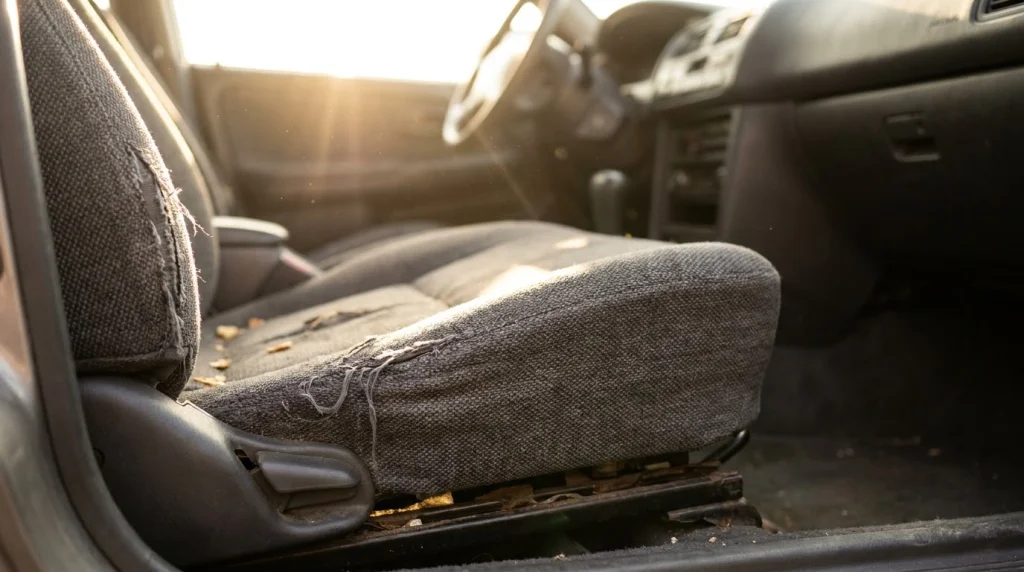
An old car seat smell is rarely just on the surface. It is usually trapped in layers you cannot see.
Cloth, foam, stitching, and the padding under the cover all soak up liquid. Heat then pushes that trapped odor back into the air.
What is an old car seat smell?
An old car seat smell is a stale odor that stays in fabric, foam, or leather long after the spill or cause is gone.
It often comes from milk, food, sweat, smoke, pets, vomit, or dampness that dried into the seat instead of being cleaned out.
I learned this the hard way with a used sedan I bought years ago. The seats looked clean, and the car smelled fine on a cool morning.
By noon, with the sun on the windows, it smelled like old milk and wet carpet. The previous owner had wiped the top, but the foam underneath was still holding the spill.
The 5 places smells hide
- Seat foam: It acts like a sponge and holds liquid deep inside.
- Seams and stitching: Spills settle into the thread and the folds around it.
- Seat cover backing: The back of a cover can hold odor even when the front looks clean.
- Under the seat: Crumbs, wrappers, and old spills collect on the rails and carpet below.
- Headrest and straps: Sweat, hair products, and food touch these parts every day.
That is why a surface wipe fails. You have to clean the layer that is holding the smell, not just the part you can see.
Section takeaway: Old smells stick because foam, seams, and fabric trap the source deep inside, and heat brings it back.
How Do You Find Where the Smell Is Coming From?
Do not start with a cleaner. Start with your nose, your hands, and a good light.
A five-minute check saves you from cleaning the wrong seat, or cleaning the same seat three times.
Do the sniff test seat by seat
Close the doors for 10 minutes on a warm day, then open one door at a time. Smell each seat up close, including the headrest and the seam where the back meets the base.
Press the cushion gently with your palm. A sour or musty puff of air often points to foam that got wet and never dried.
Match the smell to the cause
- Sour milk: Sharp, sour, and worse in heat — check child seats, cup holders, and the seat base.
- Musty or damp: Earthy and stale — look for a leak, a wet floor mat, or a seat that was steam cleaned and left damp.
- Smoke: Dry, stale, and spread across the headliner too — it clings to every soft surface.
- Sweat and body odor: Strongest on the headrest and upper backrest after gym trips or summer drives.
- Pet smell: Musky and strongest where a dog sat, slept, or shook off water.
- Food and vomit: Sharp at first, then stale — check seams, buckles, and the gap under the seat.
Check the floor under the seat too. I once chased a smell for a week before I found a juice box wedged under the passenger seat rail.
Check the trunk and the cabin filter if the smell seems to come from everywhere. A dirty cabin air filter can spread a stale smell through the vents, even when the seats are clean.
Safety note: If you smell fuel, burning, or strong chemicals, stop and check for a leak before you clean. Follow your owner’s manual, and have a qualified mechanic check a fuel or burning smell right away.
Section takeaway: Find the exact seat, layer, and cause first, because the right cleaner depends on what made the smell.
What Should You Do Before You Start Cleaning?
Good prep makes the clean work better and keeps you from damaging the seat. Skip it, and you will push dirt deeper into the fabric.
Give yourself 30 to 45 minutes for prep and a first treatment. Most of that time is waiting, not scrubbing.
Vacuum like you mean it
Use a crevice tool on every seam, under the headrest posts, and along the seat rails. Vacuum the back of the seat too, since dust and crumbs collect there.
Tap the cushion lightly while you vacuum. That loosens dried crumbs stuck in the fibers.
Test every cleaner first
Spray or dab a small amount on a hidden spot, like the lower back of the seat. Wait 10 minutes, then blot and check for color change or stiffness.
This step matters most for leather, light-colored cloth, and baby car seats. A cleaner that is safe on one material can stain or weaken another.
For a child seat, check your manual before you use anything strong. Many makers warn against harsh cleaners on straps and buckles, so use only a cleaner that is safe for a baby car seat and rinse or wipe it well.
Gather the right tools
- Vacuum with a crevice tool: For crumbs, dust, and dried baking soda.
- Soft brush: For lifting dirt from cloth without tearing fibers.
- White microfiber cloths: For blotting, so dye does not transfer to the seat.
- Spray bottle: For a light, even mist instead of a soak.
- Baking soda: For dry odor treatment on cloth.
- Enzyme cleaner: For milk, vomit, sweat, and pet smells.
- Fan or open doors: For drying, which is half the job.
Work in the shade if you can. Direct sun dries a cleaner too fast and can leave a ring on cloth.
Section takeaway: Vacuum, test, and dry-plan first, because a rushed clean can lock the smell in deeper.
How Do You Remove Old Smells From a Cloth Car Seat?
Cloth seats hold the most odor, but they also respond best to a step-by-step clean. Work from dry to wet, and from gentle to strong.
Do not jump straight to a soak. A wet seat that stays damp will smell musty within a day.
Step 1: Baking soda overnight
Sprinkle a thin, even layer of baking soda over the dry seat. Work it lightly into the fabric with a soft brush, then leave it for 8 to 12 hours.
Vacuum it out slowly with the upholstery tool. Repeat once if the smell is old or strong.
Baking soda absorbs odor, but it does not break down milk or vomit. Think of it as a first pass, not the whole fix.
Step 2: Enzyme cleaner for the real source
Spray enzyme cleaner lightly on the smelly area, just enough to dampen the fabric. Do not flood it.
Let it sit for 15 to 30 minutes, or as long as the label says. Blot with a clean white cloth, then let the seat air dry.
Enzyme cleaners work on organic smells because they break down proteins in milk, sweat, vomit, and pet accidents. A regular soap often just moves that residue around.
Step 3: Vinegar rinse for stubborn stale smells
Mix one part white vinegar with three parts water in a spray bottle. Mist the area lightly, blot after 10 minutes, and air it out.
The vinegar smell fades as it dries, usually within a few hours. Do not use it full-strength on a regular basis, since it can stiffen fabric over time.
Step 4: Steam clean only when the seat can dry fast
A steam cleaner or hot-water extractor can pull deep dirt out of cloth. Use short passes, extract as much water as you can, and dry the seat right away.
Open all doors, run a fan, and leave the car in a dry, breezy spot for several hours. If the seat still feels damp after 6 hours, keep drying it.
If your seat has a removable cover, take it off and wash it by the label when you can. Our guide to cleaning car seat covers helps you avoid shrinking or warping the cover.
Section takeaway: For cloth, use baking soda first, enzyme cleaner for the source, and fast drying last — that order beats one heavy soak.
How Do You Remove Old Smells From a Leather Car Seat?
Leather holds less odor than cloth, but it still absorbs sweat, smoke, and spills through its pores and stitching. The fix is gentler and drier.
Never soak leather. Water and harsh cleaners can dry it out, crack it, and make the smell worse.
Start with a leather-safe wipe
Vacuum the seat, then wipe it with a damp microfiber cloth and a small amount of pH-neutral leather cleaner. Work in small sections and wipe dry as you go.
Pay extra care to the perforated areas and the stitching. Odor hides in those tiny holes and seams.
Use baking soda without water
For a stale leather seat, sprinkle baking soda on a dry cloth and lay it on the seat for a few hours. Do not rub dry powder straight into perforated leather, since it can lodge in the holes.
Vacuum gently with a brush attachment, then wipe the seat again. Repeat once if needed.
Condition after you clean
Apply a thin layer of leather conditioner after the seat is clean and dry. It keeps the leather soft and helps seal the surface against new sweat and spills.
Let the conditioner soak in for 20 to 30 minutes, then buff off the extra. A sticky seat will attract dust and smell faster.
For smoke on leather, expect two or three light cleans, not one heavy one. Smoke clings to the headliner, carpet, and vents too, so clean those soft parts as well.
Section takeaway: For leather, clean lightly, keep it dry, and condition after — soaking it will damage the seat and trap more odor.
Baking Soda vs Vinegar vs Enzyme Cleaner vs Ozone: Which Works Best?
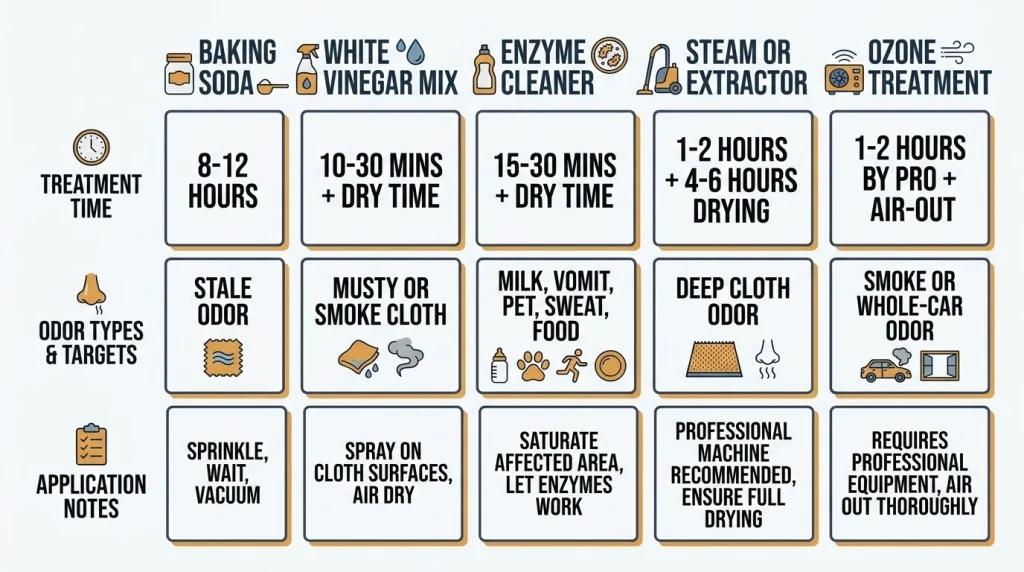
No single method wins for every smell. The best choice depends on the source, the material, and how deep the odor sits.
Use this table to pick the right first step, then move up only if the smell stays.
| Method | Best for | Time needed | Watch out for |
|---|---|---|---|
| Baking soda | General stale smell, sweat, light food odor | 8 to 12 hours | Does not break down milk or vomit |
| White vinegar mix | Stale, musty, and smoke-tinged cloth | 10 to 30 minutes, plus dry time | Can stiffen fabric; test first |
| Enzyme cleaner | Milk, vomit, pet, sweat, and food spills | 15 to 30 minutes, plus dry time | Needs time to work; do not rinse it off too fast |
| Steam / extractor | Deep, old, set-in cloth odor | 1 to 2 hours, plus 4 to 6 hours drying | Mold risk if the seat stays damp |
| Ozone treatment | Smoke and whole-car stale smell | 1 to 2 hours by a pro, plus air-out time | Do not stay in the car during treatment; air it out fully |
Baking soda is the safest start for most drivers. It is cheap, gentle, and easy to repeat.
Enzyme cleaner is my pick for the worst organic smells. I have seen it fix a milk spill that baking soda and soap could not touch, because it broke down the dried milk in the foam.
Ozone is the last resort, not the first step. It can help with smoke, but it does not replace cleaning the source, and you should let a pro handle it and air the car out well after.
For a quick check on what each method does, the Car Care Council offers general car-care guidance that helps you keep up with routine interior care.
Section takeaway: Baking soda handles light odor, enzyme cleaner handles organic spills, and steam or ozone are for deep, set-in smells.
What If the Smell Is Still There After Cleaning?
A smell that returns after cleaning is telling you something. It is either still in the foam, still wet, or coming from another part of the car.
Do not just spray more freshener. Track it down with a second, more targeted check.
Check the foam and padding
Press the seat and smell the air that comes out. If it smells sour or musty, the foam is still holding the spill.
Repeat the enzyme treatment once, use less liquid, and dry longer. If the seat was soaked before, the foam may need a full day to dry with a fan.
Learn whether your seat foam can get wet and how to dry it before you soak it again. Our note on whether car seat foam can get wet explains why drying matters so much.
Check the parts people forget
- Seat belt webbing: It absorbs sweat, food, and vomit, and it dries slowly.
- Buckle and latch area: Spills pool around the buckle and dry into a crust.
- Carpet under the seat: A spill can run down and sit in the carpet pad.
- Cabin air filter: A clogged filter can push stale air through the vents every time you drive.
- Headliner: Smoke and cooking smells cling to this soft surface.
Clean the belt with mild soap and water, then let it dry fully before you retract it. For a vomit smell that keeps coming back, follow the steps in our guide on cleaning vomit from a car seat, since vomit often hides in seams and under the seat.
When to call a pro
Call a detailer if the smell stays after two full treatments, if the seat was flooded, or if you see mold. A pro can use an extractor, an ozone machine, or a deep-clean tool you may not have at home.
See a mechanic first if the smell is fuel, burning, or exhaust-like. That is not a cleaning problem, and it needs a safety check.
Safety note: If you see mold, wear gloves and a mask, open the doors for fresh air, and do not use a dry brush that spreads spores. Check guidance from the EPA on mold and indoor air before you clean a heavy mold area.
Section takeaway: A returning smell means the source is still wet, still in the foam, or hiding in a belt, carpet, or filter you missed.
How Do You Keep a Car Seat From Smelling Again?
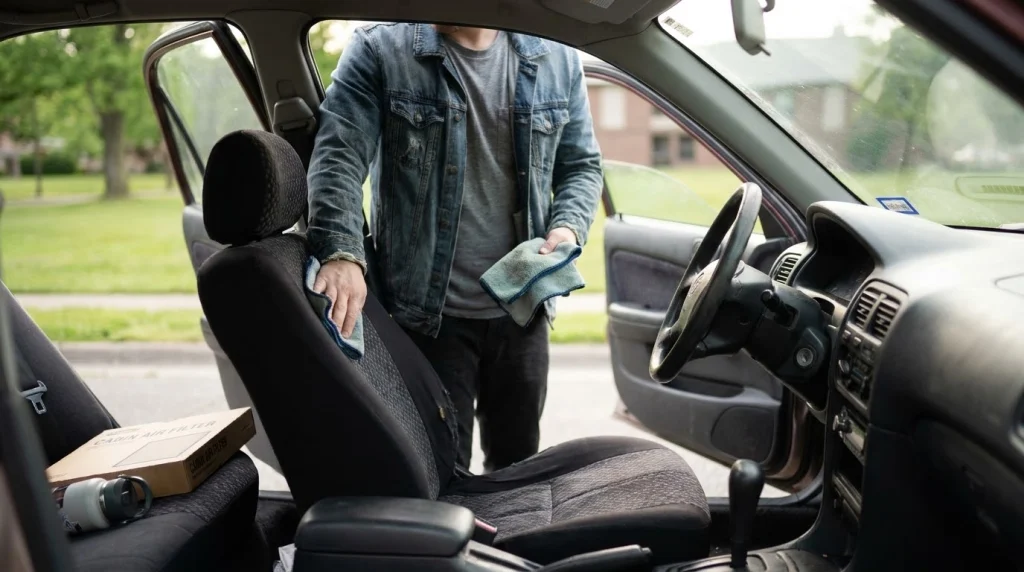
Removing a smell is only half the job. The other half is keeping new spills from soaking in.
Small habits beat big cleans. A two-minute wipe today saves a two-hour deep clean later.
Stop spills from soaking in
Blot a spill right away, even if you cannot clean it fully yet. Use a towel, a napkin, or a microfiber cloth from the glove box.
Keep a small towel and a sealable bag in the car for kid snacks, coffee, and pet trips. A quick blot buys you time until you get home.
Use covers the smart way
A washable seat cover helps a lot for kids, pets, and work gear. Wash it often, and do not leave a damp cover on the seat.
For stains that set before you catch them, our guide on removing stains from a car seat shows how to lift the mark before it turns into a lasting smell.
Air the car out every week
Open the doors for 10 minutes after a rainy day, a gym trip, or a pet ride. Fresh air and sun help a seat dry and stay fresh.
Replace the cabin air filter on the schedule in your owner’s manual. A fresh filter helps the whole cabin smell cleaner, not just the seats.
Vacuum once a week if you drive with kids or pets. Crumbs are small, but they add up fast under a seat.
For general safety and recall checks on child seats and car parts, NHTSA is a good place to confirm fit and safety guidance before you reinstall a cleaned seat.
Consumer Reports also publishes car-care and product testing that can help you compare cleaners and interior products. You can browse their car and cleaning coverage at Consumer Reports.
Section takeaway: Blot spills fast, wash covers often, and air the car out — prevention is cheaper than another deep clean.
Frequently Asked Questions
How long does it take to remove an old smell from a car seat?
Light smells often lift in one day with baking soda overnight. Deep milk, vomit, or smoke smells can take two or three treatments over a few days, plus full drying time.
Does baking soda remove old car seat smells?
Yes, baking soda helps with general stale odor on dry cloth. It works best overnight, but it may not fully fix milk or vomit, which need an enzyme cleaner.
Can vinegar remove old smells from a car seat?
Yes, a mix of one part white vinegar to three parts water can help with musty cloth smells. Mist it lightly, blot after 10 minutes, and let the seat dry fully.
Why does my car seat still smell after cleaning?
The smell is likely still in the foam, in a seam, under the seat, or in a damp spot that never dried. Clean the source again, dry it longer, and check the carpet, belts, and cabin filter.
Is it safe to use an ozone machine in my car?
Ozone can help with smoke, but do not stay in the car during treatment. Let a pro run it if you can, and air the car out fully before you drive it again.
How do I remove a smoke smell from a car seat?
Vacuum, clean the cloth or leather gently, and clean the headliner and carpet too. Repeat the clean once or twice, then consider a pro ozone treatment if the smell stays.
Should I replace a car seat if it still smells like mold?
Not always, but check the manual and inspect the foam and straps first. If mold is deep in the foam, if the seat was flooded, or if a child seat has damaged straps, replace it or ask a pro to inspect it.
Old smells feel stubborn, but they are not permanent. Find the source, clean it in the right order, and dry it like your next drive depends on it.
Start with baking soda tonight, test an enzyme cleaner tomorrow, and give the seat a full day to dry. Your car will smell like a car again, not like the spill from last summer.

Daniel Brooks is an automotive writer and product researcher focused on car accessories, car tech, maintenance, and practical driving guides. At Plug-in Car World, he helps drivers make smarter automotive decisions through honest reviews and research-driven content.