
Can You Buy Replacement Car Seat Covers? Options and Fit
Quick Answer
Yes, you can buy replacement car seat covers for almost every car, truck, and SUV. You can choose a cheap universal set, a closer semi-custom fit, or a made-to-order custom cover, and the right choice depends on your seat shape, airbags, and budget. Learn how to install a car seat cover correctly before you order, so a good cover does not turn into a loose one.
Your fastest decision
- Universal covers: They fit many seats, cost the least, and work best as short-term protection.
- Semi-custom covers: They use your vehicle model to shape the cover, so they fit better than universal sets.
- Custom covers: They are cut for your exact year, make, model, and trim, so they fit like a second skin.
- OEM covers: They come from the vehicle maker or dealer, so they match the factory fabric and fit best.
- Airbag check first: If your seats have side airbags, choose a cover made for them and leave the airbag seam clear.
Before you buy
- Measure your seat back and cushion, note split seats and headrests, and check the return policy.
- Test the fit, seat belt buckles, and seat controls before your first long drive.
I’ve replaced torn, stained, and sun-faded seat covers in my own garage for years. I’ve also seen a cheap cover slide around, block a seat belt buckle, and make a good seat feel worse.
This guide goes deeper than a quick yes. It covers every replacement option, real price ranges, fit checks, airbag safety, and the mistakes I see most often.
In This Guide
- What Does “Replacement Car Seat Cover” Actually Mean?
- Can You Buy Replacement Car Seat Covers? Where to Buy Them
- What Are Your Main Replacement Options?
- How Do You Measure Your Seats and Choose the Right Fit?
- Do Replacement Covers Work With Airbags, Heated Seats, and Seat Controls?
- How Do You Fit, Check, and Look After a Replacement Cover?
- Frequently Asked Questions
What Does “Replacement Car Seat Cover” Actually Mean?
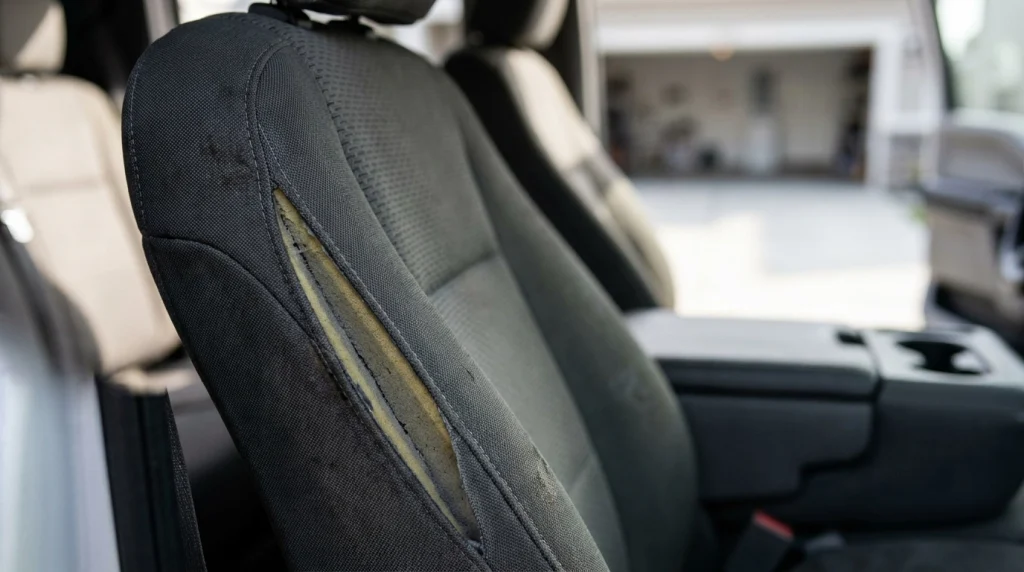
A replacement car seat cover is a new cover that fits over your vehicle’s factory seat. It replaces a worn cover, protects a good seat, or changes the look and feel of the cabin.
It is not the same as reupholstering a seat. Reupholstery removes the old fabric and fits new material to the foam and frame.
Is this about vehicle seats or child car seats?
This guide covers vehicle seats — driver, passenger, and rear seats. A child car seat is a separate safety device with its own rules.
Do not swap a child car seat cover for a random aftermarket cover. Use only a cover approved by the child seat maker, because the wrong fabric can change harness fit and crash performance.
Why do drivers replace a seat cover?
Most drivers replace a cover for one clear reason. The old one is torn, stained, faded, cracked, or smells after years of use.
- Torn seams: The bolster splits where you slide in and out each day.
- Stains and spills: Coffee, food, pets, and kids leave marks that will not lift.
- Sun damage: UV light fades colour and dries out leather and vinyl.
- Pet damage: Claws scratch fabric and leave hair in every seam.
- Fresh look: A new cover can lift a tired cabin without a full interior job.
I replaced the driver cover on a 2015 Ford F-150 after the outer bolster wore through. The seat foam was still fine, so a cover saved me hundreds of dollars.
Section takeaway: A replacement cover fits over your factory seat, and it works best when the foam, frame, and seat controls underneath are still in good shape.
Can You Buy Replacement Car Seat Covers? Where to Buy Them
Yes, you can buy them from many places. The best source depends on how exact you want the fit to be.
Start with your vehicle details. You need the year, make, model, trim, cab style, and seat type before you shop.
Where can you buy a replacement cover?
- Vehicle dealer: Best for an exact OEM match, but often the most expensive route.
- Custom cover makers: Best for a tailored fit, with fabric and colour choices.
- Auto parts stores: Good for universal and semi-custom sets you can see in person.
- Online retailers: Best range and price, but check fitment charts and return terms first.
- Upholstery shops: Best when you want a local fit, repair, or a full re-cover.
- Used parts sellers: Cheapest for an OEM cover, but check for wear, stains, and airbag damage.
I buy universal sets in store when I need a quick fix. I order custom covers online when I plan to keep the car for years.
What should you check before you order?
Check the seller’s fitment list for your exact vehicle. A cover listed for a 2019 Honda Civic sedan may not fit a 2019 Civic hatchback seat.
Read the return policy too. A cover that looks right in a photo can still bunch up on a wide bolster or a split rear seat.
Compare best car seat cover brands before you pick a seller, and note warranty length, fabric type, and airbag compatibility in your shortlist.
Section takeaway: You can buy a replacement almost anywhere, but the seller matters less than the fitment data, fabric, and return policy behind the listing.
What Are Your Main Replacement Options?
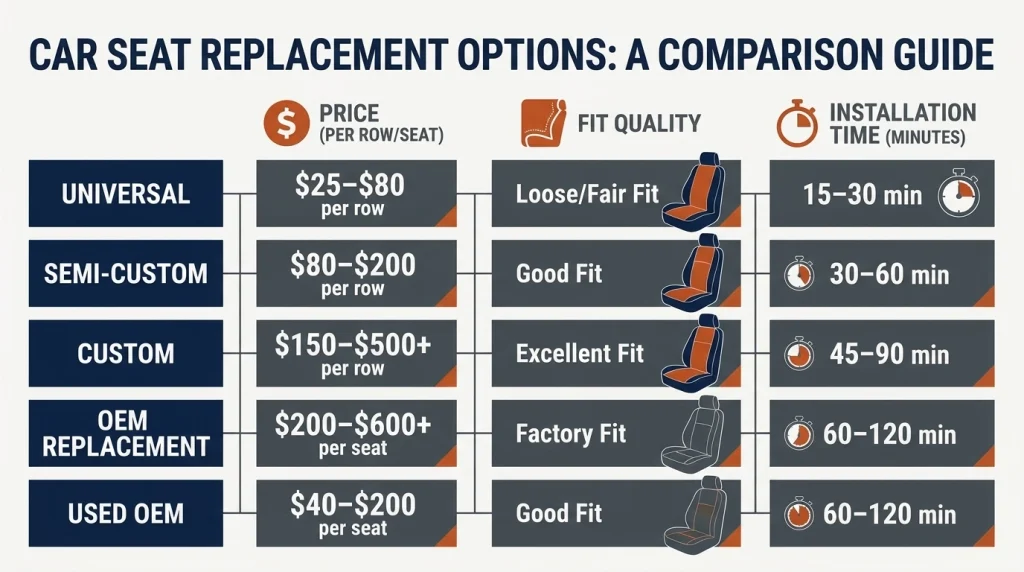
You have five main options, and each one trades price for fit. The table below gives you a fast side-by-side view.
| Option | Best for | Typical US price, as of 2026 | Fit | Install time |
|---|---|---|---|---|
| Universal | Quick, low-cost protection | $25–$80 per row | Loose to fair | 15–30 minutes |
| Semi-custom | Better fit without custom cost | $80–$200 per row | Good | 30–60 minutes |
| Custom | Long-term use and clean look | $150–$500+ per row | Excellent | 45–90 minutes |
| OEM replacement | Factory look and fit | $200–$600+ per seat | Excellent | 60–120 minutes |
| Used OEM | Low cost on an older car | $40–$200 per seat | Good if same trim | 60–120 minutes |
Prices vary by fabric, brand, and vehicle size. Leather, neoprene, and heavy-duty canvas cost more than basic polyester.
Universal car seat covers
Universal covers use elastic, straps, and hooks to fit many seat shapes. They are cheap, easy to find, and easy to remove for washing.
The trade-off is fit. They can shift on wide bolsters, bunch at the seat base, or leave gaps around the headrest.
See best universal car seat covers if you want a low-cost set that still holds up to daily use.
Semi-custom car seat covers
Semi-custom covers are cut for a vehicle model or seat family. They follow the seat shape more closely than a universal set.
They often include cutouts for headrests, armrests, and seat controls. That makes them a smart middle ground for most drivers.
Custom car seat covers
Custom covers are made to order for your exact seat. The maker uses your year, make, model, trim, and seat features to cut each panel.
They cost more and take longer to ship, often 1–3 weeks. The payoff is a snug fit, clean seams, and less sliding.
Compare best custom car seat covers when you want a cover that looks factory-fitted and stays put.
OEM and used OEM covers
An OEM cover is the factory part for your seat. It matches the original fabric, stitching, and airbag design.
A used OEM cover can work well on an older car. Check the donor car’s trim, seat type, and airbag side before you buy it.
Section takeaway: Universal covers save money, custom and OEM covers save frustration, and semi-custom covers give most drivers the best balance of price and fit.
How Do You Measure Your Seats and Choose the Right Fit?
Good fit starts with good measurements. A cover that is one inch too narrow will pull, and one that is too wide will fold.
Measure with the seat clean and dry. Push the headrest up, move the seat to a normal driving position, and use a soft tape measure.
What measurements do you need?
- Seat back width: Measure across the widest part, usually at the shoulder bolsters.
- Seat back height: Measure from the seat base seam to the top, without the headrest.
- Cushion width: Measure across the widest part of the seat base.
- Cushion depth: Measure from the front edge to the back seam.
- Headrest size: Note the width, height, and post spacing if the cover has a separate headrest piece.
Most front seats are 20–23 inches wide at the back and 19–22 inches wide at the cushion. Trucks and large SUVs often run wider, so check your own numbers.
What seat features change the fit?
Seat shape matters more than seat size alone. Sport seats, bucket seats, and bench seats all need different cuts.
- Split rear seats: Note a 60/40 or 50/50 split, plus the fold-down armrest.
- Built-in headrests: Some seats have fixed headrests that need a one-piece cover.
- Side bolsters: Deep bolsters need stretch fabric or a custom cut.
- Seat controls: Power levers, lumbar knobs, and side airbag tags all need clear access.
- Child seat anchors: ISOFIX or LATCH points must stay reachable in the rear seat.
For trucks, SUVs, and split rear seats, check best car seat covers for trucks before you order a front-only set by mistake.
How do you pick a material?
Material sets the feel, grip, and care routine. It also sets how hot the seat feels in summer.
- Neoprene: Water-resistant, grippy, and good for wet gear and pets.
- Leather and PU leather: Easy to wipe clean, but can feel hot and slippery.
- Canvas: Tough and breathable, with a work-truck feel.
- Polyester mesh: Light, cool, and easy to wash, but less plush.
- Sheepskin: Warm and soft in winter, but needs more care.
I use neoprene in a work truck and mesh in a daily commuter. The right fabric depends on how you use the car, not just how it looks.
Section takeaway: Measure the seat, note the split, bolsters, and controls, then match the material to your climate and daily use.
Do Replacement Covers Work With Airbags, Heated Seats, and Seat Controls?
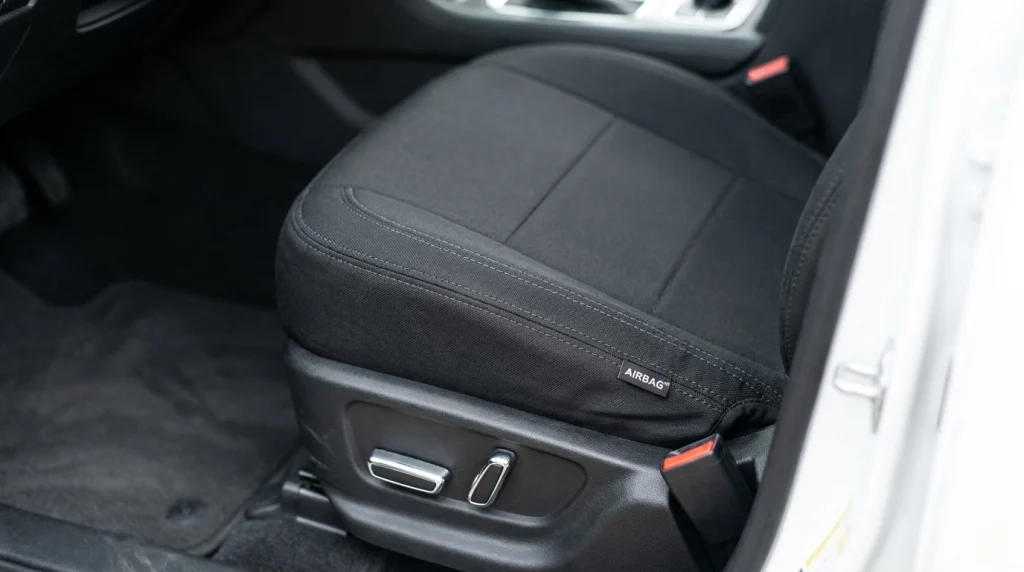
Yes, but only if the cover is made for those features. A cover that blocks an airbag seam or a heater sensor can cause a real problem.
Check your owner’s manual first. It shows where the side airbags sit and what the maker allows over the seat.
Are replacement covers safe with side airbags?
Many front seats have side airbags built into the outer bolster. The airbag must burst through a weak seam in the factory cover.
Choose a cover with an airbag-compatible seam on that side. Do not tuck, tape, or stitch over the airbag tag or seam.
Pro tip: Check your vehicle’s owner’s manual and the NHTSA recall lookup before you fit any cover over a seat with side airbags, and ask a certified mechanic if the airbag location is unclear.
Do covers work with heated and cooled seats?
Most thin covers work fine with heated seats. Thick, insulated covers can slow heat transfer and make the seat feel weak.
Cooled seats need airflow through the perforations. A solid vinyl or thick neoprene cover can block that airflow.
Test the heater on low for 10 minutes after fitting. If heat feels uneven or slow, try a thinner cover.
Will a cover block seat belts and controls?
A good cover leaves the buckle, belt path, and seat controls clear. A bad one hides them under a flap.
- Seat belt buckle: It must sit upright and click in without a fight.
- Power controls: Levers and buttons must move freely.
- Lumbar support: The knob or switch must stay reachable.
- Rear anchors: LATCH points must stay open for a child seat.
I once fitted a universal cover that covered the buckle on a 2018 Honda Civic. It took 10 minutes to fix, but it taught me to test every buckle before driving.
Section takeaway: Airbag-compatible seams, clear buckles, and free controls are not optional extras, so check them before you call the job done.
How Do You Fit, Check, and Look After a Replacement Cover?
Fitting is a 30–90 minute job for most cars. Take your time, and do the front seats first so you learn the pattern.
Work in daylight if you can. Good light helps you spot wrinkles, twisted straps, and blocked buckles.
How do you fit a replacement cover step by step?
- Clean the seat: Vacuum the seat and wipe it down, so dirt does not trap under the cover.
- Remove the headrest: Pull it up and out if your cover has a separate headrest piece.
- Fit the top first: Slide the cover over the seat back and centre it on the bolsters.
- Pull the base through: Push the lower flap between the seat back and cushion.
- Attach straps and hooks: Hook them under the seat, then tighten evenly on both sides.
- Refit the headrest: Push the posts through the cover holes and lock them in place.
- Smooth and test: Press out wrinkles, then test the buckles, controls, and seat slide.
Do not force a tight cover with a sharp tool. Warm the fabric in the sun for 20 minutes if it feels stiff.
How do you fix a loose or wrinkled cover?
Loose covers usually need tighter straps, not a new cover. Tighten the under-seat hooks first, then smooth the fabric from the centre out.
Wrinkles at the base often come from a flap that is too long. Fold it back once, then re-hook it so it sits flat.
How do you clean and care for a replacement cover?
Read the care label before you wash it. Some covers are machine-washable, while leather and neoprene need a wipe-down.
Vacuum weekly if you carry pets or kids. Spot-clean spills fast, so they do not soak into the foam below.
Learn how to wash a car seat cover without damaging it before your first wash, and air-dry it flat to avoid shrinkage.
Section takeaway: Fit the top first, tighten evenly underneath, test every buckle and control, and wash only as the care label allows.
Frequently Asked Questions
Can you buy a replacement car seat cover for just one seat?
Yes, most sellers sell front singles, front pairs, and rear sets separately. Order a single driver cover if only that seat is worn, and match the fabric to the other seats.
Are universal car seat covers worth it?
Yes, for short-term protection and low cost. They work well on standard seats, but they can shift on sport seats and wide truck bolsters.
How much do replacement car seat covers cost?
Universal sets often cost $25–$80 per row, semi-custom sets $80–$200 per row, and custom sets $150–$500+ per row. OEM covers cost more, often $200–$600+ per seat.
Can a seat cover damage my seats?
A clean, well-fitted cover should protect your seats. A loose cover can rub, trap dirt, and hide moisture, so check under it every few months.
Do I need a professional to fit a replacement cover?
No, most drivers can fit one at home in 30–90 minutes. Use a pro if the seat has airbags, power controls, or a tight custom fit.
Can I replace a child car seat cover with any cover?
No, use only a cover approved by the child seat maker. The wrong cover can change harness fit and safety, so check the manual first.
How long do replacement car seat covers last?
Most last 2–5 years with daily use. Neoprene and canvas often last longer, while thin polyester wears faster on the driver bolster.
Start with your measurements, pick the fit that matches how long you’ll keep the car, and test the airbags, buckles, and controls before you drive. A cover that fits well protects your seats and stays out of your way, and that’s the whole point.
If your old cover is torn or stained, order the replacement now and fit it this weekend. Your seats will thank you on the next long drive.

Daniel Brooks is an automotive writer and product researcher focused on car accessories, car tech, maintenance, and practical driving guides. At Plug-in Car World, he helps drivers make smarter automotive decisions through honest reviews and research-driven content.
