
Why Children Should Ride in the Back Seat: Safety Reasons Every Parent Should Know
Quick Answer
Children should ride in the back seat because it generally provides better protection from crash forces and reduces their exposure to front passenger airbag injuries. The American Academy of Pediatrics and the National Highway Traffic Safety Administration recommend keeping children younger than 13 in the rear seat. Parents should also use an age- and size-appropriate car seat, booster seat, or seat belt.
Learn more about child passenger safety.
The main safety reasons
- Airbag protection: Front airbags can seriously injure smaller children during deployment.
- Crash protection: The rear seat provides greater separation from many common frontal impacts.
- Child anatomy: Young children have developing bodies that need properly positioned restraints.
- Proper restraints: Rear-facing seats, forward-facing seats, and boosters help protect children at different growth stages.
- Better positioning: A correctly installed child restraint helps manage movement during sudden stops and collisions.
Remember
- Keep children properly restrained in the back seat until their 13th birthday.
- Never put a rear-facing car seat in front of an active passenger airbag.
- Follow your car seat manufacturer’s height, weight, and installation instructions.
When children start asking to sit in the front passenger seat, it’s tempting to let them move up, especially on short family trips. However, the front seat isn’t designed around the safety needs of younger passengers.
Understanding why children should ride in the back seat helps parents make safer decisions. I’ll explain how airbags, crash forces, child development, and properly fitted restraints affect passenger safety.
Why Is the Back Seat Safer for Children?
The back seat generally offers children better protection because it places them farther from the front of the vehicle, where many frontal crash impacts occur. It also keeps younger passengers away from the front passenger airbag.
These advantages matter because children aren’t simply smaller versions of adults. Their bodies have different proportions, and adult safety systems aren’t always suitable for them.
1. Greater distance from frontal impacts
In a frontal collision, the front of a vehicle absorbs much of the initial impact energy. Passengers in the front seating area can experience significant forces during this event.
The rear seating area provides additional separation from the front of the vehicle. This distance can help reduce a child’s exposure to certain direct impact hazards.
However, the back seat isn’t completely protected from crashes. Side impacts, rear impacts, and rollovers can still cause serious injuries.
2. Reduced exposure to front airbags
Front passenger airbags are designed to protect appropriately positioned adult occupants. Their rapid deployment can create dangerous forces for smaller passengers sitting too close.
A young child may be especially vulnerable because their head and upper body can be closer to the dashboard and airbag deployment area.
3. Better protection when paired with a suitable restraint
The rear seat works best when children use the correct restraint for their age, height, and weight. A suitable car seat or booster helps position the child’s body correctly.
Simply moving a child to the back seat doesn’t guarantee protection. Proper installation and correct harness or seat belt use remain essential.
How Can Front Airbags Injure Children?
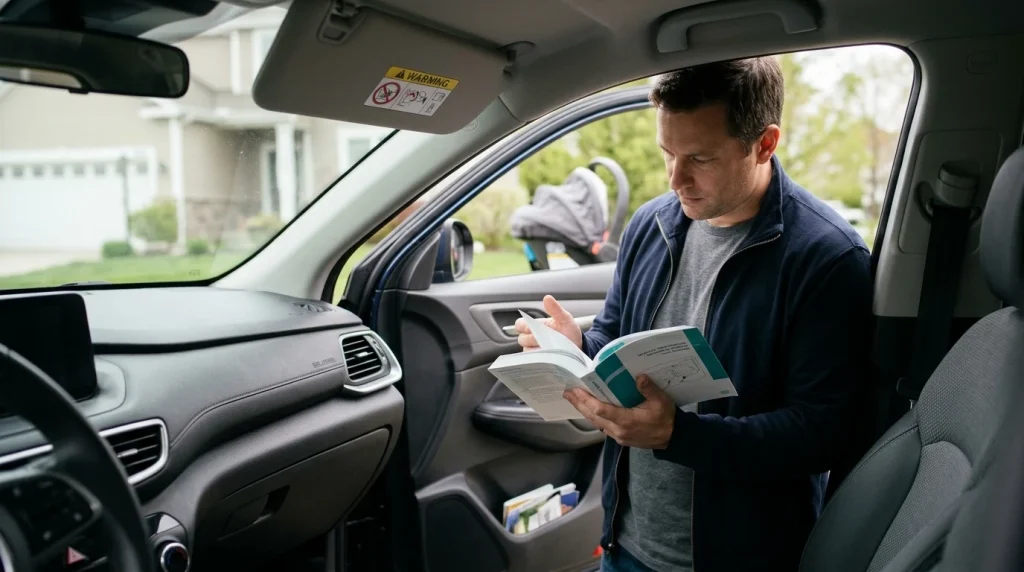
Front airbags can cause severe injuries to children because they inflate extremely quickly and with considerable force. A smaller child sitting too close to the dashboard may be struck before the airbag has fully inflated.
This is one of the most important reasons safety organizations recommend keeping children younger than 13 in the rear seat.
How an airbag deploys during a crash
An airbag is designed to inflate rapidly when a vehicle’s crash sensors detect certain collision conditions. It creates a cushioning surface between an occupant and parts of the vehicle interior.
For a properly positioned adult, this can reduce the risk of serious injury. However, the same deployment can create additional dangers for a small child.
Here are some potential injury areas:
- Head and face: Direct contact with a deploying airbag can cause serious facial or head injuries.
- Neck: A child’s developing neck may be vulnerable to the forces involved in sudden impact.
- Chest: Airbag contact can cause significant chest injuries, particularly in smaller passengers.
- Upper body: Improper seating position can increase the chance of harmful contact during deployment.
Why rear-facing car seats must never face an active airbag
A rear-facing car seat should never be installed in front of an active passenger airbag. During deployment, the airbag can strike the back of the child restraint directly.
This can produce extremely dangerous forces around an infant’s head and neck. Always install rear-facing restraints in an appropriate rear seating position.
Disabling an airbag should never be treated as a reason to routinely move a young child into the front seat. Follow the vehicle manufacturer’s instructions and applicable safety guidance.
Why Does a Child’s Age Matter When Choosing a Seat?
Age matters because children’s bodies develop over time, changing how they fit into vehicle seats and safety restraints. A restraint that works for a toddler may not provide the correct fit for an older child.
A child’s height and weight also matter. Parents should use the manufacturer’s limits rather than moving children into the next restraint stage simply because they have reached a particular birthday.
Rear-facing car seats for infants and toddlers
Rear-facing car seats support a young child’s head, neck, and back during a crash. They help distribute crash forces across a larger area of the child’s body.
Keep children rear-facing as long as possible, until they reach the maximum height or weight limit allowed by their car seat manufacturer.
Forward-facing car seats for growing children
After outgrowing their rear-facing restraint, children should move to a forward-facing car seat with a harness and top tether.
The harness helps keep the child’s body properly positioned during a collision. The top tether limits forward head movement when used according to the vehicle and car seat instructions.
Booster seats for older children
A booster seat raises a child so the vehicle’s lap and shoulder belt can fit correctly. It helps prevent the lap belt from riding across the stomach and the shoulder belt from crossing the neck or face.
Children should continue using a booster until the vehicle seat belt fits properly without one.
Regular seat belts for children who are ready
Older children can use the vehicle’s seat belt alone once they meet the correct fit requirements. Their backs should rest against the vehicle seat, with their knees bending naturally over the seat edge.
The lap belt should sit across the upper thighs, while the shoulder belt should cross the middle of the chest and shoulder.
What Are the Four Stages of Child Passenger Safety?
Child passenger safety generally follows four restraint stages: rear-facing seats, forward-facing seats, booster seats, and regular seat belts. Each stage serves a different purpose as children grow.
The CDC provides the following general guidance for families in the United States.
| Restraint stage | General age guidance | When to move on |
|---|---|---|
| Rear-facing car seat | Birth until approximately 2–4 years | When the seat’s maximum height or weight limit is reached. |
| Forward-facing car seat | After outgrowing rear-facing, until at least age 5 | When the forward-facing seat’s limits are reached. |
| Booster seat | After outgrowing the forward-facing seat | When the vehicle seat belt fits properly without a booster. |
| Regular seat belt | When the child meets the correct seat belt fit requirements | Continue using the rear seat until age 13. |
These age ranges are approximate, not strict deadlines. Children’s growth rates and car seat limits differ, so always check the restraint’s instructions.
Why Should Children Stay in the Back Seat Until Age 13?
Children younger than 13 should generally remain in the back seat because they may still be vulnerable to front airbag injuries and other front-seat crash hazards. This recommendation applies even when an older child appears physically large enough to sit in the front.
The National Highway Traffic Safety Administration and American Academy of Pediatrics both support this recommendation.
Age alone doesn’t determine front-seat readiness
A child might be tall for their age but still benefit from the additional protection of the rear seating position. Physical size doesn’t remove the risks associated with airbag deployment.
Parents should also remember that moving out of a booster seat doesn’t automatically mean a child is ready for the front passenger seat.
What if a child insists on sitting in front?
It’s common for older children to want the same seating privileges as adults. They may feel more independent or believe the front seat is more comfortable.
Parents can explain that the rule is about protection, not punishment. A consistent family rule also makes it easier to avoid arguments before every journey.
- Explain the reason: Describe how airbags and crash forces can affect smaller passengers.
- Set a clear rule: Keep everyone younger than 13 in the back seat.
- Offer choices: Let children choose their preferred rear seating position when appropriate.
- Set an example: Always wear your own seat belt and follow vehicle safety rules.
Is the Middle Back Seat the Safest Place for a Child?
The middle rear seating position can provide additional protection because it places a passenger farther from the vehicle’s sides. However, it isn’t automatically the safest position in every vehicle.
The actual safety of a seating position depends on its available restraint system and whether the child’s car seat can be installed correctly.
Advantages of the middle rear position
When a suitable restraint can be installed correctly, the center rear position can offer additional distance from side-impact intrusion.
This can be useful when choosing between otherwise suitable rear seating positions.
When an outer rear seat may be a better choice
Some vehicles have a center seat with limited space, unusual seat belt arrangements, or no lower anchor connectors. These limitations can make correct car seat installation difficult.
A properly installed restraint in an outer rear position is preferable to an incorrectly installed restraint in the middle.
Before choosing a position, check:
- Whether the vehicle allows the intended installation method.
- Whether the seat belt or lower anchors are compatible with the car seat.
- Whether the child restraint sits securely without interfering with nearby seats.
- Whether the child can be properly buckled and unbuckled.
Does the Back Seat Protect Children in Every Type of Crash?
The back seat generally offers important safety advantages, but it doesn’t eliminate every crash-related risk. Different collisions affect vehicle occupants in different ways.
Understanding these differences helps parents avoid assuming that seating position alone guarantees protection.
Frontal collisions
Frontal crashes involve an impact toward the front of the vehicle. The back seat can provide greater separation from the initial impact area and the front passenger airbag.
Side-impact collisions
Side-impact crashes can cause serious injuries because the area between an occupant and the striking vehicle is relatively small. The center rear position may provide additional distance from a side impact when the restraint can be installed properly.
Rear-end collisions
Rear-end crashes can affect passengers in every seating row. A correctly installed child restraint and properly secured harness remain important regardless of the direction of impact.
Vehicle rollovers
During a rollover, occupants can experience multiple impacts and potentially dangerous movement inside the vehicle. Proper restraints help keep children secured in their seating positions.
For every crash type, the most important approach is to combine the appropriate seating position with a correctly fitted restraint.
How Can Parents Make the Back Seat Safer for Children?
Parents can improve child passenger safety by choosing the correct restraint, installing it properly, and checking how the child fits as they grow. Small mistakes in everyday use can reduce the protection a restraint is designed to provide.
Use this practical checklist before traveling.
1. Check the car seat installation
Follow both the vehicle owner’s manual and the child restraint manufacturer’s instructions. They explain which installation methods and seating positions are permitted.
For most installations, the car seat should not move more than one inch from side to side or front to back when checked at the belt path, according to the relevant installation guidance.
2. Secure the harness correctly
Make sure the harness fits snugly against the child’s body. Remove bulky clothing that could interfere with proper harness positioning.
Follow the specific harness height and chest clip instructions for your restraint.
3. Use the top tether when required
Forward-facing car seats should use their top tether according to the manufacturer’s instructions. This component helps limit forward movement of the child’s head during a crash.
4. Check seat belt positioning
Older children who no longer need boosters still require proper seat belt positioning. The lap belt should sit low across the upper thighs, not across the stomach.
The shoulder belt should cross the chest and shoulder. Never allow children to put the shoulder belt behind their backs or underneath their arms.
5. Inspect the restraint regularly
Check for damaged straps, missing components, loose fittings, and manufacturer recalls. Also review the expiration date and replacement instructions.
6. Buckle children on every trip
Even a short drive can involve sudden braking or an unexpected collision. Make proper restraint use a routine rather than something reserved for highways or long journeys.
What Common Mistakes Put Children at Risk in the Car?
Some parents follow the back-seat recommendation but overlook other important safety details. These mistakes can reduce the effectiveness of an otherwise suitable child restraint.
- Moving forward-facing too early: Children should remain rear-facing until they reach the restraint’s permitted height or weight limit.
- Removing the booster prematurely: A child who cannot pass the proper seat belt fit checks still needs a booster.
- Using an incorrect installation method: Not every seating position supports every installation method.
- Allowing loose harness straps: Loose straps can prevent the restraint from holding the child properly.
- Ignoring airbag warnings: Never place a rear-facing restraint in front of an active passenger airbag.
- Sharing seat belts: Every passenger needs an individual appropriate restraint.
- Assuming short journeys are harmless: Children need proper restraints on every trip.
What If a Child Must Ride in the Front Seat?
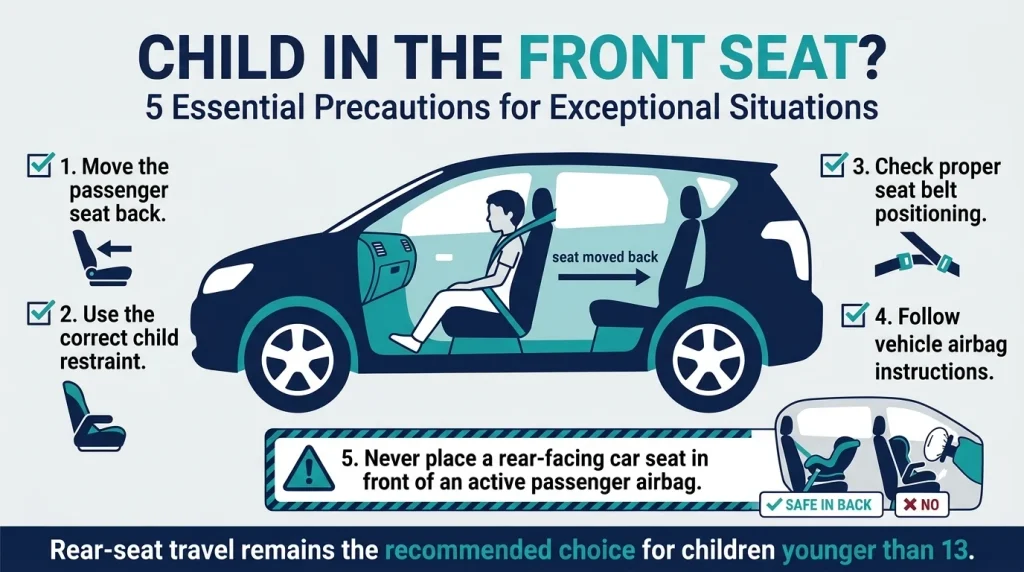
Keeping children younger than 13 in the rear seat is the recommended approach. However, unusual vehicle layouts or genuine emergencies may create situations where no suitable rear seating position is available.
If an older child must ride in front, consult the vehicle and child restraint manufacturers’ instructions and follow local requirements.
- Move the passenger seat as far back as the vehicle manufacturer recommends.
- Use the correct restraint for the child’s age, height, and weight.
- Ensure the lap and shoulder belt fit properly.
- Follow the vehicle’s airbag instructions and warnings.
- Never place a rear-facing car seat in front of an active passenger airbag.
These precautions don’t make front-seat travel equivalent to the recommended rear-seat arrangement. They are considerations for exceptional circumstances, not a reason to move children forward early.
What Should Parents Remember About Back-Seat Safety?
The most important lesson is that child passenger safety involves more than choosing where a child sits. The seating position, restraint type, installation, and proper fit all work together.
For families, the safest routine is straightforward: keep children in the rear seat until age 13, use the appropriate restraint for their growth stage, and buckle them correctly on every journey.
As vehicle technology and child restraint designs continue to evolve, it’s worth reviewing current safety guidance and manufacturer instructions. The CDC, NHTSA, and American Academy of Pediatrics provide useful resources for parents making these decisions.
Frequently Asked Questions
1. At what age can a child sit in the front seat?
The NHTSA recommends that children younger than 13 ride in the back seat. A child’s height alone doesn’t override this recommendation because younger passengers can remain vulnerable to airbag-related injuries. Always follow local laws and vehicle safety instructions.
2. Is the back seat safer than the front seat for toddlers?
Yes. The back seat is the recommended seating area for toddlers because it keeps them away from the front passenger airbag and provides greater separation from many frontal impacts. Toddlers should also use an appropriate rear-facing or forward-facing restraint according to its limits.
3. Should a 12-year-old still ride in the back seat?
Yes. Children should remain in the rear seat until they reach age 13 under NHTSA and AAP safety recommendations. Even if a 12-year-old is tall enough to use an adult seat belt, the rear seat remains the recommended location.
4. Is the middle back seat always the safest position?
Not necessarily. The middle rear seat can provide additional distance from side impacts, but only when the child restraint can be installed correctly. A properly secured car seat in an outer rear position is preferable to an improperly installed one in the center.
5. Can a child use a regular seat belt in the back seat?
Yes, once the child has outgrown their booster seat and the vehicle’s seat belt fits correctly. The lap belt should cross the upper thighs, and the shoulder belt should cross the chest and shoulder. Children should continue riding in the back seat until age 13.
Final Takeaway: Make the Back Seat the Family Safety Rule
Keeping children in the back seat is one of the simplest ways parents can follow established child passenger safety recommendations. It reduces their exposure to front airbag hazards and provides an important safety advantage during many types of collisions.
Remember that the right car seat, correct installation, and proper seat belt positioning matter just as much as seating location. Make these habits part of every family journey, whether you’re driving around the neighborhood or traveling across the country.
A few extra minutes spent checking your child’s restraint can make a meaningful difference. When it comes to protecting young passengers, the safest choice is worth making every time.

Daniel Brooks is an automotive writer and product researcher focused on car accessories, car tech, maintenance, and practical driving guides. At Plug-in Car World, he helps drivers make smarter automotive decisions through honest reviews and research-driven content.
