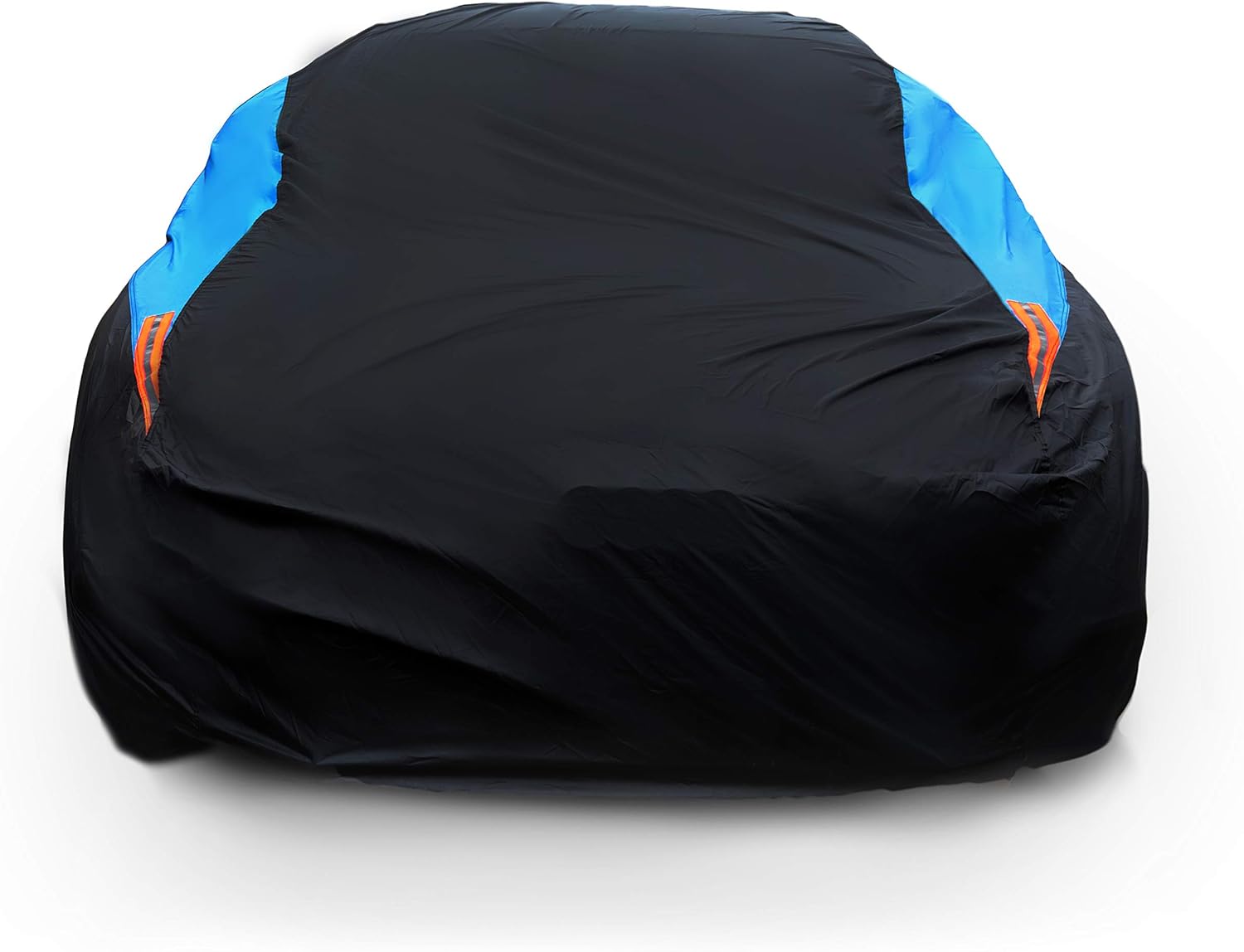
How to Safely Remove Snow From a Car Cover
⚡ Quick Answer
Clearing snow off a fitted car cover is quick and safe if you use a soft foam brush, not a shovel or stiff broom. Pull snow downward off the cover in one motion, working top to bottom, before it packs down or freezes solid against the fabric.
Removal Steps
-
1
Brush the roof first, then hood and trunk -
2
Push snow off in one direction, not side to side -
3
Remove heavy loads early before they compress
Mistakes to Avoid
-
✓
Never use a metal shovel or stiff broom -
✓
Don’t yank a frozen cover — it can tear -
✓
Skip hot water — it refreezes and adds weight
Your driveway looks like a snow globe exploded overnight, and somewhere under that white mound is your car cover doing its job. Grabbing a shovel feels like the fastest fix, but one wrong scrape can tear the fabric or scratch the paint hiding underneath it.
I’m Daniel Brooks, and I’ve pulled more frozen covers off more hoods than I care to count. The good news: removing snow from a car cover the right way takes just a few extra minutes and the right tool.
Get this step wrong, though, and you risk a torn or frozen cover that costs more to replace than the time you saved this morning.
📌 Key Takeaways
-
→
Foam brushes remove snow without scratching paint or tearing cover fabric. -
→
Brushing the roof first stops snow from sliding onto areas you already cleared. -
→
A dry cover before snowfall resists freezing to the vehicle body overnight. -
→
Metal shovels and stiff brooms puncture and rip cover fabric fast. -
→
Some states fine drivers up to $1,500 for uncleared roof snow.
How to Remove Snow From a Car Cover Safely
Removing snow from a car cover safely means using a soft, non-abrasive tool and working with gravity, not against it. Start at the roof and let each stroke carry snow off the edge, rather than piling it into corners where it packs down.
Skip anything with a hard edge. Metal shovels, ice scrapers, and stiff-bristle brooms can rip fitted cover fabric or press it hard enough into the paint to leave swirl marks.
A foam-headed snow brush glides over the surface instead of digging into it. Work in this order every time: roof, hood, trunk, then sides.
🔢 Step-by-Step: Clearing the Cover
-
1
Start at the roof
Brush the highest point first so falling snow doesn’t re-bury cleared areas below.
-
2
Sweep in one direction
Pull snow toward an edge instead of scattering it side to side.
-
3
Move to hood and trunk
Clear the flattest panels next while your rhythm is set.
-
✓
Finish the sides
Light strokes here avoid pressing snow into door seams. Your cover is clear.
Recommended Product
SNOBRUM – Snow Remover for Cars and Trucks, 28 to 63 Inch Automotive Snow Brush with Foam Head, Push-Broom Design
★★★★☆ 4.4 stars, 2,020+ ratings on Amazon
The foam head is exactly the kind of non-abrasive tool a fitted car cover needs, and the telescoping handle reaches the roof without you climbing on the bumper.
As an Amazon Associate, we earn from qualifying purchases.
Not every snow tool belongs near a car cover. Here’s a quick comparison of what to reach for and what to leave in the garage.
But brushing snow off is only half the battle. If your cover freezes to the car overnight, none of this works until you thaw it first.
Why Does a Car Cover Freeze to the Car?
A car cover freezes to your vehicle when residual heat from the engine or body creates moisture, and that moisture gets trapped between the fabric and the paint. As temperatures drop overnight, the trapped moisture turns to ice and bonds the cover directly to the surface below it.
This happens most often right after a drive. A warm engine and warm tires push heat into the air around the car, and covering it too soon seals that warm, damp air underneath like a mini greenhouse.
📋 What Causes the Freeze
-
Residual engine heat: Covering right after driving traps warm, moist air under the fabric. -
A dirty or wet body: Dirt and water droplets act as anchor points for ice crystals. -
No air gap: A cover pulled flush against the paint has nowhere for moisture to escape.
None of this means you should skip the cover. It just means timing and prep matter more than most drivers realize.
How to Stop Your Car Cover From Freezing Overnight
Preventing a frozen cover starts before the snow even falls. Dry the car fully, wait for the engine to cool, and create a small air gap between the fabric and the paint.
Three habits make the biggest difference: drying the body first, waiting roughly 30 minutes after driving before covering, and placing soft padding under the cover on the roof and hood.
✓ Pre-Storm Checklist
-
✓
Dry the car completely with a microfiber towel before covering it -
✓
Wait about 30 minutes after driving for the body to cool -
✓
Apply a wax or sealant before winter for a hydrophobic surface -
✓
Place foam pads or balls under the cover on the roof and hood -
✓
Choose a cover rated for winter, not a basic dust cover
Even with every precaution, cold snaps still catch some covers off guard. Here’s what to do if yours freezes solid anyway.
What to Do If Your Cover Is Already Frozen Stuck
If your cover is frozen to the car, don’t pull. Yanking a stuck cover tears the fabric and can lift paint that’s bonded to the ice underneath it.
Warm the bonded areas gently instead. A few minutes of patience here saves you a torn cover and a scratched hood.
🔢 Step-by-Step: Freeing a Frozen Cover
-
1
Run the defroster
Start the engine and let warm air circulate for 5 to 10 minutes.
-
2
Warm the edges
Pour lukewarm water along frozen seams to loosen the bond.
-
✓
Ease the fabric free
Gently lift small sections rather than pulling the whole cover at once.
⚠️ Warning
Never use hot or boiling water. It can crack cold glass and often refreezes instantly in sub-zero air, making the problem worse.
Do Car Covers Actually Protect Against Snow and Frost?
Yes, a quality car cover protects against snow, frost, and the road salt that comes with winter driving. It creates a physical barrier that stops ice crystals from bonding directly to your paint.
Covers designed for winter use also block moisture from pooling on the body, which cuts down on rust and corrosion over time.
✅ Pros
-
+
Blocks ice from bonding directly to paint -
+
Reduces salt and corrosion exposure -
+
Cuts down on morning scraping time
⚠️ Cons
-
−
Can freeze to the car if put on wet -
−
Needs regular drying to avoid mold -
−
Heavy wet snow adds real weight strain
Protecting your paint is one thing. But leaving snow on the roof isn’t just a cover problem — it’s the law in a lot of states.
Is It Illegal to Leave Snow on Your Car?
Yes, in many U.S. states, driving with snow or ice left on your roof, hood, or trunk is illegal, whether or not your car sits under a cover overnight. The law in Pennsylvania requires drivers to remove accumulated ice or snow from their vehicle, including the hood, trunk, and roof, within 24 hours after a storm ends, and this applies to all vehicles.
AAA notes that drivers in many states, spanning the Northeast, mid-Atlantic, and Midwest, must clear snow and ice from the entire vehicle, not just the windshield. Fines vary widely depending on where you live and whether the snow causes an accident.
24 hrs
Typical legal window to clear roof snow
$50
Base fine in Pennsylvania for a first offense
$1,500
Possible fine if flying snow causes injury
A cover helps you avoid this problem entirely, since it comes off in one clean motion instead of leaving patches of packed snow behind. Check AAA’s state-by-state snow removal law guide or PennDOT’s winter driving safety tips to see what applies where you live.
Drying and Storing Your Cover After a Snowstorm
Once the snow is off, don’t just fold the cover away wet. Trapped moisture inside a stored cover breeds mold and mildew before you need it again.
Give it a few hours to air dry, ideally somewhere above freezing, before folding it into its storage bag.
✓ After-the-Storm Checklist
-
✓
Shake off loose snow before removing the cover from the car -
✓
Hang or lay the cover flat somewhere dry for a few hours -
✓
Check for holes or worn seams before the next storm -
✓
Store it in a breathable bag, not a sealed plastic bin
What Most People Get Wrong About Removing Snow From a Car Cover
A stiff broom seems harmless for light snow, but even a light dusting can grind grit into the fabric and wear it thin over a season.
Hot water feels like a shortcut for a frozen cover. In practice, it can crack cold glass or refreeze instantly the moment it hits freezing air.
Plenty of drivers assume any tarp works as well as a real car cover. Plain tarps trap moisture and flap loose in wind, causing more paint damage than a properly rated winter cover ever would.
A car cover only protects your paint if you treat the snow removal step with the same care. Use a foam brush, work top to bottom, and give the cover time to dry before you fold it away. The extra five minutes you spend doing this right is cheaper than a torn cover or a scratched hood come spring. Right now, go check that your cover is fully dry before the next storm rolls in.
Frequently Asked Questions
Can I use a leaf blower to clear snow off a car cover?
A leaf blower works fine on light, dry powder and won’t touch the fabric. It struggles with wet or packed snow, though, so keep a foam brush handy as a backup for heavier storms.
Why does my car cover keep freezing to the car?
It usually freezes because you covered the car while it was still warm or damp. That trapped moisture turns to ice overnight. Dry the body and wait about 30 minutes after driving before covering it.
What’s the best tool for removing snow from a car cover?
A foam-headed snow brush is the safest choice. Its non-abrasive head glides over fabric without tearing it or scratching the paint underneath, unlike shovels or stiff-bristle brooms.
Is it safe to pour water on a frozen car cover?
Only lukewarm water is safe, and only along frozen edges. Hot or boiling water can crack cold glass and often refreezes instantly in freezing air, making the cover harder to remove.
Do car covers protect against frost?
Yes, a quality car cover blocks frost from forming directly on your paint and windows. It won’t stop frost from forming on the cover’s outer surface, but your car body stays clear underneath.
How long can snow legally stay on my car roof?
In states with specific laws, like Pennsylvania and New Jersey, you generally have 24 hours after a storm ends to clear the roof, hood, and trunk before you risk a fine.
Should I remove my car cover every time it snows?
Not necessarily. If the cover is holding up well and the snow load isn’t heavy, you can brush the top layer off without fully removing it. Take it off if snow gets too heavy or wet.

Daniel Brooks is an automotive writer and product researcher focused on car accessories, car tech, maintenance, and practical driving guides. At Plug-in Car World, he helps drivers make smarter automotive decisions through honest reviews and research-driven content.