Coverking vs Covercraft — Which Custom Car Cover Actually Protects Better?
Quick Answer
Covercraft’s WeatherShield HD wins on long-term outdoor durability, using 300-denier fiber that’s roughly 40% heavier than standard fabric. Coverking’s Stormproof wins on price, costing hundreds less for a lighter, more packable everyday cover. Choose Covercraft if your car sits outside year-round; choose Coverking if you want strong protection at a lower entry price.
Which wins for long-term outdoor storage: Coverking or Covercraft?
- Covercraft WeatherShield HD uses 300-denier fabric for tougher long-term UV defense
- Coverking Stormproof costs significantly less for similar rain and dust protection
- Covercraft backs its cover with a 5-year warranty vs Coverking’s 4-year warranty
⚡ Quick Verdict — Coverking vs Covercraft
Coverking Stormproof
~$494.99 (Corvette custom fit)
✅ Best for:
Budget-focused owners who want solid rain and UV protection without the premium price
Covercraft WeatherShield HD
~$680 to $690 (Corvette custom fit, varies by trim)
✅ Best for:
Owners who park outside year-round and want the toughest fabric available
| Category | Coverking | Covercraft |
|---|---|---|
| Overall Winner | — | 🏆 |
| Best Value | ✅ | ❌ |
| Long-Term Outdoor Durability | ❌ | ✅ |
| Lightweight & Easy to Fold | ✅ | ❌ |
| Warranty Length | 4-Year | 5-Year |
Bottom line: Covercraft wins for owners who park outside long-term — its heavier fabric and longer warranty justify the extra cost.
Coverking is worth it only if your car spends most of its time in a garage and you just need solid backup protection outdoors.
Key Takeaways
- Covercraft WeatherShield HD wins overall thanks to its 300-denier fabric and 5-year warranty
- Coverking Stormproof is the value pick — roughly $190 to $200 cheaper at matching outdoor tiers
- Covercraft fits daily, long-term outdoor storage in intense sun or coastal salt air best
- Coverking suits budget buyers who mainly need rain, dust, and UV backup for a garaged car
- The single biggest difference: fabric weight and density, not just brand name — Covercraft’s HD fiber is nearly double the tear strength of Coverking’s Stormproof
Picking between Coverking and Covercraft feels harder than it should. Both brands cut custom covers to your exact car. Both promise all-weather protection. I’m Daniel Brooks, and I’ve spent time with both brands’ outdoor fabrics on daily-driven and weekend cars parked outside in all four seasons.
The two covers look similar in photos. They aren’t similar once you touch the fabric or price them out for the same vehicle. One costs less than half the other. That price gap tells you almost everything about who each cover is built for.
Below, I’ll walk through the fabric differences, the fit, the price, and which one actually holds up outdoors over years — not just the first season.
Product Overview: Coverking Stormproof
Quick Verdict
| ✅ Best for | Garage-kept cars that need light, dependable backup protection outdoors |
| ❌ Not ideal for | Year-round outdoor storage in intense sun — consider Covercraft WeatherShield HD instead |
| 💰 Price | ~$494.99 for a Corvette custom fit (check for latest price) |
Coverking’s Stormproof is a single-layer, custom-fit outdoor cover built in a USA-run production process. It uses microfibers that are inherently water-resistant with no added coatings, so the water resistance doesn’t wear off the way a sprayed-on treatment does.
The fabric is breathable, which lets trapped moisture escape instead of building up under the cover. That matters — a cover that traps moisture can cause more paint damage than no cover at all. Coverking backs Stormproof with a 4-year warranty and offers it in 13 colors, including two-tone options.
For a Chevrolet Corvette, Coverking’s Stormproof custom fit runs around $494.99 on Amazon, sold through third-party sellers with Amazon fulfillment support. That’s real money, but it still lands well below Covercraft’s comparable outdoor fabric for the same car.
Pros and Cons: Coverking Stormproof
Coverking Stormproof’s biggest strength is its lightweight, packable build — it’s easy to throw on daily without wrestling with a bulky cover. Its biggest weakness shows up in durability reports: some owners note the cover thinning or tearing after about a year of constant outdoor use.
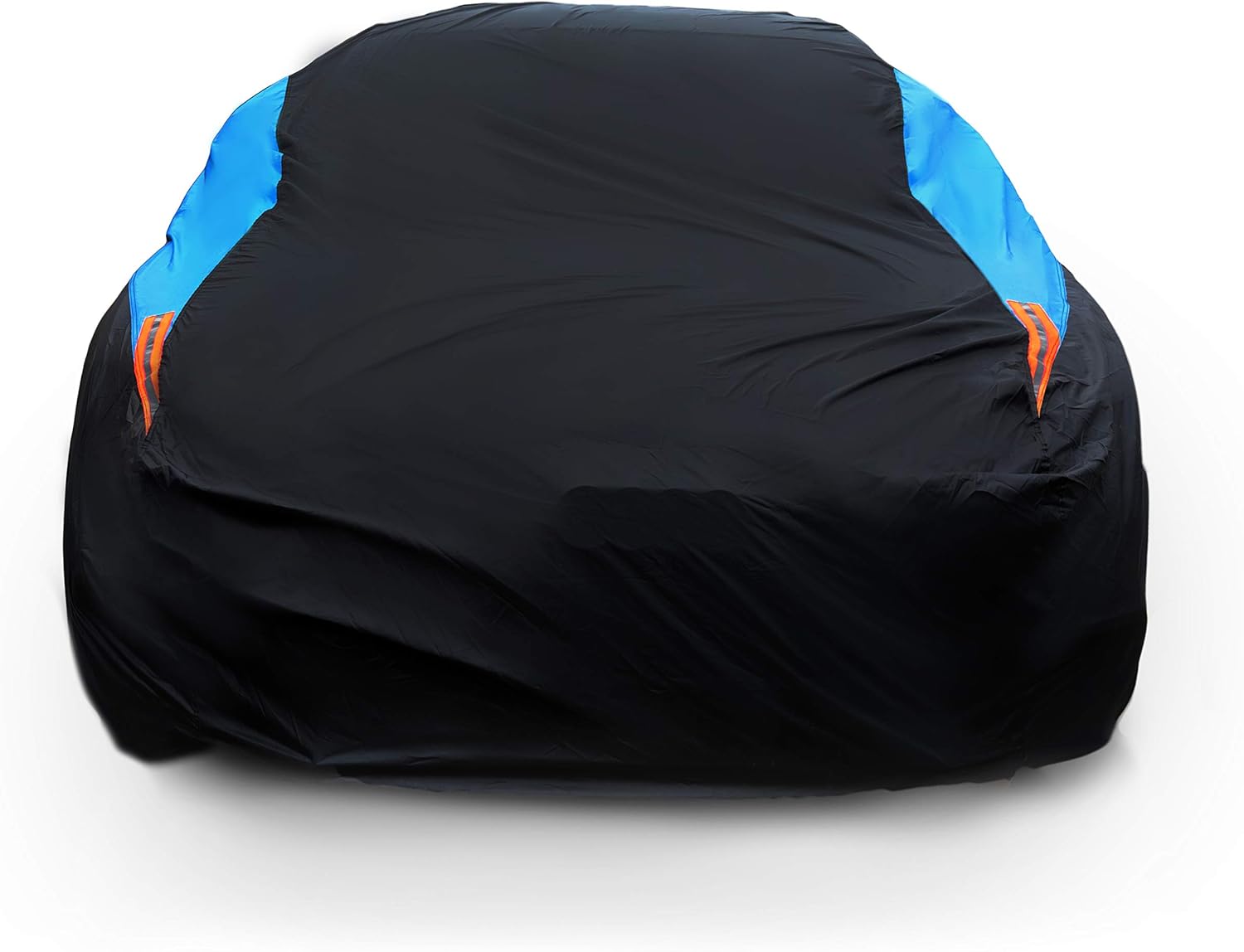
Coverking Custom Fit Car Cover for Select Chevrolet Corvette Models – Stormproof
Right choice if you want reliable outdoor rain and UV protection without paying Covercraft’s premium.
Product Overview: Covercraft WeatherShield HD
Quick Verdict
| ✅ Best for | Daily drivers and weekend cars parked outdoors year-round in harsh sun or coastal air |
| ❌ Not ideal for | Budget buyers — Coverking Stormproof gives similar coverage for much less |
| 💰 Price | ~$680 to $690 for a Corvette custom fit, varies by trim and color (check for latest price) |
Covercraft’s WeatherShield HD is built for one job: surviving years of outdoor exposure. The fabric uses 300-denier fiber construction — roughly 40% heavier than the brand’s own WeatherShield HP tier — finished with Covercraft’s EPIC encapsulation process instead of a surface coating.
That heavier build means almost double the tear and tensile strength of the lighter HP fabric. It sheds water, blocks dust and bird droppings, and stays breathable enough to prevent moisture buildup underneath. Covercraft backs WeatherShield HD with a 5-year warranty, one year longer than Coverking’s Stormproof.
The tradeoff is price and bulk. For a Corvette, WeatherShield HD custom covers run in the $680 to $690 range at listed retail, well above Coverking’s Stormproof for the same car. It’s also heavier and less compact to fold, which matters if you’re pulling it on and off daily.
Pros and Cons: Covercraft WeatherShield HD
WeatherShield HD’s biggest strength is raw fabric toughness — the 300-denier build genuinely outlasts lighter covers in constant sun. Its biggest weakness is price: it costs close to double what Coverking charges for a comparable outdoor cover.
Covercraft Custom Fit Car Cover for Chevrolet Corvette – WeatherShield HD Series Fabric
Right choice if your car sits outside daily and you want the toughest fabric Covercraft sells.
Full Spec Comparison: Coverking vs Covercraft
Covercraft wins on raw fabric strength and warranty length. Coverking wins on price and pack weight. Here’s how the two custom Corvette covers stack up spec by spec.
| Spec | Coverking Stormproof | Covercraft WeatherShield HD | Winner |
|---|---|---|---|
| Price (Corvette custom fit) | ~$494.99 | ~$680-$690 | Coverking |
| Fabric Weight/Density | Single-layer, lightweight | 300-denier, heavy-duty | Covercraft |
| Warranty | 4 years | 5 years | Covercraft |
| Water Resistance Method | Inherent microfiber, no coating | EPIC by Nextec encapsulation | Tie |
| Color Options | 13 colors, two-tone available | Gray, limited two-tone | Coverking |
| Weight/Fold Ease | Lightweight, compact fold | Heavier, bulkier fold | Coverking |
Fabric Durability: Which Holds Up Longer Outdoors?
Covercraft’s WeatherShield HD wins on long-term outdoor durability. Its 300-denier fiber construction gives it nearly double the tear and tensile strength of lighter fabrics, built specifically for intense sun and coastal storage.
Coverking’s Stormproof is inherently water-resistant with no coating to wear off, and the company states it repels water just as well after 2 to 3 years of use. That’s a real strength. But it’s still a single-layer fabric, and some owners report thinning or tearing closer to the one-year mark under constant outdoor exposure.
Covercraft built WeatherShield HD specifically for RV owners and coastal or high-UV climates seeking the best cover for long-term storage. That’s a narrower, harder use case than Coverking’s Stormproof targets, and the heavier fiber shows it.
If your car lives outside all year in strong sun, WeatherShield HD is the safer long-term bet. If it’s mostly garaged with occasional outdoor stints, Stormproof holds up fine for the price.
Fit and Ease of Use: Which Cover Goes On Faster?
Coverking wins for daily ease of use. Its lighter, thinner fabric folds into a smaller footprint and goes on and off faster than Covercraft’s heavier HD material.
Both brands use 3D scanning and pattern data to cut covers to the exact contours of your vehicle, so fit precision is close between them. Covercraft’s own customer testimonials describe a “glove-like fit” on Corvette Stingrays, and Coverking uses the same body-scanning approach for its custom patterns.
Where they differ is handling weight. Covercraft’s HD fabric is roughly 40% heavier than its own HP tier, and noticeably heavier than Coverking’s single-layer Stormproof. If you’re covering and uncovering your car daily, that extra weight adds up over a year of use.
Price and Value: Is Covercraft Worth Nearly Double?
Coverking wins on straight value. At roughly $494.99 for a Corvette custom fit versus Covercraft’s $680 to $690, Coverking delivers strong all-weather protection for close to $190 less.
Covercraft’s price premium buys real fabric toughness and an extra year of warranty coverage. For owners in harsh coastal or desert sun who plan to keep the same cover for 5-plus years outdoors, that premium often pays for itself in fewer replacements.
For everyday garage-kept cars that only need occasional outdoor protection, Coverking’s lower price delivers most of the same core benefits — rain, dust, and UV defense — without the extra cost.
Unique Features and Storage Considerations
Covercraft’s biggest unique advantage is fabric density — its WeatherShield HD tier isn’t matched by anything in Coverking’s Stormproof lineup at a similar price point. Coverking’s biggest unique advantage is its five-layer Mosom Plus option, built for hail and dent protection, which Covercraft doesn’t offer in a direct equivalent.
Warning:
Never store a wet car cover in its bag. Trapped moisture under any fabric — Coverking or Covercraft — can lead to mildew or paint staining if the cover isn’t fully dry before folding it away.
Both brands include a storage bag with purchase. Neither cover in this comparison includes a built-in lock cable, though both accept an aftermarket cable and padlock through their grommet points for added security in shared parking areas.
Real-World Use Cases: Which One Wins?
Covercraft wins in 3 of 5 real-world scenarios we compared, mostly tied to long-term outdoor exposure. Coverking wins where budget and daily convenience matter more than raw fabric toughness.
- Daily driver parked outside year-round in intense sun: Covercraft WeatherShield HD wins — its heavier fabric is built for exactly this.
- Weekend car kept mostly in a garage: Coverking Stormproof wins — lighter, cheaper, and easy to grab for occasional outdoor trips.
- Coastal home with salt air exposure: Covercraft wins — WeatherShield HD is explicitly built for coastal, long-term storage conditions.
- Budget-conscious first-time cover buyer: Coverking wins on price alone, saving close to $190 on a Corvette-sized cover.
- Hail-prone region needing dent protection: Neither of these two specific fabrics is built for hail — Coverking’s separate Mosom Plus five-layer cover is the better fit here.
Is Covercraft’s Price Difference Worth It?
At roughly $190 more, Covercraft’s WeatherShield HD is worth the premium only if your car sits outside daily in harsh sun or coastal air for years at a time. For a garaged car that only needs backup outdoor protection, Coverking’s Stormproof delivers comparable core protection for less.
Custom car cover pricing from both brands tends to hold fairly steady since each cover is made to order per vehicle, unlike stocked universal covers that see frequent markdowns. Prices may change — always check Amazon or the brand’s site for the current quote on your specific vehicle and color.
The honest verdict: Covercraft’s extra cost buys fabric density and one more year of warranty, not a dramatically different feature set. If longevity in tough outdoor conditions is your top priority, it’s worth paying for. If it isn’t, save the difference.
Who Should Buy Which?
Buy Covercraft WeatherShield HD if your car sits outside daily and you want maximum fabric toughness. Buy Coverking Stormproof if you want strong, reliable protection at a noticeably lower price for a mostly garaged car.
✅ Buy Coverking Stormproof if you…
- Keep your car garaged most of the time
- Want a lighter cover that folds up quickly
- Are working with a tighter budget
- Like having more color and two-tone options
✅ Buy Covercraft WeatherShield HD if you…
- Park outside every day, in any season
- Live in a coastal or high-UV climate
- Want the longer 5-year warranty
- Plan to keep the same cover for 5-plus years
⚠️ Don’t Buy Either If…
- You need hail or dent protection — look at Coverking’s own Mosom Plus five-layer cover instead
- You want a soft indoor-only cover for a showroom car — Coverking Satin Stretch fits that better
- You need the cheapest possible option and don’t care about custom fit — a universal-fit budget cover will cost less than either
What Are Real Buyers Saying About Both Covers?
Both covers draw largely positive feedback from long-term owners, with recurring praise for fit and recurring complaints tied to fabric weight or delivery timing. Most buyers agree both brands deliver on their core promise of custom-fit weather protection.
⭐ What Verified Buyers Are Saying
Coverking Stormproof
👍 What Buyers Love
- Snug, tailored fit straight out of the box
- Keeps garaged cars dry and clean between drives
- Responsive customer service when issues come up
👎 Common Complaints
- A minority of buyers report fabric wearing thin after about a year
- Custom-color orders sometimes arrive with minor shipping damage
Covercraft WeatherShield HD
👍 What Buyers Love
- Glove-like custom fit widely praised across vehicle types
- Rain beads and rolls off, keeping the car looking freshly washed
- Repeat buyers who’ve purchased multiple Covercraft covers over the years
👎 Common Complaints
- Inner lining feels silkier than the soft felt some expected
- Antenna or charge-port cutout placement isn’t always exact
Bottom line from buyers:
Both brands are consistently rated well for fit precision. Covercraft owners more often mention long-term durability; Coverking owners more often mention value for the price.
How to Maintain Your Custom Car Cover
Tip:
Always let your cover fully air dry before folding it back into its storage bag — trapped moisture is the fastest way to shorten the life of either fabric.
Machine wash both Coverking and Covercraft covers in cold water with a mild detergent, then air dry. Avoid fabric softener, which can clog the breathable weave both brands rely on to prevent moisture buildup.
Store the cover in its included bag only when completely dry. If you’re storing it long-term during a season you won’t use it, keep it somewhere cool and dry rather than in a hot trunk or attic, since heat accelerates fabric breakdown over time.
Check tie-down grommets and elastic hems each season for wear. A stretched-out hem lets wind get under the cover, which causes far more flapping-related scuffs than the fabric itself ever would.
Final Verdict — Coverking or Covercraft: Which Should You Buy?
Covercraft WeatherShield HD is the overall winner for anyone who parks outside daily in harsh sun, heavy rain, or coastal salt air. Its 300-denier fabric and 5-year warranty are built for exactly that kind of long-term outdoor punishment. Coverking Stormproof is the smarter buy for garage-kept cars that only need occasional outdoor coverage, saving roughly $190 without giving up much real-world protection.
If you need maximum long-term durability and don’t mind the extra cost, go with Covercraft. If your budget matters more and your car spends most nights under a roof, Coverking gets the job done for less. Either way, check current listings before you buy — custom-fit pricing can shift by vehicle, color, and season.
Coverking Custom Fit Car Cover for Select Chevrolet Corvette Models – Stormproof
Best choice if you need reliable, affordable outdoor protection for a mostly garaged car.
Covercraft Custom Fit Car Cover for Chevrolet Corvette – WeatherShield HD Series Fabric
Best choice if you need maximum long-term outdoor durability and don’t mind paying more for it.
Frequently Asked Questions
Which is better, Coverking or Covercraft?
Covercraft’s WeatherShield HD wins for long-term outdoor durability thanks to its heavier 300-denier fabric. Coverking’s Stormproof wins on price and everyday ease of use. The better choice depends on how much time your car spends outside.
What is the difference between Coverking Stormproof and Covercraft WeatherShield HD?
Stormproof is a lighter, single-layer fabric with no added coating. WeatherShield HD is a heavier, 300-denier fabric finished with Nextec’s EPIC encapsulation process. WeatherShield HD costs roughly $190 more but resists long-term outdoor wear better.
Is Covercraft worth the extra money over Coverking?
It’s worth it if your car sits outside daily in intense sun or coastal air, since the heavier fabric and longer warranty pay off over years. For a mostly garaged car, Coverking’s lower price delivers comparable core protection.
Do these car covers work in cold weather and snow?
Both fabrics handle snow and cold-weather moisture reasonably well since they’re breathable and water-resistant. Neither is designed specifically for heavy hail protection — Coverking’s separate Mosom Plus line handles that better.
How long does a custom car cover from either brand typically last?
Coverking’s Stormproof is backed by a 4-year warranty, with some owners reporting thinning around the one-year mark under constant outdoor use. Covercraft’s WeatherShield HD carries a 5-year warranty and is built for longer outdoor exposure overall.
Affiliate Disclosure:
As an Amazon Associate, I earn from qualifying purchases.
If you click a link on this page and make a purchase,
I may receive a small commission — at no extra cost to you.
I only recommend products I genuinely believe will help you.
This helps keep the site free and running. Thank you for your support.
Daniel Brooks is an automotive writer and product researcher focused on car accessories, car tech, maintenance, and practical driving guides. At Plug-in Car World, he helps drivers make smarter automotive decisions through honest reviews and research-driven content.