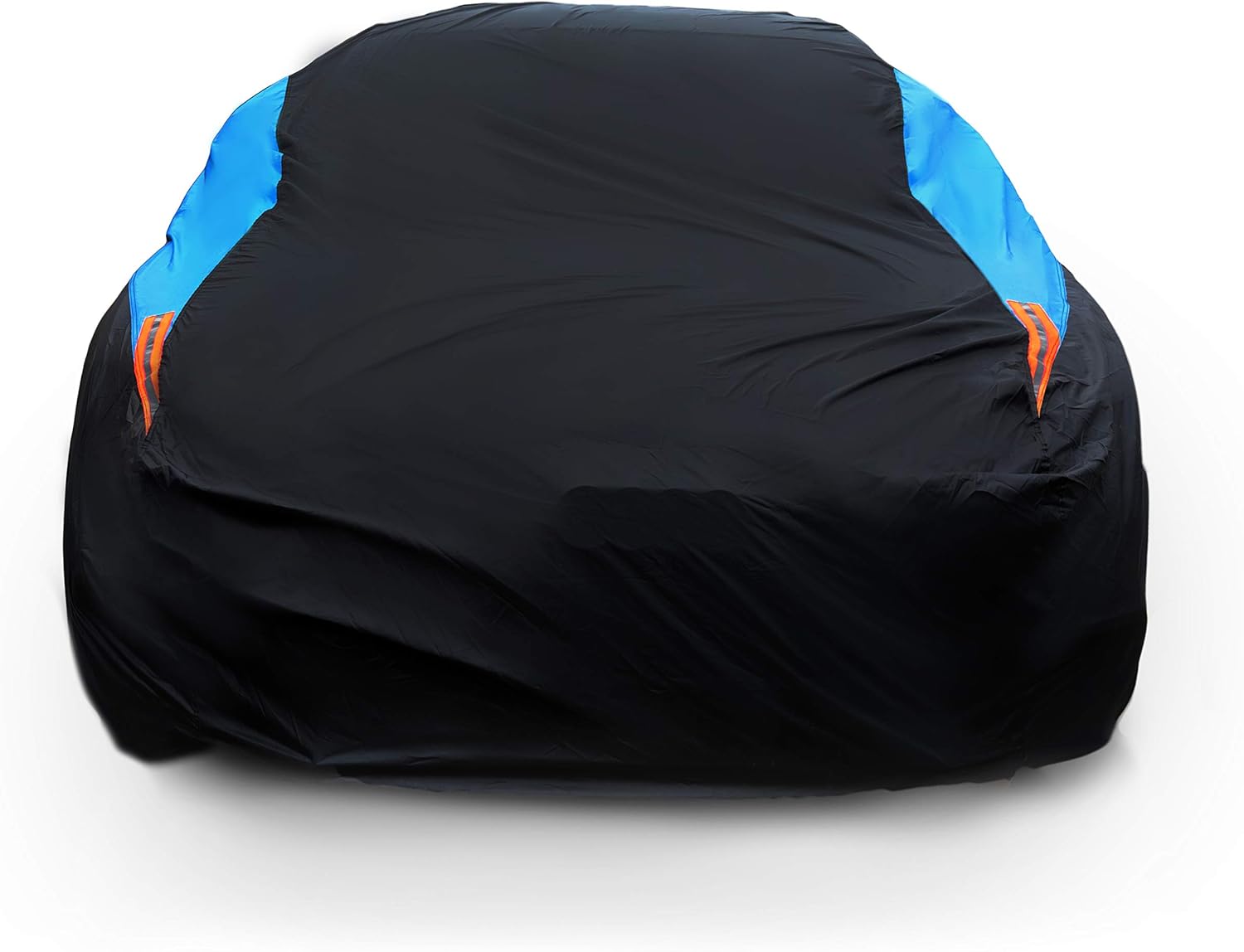
How to Fix a Loose-Fitting Car Cover (5 Fast Methods)
⚡ Quick Answer
A loose-fitting car cover can be fixed in minutes. Tuck the elastic hem under the bumpers, add a gust strap under the chassis, use binder clips on the front and rear edges, and thread bungee cords through the grommets. A universal cover that’s too big may need a cable lock or upgrade to a semi-custom fit.
5 Ways to Fix a Loose Car Cover Right Now:
-
1
Tuck the elastic hem tightly under the front and rear bumpers. -
2
Attach a gust strap under the chassis front and rear. -
3
Clip heavy-duty binder clips to the front and rear bumpers. -
4
Thread bungee cords through cover grommets and tie under the car. -
5
Add a cable lock kit for long-term outdoor parking.
Mistakes That Make a Cover Even Looser:
-
✓
Never skip the front-to-back installation sequence. -
✓
Don’t put a cover on in high wind — it traps air immediately. -
✓
Don’t assume a universal cover will ever fit as snugly as custom.
Your car cover just won’t stay put — it flaps in every breeze, slips off the bumper overnight, and ends up bunched on the ground. I’m Daniel Brooks, and I’ve seen this problem ruin more paint jobs than you’d think. A loose car cover isn’t just frustrating. It lets dirt and debris get trapped underneath, where it scratches the paint every time the cover shifts. Here’s how to fix it fast, and keep it fixed.
📌 Key Takeaways
-
→
Universal car covers are the #1 cause of a loose fit — they’re designed for dozens of shapes, not your exact car. -
→
A gust strap costs under $20 and is the single most effective fix for a cover that blows off in wind. -
→
Incorrect installation (not securing front first) creates gaps that catch wind and pull the entire cover loose. -
→
A loose cover that shifts traps dirt against your paint — it does more damage than no cover at all.
Why Is My Car Cover So Loose?
Most loose car covers come down to one thing: the cover is the wrong size for your vehicle. Universal car covers are built to fit dozens of different car shapes, so they’re deliberately oversized to work across multiple models. That extra fabric is what causes the billowing, slipping, and gaps you’re dealing with.
But wrong size isn’t the only cause. Here are all the real reasons a car cover fits badly:
📋 Common Reasons a Car Cover Fits Too Loosely
-
Universal fit: Made to fit many cars at once, so it’s always a compromise — never a perfect match. -
Wrong size purchased: Buying “large” when your car needs “medium” adds several inches of excess fabric all around. -
Stretched elastic hem: Over time, the elastic band loses tension and can no longer grip the bumpers tightly. -
Incorrect installation: Not securing the front bumper first lets the cover sit off-center from the start. -
Wind exposure: Even a well-fitted cover will shift over days of outdoor parking if it has no anchor points.
Here’s the part most people miss: a loose car cover that shifts around is actually worse than no cover at all. Every time the fabric moves, it drags fine dust and grit across your paint. That creates micro-scratches — the same damage as rubbing sandpaper lightly over your clear coat.
So if your cover keeps slipping, fixing it isn’t optional. It needs to happen before the next windstorm.
How to Fix a Loose-Fitting Car Cover: 5 Proven Methods
You don’t need to buy a new cover to fix a loose one. These 5 methods work on their own — or combined for maximum hold. Start with Method 1 and add more if needed.
🔢 Step-by-Step: How to Tighten a Loose Car Cover
-
1
Tuck and secure the elastic hem
Pull the cover’s elastic hem firmly under the front and rear bumpers. It should sit flush — not just draped over them. This alone stops 80% of loose-cover shifting.
-
2
Add a gust strap under the chassis
Clip the gust strap to the hem just in front of the front tires and just behind the rear tires. Thread it under the car and tighten. This pulls the cover inward from both ends.
-
3
Clip binder clips to the edges
Use heavy, padded binder clips. Attach them to the cover edge at the front and rear bumpers, gripping the fabric to the underside of the chassis. Use plastic clips to avoid paint scratches.
-
4
Thread bungee cords through grommets
If your cover has grommets (reinforced holes near the bumpers), thread bungee cords or rope through them. Tie them together under the car. This creates 4 fixed anchor points.
-
5
Add a cable lock kit for outdoor storage
A braided steel cable threads through the grommets and locks under the car with a padlock. This is the best option for long-term outdoor parking — it holds even in storms and deters theft.
-
✓
Check fit from all 4 sides
Walk around the car. The hem should sit even all the way around, with no section lifted more than 2 inches off the ground. If one side is higher — re-center and re-tuck.
⚠️ Warning
Never use metal clips directly on a painted bumper without padding. Metal edges vibrate against the clearcoat in wind and cause permanent scratches. Always choose rubber-padded or plastic binder clips.
For most people, combining Methods 1 and 2 (hem tuck + gust strap) solves the problem completely. If you’re in a high-wind area, add Method 4 (grommets + bungee) on top.
How to Install a Car Cover Correctly the First Time
Even the best-fitting car cover will sit loose if you put it on wrong. The correct installation sequence is what locks the cover in place — skip one step and the whole thing shifts. Here’s how to do it right.
Start at the front bumper. Every car cover has a labeled “front” — always find it before you begin. Secure the front elastic hem over the front bumper first. This is your anchor point. Everything else lines up from here.
Next, pull the cover back toward the roof — switching sides as you go. Don’t drag it over one side. Alternate between driver’s side and passenger’s side every few feet. This prevents the cover from pulling to one side and sitting off-center.
Once the cover clears the roofline, bring it down over the rear. Tuck the elastic hem under the rear bumper. It should grip the bumper — not just rest on it.
✓ Car Cover Installation Checklist
-
✓
Find the “front” label on the cover before placing it on the car. -
✓
Secure the front bumper hem before pulling the cover back. -
✓
Alternate sides when pulling over the roof — never drag one side only. -
✓
Tuck the elastic hem under both bumpers — don’t just drape it over them. -
✓
Walk all 4 sides and check that the hem is even before adding any straps.
One more thing: never put a car cover on in high wind. The cover catches air instantly and inflates like a sail. It becomes impossible to position correctly — and you’ll end up with the cover sitting 6 inches off-center before you’ve even finished.
Wait for a calm moment. Two minutes of patience at installation saves you an hour of re-tucking later.
Do Car Cover Gust Straps Really Work?
Yes — gust straps are the most reliable fix for a car cover that keeps blowing off. A gust strap is a bungee cord and clip system that attaches to the hem of your cover at 4 points, then threads under the chassis to create constant inward tension. That tension pulls the loose fabric tight and stops wind from getting underneath.
The design is simple. 4 clips grip the front and rear hem of the cover (2 per end). A single bungee cord connects the 2 front clips under the car. A second cord connects the 2 rear clips. Both cords create a cross-tension that holds the cover flat against the vehicle’s sides, even in strong gusts.
Here’s how the main securing methods compare on ease, cost, and wind resistance:
For most drivers, a gust strap kit is the sweet spot — high wind resistance, $10–$20, and takes under 60 seconds to attach.
Recommended Product
Hlogree 2PCS Car Cover Gust Straps Wind Protector – Bungee Cords Hook Clips Kit, Universal Fit for Most Cars, Sedans, SUVs, Trucks, Vans
★★★★☆ Highly rated on Amazon
Includes 4 heavy-duty clips and 2 bungee cords — clips to your cover hem in under 60 seconds and stops billowing even in strong winds.
As an Amazon Associate, we earn from qualifying purchases.
What Most People Get Wrong About Loose Car Covers
Most drivers assume their car cover is too small when it lifts or flaps in the wind. That’s almost never true. A cover lifting in wind almost always means it’s too large — extra fabric acts like a sail, catching air and pulling the rest of the cover with it.
The second mistake: people tighten only the front and leave the rear loose. A cover needs equal tension at both ends. If the rear hem isn’t tucked under the bumper, wind gets under the back and flips the whole cover forward in one strong gust.
💡 Key Insight
A loose car cover that shifts is more damaging than no cover at all. Dirt trapped between the fabric and your paint acts like sandpaper every time the cover moves. If the cover won’t stay still, fix it — or remove it until you can.
Third misconception: grommets are optional. Many people ignore the reinforced holes at the cover’s edges and treat them as decorative. They’re not. Grommets exist to let you thread cords and anchor the cover to fixed points. Using them is the fastest way to go from “loose” to “fully secured.”
When Should You Upgrade to a Custom Car Cover?
If you’ve tried all 5 methods above and the cover still won’t stay put, the cover itself is the problem — not your technique. Universal car covers are made to fit a wide range of vehicles. They work well for sheltered parking on calm days. They’re not designed for long-term outdoor use or consistently windy conditions.
A custom or semi-custom car cover is cut to match your vehicle’s exact shape. There’s no excess fabric to flap, no gaps for wind to enter at the hood or trunk. The elastic hem fits the bumper contours rather than just resting on them.
🎯 Which Car Cover Is Right For You?
If you are…
Parking indoors or in a calm, sheltered area most of the time
→ Universal cover + gust strap
If you are…
Parking outdoors long-term in moderate wind or weather
→ Semi-custom cover
If you are…
Storing a classic or collector car outdoors in all seasons
→ Full custom cover + cable lock
The industry standard advice from cover manufacturers like CarCovers.com is clear: generic universal covers aren’t designed to stay secure in adverse weather — a custom-fit cover is the only long-term solution for open outdoor parking. That said, the securing methods above extend the life and performance of any cover you already own.
✅ Tip
Inspect your car cover’s elastic hem every 3 months. If the elastic feels stretched or loose when you pull it, it’s no longer gripping. A replacement cover — or even just a gust strap — will outperform a fatigued hem every time.
Conclusion
A loose car cover is a fixable problem in most cases. Start with the hem tuck, add a gust strap, and use grommets with bungee cords if you need more hold. These 3 steps together will secure almost any cover in almost any wind.
If your cover has a worn-out elastic hem or it’s a very large universal fit, the securing methods above buy you time — but a semi-custom or custom cover is the permanent answer. Right now, do one thing: check that your cover’s elastic hem is actually tucked under both bumpers, not just resting on top of them. That single fix makes a bigger difference than anything else on this list.
Frequently Asked Questions
How do I keep my car cover from blowing off?
Tuck the elastic hem firmly under both bumpers, then add a gust strap that clips to the cover hem and threads under the chassis. For high-wind areas, combine the gust strap with bungee cords through the cover’s grommets for maximum hold on both ends.
Why does my car cover keep blowing off?
Most car covers blow off because they’re a universal (one-size-fits-many) design with excess fabric that catches wind like a sail. Incorrect installation — specifically not securing the front hem to the front bumper first — also creates air gaps that let wind flip the cover in one strong gust.
What is a car cover gust strap?
A gust strap is a kit that includes 4 clips and 2 bungee cords. The clips attach to the cover hem at the front and rear of the car. The cords connect each pair of clips under the chassis, pulling the cover inward from both ends to prevent it from lifting in wind.
Can I use binder clips to secure a car cover?
Yes — heavy, padded binder clips work as a budget alternative to gust straps. Clip them to the front and rear edges of the cover and attach them to the underside of the chassis. Use plastic or rubber-padded clips only; bare metal clips can scratch your bumper paint from vibration.
Do car cover grommets actually help?
Yes. Grommets are reinforced holes near the cover’s bumper edges, specifically designed for anchor cords. Threading bungee cords or rope through them and tying under the car creates 4 fixed anchor points that hold the cover flat against the vehicle’s sides.
Is a loose car cover worse than no cover?
Yes, in some cases. A loose cover that shifts constantly traps dust and grit between the fabric and your paint. Every time the fabric moves, that grit acts like fine sandpaper on your clearcoat. A cover that won’t stay still should be secured — or removed — until you can fix it properly.
When should I replace my car cover instead of fixing it?
Replace it when the elastic hem no longer grips the bumpers even after tightening, when the fabric has tears larger than 2 inches, or when you’re regularly parking outdoors in windy or harsh weather. At that point, a semi-custom or custom-fit cover with reinforced grommets is a better long-term investment than adding more clips.

Daniel Brooks is an automotive writer and product researcher focused on car accessories, car tech, maintenance, and practical driving guides. At Plug-in Car World, he helps drivers make smarter automotive decisions through honest reviews and research-driven content.