Can Pollen Penetrate a Car Cover? What Drivers Need to Know
⚡ Quick Answer
A good car cover blocks almost all pollen, but it isn’t a perfect seal. Tiny grains can still slip through loose seams, mirror pockets, and gaps near the ground if the cover doesn’t fit snugly.
What blocking power depends on:
- Fabric weave: Tight, multi-layer fabric stops far more pollen than a thin tarp.
- Fit: A loose or universal-fit cover leaves gaps pollen can drift through.
- Wind: Strong gusts can push fine pollen dust under a flapping edge.
Bottom line for pollen season:
-
✓
A snug, multi-layer cover cuts pollen buildup by a huge margin. -
✓
No cover gives 100% protection, so a quick wash before covering still matters.
You step outside on a spring morning and your windshield is already dusted yellow again. By Daniel Brooks, who has spent years testing outdoor car gear, that scene is the whole reason car covers exist. Pollen season turns a clean car into a sticky mess almost overnight, and a lot of drivers wonder if a cover even works against something this small. The short answer is yes, mostly, but the details matter.
Pollen grains are so tiny that “waterproof” doesn’t automatically mean “pollen-proof.” Some covers handle the job beautifully. Others leave gaps a breeze can exploit. Here’s exactly what makes the difference, and how to get the most protection out of whatever cover you own.
📌 Key Takeaways
-
→
Pollen grains range from about 10 to 200 microns, smaller than a strand of hair. -
→
Multi-layer covers stop far more pollen than single-layer tarps or sheets. -
→
Loose-fitting covers leak the most pollen at the hem, mirror pockets, and zipper seams. -
→
Pollen left wet under a cover can still cause more harm than pollen on bare paint.
Can Pollen Actually Get Through a Car Cover?
Yes, some pollen can get through, but a quality cover blocks the vast majority of it. Pollen grains are tiny, dry particles, not liquid, so they don’t soak through fabric the way rain does. Instead, they ride on wind and settle wherever there’s an open path: a flapping hem, a stretched-out seam, or a gap where the cover doesn’t quite reach the ground.
Think of it like a window screen. A screen blocks almost every bug, but a determined gnat can still find the one torn corner. Pollen works the same way with a car cover. Tight, well-fitted fabric leaves almost no opening. A baggy cover that shifts in the wind gives pollen plenty of chances to slip underneath.
So what does that mean for you? If you park outside during peak season, the cover’s fit and material matter more than the price tag on the box.
Why Pollen Is So Hard to Block Completely
Pollen is built to travel and stick. Most allergy-causing pollen grains measure between roughly 10 and 200 microns across, smaller than the width of a human hair, and they’re light enough to ride the wind for miles, according to Texas Parks and Wildlife’s pollen guide.
You might be thinking that something this small would just blow past a parked car entirely. Here’s why that’s not the case: pollen grains have microscopic hooks and ridges on their surface. Those structures evolved to grab onto insects and pollinators, but they grab onto car covers, paint, and rubber trim just as easily. Once a grain lands in a tiny gap, it tends to stay put.
Here’s how common pollen sizes compare to everyday particles:
The smaller the gap in your cover, the smaller the particle that can sneak through it.
What Makes a Car Cover Good at Blocking Pollen?
The best pollen-blocking covers share three traits: tight weave, multiple layers, and a snug fit. A single-layer plastic tarp might keep rain off, but its loose drape and stiff material leave gaps along the body lines. Multi-layer covers press tighter against the car’s contours, closing off those entry points.
Material Matters More Than You’d Think
Breathable, multi-layer fabrics like the ones used in higher-end covers are woven tightly enough to stop dust-sized particles while still letting moisture escape. That breathability prevents condensation, which matters because trapped moisture mixed with pollen creates an acidic film that’s worse for paint than dry pollen alone.
✅ Tip
Choose a cover sized for your exact vehicle, not a “universal fit.” A snug cover closes the gaps where pollen sneaks in.
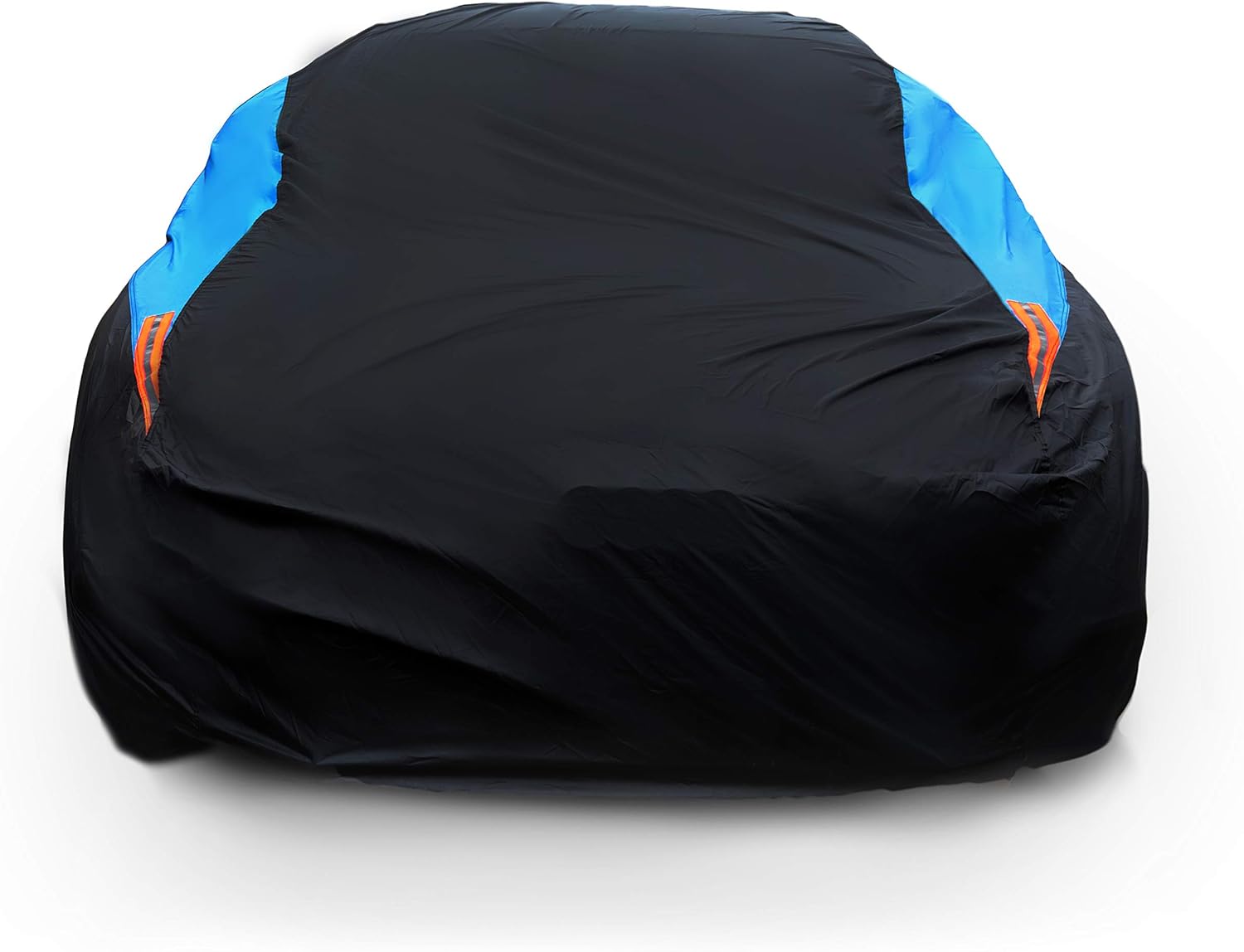
One option that fits this profile is the EzyShade 10-Layer Car Cover, which uses a multi-layer, machine-cut design with click-tight straps that pull the fabric snug against the body and a cotton inner lining that won’t trap moisture against the paint.
Recommended Product
EzyShade 10-Layer Car Cover Waterproof All Weather, Vehicle Size-Chart Fit, Full Exterior Cover for Sedan, Hatch, SUV
★★★★☆ 4.3 out of 5 on Amazon
A snug, multi-layer fit plus reflective straps and a cotton lining make this a solid pick for blocking pollen while keeping moisture from getting trapped against your paint.
As an Amazon Associate, we earn from qualifying purchases.
What Most People Get Wrong About Car Covers and Pollen
Most car owners assume any cover is better than no cover, full stop. That’s mostly true, but a few mistaken beliefs lead to disappointing results.
⚠️ Warning
Never cover a dirty or pollen-coated car. Trapping pollen underneath turns it into an abrasive layer that rubs against your paint with every gust of wind.
Myth 1: All car covers block pollen equally. Thin, single-layer covers and loose universal-fit covers leave gaps that defeat the purpose. Fit and layer count separate the good covers from the disappointing ones.
Myth 2: A waterproof cover is automatically pollen-proof. Waterproofing blocks liquid, not necessarily fine dry particles. Some waterproof vinyl covers actually trap pollen and moisture underneath because they don’t breathe.
Myth 3: You can skip washing your car if you use a cover. A cover slows down buildup, but it isn’t a substitute for washing. Pollen that lands on the cover itself, near zippers, or on exposed mirrors and antennas can still work its way to the paint.
How to Use a Car Cover the Right Way During Pollen Season
Using a cover correctly closes most of the gaps pollen relies on. Follow these steps every time you park outdoors during high-pollen weeks.
🔢 Step-by-Step: Covering Your Car During Pollen Season
-
1
Wash the car first
Never cover a car that already has pollen on it. Rinse and dry the surface first.
-
2
Shake out the cover
Pollen settles on stored covers too. Shake it out before draping it over the car.
-
3
Secure the straps snugly
Tighten front, middle, and rear straps so wind can’t lift the hem.
-
✓
Check the hem weekly
A quick check keeps gaps from forming as straps stretch over time.
Quick Checklist Before You Cover Up
✓ Pollen-Season Cover Checklist
-
✓
Car is clean and dry before covering -
✓
Cover is sized correctly for your vehicle -
✓
Straps are tightened and mirror pockets seated properly
Conclusion
A quality car cover blocks the great majority of pollen, but no cover seals out every grain. Fit, fabric layers, and a clean starting surface decide how well it performs. Pollen will still find the smallest gap if you let one form.
One thing to do right now: Check your current cover’s straps and hem for gaps before the next high-pollen day hits.
Frequently Asked Questions
Does a car cover stop pollen completely?
No cover stops 100% of pollen. A snug, multi-layer cover blocks most of it, but tiny grains can still drift in through loose seams, gaps near the ground, or mirror pockets.
Can pollen damage car paint even under a cover?
Yes, if pollen is trapped under the cover with moisture. The combination forms an acidic, abrasive film that can scratch and dull clear coat over time.
Is a waterproof cover the same as a pollen-proof cover?
Not always. Waterproofing blocks liquid, but some waterproof vinyl covers don’t breathe well and can trap fine dry particles like pollen and moisture underneath.
Should I wash my car before putting on a cover?
Yes, always cover a clean, dry car. Covering a dirty car traps pollen and dust against the paint, where wind can rub the abrasive particles into the clear coat.
How small is a pollen grain compared to a car cover’s weave?
Most allergy-causing pollen grains measure between 10 and 200 microns, smaller than a human hair. Tightly woven, multi-layer fabric closes gaps small enough to stop most of it.
How often should I check my car cover during pollen season?
Check the hem and straps about once a week. Straps stretch and shift over time, and even small gaps give wind-blown pollen an opening.
Is it worth using a car cover if I park outside year-round?
Yes. Beyond pollen, a cover also protects against UV rays, bird droppings, dust, and tree sap, which makes it a worthwhile investment for any outdoor-parked vehicle.

Daniel Brooks is an automotive writer and product researcher focused on car accessories, car tech, maintenance, and practical driving guides. At Plug-in Car World, he helps drivers make smarter automotive decisions through honest reviews and research-driven content.