Best Solutions for Humid Climate Car Cover Problems
⚡ Quick Answer
Humid climate car cover problems — mold, condensation, rust, and paint damage — are caused by non-breathable covers that trap moisture against your car overnight. The fix is a breathable, waterproof multi-layer cover made from microporous fabric or Oxford cloth, plus a few simple usage habits that keep the area under the cover dry.
Top solutions for humid climate car cover problems:
- Choose breathable + waterproof: Microporous fabric blocks rain but lets vapor escape outward.
- Never cover a wet car: Damp paint under a sealed cover breeds mold within 24 hours.
- Air out weekly: Remove the cover on sunny days to break the condensation cycle.
- Custom or snug fit: Loose covers flap, scratch paint, and let moist air pool underneath.
Mistakes that make humid climate damage worse:
-
✓
Using a 100% waterproof-only cover with no ventilation -
✓
Covering a car right after rain without drying it first -
✓
Leaving a cover on for weeks without inspecting underneath
You pull back the car cover expecting a clean, protected vehicle — and instead you get a musty smell, faint rust spots, or dull paint that wasn’t there before. I’m Daniel Brooks, and this is the exact problem humid climate car cover users report most often. The cover is supposed to protect your car. But the wrong one, used the wrong way, quietly destroys the finish it was meant to guard.
The good news is that every single one of these problems has a clear, fixable cause. This guide covers the right materials, the right habits, and the mistakes most car owners don’t know they’re making.
📌 Key Takeaways
-
→
Non-breathable covers trap condensation against your paint every single night in humid climates. -
→
Breathable microporous fabric blocks liquid rain from outside while letting water vapor escape from underneath. -
→
Covering a wet car creates a dark, damp environment — mold can begin forming in under 24 hours. -
→
Weekly airing on sunny days breaks the condensation cycle and prevents mildew buildup under any cover type.
Why Does a Car Cover Cause Moisture Problems in a Humid Climate?
A car cover doesn’t create moisture. It traps the moisture that’s already there. That’s the part most owners miss — and it’s why a sealed, non-breathable cover can do more harm than no cover at all in a humid region.
Here’s what happens every single night. When the sun goes down, the air cools and the humidity rises. Metal surfaces on your car drop below the dew point — the temperature at which air becomes saturated and releases water. That moisture condenses directly onto your paint, your glass, and your metal panels. Under an open sky, it evaporates by morning. Under a sealed cover, it can’t escape. It sits.
That cycle runs every night. Night after night, the trapped moisture builds. Within weeks, it creates the ideal conditions for mold and mildew growth — warm, dark, damp, and stagnant. The U.S. Environmental Protection Agency’s mold guidance confirms that mold requires only two conditions to grow: organic material and sustained moisture. Your car’s paint, seals, and interior materials provide the organic material. A sealed cover provides the moisture.
Rust forms the same way. Metal panels exposed to trapped moisture begin oxidizing. The clear coat weakens first. Then the paint separates at panel edges. By the time you see visible rust or paint bubbling, the damage has already been accelerating for months.
💡 Key Insight
A “waterproof” cover label describes only one direction: liquid water can’t get in from outside. It says nothing about the moisture already trapped inside. In a humid climate, that internal moisture is the greater threat to your paint.
So if your car has developed water spots, a musty smell, or rust patches despite being covered, your cover is likely the reason — not the solution. The next section shows exactly what to use instead.
What’s the Best Car Cover Material for a Humid Climate?
The right car cover for a humid climate must do two things at once: block liquid water from getting in, and allow water vapor to escape outward. This is called being breathable and waterproof — and not all covers are both. Most cheap covers are one or the other.
The table below shows how the main cover materials perform in humid conditions specifically.
This comparison focuses on humid and coastal climates — regions where trapped condensation is the primary risk, not just rain.
Microporous and Oxford cloth covers solve both problems at once. PVC and budget polypropylene covers solve only one — or neither.
For humid climates, look for these 3 specific features when buying a cover:
📋 What to Look For in a Humid Climate Car Cover
-
Microporous or multi-layer woven fabric: The pores must be large enough for vapor to exit but too small for liquid water to enter. Materials like Noah fabric, Tyvek, or quality Oxford cloth achieve this balance. -
Built-in ventilation panels or vents: Quality covers include side vents or strategically placed panels that promote active airflow under the cover, not just passive fabric breathability. -
Snug or custom fit: A loose cover flaps in wind and creates gaps where humid air pools underneath. Elastic hems, mirror pockets, and windproof straps keep it sealed against the body.
Recommended Product
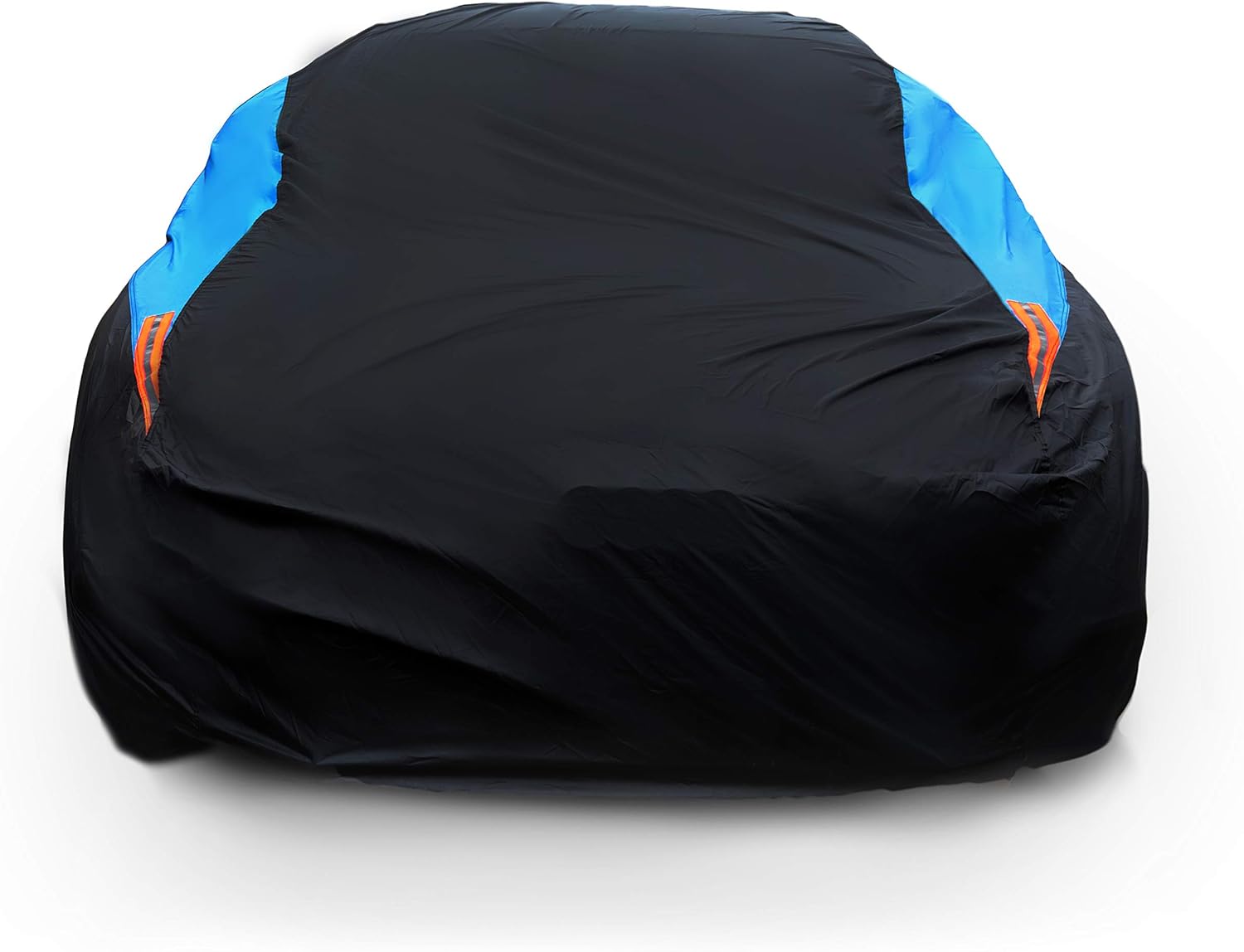
GUNHYI 16 Layers Car Cover Waterproof All Weather, Heavy Duty Outdoor Car Cover Universal Fit Sedan (Toyota Camry, Tesla Model 3, Honda Accord, Nissan Altima, Kia K5/Stinger, Hyundai Sonata etc.)
★★★★☆ Highly rated on Amazon
Features built-in breathable vents specifically designed to prevent moisture accumulation — exactly what humid climate car owners need. The 16-layer construction also handles rain, UV, and wind without sacrificing airflow under the cover.
As an Amazon Associate, we earn from qualifying purchases.
Should I Use a Car Cover in Humid Weather?
Yes — but only if you choose the right cover type. This is where most humid climate car owners go wrong. They assume any cover is better than no cover. In very humid regions, a sealed non-breathable cover is actively worse than leaving the car uncovered.
Here’s the right answer based on your situation:
🎯 Which Car Cover Approach Is Right For You?
If you have…
Light humidity, mostly parking overnight, occasional rain
→ Any quality breathable outdoor cover
If you have…
High humidity daily (Florida, Gulf Coast, Pacific Northwest)
→ Microporous fabric cover with vents + weekly airing
If you have…
Only a non-breathable sealed cover right now
→ No cover is better until you replace it
The bottom line: a breathable, well-fitted cover is one of the best tools for protecting your car in a humid climate. It blocks rain, UV rays, bird droppings, salt air, and dust — while still letting moisture escape. That’s the combination that protects, not damages.
But that protection only works if the cover material is correct and the usage habits are right. The next section covers those habits in full.
How Do I Stop Condensation Under My Car Cover?
Stopping condensation under a car cover requires 3 things working together: a breathable fabric, a proper fit, and regular airing. Fix all 3 and condensation stops accumulating. Fix only one and the problem persists.
Follow these steps in order to eliminate the condensation cycle:
🔢 Step-by-Step: How to Stop Condensation Under a Car Cover
-
1
Switch to a breathable, waterproof cover
Microporous fabric or multi-layer Oxford cloth lets vapor out. A sealed cover makes condensation worse every single night.
-
2
Always cover a dry car
Dry the car with a microfiber towel before applying the cover. Even a breathable cover can’t handle the volume of moisture from a wet car.
-
3
Ensure a snug fit — no loose areas
Tuck elastic hems under the bumpers. Secure windproof straps tightly. Gaps and loose folds collect and pool humid air.
-
4
Remove and air out the cover once a week
On the next sunny, dry day — pull the cover off for 30 to 60 minutes. This resets the moisture balance under the cover and prevents buildup.
-
✓
Inspect for moisture weekly during humid seasons
Lift the cover and check the paint surface. Dry surface = you’re set. Damp surface = air out immediately and review steps 1-3.
The EPA’s moisture and mold control guidance is clear: the key to preventing mold is preventing sustained moisture. Under a car cover, that means ventilation and periodic drying — exactly what these steps deliver.
One more thing most guides skip: let your car cool for 15 to 30 minutes after driving before you cover it. A hot engine and warm body panels create steam under the cover as they cool. That steam needs somewhere to go — and a breathable cover handles it far better than a sealed one.
Is It Bad to Put a Car Cover on a Wet Car?
Yes — covering a wet car is one of the most damaging things you can do in a humid climate. When you trap liquid water under a cover, you create a dark, warm, damp enclosure. Mold can begin growing in under 24 hours in those conditions. The moisture also sits directly against the paint, which accelerates oxidation and water spotting.
⚠️ Warning
Never cover a car that is still wet from rain or washing. Even a high-quality breathable cover can’t handle the volume of liquid water from a soaked surface. Dry the car first — always.
But what if it starts raining while the cover is already on? That’s different. A breathable, waterproof cover handles this well — it blocks the rain from getting in while letting any internal vapor slowly escape through the fabric. The problem only starts when you cover a car that is already wet underneath.
If your cover gets soaked from a storm, remove it as soon as conditions allow. Let both the car and the cover dry completely in an open, sunny spot before re-covering. A wet cover stored in a bag or left folded will grow mold on the fabric itself — and that mold transfers to your car’s paint next time you use it.
✅ Tip
Keep a large microfiber drying towel in your garage or car boot. A 2-minute dry-down before covering is the single most effective moisture habit you can build.
Do I Need Desiccant Bags with My Car Cover?
Desiccant bags are a useful supplement — not a replacement for a breathable cover. They absorb ambient moisture inside the car’s cabin, which helps if your vehicle is stored for weeks or months in a humid garage. They don’t address the moisture problem under the cover itself.
Think of it this way. A breathable cover handles exterior condensation and rain. Desiccant bags handle interior cabin humidity. Together, they cover both directions. Solo, each one solves only half the problem.
Place 2 to 4 silica gel desiccant bags inside the cabin — on the seats or floor — when storing the car for more than 2 weeks at a time. Replace or recharge them every 4 to 6 weeks, or more often in very humid regions like Florida or coastal areas. Many car owners in high-humidity storage situations also use a small plug-in dehumidifier in the garage, set to keep ambient humidity below 65%.
📋 Quick Summary
Breathable cover = handles exterior moisture and condensation. Desiccant bags = handle interior cabin humidity during storage. For long-term storage in very humid climates, use both together for full protection.
What Most People Get Wrong About Humid Climate Car Covers
Three very common beliefs cost car owners real money in paint repairs and mold remediation. All 3 are wrong.
“Waterproof means fully protected in humid weather”
Waterproof only describes one direction of moisture movement — it means liquid water can’t get through from outside. It says nothing about vapor inside the cover. A sealed waterproof cover in a humid climate traps condensation against your paint every night. The damage from internal moisture accumulation is often worse than rain exposure with no cover at all.
“If my car looks fine, the cover isn’t causing damage”
Paint damage from trapped moisture doesn’t appear immediately. It accumulates over months before becoming visible. By the time you see clear coat separating, rust spots, or paint bubbling, the problem has been running in the background for a long time. The absence of visible damage does not mean the condensation cycle isn’t happening every night.
“A breathable cover will let rain in”
This is the most common objection — and the most incorrect. Quality breathable covers use microporous technology. The pores are engineered to be large enough for water vapor molecules to exit but too small for liquid water droplets to enter. Rain stays out. Vapor gets out. This is the same principle as high-end rain gear designed for outdoor athletes.
Conclusion
Every humid climate car cover problem — mold, rust, condensation, musty smells, water spots — traces back to the same root cause: a non-breathable cover trapping moisture against your car. The fix is simple: switch to a breathable, waterproof multi-layer cover with ventilation, and cover only a dry car.
Right now, do this one thing: run your hand along the paint surface under your current cover. If it feels damp — even slightly — your cover is the problem, not the protection. Replacing it with a breathable option is the single highest-impact change you can make today.
Frequently Asked Questions
Can a car cover cause rust?
Yes — a non-breathable car cover can cause rust by trapping moisture against metal surfaces overnight. The condensation cycle that runs under a sealed cover creates sustained dampness on paint and metal, which accelerates oxidation. A breathable cover prevents this by allowing vapor to escape rather than accumulate.
Can a car cover cause mold?
Yes. A cover that traps moisture creates warm, dark, damp conditions — exactly what mold needs to grow. This happens most often when a car is covered while wet, or when a sealed cover traps nightly condensation. Mold can start forming in under 24 hours in those conditions. A breathable cover eliminates the conditions that allow mold to develop.
Why does my car smell musty under the cover?
A musty smell means mold or mildew has already begun growing under the cover, inside the car, or on the cover fabric itself. This happens when moisture gets trapped and can’t escape. Remove the cover, air the car in dry conditions for several hours, wipe down surfaces with a mild cleaner, and let everything dry fully before re-covering with a breathable cover.
How often should I remove my car cover in humid weather?
Remove and air out the cover at least once a week in humid climates, ideally on a sunny, dry day. A 30 to 60 minute airing session breaks the condensation cycle and prevents moisture from accumulating under the cover. In very high-humidity regions like coastal Florida or the Pacific Northwest, air it out 2 times per week.
What is the difference between a waterproof and a breathable car cover?
A waterproof cover blocks liquid water from entering from outside. A breathable cover allows water vapor to pass through from underneath. In humid climates, you need both. A cover that is waterproof but not breathable traps condensation against your paint. The best covers are both waterproof and breathable — using microporous fabric that blocks rain but lets vapor out.
Why does my car have water spots even though I use a cover?
Water spots under a car cover usually come from condensation forming directly on the paint surface — not from rain getting in. This happens when a non-breathable cover traps humid air overnight and it condenses on the cooler metal panels. Switching to a breathable cover and always covering a dry car eliminates this problem.
Is it okay to put a car cover on a wet car in an emergency?
If you must use a cover on a damp car, choose a highly breathable cover — never a sealed one. Remove the cover as soon as the weather improves and dry both the car and the cover fully. Leaving a wet car under any cover for more than a few hours risks mold formation and prolonged moisture contact with the paint finish.

Daniel Brooks is an automotive writer and product researcher focused on car accessories, car tech, maintenance, and practical driving guides. At Plug-in Car World, he helps drivers make smarter automotive decisions through honest reviews and research-driven content.