
What Happens During a Car Seat Safety Inspection?
Quick Answer
During a car seat safety inspection, a certified Child Passenger Safety Technician checks whether your child’s car seat fits the child, vehicle, and manufacturer’s installation requirements. The technician examines the installation, harness, recline angle, recalls, and seat condition. Most importantly, you’ll receive hands-on guidance so you can install and use the seat correctly yourself. You can learn what to expect from a certified car seat technician before your appointment.
What the technician checks:
- Seat suitability: Confirms the restraint matches your child’s age, height, and weight.
- Installation security: Checks the correct belt path, attachment method, and movement at the belt path.
- Harness positioning: Reviews shoulder strap placement, harness tightness, and chest clip position.
- Seat condition: Looks for recalls, expiration information, missing parts, and visible damage.
- Caregiver education: Teaches you to install, adjust, and check the car seat independently.
Before you go:
- Bring your car seat, vehicle, both instruction manuals, and your child’s current height and weight.
- Allow approximately 20–30 minutes for a typical individual check, although complicated installations may take longer.
If you’ve ever tightened a car seat until it felt secure, then wondered whether you did everything correctly, you’re not alone. Small installation details can be difficult to judge without professional guidance.
What happens during a car seat safety inspection is more involved than someone tugging on the seat. I’ll walk you through the appointment, the checks technicians perform, common problems, and what to do afterward.
In This Guide
- What Is a Car Seat Safety Inspection?
- How Should You Prepare for a Car Seat Inspection?
- What Does a Car Seat Technician Check During the Inspection?
- What Problems Do Technicians Commonly Find?
- How Long Does a Car Seat Inspection Take, and Is It Free?
- What Happens After the Car Seat Inspection?
- Frequently Asked Questions
What Is a Car Seat Safety Inspection?
A car seat safety inspection is a hands-on educational appointment that checks whether a child restraint is appropriate, installed correctly, and used according to manufacturer instructions. In the United States, these appointments are commonly provided by certified Child Passenger Safety Technicians (CPSTs).
The goal isn’t simply to make the car seat feel tighter. It’s to ensure you understand how the restraint protects your child and how to use it correctly on every journey.
Who performs a car seat inspection?
Certified Child Passenger Safety Technicians complete specialized training covering child restraints, vehicle safety systems, installation methods, and caregiver education. Safe Kids Worldwide administers the national certification program in the United States.
You may find qualified technicians working through:
- Hospitals and pediatric injury-prevention programs.
- Community child passenger safety organizations.
- Fire departments or police departments offering certified inspections.
- Public health departments and local safety coalitions.
- Scheduled car seat checkup events.
Not every firefighter, police officer, or hospital employee holds this certification. Ask whether the person conducting your check is currently certified.
Is an inspection the same as a car seat installation?
No. Installation is one part of a complete inspection, but technician-led education is equally important.
Rather than installing everything while you watch, a technician usually encourages you to participate. You should finish the appointment understanding how to repeat the installation yourself.
Think of it as a practical lesson with your own vehicle. The learning matters because someone must secure the seat correctly whenever it gets moved.
An inspection is not a crash test or permanent safety guarantee. Correct use still depends on the restraint, vehicle, child, and caregiver on every trip.
How Should You Prepare for a Car Seat Inspection?
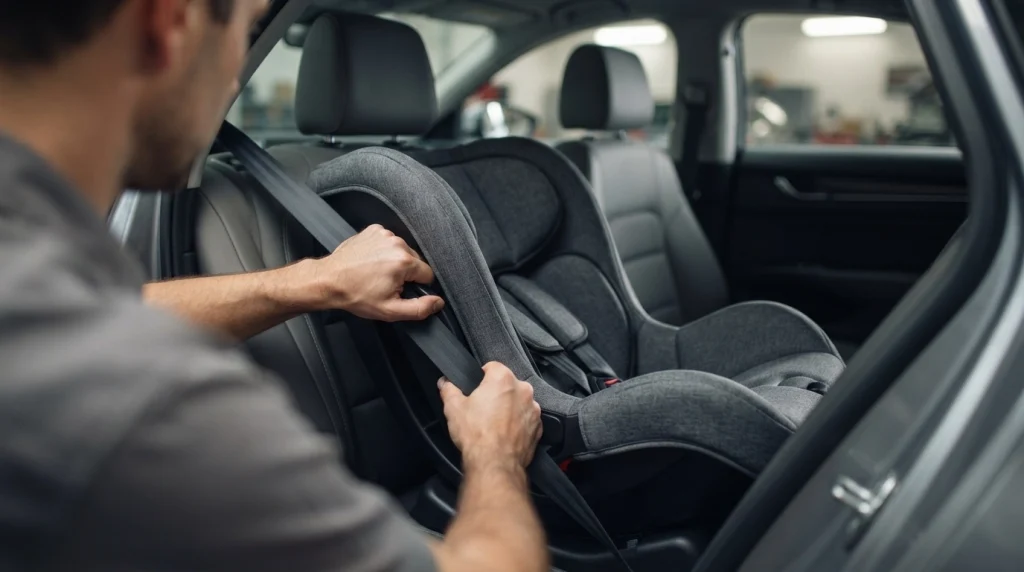
Preparing for a car seat inspection makes the appointment more useful. Bring the actual equipment you use for everyday travel rather than relying on photos or descriptions.
What should you bring to a car seat check?
Use this preparation checklist:
- Your vehicle: Bring the car normally used to transport your child.
- Your car seat: Include its base, harness, inserts, and other manufacturer-supplied components that you use.
- Car seat instruction manual: The technician will need the instructions for your specific model.
- Vehicle owner’s manual: This identifies approved seating positions, anchors, and relevant installation restrictions.
- Child’s measurements: Know their current height, weight, and age.
- Your child: Bring them when possible so the technician can evaluate their fit in the restraint.
- Another caregiver: A second adult can help supervise your child while you practice.
- Your questions: Write down anything confusing about installation, buckling, or daily use.
Should you install the car seat before arriving?
Yes, if you can follow the manufacturer’s instructions. Safe Kids Worldwide recommends attempting the installation before the appointment so the technician can review your setup.
You don’t need to make the installation perfect. The point is to identify areas where you need help.
If you’re unsure whether your current setup is safe, contact the inspection provider before transporting your child. Don’t knowingly travel with a loose, damaged, or otherwise unsafe restraint.
What questions should you ask beforehand?
A short phone call can prevent unnecessary delays:
- Do I need an appointment?
- Is the inspection free?
- How much time should I reserve for multiple seats?
- Can my child attend the appointment?
- Do you inspect infant, convertible, and booster seats?
- Can you help with a vehicle that has unusual seating arrangements?
- Is assistance available for children with special transportation needs?
For older children, ask whether the technician can evaluate booster-seat positioning and seat belt fit. Those checks are just as worthwhile as an infant seat installation review.
What Does a Car Seat Technician Check During the Inspection?
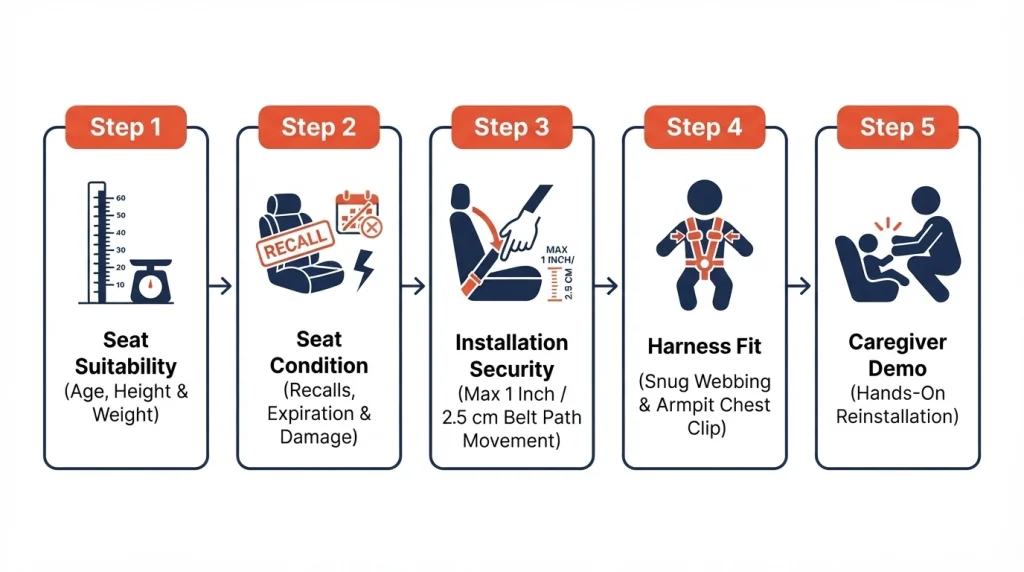
A technician follows a structured process covering the restraint, vehicle, child, and caregiver. The exact order may vary, but the inspection normally includes the following checks.
1. Reviewing your child and car seat information
The technician begins by asking about your child’s age, height, and weight. They also identify the seat’s model, type, and installation direction.
They may record these details on a paper or electronic inspection form. The form helps document the initial setup and any changes made during the appointment.
The technician then determines whether your child is using an appropriate restraint. Rear-facing, forward-facing, and booster configurations have different eligibility and fit requirements.
2. Examining expiration dates, recalls, and damage
Next, the technician examines the seat’s labels and physical condition. A restraint with missing parts or damage may require additional investigation before use.
The inspection may include:
- Locating the model number and manufacture date.
- Reviewing the manufacturer’s expiration or useful-life guidance.
- Checking applicable safety recalls.
- Looking for cracks, damaged harness webbing, or missing components.
- Discussing any previous crash involvement.
- Checking whether accessories are approved for the specific restraint.
A recall doesn’t automatically mean the entire seat must be discarded. Some manufacturers provide an approved repair or replacement component.
3. Checking the installation method and seat position
This is where small details become important. A technician verifies that the restraint is secured through the correct belt path and at a permitted vehicle seating position.
They also check whether the installation uses the vehicle seat belt or lower anchors appropriately. These are alternative primary attachment methods, and both should not be combined unless the relevant instructions specifically permit it.
For harnessed seats, the technician checks for excessive movement at the belt path. NHTSA advises that a correctly secured seat should move no more than 1 inch (2.5 cm) from side to side or front to back at that location.
The technician also examines:
- Correct seat belt routing and locking.
- Lower-anchor connections and applicable weight limits.
- Top tether use for forward-facing installations.
- Rear-facing recline indicators.
- Vehicle head restraint or seatback compatibility.
- Clearance and positioning requirements specified by the manufacturers.
Lower Anchors and Tethers for Children (LATCH) is a vehicle attachment system designed for compatible child restraints. Its lower-anchor attachments are different from the top tether used with forward-facing seats.
You can review the NHTSA car seat installation tips for further guidance on these checks.
4. Checking harness fit and positioning
Once installation is addressed, the technician reviews how your child sits in the restraint. A secure seat doesn’t help as intended if the child is incorrectly harnessed.
For harnessed seats, technicians check:
- Shoulder strap height: Generally at or below the shoulders when rear-facing and at or above them when forward-facing.
- Harness tightness: The straps should fit snugly without pinchable slack at the shoulder.
- Chest clip position: On seats with a chest clip, it should sit at armpit level.
- Strap condition: Harness webbing should lie flat without twists.
- Child positioning: The child should sit correctly against the restraint.
- Clothing: Bulky coats should not interfere with a snug harness.
For booster seats, the technician focuses on vehicle seat belt fit rather than a five-point harness. The lap belt should lie low across the upper thighs, with the shoulder belt crossing the chest and shoulder.
5. Teaching you to reinstall the seat
Education is the final practical step. Your technician should explain any corrections and guide you through the proper installation process.
I find the belt-path check a useful way to understand why appearance alone can be misleading. A seat can look centered and stable while its installation still needs adjustment.
The important test is whether you can reproduce the correct setup without guessing. Ask the technician to watch you practice.
Car seat inspection checklist: What gets checked and why?
| Inspection area | What the technician verifies | Why it matters |
|---|---|---|
| Seat suitability | Child’s size, seat limits, and riding direction | Ensures the restraint is appropriate for the child |
| Installation security | Correct attachment and no more than 1 inch of movement at the belt path | Helps prevent excessive movement during a crash |
| Harness fit | Strap height, snugness, and chest clip placement | Helps position and restrain the child properly |
| Recline and tether | Required recline angle and tether use where applicable | Supports the intended crash protection |
| Seat condition | Recalls, expiration, damage, and missing parts | Identifies concerns requiring repair or replacement |
| Caregiver demonstration | Ability to reinstall and use the seat correctly | Builds confidence for everyday use |
Section Takeaway: A complete inspection covers more than installation tightness. It also evaluates child fit, seat condition, vehicle compatibility, and your ability to use the restraint independently.
What Problems Do Technicians Commonly Find?
Car seat inspections often uncover correctable installation or usage problems. These issues aren’t always obvious from looking at the seat.
Loose installations and incorrect attachment methods
A seat may move too far because the seat belt wasn’t locked, the attachment strap remained loose, or the belt followed the wrong route. Technicians identify the cause and demonstrate the approved correction.
Other issues may include:
- Using an incorrect seat belt path.
- Attaching lower-anchor connectors to an unapproved location.
- Overlooking lower-anchor weight limits.
- Failing to use a required or recommended top tether.
- Placing a restraint at an unsuitable recline angle.
Harness mistakes that affect child fit
Harness problems often involve strap height, twisting, excessive slack, or incorrect chest clip placement. Bulky winter clothing can also prevent the harness from fitting snugly.
Technicians demonstrate the proper harness adjustment using your child’s actual restraint. You’ll learn which adjustments need checking as your child grows.
Unapproved car seat covers and accessories
Car seat covers deserve special attention because added padding or fabric can interfere with harness positioning. A replacement cover should be approved for the specific seat model by its manufacturer.
Accessories that may require review include:
- Aftermarket padded seat covers.
- Unapproved infant support inserts.
- Extra harness pads or strap covers.
- Vehicle seat protectors placed under the restraint.
- Head or neck positioning accessories.
- Additional cushions that change the child’s seating position.
The American Academy of Pediatrics advises against adding products unless they came with the restraint or its manufacturer specifically approves them. Read its car seat safety guidance for families before using aftermarket accessories.
Expired, recalled, or previously damaged seats
Technicians also examine concerns that tightening straps cannot solve. An expired restraint or one with structural damage may no longer meet the manufacturer’s conditions for safe use.
Crash history matters as well. NHTSA recommends replacing seats following moderate or severe crashes, while some minor crashes may not require replacement.
Always follow the restraint manufacturer’s instructions and consult the NHTSA car seat replacement guidance when evaluating a seat involved in a collision.
Pro tip: If a technician identifies a damaged, recalled, or incompatible seat, confirm the next step with the manufacturer or another qualified child passenger safety professional before using it again.
How Long Does a Car Seat Inspection Take, and Is It Free?
A typical individual car seat check takes approximately 20–30 minutes, according to the National Child Passenger Safety Certification program. Complex installations, multiple restraints, or additional questions can require more time.
How much does a car seat inspection cost?
Many certified car seat inspection programs in the United States provide checks free of charge. However, costs and appointment policies vary by provider.
Confirm the fee when scheduling, especially if you’re using a private service. You shouldn’t need to purchase a new restraint simply to receive installation guidance.
Where can you get a car seat inspected?
Start with organizations that can identify currently certified technicians. In the United States, your options include:
- NHTSA-listed car seat inspection stations.
- Safe Kids Worldwide local coalitions.
- Hospital-based child passenger safety programs.
- Community safety events with certified technicians.
- Eligible virtual consultations offered by participating organizations.
The NHTSA car seats and booster seats resource center provides inspection and installation information. Availability of in-person and virtual appointments depends on your area.
If you live outside the United States, look for local child restraint fitting services and applicable national safety guidance. Vehicle regulations, available restraints, and certification systems can differ by country.
What Happens After the Car Seat Inspection?
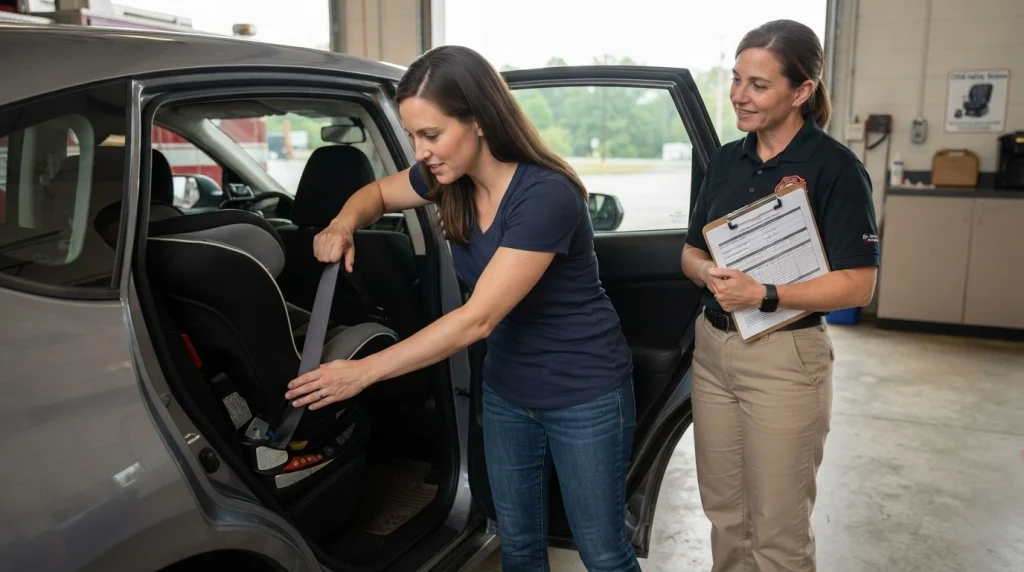
After the inspection, you should understand how to install the restraint and secure your child correctly. The technician may review the inspection form and explain any remaining concerns.
Practice before leaving
Ask to repeat the installation yourself under supervision. This helps reveal any steps you still find confusing.
Before the appointment ends, check that you can:
- Identify the correct belt path or lower-anchor attachment points.
- Secure the car seat using the approved installation method.
- Evaluate movement at the belt path.
- Adjust the harness and chest clip properly.
- Check the required recline angle or tether connection.
- Explain when the seat needs adjustment or replacement.
Check your installation during everyday use
A professional inspection doesn’t eliminate the need for routine checks. Installation and harness settings can change when you move the seat or adjust it for a growing child.
Make these checks part of your travel routine:
- Confirm that the restraint remains securely installed.
- Check the harness position and tightness before each journey.
- Keep the buckle area free from obstructions.
- Recheck instructions when changing installation methods.
- Check seat fit whenever your child reaches a growth milestone.
- Register your restraint for recall notifications.
What if your car seat fails the inspection?
Car seat checks are educational appointments rather than standardized pass-or-fail certification tests. Technicians typically explain identified problems and help you correct them when possible.
If the seat cannot be used safely, ask why and what replacement or manufacturer-approved remedy is needed. Don’t assume a visibly undamaged seat is safe when an unresolved defect or installation problem remains.
For me, the most valuable result is knowing exactly how to check the installation without relying on guesswork. That knowledge stays useful long after the appointment.
Frequently Asked Questions About Car Seat Safety Inspections
1. Do I need a car seat inspection if I installed the seat myself?
Yes, a professional check can still be useful. Even when you follow the instructions carefully, a certified technician may identify a fit or installation issue you overlooked and demonstrate how to verify the setup yourself.
2. Can I get my car seat inspected before my baby is born?
Yes. Expectant parents can schedule a check to learn correct installation before bringing their baby home. The technician can examine your setup and explain newborn harness positioning, although a later fit check with your baby may still be helpful.
3. Will a technician install my car seat for me?
The technician will guide you through installing the seat and correct problems when needed. However, the main goal is education, so you should expect to participate and practice rather than simply leave the vehicle for someone else to complete the work.
4. Do car seat safety inspections include booster seats?
Yes. Certified technicians can examine booster-seat suitability, positioning, and vehicle seat belt fit. They can also help determine whether your child still needs a booster instead of relying on age alone.
5. Can I have multiple car seats checked during one appointment?
Many inspection programs accommodate multiple seats, depending on scheduling and staffing. Contact the provider beforehand and explain how many restraints and children need checks so sufficient appointment time can be arranged.
6. How often should I schedule another car seat inspection?
There isn’t one universal inspection interval for every family. Consider scheduling another check after changing vehicles, purchasing a new seat, switching installation methods, or moving your child into a different restraint configuration.
7. Are car seat inspections mandatory?
Inspection requirements vary by location, and a professional check is generally a recommended safety service rather than a universal legal requirement in the United States. You must still comply with applicable child restraint laws and follow the manufacturer instructions.
Final Takeaway: Make Your Car Seat Inspection Count
Knowing what happens during a car seat safety inspection makes the appointment easier to prepare for. You’ll receive a review of the restraint, installation, child fit, condition, and everyday usage.
The best outcome isn’t simply a tighter car seat. It’s learning how to install and use the restraint correctly whenever your child rides in the vehicle.
Schedule a check with a certified technician, bring your manuals, and ask questions about anything you don’t understand. Before leaving, practice the installation yourself and confirm that any identified safety concerns have been resolved.
Your next step: Find a certified child passenger safety technician in your area and arrange an inspection for the vehicle and restraint your family uses.

Daniel Brooks is an automotive writer and product researcher focused on car accessories, car tech, maintenance, and practical driving guides. At Plug-in Car World, he helps drivers make smarter automotive decisions through honest reviews and research-driven content.
