
How to Get a Car Seat Installation Checked: A Complete Safety Guide
Quick Answer
To get a car seat installation checked, find a certified Child Passenger Safety Technician (CPST), schedule an inspection, and bring your vehicle, car seat, and instruction manuals. Most inspection stations offer free assistance. You can find a nearby location through the NHTSA car seat inspection resources.
Five Steps to Get Your Car Seat Checked
- Find a technician: Search for a currently certified child passenger safety professional in your area.
- Book an appointment: Contact an inspection station or attend a scheduled safety event.
- Prepare your vehicle: Bring the installed car seat, both instruction manuals, and your child’s measurements.
- Complete the inspection: Let the technician review the installation, harness fit, and manufacturer requirements.
- Practice the installation: Learn to remove, reinstall, and secure the seat yourself.
Important Safety Tip
- Don’t rely on appearance: A car seat can look secure while still having an incorrect belt path, installation angle, or harness adjustment.
Learning how to get a car seat installation checked is one of the smartest steps a parent or caregiver can take. Even a well-made child safety seat needs correct installation to provide its intended protection.
I’m a firm believer in checking safety-related equipment against the manufacturer’s instructions instead of trusting appearances. This guide explains where to find qualified help, what happens during an inspection, and how to maintain a safer installation afterward.
In This Guide
- Where Can You Get a Car Seat Installation Checked?
- How Do You Schedule a Car Seat Inspection?
- How Should You Prepare for a Car Seat Check?
- What Happens During a Car Seat Installation Inspection?
- What Installation Problems Do Technicians Look For?
- When Should You Have a Car Seat Checked Again?
- Frequently Asked Questions
Where Can You Get a Car Seat Installation Checked?
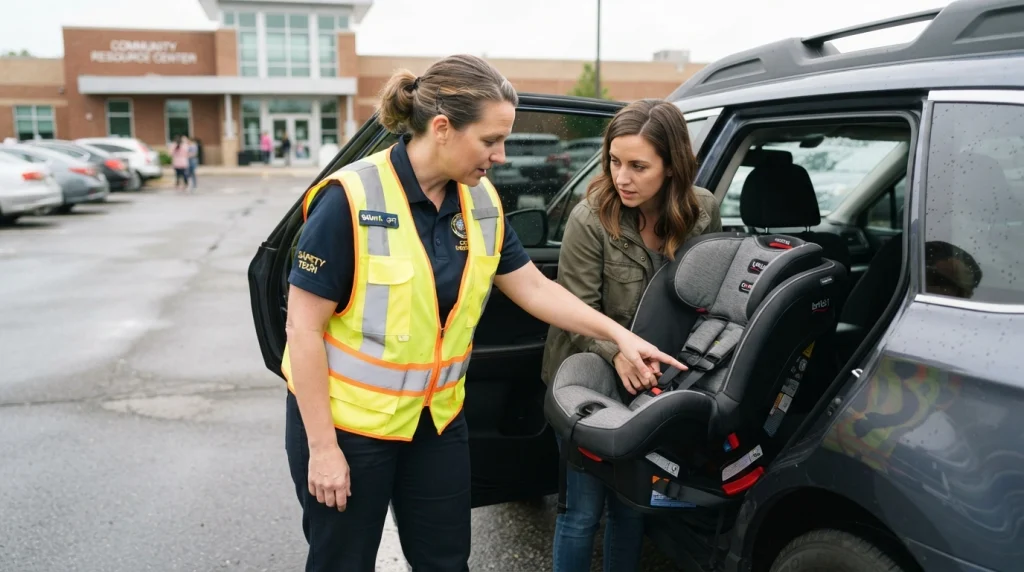
You can get a car seat installation checked at participating inspection stations, community safety events, and appointments with certified child passenger safety technicians. Many services are free, although availability differs by location.
A Child Passenger Safety Technician (CPST) is a trained professional who helps caregivers select, install, and use child restraints correctly. In the United States, the national certification program is administered by Safe Kids Worldwide.
Find a Certified Technician Near You
The easiest starting point is an official child passenger safety directory. These resources help you locate trained professionals rather than relying on an unverified installation service.
- Inspection stations: Check the NHTSA directory for participating child restraint inspection locations.
- Community safety events: Use the Safe Kids checkup event finder to locate scheduled inspections.
- Certified technicians: Visit the National CPS Certification guidance to find qualified assistance.
- Local organizations: Ask hospitals, health departments, or community safety programs whether they offer checks by certified technicians.
Some fire departments and police stations participate in car seat safety programs. However, not every station has a certified technician or offers this service.
Always contact the location before visiting.
Which Inspection Option Is Best?
| Inspection Option | Typical Cost | Best For |
|---|---|---|
| Public inspection station | Usually free | Individual installation reviews |
| Community checkup event | Often free | Families seeking local assistance |
| Private certified technician | Varies by provider | Flexible or personalized appointments |
| Virtual consultation | Free or paid | Remote guidance where available |
An in-person appointment offers direct inspection and hands-on instruction. Virtual guidance may help when local services are unavailable, but it can have limitations.
Section Takeaway: Start with a verified CPST directory and confirm the technician’s certification before booking.
How Do You Schedule a Car Seat Inspection?
To schedule a car seat inspection, find a participating provider, contact the location, and confirm the appointment requirements. Most programs ask you to bring your vehicle with the child restraint installed.
Step-by-Step Booking Process
- Search your area: Use a recognized car seat inspection locator and enter your city, state, or ZIP code.
- Choose a provider: Look for a convenient inspection station, safety event, or certified technician.
- Confirm certification: Ask whether a currently certified CPST will conduct the inspection.
- Contact the organizer: Check appointment availability, fees, and whether walk-ins are accepted.
- Describe your seat: Mention whether you’re using a rear-facing, forward-facing, or booster seat.
- Confirm your appointment: Record the address, date, arrival instructions, and required documents.
Safe Kids notes that an individual educational check commonly takes about 20–30 minutes. Your appointment may take longer if you have multiple seats or complicated installation questions.
Questions to Ask Before Booking
- Is the inspection free, or is there a service fee?
- Will a certified child passenger safety technician be available?
- Can the technician check multiple car seats?
- Should I bring my child to the appointment?
- Do you offer help with unusual vehicle seating arrangements?
- Are virtual consultations available if I cannot attend?
If your child has special transportation needs, mention them when scheduling. Some technicians have additional training for children with special healthcare needs.
A convenient appointment matters, but appropriate expertise matters more.
How Should You Prepare for a Car Seat Check?
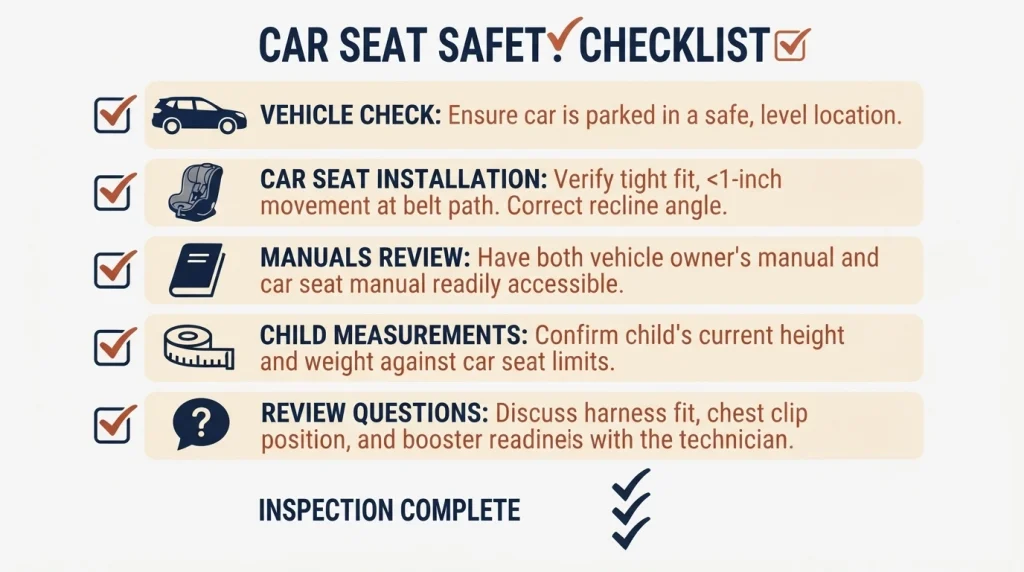
Prepare by installing the seat according to its manual, gathering your documents, and noting questions about your child’s fit. The technician can then evaluate your existing setup and explain necessary changes.
What Should You Bring?
- Your vehicle: Bring the car used regularly to transport your child.
- The car seat: Have the complete seat, base, and required manufacturer-supplied parts available.
- Car seat manual: Bring the instructions for the exact manufacturer and model.
- Vehicle owner’s manual: The child restraint section identifies seating positions and approved anchor locations.
- Child’s measurements: Know their current weight and height.
- Your child, if possible: This lets the technician check harness position and fit directly.
- Your questions: Write down concerns about tightness, seat angle, straps, and installation methods.
If you’ve lost the car seat manual, look for an official replacement from the manufacturer. Avoid treating instructions for a similar-looking model as interchangeable.
Should You Install the Car Seat Before Arriving?
Yes, if you can follow the manufacturer’s directions. Arriving with your own installation allows the technician to identify mistakes and explain them.
Do not improvise a setup when the instructions are unclear. Contact the manufacturer or technician before transporting a child in a seat you cannot install correctly.
I use the same principle when checking vehicle safety components: the correct specification matters more than how solid something feels. A car seat deserves that level of care.
Keep the surrounding vehicle area accessible. The technician may need to inspect the seat belt routing, lower anchors, or tether attachment.
Section Takeaway: Bring both manuals, your child’s measurements, and the actual vehicle. Arrive ready to participate in the installation process.
What Happens During a Car Seat Installation Inspection?
During an inspection, a certified technician evaluates the car seat, vehicle compatibility, installation method, and child’s restraint fit. They also teach you how to make corrections and repeat the installation independently.
1. Reviewing the Seat and Vehicle
The technician starts by identifying the car seat model and checking the instructions. They compare its requirements with your vehicle’s approved child restraint positions.
They may review:
- The manufacturer’s height and weight limits.
- The seat’s expiration information and visible condition.
- Possible recalls or missing components.
- Whether the chosen seating position allows proper installation.
- The child’s age, measurements, and restraint needs.
2. Checking the Installation Method
Most harnessed car seats use either the vehicle seat belt or the lower anchors for installation. Lower anchors are part of the LATCH system, which stands for Lower Anchors and Tethers for Children.
The technician confirms that you used an allowed installation method and followed the correct belt path. They also check whether the seat belt locks properly when that installation method requires it.
For a forward-facing harnessed seat, they inspect the top tether and its attachment point. The tether helps limit forward movement during a collision.
Use both lower anchors and the seat belt together only if the car seat and vehicle manufacturers explicitly permit it.
3. Checking Installation Tightness and Harness Fit
For a harnessed car seat, the technician checks movement at the designated belt path. Generally, the installed seat should move less than one inch side to side or front to back at that location.
The technician then evaluates the harness against the child’s shoulders and body. They verify the allowed harness height, snugness, and chest clip placement.
Rear-facing seats also require the correct recline angle. A level indicator or manufacturer-approved adjustment method helps establish that angle.
The American Academy of Pediatrics car seat guidance explains why correct restraint selection, harnessing, and installation all matter.
4. Teaching You to Reinstall the Seat
A good car seat check is an educational appointment, not simply a technician tightening a strap. You should have the opportunity to practice the installation yourself.
Before leaving, make sure you can:
- Identify the correct belt path or lower anchor connectors.
- Lock and tighten the installation correctly.
- Check movement in the correct location.
- Adjust the harness and chest clip.
- Recognize when the seat needs another check.
An inspection does not create a permanent guarantee of correct use. You still need to follow the instructions every time you reinstall or use the seat.
Section Takeaway: The best inspection leaves you with both a corrected installation and the skills to maintain it.
What Installation Problems Do Technicians Look For?
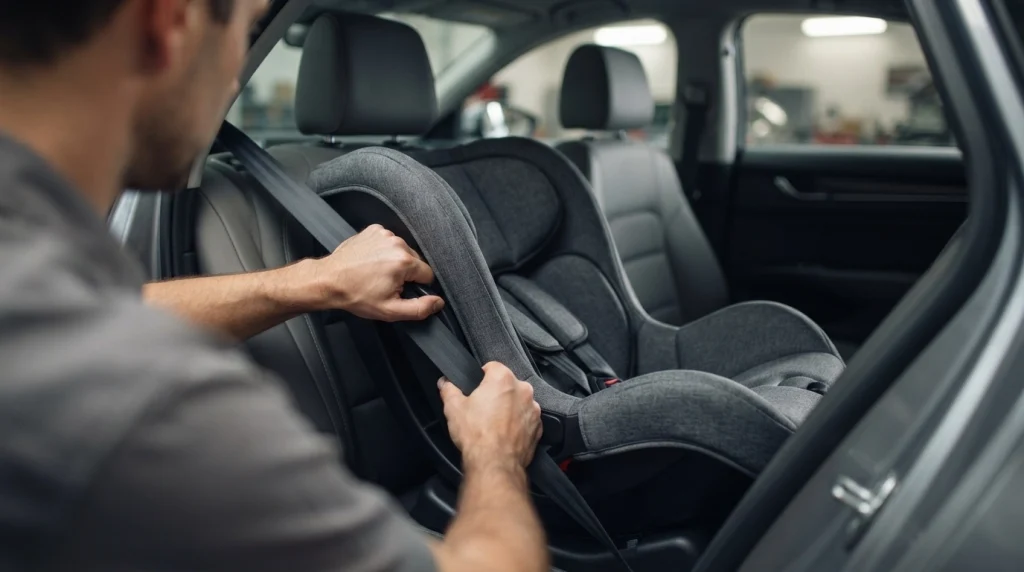
Technicians commonly look for loose installations, incorrect restraint positioning, improper harness adjustment, and conflicts with manufacturer instructions. Some errors are difficult to notice without a systematic inspection.
Common Car Seat Installation Mistakes
- Loose installation: A harnessed seat moves more than one inch at the belt path.
- Incorrect belt routing: The vehicle seat belt passes through the wrong belt path for the seat’s orientation.
- Unused top tether: A forward-facing harnessed seat lacks the required tether connection when installed.
- Wrong recline angle: A rear-facing seat sits outside the manufacturer’s permitted angle range.
- Loose harness: Excess slack prevents the harness from holding the child snugly.
- Incorrect chest clip: The clip sits too low rather than around armpit level.
- Improper lower anchor use: The installation exceeds the applicable lower anchor weight limit.
- Unapproved accessories: Added padding, covers, or inserts interfere with the restraint’s intended operation.
The technician may also identify a seat that the child has outgrown. Seat selection matters just as much as installation technique.
Does the Center Rear Seat Always Work Best?
Not necessarily. A center rear position can be a good choice when the car seat can be installed correctly there.
However, some vehicles don’t permit lower anchor use in that position. Seat shape and belt geometry can also affect installation.
A correct installation in an approved outboard rear seat is preferable to an incorrect installation in the middle.
What About Car Seat Covers and Accessories?
Aftermarket car seat covers, harness pads, and extra cushions deserve careful attention. Some accessories may change harness fit or interfere with a child restraint’s operation.
Use accessories only when the car seat manufacturer specifically approves them for your model. Ordinary vehicle upholstery protection should never compromise the child restraint installation.
Pro tip: Check your vehicle owner’s manual and car seat manufacturer’s instructions before changing anything about the installation. Ask a certified technician when the guidance is unclear.
Section Takeaway: Secure installation, proper harnessing, and manufacturer compatibility are separate checks. All three need attention.
When Should You Have a Car Seat Checked Again?
Get another inspection whenever you change the installation, switch vehicles, or encounter a restraint problem you cannot resolve. Periodic checks can also help as your child grows.
Situations That Call for Another Inspection
- New car seat: Check the installation when buying or replacing a child restraint.
- Different vehicle: Confirm compatibility and installation in each car used to transport the child.
- Seat reinstallation: Review the setup after removing the restraint for cleaning or other reasons.
- Change in riding direction: Get guidance when transitioning from rear-facing to forward-facing.
- Change to booster use: Verify that the child meets the requirements and the vehicle belt fits correctly.
- Unexplained movement: Seek assistance if the seat becomes loose or no longer installs as instructed.
- Vehicle collision: Follow the seat manufacturer’s crash-replacement instructions and obtain further guidance.
What If the Car Seat Has Been Recalled?
Check the seat’s brand, model, and manufacture date against current recall notices. The NHTSA recall information can help identify relevant safety campaigns.
Registering your car seat with its manufacturer also helps you receive future safety notifications. Keep your registration details current.
As of 2026, NHTSA and Safe Kids continue to recommend certified inspection assistance for families who need installation guidance. A technician can help explain instructions, but manufacturer requirements still govern the particular seat.
Remember that a routine inspection doesn’t replace checking harness fit before each trip. Correct everyday use remains your responsibility.
Section Takeaway: Recheck the installation after meaningful changes, and seek professional assistance whenever you’re uncertain about safety.
Frequently Asked Questions About Car Seat Installation Checks
Is it free to get a car seat installation checked?
Many car seat inspection stations and community events provide free assistance. Private appointments and certain virtual services may charge a fee, so confirm the price when booking. A free appointment with a currently certified technician can provide valuable hands-on instruction.
How long does a car seat safety inspection take?
A typical one-on-one check takes approximately 20–30 minutes, according to Safe Kids. The exact time depends on the seat, vehicle, number of restraints, and questions involved. Allow additional time if you need detailed assistance or practice.
Can a fire department check my car seat?
Some fire departments offer car seat checks through certified technicians, but others do not. Call the department first and ask whether a currently certified Child Passenger Safety Technician is available. Do not assume every firefighter has the specialized training.
Should I get a car seat checked before my baby is born?
Yes. An inspection before your baby’s arrival gives you time to correct installation problems and practice using the seat. Bring the car seat, vehicle, and manuals. You can review the installation again after your baby arrives to confirm proper harness fit.
Can I get a car seat checked online?
Some certified technicians offer virtual consultations using video calls or photographs. These services may help you understand instructions and identify visible problems. However, remote guidance cannot always replace a complete hands-on assessment of the installed restraint.
How do I know whether my car seat is tight enough?
For a harnessed car seat, hold it at the belt path and check side-to-side and front-to-back movement. It should generally move less than one inch. Movement elsewhere on the seat isn’t the correct test, and tightness alone doesn’t prove the installation is correct.
Can a technician inspect an older or secondhand car seat?
Yes, a technician can examine an older seat for visible concerns, labeling, recalls, and manufacturer limits. However, they cannot always verify an unknown crash history or hidden damage. If you cannot establish a used seat’s safety history, ask the manufacturer about appropriate next steps.
Final Takeaway: Getting a car seat installation checked is a practical way to improve your child’s travel safety. Find a certified technician, prepare your manuals, and take part in the inspection so you understand the installation yourself.
Before your next journey, confirm that the car seat is appropriate for your child and installed according to both manuals. If anything seems uncertain, arrange a professional check rather than guessing.

Daniel Brooks is an automotive writer and product researcher focused on car accessories, car tech, maintenance, and practical driving guides. At Plug-in Car World, he helps drivers make smarter automotive decisions through honest reviews and research-driven content.
