
How to Recycle an Old Car Seat
Quick Answer
To recycle an old car seat, first work out whether it is a vehicle seat, a child safety seat, or only a seat cover. Then separate the cover, frame, foam, and metal parts, and take each part to the recycler, scrap yard, or waste service that accepts it. Start by learning how to remove a seat cover for cleaning, because that step makes sorting much easier.
Do this first
- Identify the seat: A vehicle seat and a child safety seat follow different rules.
- Check reuse first: A sound seat may serve someone else, while a damaged seat should not.
- Separate the parts: Mixed seats often end up in landfill, while sorted parts can be recycled.
- Handle airbags safely: Leave a seat airbag module to a professional if you are unsure.
- Check local rules: Acceptance, fees, and drop-off points vary by area.
Do not skip this
- Never pass on an expired, recalled, or crash-damaged child safety seat for another child to use.
This guide covers how to recycle an old car seat without guessing, and it goes deeper than a simple “take it to the dump” answer.
Here you will find how to tell the seat types apart, how to prepare each part, and where each part usually goes.
In This Guide
What kind of old car seat do you have?
A vehicle seat is the fixed seat built into a car, van, or truck. A child safety seat is a separate, portable seat that restrains a child, and it carries its own labels, expiry date, and safety rules.
A seat cover is only the removable layer that protects the vehicle seat. Recycling a cover alone is a much smaller job than recycling a whole seat.
Start with the labels and the shape of the seat. A vehicle seat usually has rails, a recliner, and a large metal frame.
A child safety seat usually has a harness, a shell, and a label with a model number and manufacture date. Check that label before you decide anything else.
Why does the distinction matter?
The distinction matters because safety rules differ sharply. A vehicle seat can often be broken down for scrap metal and other materials.
A child safety seat, by contrast, must not return to use once it has expired, been recalled without a fix, or been in a serious crash. That rule protects the next child, even if the seat looks fine.
As of 2026, local recycling options still vary a lot. A scrap yard may take a vehicle seat frame, while a child seat shell may need a specialist take-back scheme or a waste service.
Section takeaway: Identify the seat first, because a vehicle seat, a child safety seat, and a seat cover do not follow the same reuse or recycling route.
Can you recycle a car seat, or reuse it first?
Recycling should come after reuse, not before it. A seat in sound, clean, and complete condition may still help another driver or a workshop.
Reuse makes sense only when the seat is safe and honest about its history. Do not hide damage, a crash, a recall, or missing parts.
Ask these questions before you choose a route:
- Is the frame straight, and does the recliner and adjuster still work?
- Is the foam firm, dry, and free from mould or a strong odour?
- Are all bolts, rails, and trim parts present, or can you list what is missing?
- For a child seat, is it within its expiry date, free from recalls, and free from crash damage?
If you answer no to a safety question, choose disposal or recycling. A bargain is not worth a hidden safety risk.
For a child seat, read about whether a secondhand car seat is safe to use before you offer it to anyone. That check helps you avoid passing on a seat that looks usable but is not.
For a vehicle seat, a salvage yard, a parts breaker, or a repair shop may want a complete seat. A torn cover alone rarely blocks reuse, since a new cover can refresh the seat.
When reuse is not safe or practical, move to recycling. Sorting the seat first gives each material a better chance of a second life.
Section takeaway: Reuse a sound seat with a full history, and recycle a seat that is damaged, incomplete, or unsafe to pass on.
How do you prepare a vehicle seat for recycling?
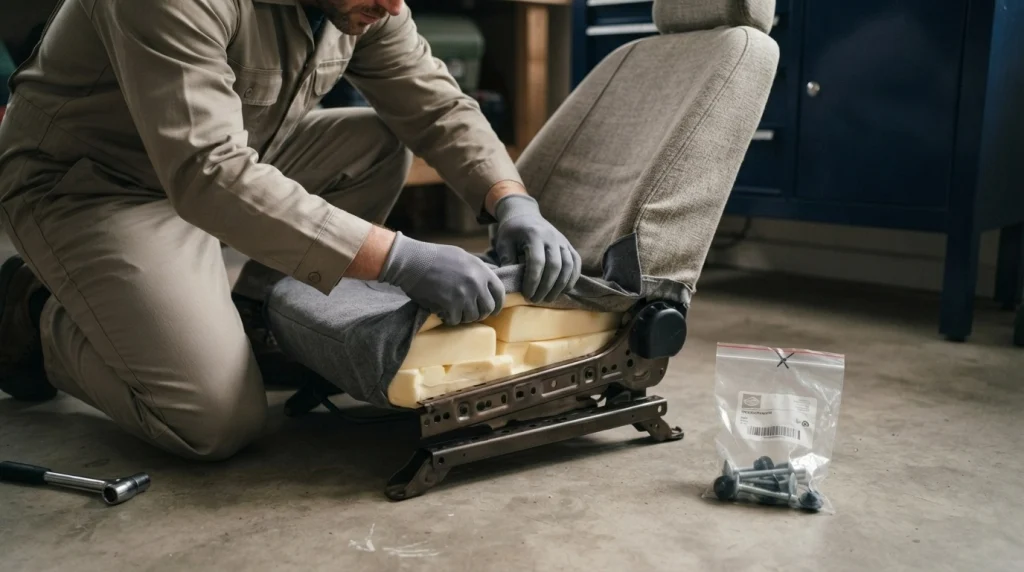
Preparation takes time, but it keeps the job safe and makes the parts easier to sort. Work in a clear, dry space, and keep small bolts in a labelled bag.
Some vehicle seats contain a side airbag. That part needs extra care, and you should not cut, crush, or open it.
Pro tip: Check the vehicle owner’s manual for airbag and seat-removal guidance, and ask a certified mechanic if the manual is unclear or the seat has an airbag module.
Follow these steps in order:
- Disconnect the vehicle battery if the seat has power, heating, or an airbag connection, and follow the manual for the waiting time.
- Unplug any seat connectors only after the battery step, and label each plug if you plan to reuse the seat.
- Remove the seat bolts, lift the seat out with help, and set it on a flat surface.
- Remove the headrest, trim, and seat cover, and keep each group separate.
- Cut or unclip the foam from the frame only after you have removed wiring and trim.
- Bag metal fixings, plastic clips, and wiring separately for the recycler.
Do not rush the airbag step. A deployed or damaged airbag module belongs with a professional recycler or a qualified workshop, not in household waste.
Clean, dry parts also help. Shake out loose dirt, wipe down plastic trim, and let damp foam dry before transport if the recycler asks for clean loads.
For the cover itself, learn how to wash a seat cover without damaging it before you decide whether to keep, donate, or discard it. A clean cover is easier to reuse than a stained one.
Section takeaway: Disconnect power first where the manual requires it, remove the cover and trim, and keep metal, foam, plastic, and wiring in separate groups.
What parts of a car seat can be recycled?
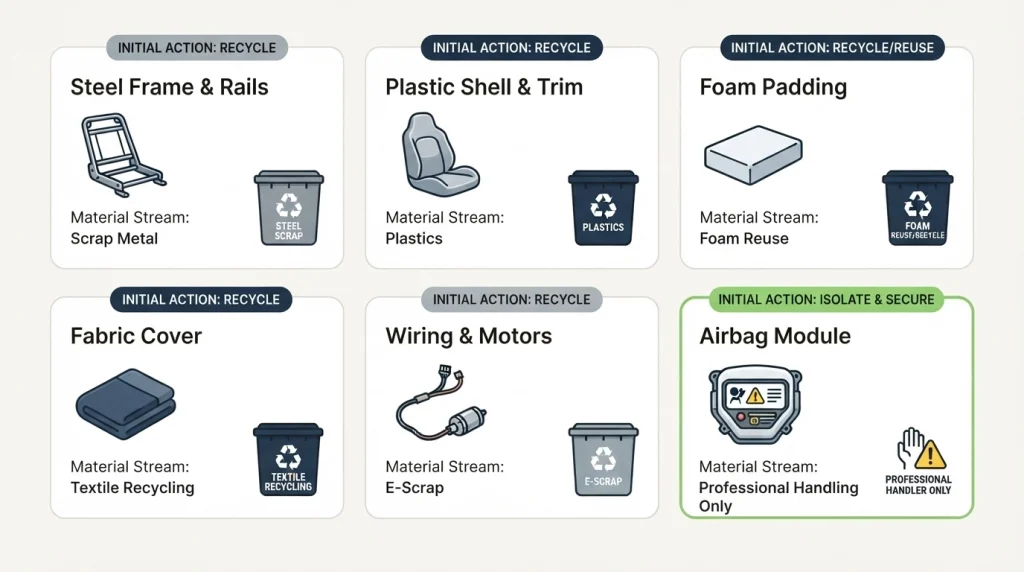
A car seat is a mix of materials, not a single item. That mix explains why many waste services will not take a whole seat in one bin.
Metal gives the best recycling result in most areas. Foam, fabric, and mixed plastic are harder, and some loads may still go to energy recovery or landfill.
Use this table as a starting point, then confirm each route with your local recycler:
| Part | Likely route | What to do first |
|---|---|---|
| Steel frame and rails | Scrap metal recycling | Remove foam, trim, and wiring |
| Plastic shell and trim | Plastic recycling, where accepted | Remove metal clips and foam backing |
| Foam padding | Specialist foam reuse, or waste service | Keep it dry and clean, and ask first |
| Fabric or leather cover | Reuse, textile recycling, or waste | Wash it if you plan to reuse it |
| Wiring, motors, and heaters | Electrical waste or scrap, by site rules | Keep wiring intact until drop-off |
| Airbag module | Professional handling only | Do not cut, crush, or bin it |
Foam deserves a clear warning. Clean foam may find a second use, while mouldy, wet, or oil-soaked foam often cannot.
Do not burn foam or fabric to get rid of them. Burning creates smoke and harmful fumes, and it breaks local waste rules in many areas.
Ask the recycler what they accept before you drive over. A short call can save a wasted trip with a bulky seat in the boot.
Section takeaway: Metal recycles most easily, while foam, mixed plastic, and covers need a local check, and airbag parts need professional handling.
What if the old seat is a child safety seat?
A child safety seat needs a different decision path. Its value lies in crash protection, not in its fabric or shell alone.
Stop and check three things before you reuse, donate, or recycle it. First, check the expiry date on the label.
Second, check for a recall. You can learn how to check whether a car seat has been recalled using the model number and manufacture date.
Third, check the crash history. A seat in a serious crash should leave service, even if the damage looks minor.
If the seat has expired, read what to do with an expired car seat before you store it or give it away. Expiry reflects ageing plastic, worn harness parts, and changing safety standards.
For an unsafe child seat, make it unusable before disposal. Cut the harness straps, remove the cover, and mark the shell so no one picks it up for reuse.
That step feels wasteful, but it stops a dangerous seat from reaching another family. A free seat is not a safe seat if its history is unknown.
Some makers and retailers run take-back or trade-in events from time to time. Those schemes vary by brand, area, and year, so check the maker first.
For general safety context, the NHTSA site covers recalls, complaints, and child passenger safety. Use it to confirm a recall, not to guess from a forum post.
For wider product safety alerts, the U.S. Consumer Product Safety Commission site lists recalls for many consumer products. Check it when a label or maker notice leaves you unsure.
Section takeaway: An expired, recalled, or crash-damaged child safety seat should not be reused, and it should be made unusable before disposal or recycling.
Where can you take an old car seat?
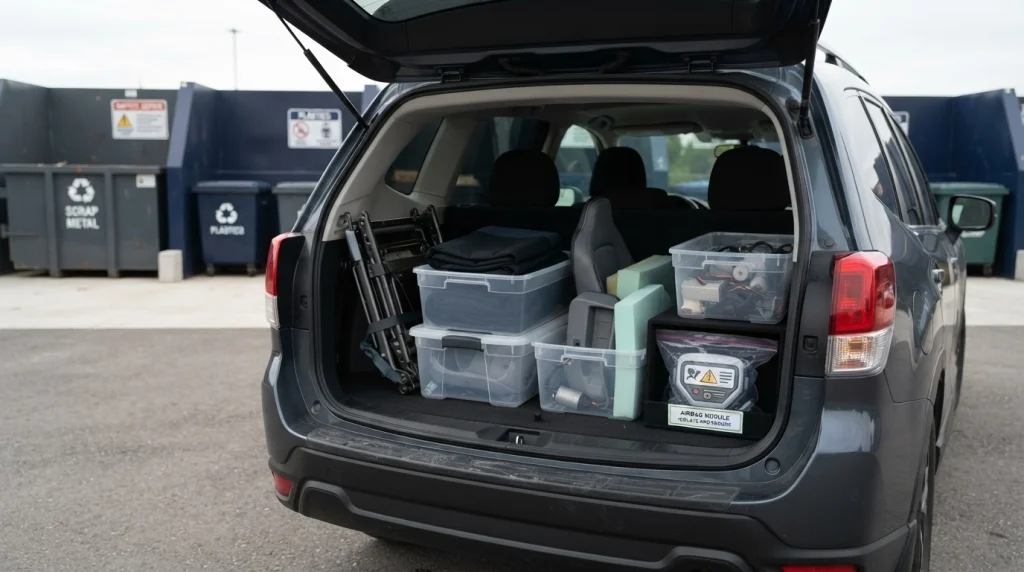
Start local, because no single national route fits every seat. Your council, waste service, or recycler will give the clearest answer.
Try these routes in order:
- Auto recycler or scrap yard, for a vehicle seat frame and metal parts.
- Parts breaker or salvage yard, for a complete vehicle seat that still works.
- Maker or retailer take-back scheme, for a child safety seat, where one runs.
- Municipal bulky waste or household waste site, for parts no recycler accepts.
- Textile or foam specialist, for a clean cover or foam load, where one exists.
Call ahead with a short description. Tell them whether it is a vehicle seat or a child seat, whether it has an airbag, and whether you have already separated the parts.
That call also clarifies fees. Some scrap yards pay a small amount for clean metal, while others charge for mixed or bulky loads.
Do not leave a seat by a bin, on a verge, or outside a charity shop. Fly-tipping creates a hazard, and a charity cannot safely resell an unknown child seat.
For general waste sorting, the EPA recycling guidance explains how to sort common household materials. Local rules still win when they differ from general guidance.
Transport matters too. A vehicle seat is bulky and heavy, so measure it, fold it where the design allows, and protect your car boot from sharp rails.
Some waste sites also ask you to book a bulky drop-off slot. Check that step online or by phone, so the seat does not sit in your garage for another month.
Section takeaway: Call a local auto recycler, parts breaker, or waste service first, describe the seat type and airbag status, and confirm fees before you travel.
Frequently Asked Questions
Can I put a whole car seat in my household recycling bin?
No, a whole seat does not belong in a household recycling bin. It is too large, too mixed, and it may contain metal, foam, wiring, and airbag parts that need separate handling.
Can I recycle a car seat cover on its own?
Yes, in many cases you can reuse or recycle a cover more easily than a whole seat. Remove it, wash it if it is reusable, and ask a textile recycler or waste service what they accept.
Should I donate an old child car seat?
Donate it only if it is within its expiry date, free from recalls and crash damage, and complete with its manual and labels. If any of those checks fail, do not donate it.
What should I do with a seat from a crashed car?
Treat a vehicle seat from a serious crash with care, and ask a recycler or workshop whether the frame is still sound. Treat a child seat from a serious crash as out of service, and make it unusable before disposal.
Do I need to remove the airbag from a vehicle seat?
Do not remove or open an airbag module unless you are qualified and the manual guides you. Leave that part to a professional recycler or workshop, and tell the drop-off site about it.
Will a scrap yard pay me for an old car seat?
A scrap yard may pay a small amount for clean metal, but many sites pay little or nothing for a mixed seat. Call ahead, ask about fees, and do not assume a payment before you arrive.
Ready to clear that old seat out? Sort it by type, separate the parts, and call your local recycler first. That one call turns a bulky problem into a clear, safe drop-off.

Daniel Brooks is an automotive writer and product researcher focused on car accessories, car tech, maintenance, and practical driving guides. At Plug-in Car World, he helps drivers make smarter automotive decisions through honest reviews and research-driven content.
