
How to Position a Car Seat Belt Safely During Pregnancy
Quick Answer
To position a car seat belt safely during pregnancy, place the lap belt snugly below your belly, across your hip bones and pelvis. Position the shoulder belt across the center of your chest, between your breasts, and away from your neck. Always wear both parts of your three-point seat belt, following the National Highway Traffic Safety Administration’s pregnancy seat belt recommendations.
Five Essential Safety Checks
- Lap belt position: Keep the belt below your belly, resting firmly across your pelvic bones.
- Shoulder belt placement: Route the belt across your chest, never under your arm or behind your back.
- Proper belt tension: Remove unnecessary slack while allowing comfortable breathing and normal movement.
- Correct seat position: Sit upright with your back supported and maintain safe clearance from the steering wheel.
- Airbag protection: Keep factory airbags enabled because they work together with correctly worn seat belts.
Important Safety Reminder
- Never place the lap belt directly across your pregnant abdomen.
- Seek immediate medical evaluation after a vehicle crash, even without obvious injuries.
Pregnancy changes how you sit, move, and fit inside a vehicle. As your belly grows, even an ordinary seat belt can feel uncomfortable or difficult to position correctly.
I’ve found that the clearest way to approach vehicle safety is to check belt routing before considering accessories. This guide explains correct positioning, seat adjustments, common mistakes, and what to do after a collision.
In This Guide
- How Should You Wear a Seat Belt While Pregnant?
- Why Does Seat Belt Position Matter During Pregnancy?
- How Should Pregnant Drivers Adjust Their Seats and Airbags?
- How Does Seat Belt Fit Change During Pregnancy?
- Are Pregnancy Seat Belt Adjusters and Accessories Safe?
- What Should You Do After a Car Crash While Pregnant?
- Frequently Asked Questions
How Should You Wear a Seat Belt While Pregnant?
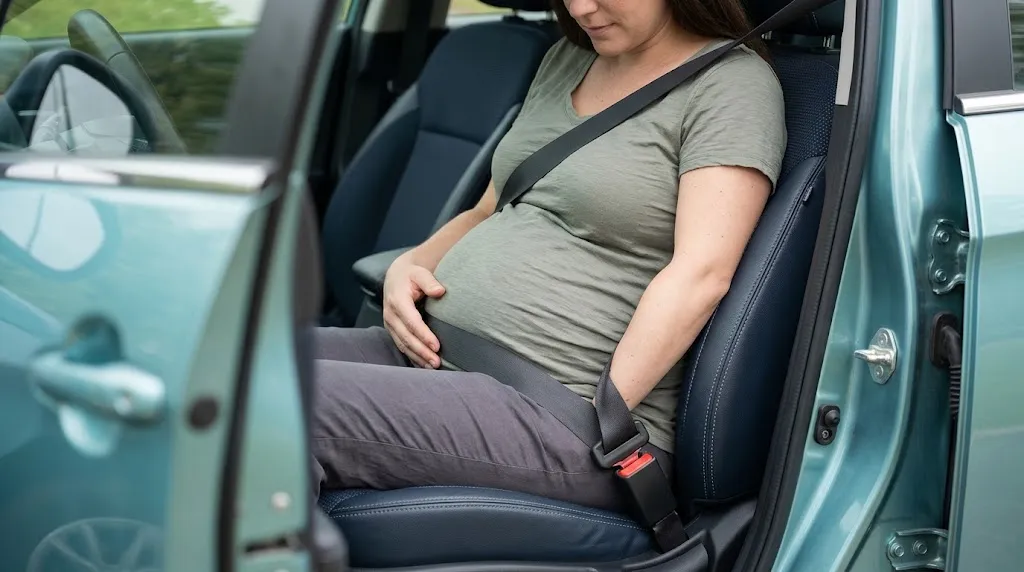
The safest way to wear a seat belt during pregnancy is with the lap portion below your belly and the shoulder portion across your chest. Both sections should remain properly positioned throughout your journey.
A three-point seat belt is the standard vehicle restraint that crosses your shoulder and hips. Its design helps distribute crash forces across stronger parts of your body.
Step 1: Sit Upright Before Buckling Up
Start by sitting comfortably against the seatback. Keep your hips toward the rear of the seat and avoid unnecessary reclining.
An upright position helps your seat belt follow its intended path. It also provides a more stable position during sudden braking.
- Keep your back supported against the seatback.
- Position your hips fully against the seat cushion.
- Keep your feet comfortably supported.
- Avoid leaning forward or slouching.
Step 2: Place the Lap Belt Below Your Belly
Pull the lap portion down until it rests across your hip bones and pelvis. The belt should pass below the rounded part of your pregnant abdomen.
Do not position it across your stomach or at your waist. Those positions can concentrate crash forces where they should not be directed.
As pregnancy progresses, check that the belt stays low instead of creeping upward. Reposition it before the vehicle moves whenever necessary.
Step 3: Position the Shoulder Belt Across Your Chest
Place the shoulder belt over your shoulder and diagonally across your chest. It should pass between your breasts and remain away from your neck.
Never move the shoulder belt behind your back or underneath your arm. Doing so removes important upper-body restraint protection.
The American College of Obstetricians and Gynecologists (ACOG) recommends wearing both the lap and shoulder portions throughout pregnancy.
Step 4: Remove Excessive Belt Slack
After fastening your belt, gently adjust the webbing to remove unnecessary looseness. It should feel secure without restricting normal breathing.
Excessive slack allows greater body movement before the belt restrains you. A snug fit helps the restraint perform as designed.
- Check that the belt lies flat rather than twisted.
- Make sure the buckle locks securely.
- Remove loose folds from the shoulder section.
- Check that the lap belt remains across your hips.
Step 5: Recheck Before Every Journey
Your position can change when entering a vehicle, adjusting clothing, or changing seats. Take a few seconds to verify the belt before driving.
I recommend checking the lap belt first because its position is easy to overlook. Then confirm the shoulder belt crosses your chest correctly.
Section Takeaway: Keep the lap belt low, the shoulder belt across your chest, and both sections snug. Correct positioning matters on every trip, including short drives.
Why Does Seat Belt Position Matter During Pregnancy?
Correct seat belt positioning protects the pregnant occupant while helping reduce the chance of injury to the developing baby. Seat belts are especially important because pregnancy does not eliminate the risks of sudden vehicle deceleration.
During a collision, your body continues moving until a restraint stops it. A properly positioned belt helps transfer those forces to structures better suited to handle them.
Why the Pelvic Bones Matter
The pelvis provides a stronger area for lap-belt restraint than the abdomen. Keeping the belt low helps reduce direct pressure on the pregnant uterus during a crash.
Placing the belt across the belly can expose the abdomen to concentrated forces. A loose or incorrectly routed shoulder belt can also reduce upper-body protection.
Correct vs. Incorrect Seat Belt Positions
| Component | Safer Position | Unsafe Position |
|---|---|---|
| Lap belt | Low across hip and pelvic bones | Across the belly or waist |
| Shoulder belt | Across chest, between breasts | Under the arm or behind the back |
| Belt tension | Comfortably snug with minimal slack | Loose, twisted, or poorly routed |
| Seatback | Comfortably upright | Excessively reclined |
| Airbags | Enabled and unobstructed | Intentionally disabled for pregnancy |
Can a Seat Belt Hurt Your Baby During Normal Driving?
A correctly positioned seat belt is recommended throughout pregnancy. It does not need to press directly against your belly to restrain you safely.
If the belt causes discomfort, adjust your seating position and belt routing while parked. Do not respond by removing the belt or placing the shoulder strap behind you.
Persistent pain or unusual abdominal discomfort deserves advice from your maternity healthcare professional. Do not assume every symptom comes from belt pressure.
What Happens During Sudden Braking?
Sudden braking can cause your upper body to move forward. Your three-point belt is designed to help restrain this movement.
That protection depends on proper placement and minimal slack. The belt should remain correctly routed whether you’re driving slowly or traveling on a highway.
Section Takeaway: A seat belt protects best when crash forces pass through appropriate body structures. Keeping the lap section below your belly is a crucial part of that fit.
How Should Pregnant Drivers Adjust Their Seats and Airbags?
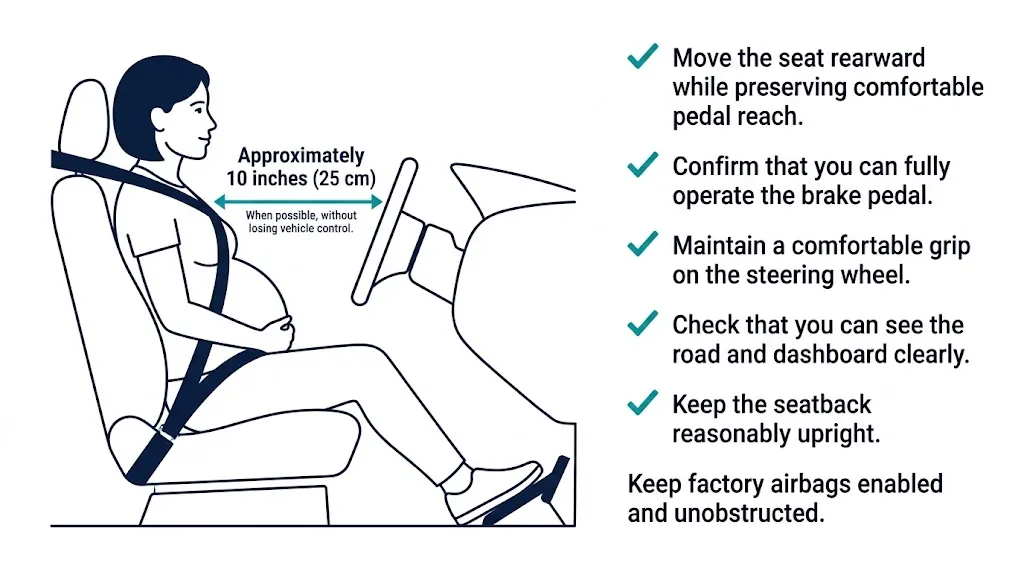
Pregnant drivers should sit upright, maintain sufficient steering-wheel clearance, and keep airbags enabled. The goal is to balance safe restraint positioning with full vehicle control.
Seat adjustments become more important as your abdomen grows. Small changes to seat position may improve comfort without compromising protection.
Adjust Your Distance From the Steering Wheel
ACOG advises maintaining approximately 10 inches, or 25 centimeters, between the steering wheel and your breastbone. Maintain this distance when possible without losing control of the vehicle.
Move your seat backward only as far as you can safely reach the pedals and steering wheel. Your belly should not touch the steering wheel.
- Move the seat rearward while preserving comfortable pedal reach.
- Confirm that you can fully operate the brake pedal.
- Maintain a comfortable grip on the steering wheel.
- Check that you can see the road and dashboard clearly.
- Keep the seatback reasonably upright.
If you cannot maintain adequate clearance and control, consider having someone else drive. Never sacrifice braking ability to achieve a particular seat distance.
Adjust Steering Wheel Height and Angle
If your steering wheel tilts, aim its center toward your breastbone rather than your belly or face. This helps establish a more appropriate position relative to the driver’s front airbag.
Make all adjustments while parked. Afterward, verify that the steering wheel locks securely into position.
Should You Turn Off Airbags During Pregnancy?
No. Pregnancy alone is not a reason to disable a working factory airbag.
Airbags are part of the vehicle’s supplemental restraint system, often called the SRS. They are designed to work alongside seat belts, not replace them.
A properly worn seat belt helps position your body for airbag protection. Removing either layer of protection can increase injury risk.
Pro tip: Consult your vehicle owner’s manual for airbag and seating instructions. If an airbag warning light remains illuminated, have the restraint system inspected by a qualified technician.
When Should You Stop Driving During Pregnancy?
There isn’t one universal pregnancy week when every driver must stop driving. Safe driving depends on your physical comfort, medical circumstances, and ability to control the vehicle.
Ask your maternity healthcare professional for individual guidance when driving becomes difficult. Situations requiring special attention include:
- Your abdomen touches or approaches the steering wheel.
- You cannot operate the pedals comfortably.
- Your healthcare professional advises limiting driving.
- You experience dizziness, severe discomfort, or symptoms that affect concentration.
- You cannot maintain a safe seating position.
Section Takeaway: Maintain enough space for safe airbag operation without losing vehicle control. Keep the airbags enabled and seek individual medical advice when driving becomes uncomfortable or difficult.
How Does Seat Belt Fit Change During Pregnancy?
Seat belt positioning principles stay the same during every trimester. However, changes in abdominal size and comfort may require more frequent adjustments.
The correct response is to improve belt fit, not stop wearing it. Check positioning whenever your usual seating arrangement starts feeling different.
First Trimester: Build Safe Habits Early
During early pregnancy, your abdomen may not significantly affect belt placement. This is a good opportunity to establish consistent safety habits.
- Wear the complete three-point belt every journey.
- Position the lap portion across your pelvis.
- Keep the shoulder section across your chest.
- Adjust your seat for comfortable vehicle control.
Don’t wait until your belly becomes prominent to change unsafe belt habits. Correct positioning matters from the beginning of pregnancy.
Second Trimester: Watch the Lap Belt
As your belly becomes larger, the lap belt may be more likely to ride upward. Check its position carefully before setting off.
Keep the webbing below your abdomen and snug across the hips. If it shifts repeatedly, inspect your posture and seating position while parked.
A correctly positioned belt should not require pulling the shoulder portion away from your body. Both belt sections need to remain functional.
Third Trimester: Check Steering Wheel Clearance
Late pregnancy can make entering the car and reaching the pedals more challenging. A larger abdomen may also reduce available steering-wheel clearance.
Reassess the driver’s seat position regularly. Consider riding as a passenger when maintaining safe driving posture becomes difficult.
Is Sitting in the Passenger Seat Safer?
The safest practical seating arrangement is one that provides a correctly fitted restraint and suitable vehicle protection. Riding as a passenger avoids the additional task of controlling the car.
When using the front passenger seat, move it backward as far as comfortably possible. Continue wearing the lap and shoulder belt correctly.
Back-seat passengers must also buckle up. Whenever possible, choose a seating position equipped with a properly functioning three-point belt.
How Can You Stay Comfortable on Long Car Trips?
Long drives can become tiring during pregnancy, especially when sitting in one position. Plan regular opportunities to move and stretch.
ACOG’s travel during pregnancy guidance recommends frequent stops, comfortable clothing, hydration, and continued seat belt use.
- Plan regular breaks to walk and stretch.
- Keep drinking water available.
- Wear comfortable, nonrestrictive clothing.
- Recheck belt placement after each stop.
- Discuss lengthy journeys with your healthcare professional if you have pregnancy complications.
For journeys lasting more than four hours, ask your healthcare professional about your individual blood-clot risk. Travel precautions may differ depending on your medical history.
Section Takeaway: Belt positioning remains consistent throughout pregnancy, but seating needs change. Recheck comfort, belt placement, and steering-wheel clearance as your body changes.
Are Pregnancy Seat Belt Adjusters and Accessories Safe?
Standard three-point seat belts are the recommended restraint for pregnant occupants. Aftermarket pregnancy belt adjusters should not be assumed safer simply because they claim to reduce belly pressure.
Some accessories change the intended path of the restraint. That can affect how collision forces travel through your body.
What Are Pregnancy Seat Belt Adjusters?
Pregnancy seat belt adjusters are aftermarket accessories designed to change how a vehicle’s belt fits. Some use hooks, straps, or anchors to redirect the lap portion.
Although their marketing often emphasizes comfort, comfort does not establish crash protection. Any accessory that changes belt geometry deserves careful scrutiny.
Are Pregnancy Belt Adjusters Crash-Tested?
Not all aftermarket positioning devices undergo the same requirements as original vehicle restraint systems. Claims of government approval should be checked carefully.
In an official NHTSA interpretation concerning an aftermarket pregnancy belt-positioning device, the agency explained that its standards did not directly cover that product category.
NHTSA also raised concerns about altered crash-force distribution and additional belt slack. These are important considerations before purchasing an accessory.
- Do not assume a product is approved because its packaging mentions safety testing.
- Avoid devices that introduce excessive belt slack.
- Never redirect the belt between your legs without verified safety guidance.
- Do not substitute an aftermarket accessory for correct standard belt positioning.
- Ask your vehicle manufacturer about approved fit solutions.
Can You Use a Seat Belt Extender During Pregnancy?
A belt extender may be appropriate when the original belt cannot fasten or fit properly. However, compatibility matters because restraint components must function together.
Contact your vehicle manufacturer or authorized dealer for an approved, compatible solution. Avoid choosing an unknown universal extender based only on buckle appearance.
Do Car Seat Covers Affect Pregnancy Seat Belt Safety?
Car seat covers do not replace proper belt routing. Their suitability depends on vehicle compatibility, seat construction, and the location of safety equipment.
Some vehicles have airbags built into their seatbacks. An unsuitable cover can interfere with deployment or other seat safety functions.
NHTSA discusses these concerns in its guidance concerning aftermarket seat covers and side airbags.
Before installing a cover, check the vehicle owner’s manual and the manufacturer’s compatibility instructions. Confirm that the cover does not obstruct the buckle or belt routing.
What Should You Do if the Belt Feels Uncomfortable?
Start with adjustments that preserve the vehicle’s original restraint design. A small change to seatback angle or shoulder-belt height may improve fit.
- Adjust the shoulder-belt height if your vehicle supports it.
- Keep the seatback comfortably upright.
- Make sure the belt is not twisted.
- Check whether clothing is affecting belt placement.
- Ask an authorized dealer about vehicle-specific fit concerns.
Never place an unapproved cushion or positioning device between your body and the belt as a substitute for proper fit. If discomfort persists, seek advice rather than traveling unrestrained.
Pro tip: Your vehicle’s owner’s manual is the primary reference for seat accessories, airbag compatibility, belt extenders, and restraint adjustments.
Section Takeaway: The original three-point restraint is the starting point for pregnancy travel safety. Accessories require careful compatibility checks and should never compromise the belt’s intended function.
What Should You Do After a Car Crash While Pregnant?
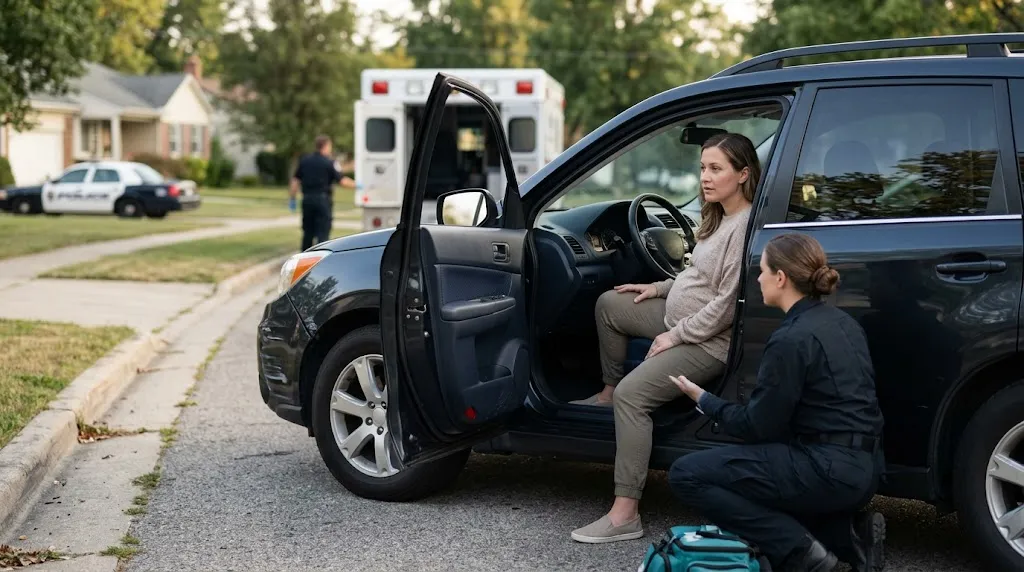
Seek immediate medical evaluation after a vehicle crash during pregnancy, even if you feel uninjured. Important complications may not produce obvious symptoms right away.
This recommendation applies to drivers and passengers. It also applies when the vehicle damage appears minor.
Immediate Steps After a Collision
Prioritize emergency care and avoid unnecessary movement if you suspect a serious injury. Tell emergency responders that you are pregnant.
- Call emergency services: Request help for serious injuries, concerning symptoms, or an unsafe crash scene.
- Explain your pregnancy: Tell responders your approximate gestational age.
- Seek medical assessment: Get evaluated promptly, even without visible injuries.
- Report symptoms: Mention abdominal pain, bleeding, contractions, or unusual changes.
- Follow medical instructions: Complete recommended monitoring or follow-up care.
Why Is Medical Evaluation Necessary?
A crash can create forces that affect the abdomen and pregnancy. Certain complications may develop without immediate visible injury.
One concern is placental abruption, which occurs when the placenta separates from the uterine wall before birth. Other possible concerns include premature contractions or injury to the pregnant occupant.
The necessary assessment depends on pregnancy stage, crash circumstances, and medical findings. Your healthcare team determines whether fetal monitoring, observation, or additional testing is needed.
Warning Signs That Need Urgent Attention
Any concerning symptom after a collision deserves immediate medical attention. Do not delay evaluation while waiting for warning signs to develop.
- Vaginal bleeding or leaking fluid.
- Abdominal pain, tenderness, or persistent tightening.
- Regular contractions or unusual back pain.
- Reduced fetal movement when you normally feel regular movement.
- Severe dizziness, fainting, or breathing difficulty.
- Head injury, severe pain, or other signs of trauma.
These symptoms can signal urgent conditions, but their absence does not guarantee safety. Medical assessment remains important after a crash.
Can You Continue Driving After a Minor Accident?
Do not assume a minor-looking collision is harmless during pregnancy. Arrange medical evaluation before returning to normal activities.
The vehicle may also require inspection before reuse. Seat belts, pretensioners, and airbags can need servicing after certain collisions.
Consult your owner’s manual and a qualified repair professional about damaged restraint components. Never ignore a new airbag or seat belt warning light.
Pro tip: Follow your maternity healthcare team’s instructions after any crash. Pregnancy-related evaluation should not depend only on visible vehicle damage.
Section Takeaway: Correct seat belt use reduces risk, but it cannot eliminate every injury. Prompt medical evaluation is essential after a collision during pregnancy.
Frequently Asked Questions
1. Is It Safe to Wear a Seat Belt During All Nine Months of Pregnancy?
Yes. Wearing a properly positioned seat belt is recommended throughout pregnancy, including the final weeks. Keep the lap belt below your belly and the shoulder belt across your chest. Ask your healthcare professional about any unusual medical circumstances that affect travel.
2. Should the Seat Belt Go Above or Below a Pregnant Belly?
The lap belt should always go below your pregnant belly, across the hips and pelvic bones. It should never pass directly over the abdomen. The shoulder belt belongs across your chest, between your breasts, and should remain away from your neck.
3. Can I Put the Shoulder Belt Behind My Back While Pregnant?
No. Placing the shoulder belt behind your back or under your arm reduces the protection provided by the three-point restraint. Adjust the shoulder-belt height or seating position instead. Both parts of the belt should remain properly fitted.
4. Do I Need a Special Pregnancy Seat Belt?
Most pregnant occupants should use the vehicle’s existing three-point seat belt correctly. A special aftermarket pregnancy belt is not routinely necessary. Products that redirect belt forces may introduce additional risks, so consult the vehicle manufacturer before modifying the restraint system.
5. How Far Should a Pregnant Driver Sit From the Steering Wheel?
ACOG recommends approximately 10 inches between the steering wheel and breastbone. Maintain as much safe clearance as practical while retaining full control of the pedals and steering wheel. If suitable clearance becomes impossible, consider another driver.
6. Is the Back Seat Safer for Pregnant Passengers?
A rear seating position can be a reasonable choice when it has a properly functioning lap-and-shoulder belt. Correct restraint use remains essential regardless of where you sit. The availability of appropriate belts, airbags, and other vehicle features also matters.
7. Should I See a Doctor After a Small Car Accident While Pregnant?
Yes. Seek immediate medical evaluation after a vehicle crash, even if you have no obvious injuries. Some pregnancy complications can occur without immediate symptoms. Tell healthcare professionals how far along you are and describe the collision.
Final Takeaway:
Safe pregnancy seat belt positioning comes down to three habits: keep the lap belt below your belly, wear the shoulder belt across your chest, and maintain a suitable seating position. Recheck these details before every trip.
Use your vehicle owner’s manual for restraint adjustments and discuss pregnancy-specific concerns with your healthcare professional. A correctly fitted seat belt remains one of your most important protections whenever you travel by car.

Daniel Brooks is an automotive writer and product researcher focused on car accessories, car tech, maintenance, and practical driving guides. At Plug-in Car World, he helps drivers make smarter automotive decisions through honest reviews and research-driven content.
