
When Can a Child Safely Sit in the Front Seat?
Quick Answer
A child should generally wait until at least age 13 before sitting in the front passenger seat. Even at 13, the child must fit the vehicle’s lap-and-shoulder seat belt correctly, sit upright, and remain properly buckled throughout the ride. The National Highway Traffic Safety Administration recommends keeping all children younger than 13 in the back seat for maximum safety.
Five Rules Parents Should Know
- Minimum recommended age: Children under 13 should ride in the back seat.
- Correct seat belt fit: The lap belt must cross the upper thighs, while the shoulder belt crosses the chest and shoulder.
- Booster seat readiness: Some children need boosters until around 4 feet 9 inches tall, although fit varies by vehicle.
- Airbag protection: Never install a rear-facing child seat in front of an active passenger airbag.
- Local requirements: Child passenger laws vary by location and may impose additional restrictions.
Before Allowing Front-Seat Travel
- Confirm the child is at least 13, passes the seat belt fit test, and meets applicable legal and vehicle requirements.
- Move the passenger seat rearward while maintaining a proper seating position.
- Keep the child seated upright with the shoulder belt correctly positioned.
When can a child safely sit in the front seat? It’s a question many parents face when their children start asking to ride beside the driver.
I approach this decision by looking beyond birthdays and checking how the child, seat belt, and vehicle work together. This guide explains the age recommendation, airbag risks, booster seat rules, and practical checks that matter before making the switch.
In This Guide
What Age Can a Child Sit in the Front Seat?
Age 13 is the standard safety recommendation for beginning front-seat travel in the United States. Children younger than 13 should remain properly restrained in the back seat, regardless of their height.
This recommendation comes from child passenger safety guidance developed around crash protection and injury prevention. It isn’t simply about whether a child can reach the dashboard or sit comfortably.
Why Is Age 13 the Recommended Minimum?
Children’s bodies continue developing throughout childhood. Their proportions, skeletal development, and ability to maintain a proper seating position differ from those of adults.
Front airbags and vehicle seat belts primarily protect properly positioned occupants. A smaller child may sit too close to the dashboard or have a poorly positioned shoulder belt.
That combination can increase injury risk during a collision.
The CDC’s child passenger safety recommendations reinforce the importance of keeping children properly restrained in the back through age 12.
Does Turning 13 Automatically Make the Front Seat Safe?
No. A thirteenth birthday doesn’t guarantee that a child fits the passenger seat correctly.
A small 13-year-old might still struggle with seat belt positioning. A taller child may fit the belt earlier but should still ride in the back until age 13.
Check these conditions before considering the front passenger seat:
- Age: The child is at least 13 years old.
- Lap belt: The belt rests low across the hips and upper thighs.
- Shoulder belt: It crosses the center of the shoulder and chest.
- Seating posture: The child sits upright without sliding forward.
- Behavior: The child can maintain proper belt positioning throughout the journey.
If any condition isn’t met, keep using the appropriate restraint and back-seat position. A child who needs a booster shouldn’t abandon it merely to sit beside the driver.
What About a Tall 10-, 11-, or 12-Year-Old?
Height doesn’t replace the age recommendation. A 12-year-old who looks adult-sized should still ride in the rear.
I wouldn’t treat a child’s appearance as a reliable safety measurement. Checking the actual restraint system is far more useful.
Section Takeaway: Age 13 is the recommended starting point for front-seat travel, not an automatic guarantee of safety. Proper seat belt fit and vehicle requirements still matter.
Why Is the Back Seat Safer Than the Front?
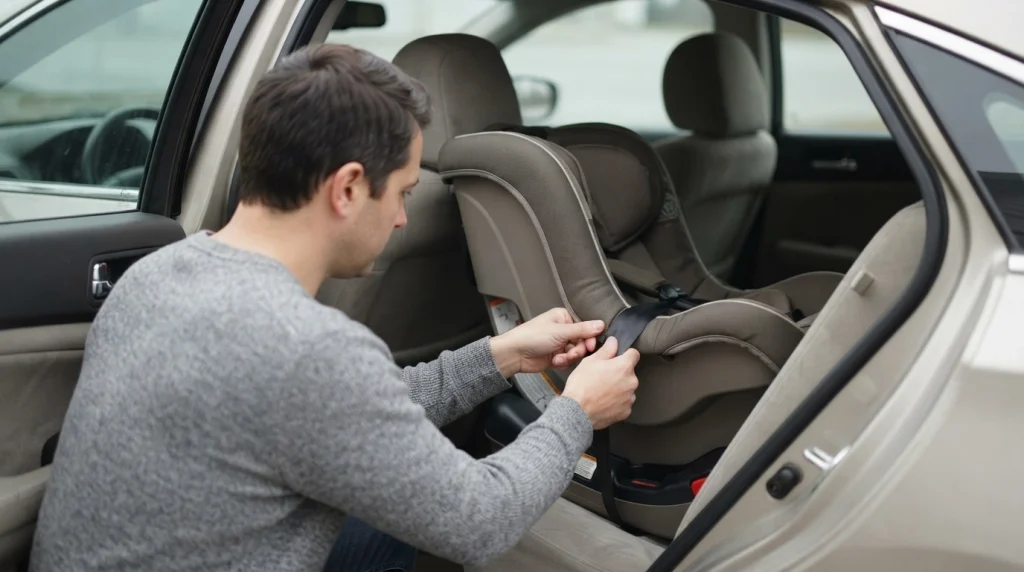
The back seat generally provides better protection for children because it increases their distance from the dashboard and frontal airbag. It also provides a safer environment for the child restraints designed for younger passengers.
Understanding the reasons helps explain why even a short trip deserves the same seating precautions.
Front Airbags Create Additional Risks for Children
A frontal airbag inflates rapidly during certain crashes. It works with the seat belt to protect correctly positioned occupants.
However, a child sitting too close to the dashboard may be struck by the deploying airbag. The resulting force can cause serious injuries.
The NHTSA airbag safety guidance specifically recommends seating children under 13 in the back.
Modern vehicles may have advanced airbag systems that respond to occupant size or position. Those systems don’t eliminate the recommendation to keep younger children in the rear.
Why Are Rear-Facing Car Seats Especially Vulnerable?
A rear-facing car seat sits with its back toward the dashboard when placed in the front passenger position. An active frontal airbag can strike that seat with tremendous force.
This creates a potentially fatal situation for an infant or young child.
Never place a rear-facing car seat in front of an active frontal airbag.
For ordinary passenger vehicles with usable rear seating positions, install rear-facing child restraints in the back. Follow both the child seat manufacturer’s instructions and the vehicle owner’s manual.
Does the Middle Rear Seat Offer the Best Protection?
The center rear position can offer a safety advantage because it is farther from the vehicle’s sides. However, correct installation and an appropriate restraint are more important than choosing the center at all costs.
Some vehicles lack suitable anchors, belts, or enough space for a child restraint in the center.
Before selecting a seating position, check:
- Whether the vehicle permits child restraint installation in that location.
- Whether the seat belt or lower anchors are compatible with the restraint.
- Whether a forward-facing seat’s top tether can attach to an approved anchor.
- Whether the child restraint can be installed securely according to its instructions.
A properly installed child seat in an approved rear outboard position is preferable to an incorrectly installed center seat.
Are Short Trips Less Dangerous?
A short journey doesn’t remove crash risk. An unexpected collision can occur close to home, even on familiar roads.
Keep children properly restrained whenever the vehicle moves. This includes school trips, grocery runs, and neighborhood drives.
Section Takeaway: The rear seat provides an important safety advantage for younger passengers. Correct restraint installation and consistent seat belt use remain essential.
Does a Child Still Need a Booster Seat?
A child needs a booster seat until the vehicle’s adult lap-and-shoulder belt fits correctly without one. Age alone doesn’t determine when a booster can be retired.
A booster seat raises and positions the child so the vehicle’s seat belt contacts stronger parts of the body.
Without a booster, the lap belt may rest across the abdomen. The shoulder belt may also cross the neck or face rather than the center of the shoulder.
Car Seat, Booster Seat, and Seat Belt Stages Compared
The correct restraint changes as a child grows. Each stage has specific height and weight limits established by the restraint manufacturer.
| Restraint Stage | When to Use It | Recommended Position |
|---|---|---|
| Rear-facing car seat | From birth until the rear-facing height or weight limit is reached, often around ages 2–4 | Back seat |
| Forward-facing harness seat | After outgrowing rear-facing limits until the forward-facing harness limits are reached | Back seat |
| Belt-positioning booster | After outgrowing the harness until an adult seat belt fits properly, often around ages 9–12 | Back seat |
| Adult lap-and-shoulder belt | When the child passes every seat belt fit check | Back seat until at least age 13 |
These are developmental stages, not deadlines. A child should remain in their current appropriate restraint until they outgrow its limits.
Is 4 Feet 9 Inches the Magic Height?
Many children approach proper adult seat belt fit around 4 feet 9 inches, or approximately 145 cm. However, that number is a general reference rather than a universal requirement.
Vehicle seats differ in cushion depth, belt anchor placement, and shoulder belt geometry. The same child may fit properly in one vehicle but still need a booster in another.
Always perform the fit test in the actual seating position.
Can a Child Use a Booster Seat in the Front?
The back seat is the recommended position for children using boosters. A child who still needs a booster should not move to the front simply because they’re eager to sit there.
Exceptional situations involving a child in the front require checking vehicle instructions, booster instructions, and local law. Some child restraint systems restrict the positions where they may be used.
The American Academy of Pediatrics car seat guidance explains these transitions and common restraint mistakes.
Section Takeaway: A booster seat is no longer needed only when the adult seat belt fits correctly. Seat belt readiness and front-seat readiness are separate decisions.
How Can You Check Whether a Child Is Ready?
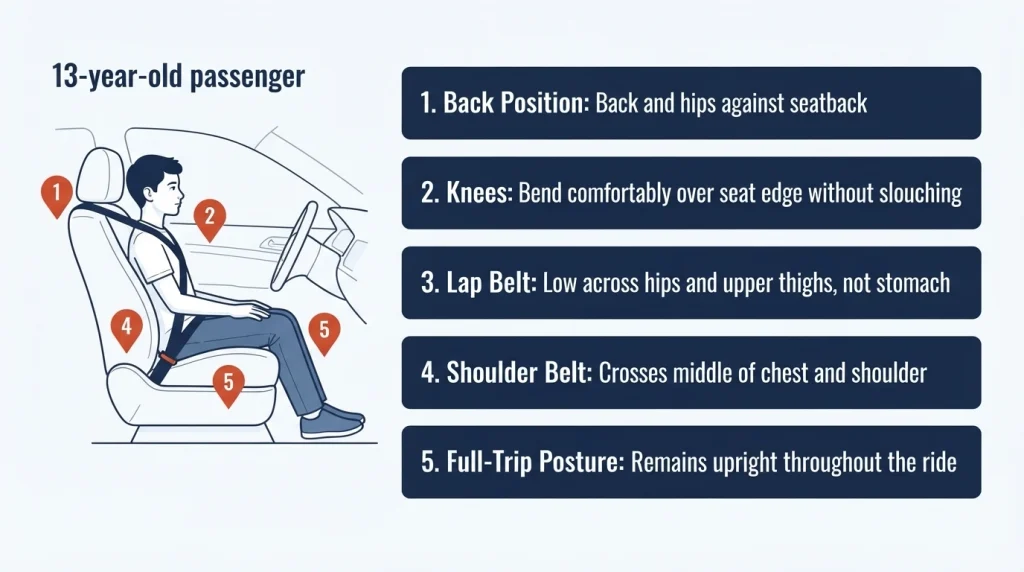
Use a five-point seat belt fit check to determine whether a child can safely use the vehicle’s adult belt. Perform this test in the actual seat the child will use.
For front-seat consideration, the child should also be at least 13 and meet applicable vehicle and legal requirements.
The Five-Step Seat Belt Fit Test
- Check the back position: Have the child sit with their back and hips against the vehicle seatback.
- Check the knees: Their knees should bend comfortably over the front edge of the cushion without slouching.
- Check the lap belt: The belt should lie low across the hips and upper thighs, not the stomach.
- Check the shoulder belt: It should cross the middle of the shoulder and chest without touching the neck or slipping off the shoulder.
- Check the full-trip position: The child must remain comfortably upright with the belt correctly positioned throughout the journey.
If the child fails any part of the test, the adult belt doesn’t fit properly in that seating position. Continue using an appropriate booster when permitted by its instructions.
Why Does Seating Position Matter So Much?
I pay particular attention to whether a child must slide forward to bend their knees. That movement often changes where the lap belt sits.
A child may look properly buckled at first but shift into a dangerous position after several minutes.
Common warning signs include:
- The child slouches or slides forward.
- The lap belt crosses the stomach.
- The shoulder belt touches the neck or face.
- The child places the shoulder belt under an arm.
- The child moves the shoulder belt behind their back.
- The belt stays loose because the child cannot sit comfortably.
Never allow a child to tuck the shoulder belt under an arm or behind the back. This removes important upper-body restraint protection.
How Should the Front Passenger Seat Be Adjusted?
Once an age-appropriate child passes the fit test, check the seat’s position. The goal is to maintain correct belt geometry while maximizing distance from the dashboard.
- Move the front passenger seat as far rearward as practical.
- Keep the seatback upright enough for proper restraint positioning.
- Ensure the child sits with their back against the seatback.
- Use the vehicle’s approved shoulder belt height adjustment if available.
- Keep the child’s feet and belongings away from the dashboard.
- Confirm the lap-and-shoulder belt remains snug and untwisted.
Avoid thick cushions or unapproved accessories intended to change belt position. These products can alter how the restraint system works during a crash.
Repeat the fit check when changing vehicles. A child who fits in the family SUV may not fit the same way in a compact car.
Section Takeaway: The five-point test helps identify correct adult seat belt fit. Always combine it with the age recommendation and vehicle-specific instructions.
What if a Child Must Ride in the Front?
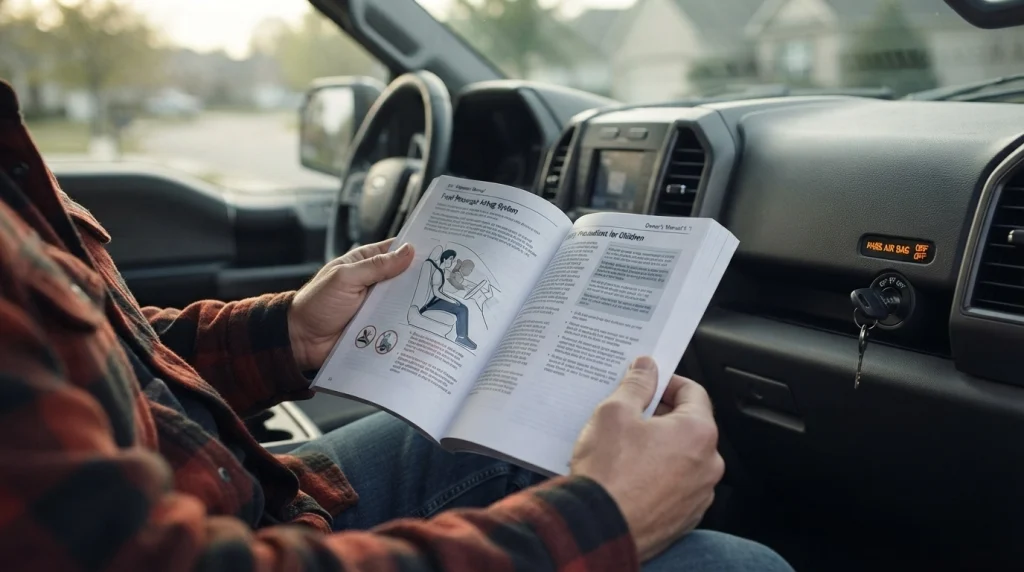
Sometimes a vehicle doesn’t have a rear seat, or a family faces an unusual transportation situation. These cases require extra planning rather than simply ignoring the back-seat recommendation.
Whenever practical, choose another vehicle or seating arrangement that allows the child to ride properly restrained in the rear.
What About Pickup Trucks With No Back Seat?
A regular-cab pickup may have only front passenger seating. That makes child passenger protection more complicated.
Before transporting a child, check whether the vehicle manufacturer permits the required child restraint in that position. Also verify the airbag instructions and local laws.
Important precautions include:
- Never put a rear-facing child restraint in front of an active frontal airbag.
- Consult the owner’s manual for approved seating and restraint arrangements.
- Check whether the vehicle has a manufacturer-approved passenger airbag deactivation system.
- Never assume an automatic passenger airbag sensor will provide sufficient protection.
- Move an occupied front passenger seat rearward as directed by the manufacturer.
- Use the appropriate restraint and approved installation method.
Do not modify, disconnect, or defeat an airbag system yourself. Deactivation is tightly controlled, and some vehicles don’t support it.
Pro tip: Check your vehicle owner’s manual and ask a certified child passenger safety technician before installing a child restraint in a front-only vehicle.
What if There Are More Children Than Rear Seats?
Every passenger needs an individual, appropriate seating position and restraint. Never let children share a seat belt or occupy a seating position without proper protection.
When possible, arrange a larger vehicle or divide the trip between vehicles. The goal should be to provide each child with an approved rear seating position.
If no alternative is available, seek vehicle-specific guidance before transporting a younger child in front. The American Academy of Pediatrics discusses limited situations involving an older child in a forward-facing harness seat.
Such guidance isn’t permission to place any child in front regardless of the vehicle or airbag arrangement.
Do Passenger Airbag Sensors Make the Front Seat Safe?
No. Modern occupant detection systems may adjust or suppress passenger airbag deployment under certain conditions.
These systems have limitations, and their operation varies by vehicle. An airbag indicator is not a substitute for the recommended seating position.
Don’t assume an illuminated passenger airbag-off indicator makes front-seat travel appropriate for a child under 13.
Can Seat Covers Interfere With Passenger Safety?
Some aftermarket seat covers and cushions may affect vehicle safety systems, depending on their design. Front seats can contain occupant detection sensors and side-impact airbag components.
Before installing an accessory on the front passenger seat, check the vehicle manufacturer’s compatibility requirements.
For child restraints, avoid aftermarket padding or inserts unless the child seat manufacturer specifically approves them.
Comfort accessories should never compromise the protective equipment already installed.
Section Takeaway: Front-only vehicles and unusual seating situations require special care. Follow manufacturer-approved procedures rather than assuming an airbag switch or sensor removes the risk.
What Do Front-Seat Laws Actually Say?
Front-seat laws vary by jurisdiction. The commonly recommended age of 13 is a safety guideline and shouldn’t be mistaken for a universal legal minimum.
Different locations may regulate child restraint use according to age, height, weight, or seating position.
Are U.S. Front-Seat Laws the Same in Every State?
No. U.S. states have different child passenger safety laws, and requirements can change.
Some focus on which restraint a child must use. Others also restrict where younger children can sit or establish conditions for exceptions.
Before deciding, verify:
- The current law in your state.
- The minimum age or size requirements for front-seat travel.
- Any mandatory car seat or booster seat rules.
- Exceptions for vehicles without rear seating.
- Requirements for taxis, rideshares, and other passenger vehicles.
Meeting the legal minimum doesn’t necessarily mean a seating arrangement provides maximum protection. Following the stricter safety recommendation is generally the better choice.
What About Other Countries?
Countries outside the United States may use different age and height thresholds. Vehicle classifications and child restraint approval standards can also differ.
Drivers should check their country’s current road safety rules and the vehicle’s instructions. Avoid relying on a general internet age chart as a legal reference.
Where Can Parents Get Professional Help?
In the United States, certified child passenger safety technicians can help families evaluate car seat installation and restraint use. Many inspection services are available without charge.
Use the NHTSA car seat and booster seat resources to find educational guidance, recall information, and inspection assistance.
For a specific vehicle, the owner’s manual and child restraint instructions remain essential. They explain which seating positions and installation methods the manufacturers permit.
Frequently Asked Questions
Can a 10-year-old sit in the front seat?
A 10-year-old should generally ride in the back seat, even if they’re tall enough for an adult seat belt. U.S. safety guidance recommends rear seating until at least age 13, with an appropriate child restraint or booster when needed.
Can an 11- or 12-year-old sit in front if they’re tall?
Height alone doesn’t override the recommendation. An 11- or 12-year-old should continue riding in the back seat, even with proper seat belt fit. Exceptional situations require checking local law, vehicle instructions, and child passenger safety guidance.
Can a child sit in the front seat at age 13?
Generally, a 13-year-old may begin using the front passenger seat when the adult lap-and-shoulder belt fits properly. They must sit upright, remain buckled, and meet any applicable legal or vehicle requirements. Rear seating remains an option.
How tall should a child be to sit in the front seat?
There is no universal height that automatically makes front-seat travel safe. Around 4 feet 9 inches is a common reference for adult belt fit, not a front-seat eligibility rule. Children should be at least 13 and fit the belt correctly.
Can a child ride in the front if the passenger airbag is turned off?
Turning off the passenger airbag does not automatically make the front seat appropriate for a younger child. Vehicle design, restraint compatibility, local laws, and manufacturer instructions still apply. Never manually disable an airbag outside an approved procedure.
Is the back seat safer for teenagers?
The rear seat remains a reasonable safety-conscious option for teenagers, particularly smaller teens. Every passenger needs correct seat belt fit and consistent restraint use, whether seated in front or behind. Parents should also follow the vehicle manufacturer’s guidance.
Can a child sit on a parent’s lap in the front seat?
No. A child should never ride on someone’s lap in a moving vehicle. An adult cannot safely hold a child during a serious collision, and sharing a seat belt is dangerous. Every passenger needs their own approved seating position and appropriate restraint.
Does a child need a booster seat after turning 13?
Some children may still need a booster if the adult belt doesn’t fit properly, provided the booster is approved for their size. Age alone doesn’t guarantee correct belt fit. Check the child, the vehicle, and the restraint manufacturer’s limits.
What is the biggest mistake parents make when moving children to the front?
One common mistake is treating a child’s height or birthday as the only safety requirement. The decision also depends on seat belt fit, seating posture, airbag exposure, and vehicle instructions. Every factor deserves attention before changing seating positions.
Should the front passenger seat be moved all the way back?
When an older child rides in front, moving the seat rearward helps increase distance from the dashboard and frontal airbag. The child must still sit upright and maintain correct belt positioning. Follow any additional instructions in the vehicle owner’s manual.
Final Takeaway: Safety Comes Before the Front-Seat Privilege
For most families, the answer is straightforward: keep children in the back seat until at least age 13. After that, evaluate the child’s seat belt fit, seating posture, maturity, and vehicle requirements.
The front seat shouldn’t be a reward for growing taller or reaching a birthday. It should be a carefully considered seating choice based on actual safety conditions.
Before your next family trip, perform the five-point seat belt check and review your vehicle manual. When uncertain, ask a certified child passenger safety technician for guidance rather than taking an unnecessary risk.

Daniel Brooks is an automotive writer and product researcher focused on car accessories, car tech, maintenance, and practical driving guides. At Plug-in Car World, he helps drivers make smarter automotive decisions through honest reviews and research-driven content.
