
Do Car Seat Covers Affect Heated Seats? Compatibility Guide
Quick Answer
Yes, car seat covers affect heated seats, but they rarely stop the heat completely. Thin, breathable covers usually let warmth through with a short delay, while thick, padded, or waterproof covers can slow it down a lot. The safest choice is a cover made for heated seats, fitted snugly, with no blocked airbag seams or controls. Learn how to install a car seat cover correctly before you switch the heat on.
What matters most
- Cover thickness: Thinner layers pass heat faster than thick padding.
- Material type: Breathable fabric and thin leather tend to warm up sooner.
- Fit and contact: A loose cover traps air and feels cooler at first.
- Seat design: Built-in heaters sit under the factory trim, not on top of it.
- Airbag seams: Never cover a side-airbag seam with a non-compatible cover.
What to check first
- Read the cover label for heated-seat compatibility before you buy it.
- Check your owner’s manual for warnings about added seat layers.
- Test the heat on low first, then check for hot spots or uneven warmth.
I’ve fitted seat covers in cold garages, on hot driveways, and in cars that needed the heat working again by morning.
The question always comes up in winter. Drivers want to protect leather or cloth, but they don’t want to lose the heated seat they paid for.
This guide goes deeper than a yes-or-no answer. You’ll learn how heat moves through a cover, which materials help or hurt, and how to test a cover safely.
In This Guide
How Do Heated Seats Actually Work?
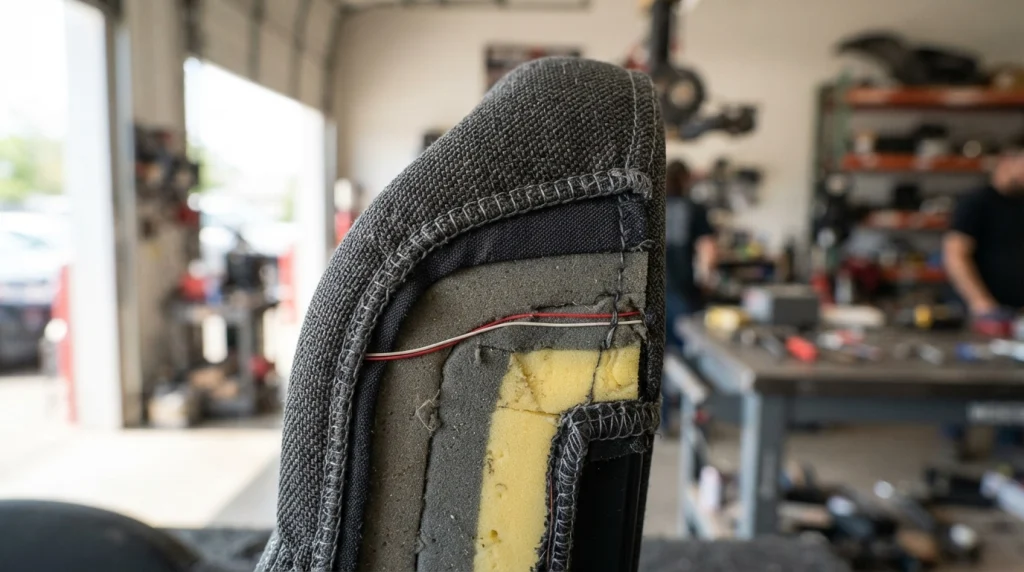
A heated seat is a factory seat with thin heating elements built into the cushion and backrest padding.
Those elements warm the seat trim from below. A switch or touch control sets the heat level, and a thermostat helps keep the temperature in a set range.
Most systems heat the cushion first, then the backrest. Some cars heat only the cushion, so check your own seat before you judge a cover.
Heat must pass through foam, trim, and then your cover. Each extra layer adds a small delay, and thick layers add a larger one.
Why does heat feel slower with a cover on?
Your body senses surface temperature, not heater output. A cover starts cold, so it must warm up before you feel the full effect.
Air gaps make that delay worse. A loose cover creates a pocket of cool air between the seat and your body.
A snug cover stays in contact with the seat. That contact lets heat move through it faster and more evenly.
Do heated seats use a sensor that a cover can fool?
Some cars use a temperature sensor near the heating element. That sensor reads the element area, not the top of your cover.
A thick cover can trap heat close to the element. The system may then cycle off sooner, even though the surface still feels cool.
This does not mean the heater has failed. It often means the cover changed how heat builds up and escapes.
Section takeaway: Heated seats still work under a cover, but the cover changes how fast warmth reaches you and how evenly it spreads.
Do Car Seat Covers Block Heat?
Most seat covers for heated seats reduce heat flow, but they do not block it like a wall. The effect depends on thickness, density, and fit.
I once fitted a thick quilted cover to a car in January. The seat took noticeably longer to feel warm, and the edges stayed cooler than the centre.
After I swapped it for a thinner fabric cover, the same seat warmed up faster. The heater setting stayed the same, and only the cover changed.
That test taught me a simple rule. Judge a cover by feel over 10 to 15 minutes, not by the first 30 seconds.
What signs point to a poor match?
- The cushion warms, but the backrest stays cold.
- One spot feels hot while the rest feels cool.
- You need the highest setting just to feel mild warmth.
- The cover bunches up and lifts away from the seat.
- The heater cycles off and on more often than before.
Uneven heat often points to a fit problem. A fold or thick seam can sit over part of the heating area and slow heat there.
A cover that blocks the seat controls causes a different problem. You should never need to fight the cover to change a heat setting.
Can a cover damage a heated seat?
A normal, well-fitted cover should not damage a healthy heating element. Heat damage becomes more likely when heat cannot escape.
Thick insulation, stacked covers, or a heated cushion pad placed under a heavy cover can trap heat. Trapped heat stresses wiring and trim over time.
Stop and remove the cover if you smell burning, see discoloration, or feel a sharp hot spot. Have the seat checked before you use the heater again.
Pro tip: Check your owner’s manual for seat-cover limits, and use the NHTSA recall lookup if you suspect a heater or airbag fault.
Section takeaway: Covers slow heat more than they stop it, and a poor fit or trapped heat causes more trouble than a thin cover ever will.
Which Cover Materials Work Best With Heated Seats?
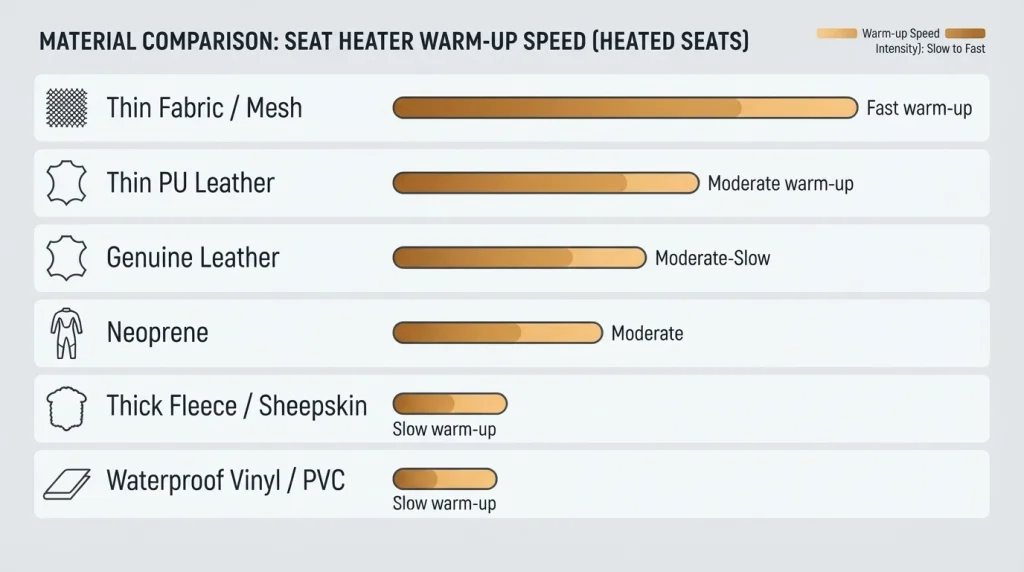
The best seat covers for heated seats share two traits. They stay thin, and they pass heat without holding a lot of air.
Material alone does not tell the full story. A thin version of a dense material can beat a thick version of a breathable one.
Use the table below as a starting point, not a lab result. Your car, seat trim, and cover fit will shift the feel.
| Cover material | Heat feel | Warm-up | Watch out for |
|---|---|---|---|
| Thin fabric or mesh | Even and natural | Fast | Loose fit and bunching |
| Thin PU leather | Smooth and steady | Moderate | Sweat build-up on long drives |
| Genuine leather | Warm once heated | Moderate to slow | Thick hides and stiff seams |
| Neoprene | Insulated and even | Moderate | Heat retention under thick padding |
| Thick fleece or sheepskin | Cosy, but muted | Slow | Blocked airflow and slow warm-up |
| Waterproof vinyl or PVC | Uneven and clammy | Slow | Trapped moisture and heat |
Is leather good or bad for heated seats?
Thin leather works well because it conducts heat and sits close to the seat. Thick, stiff leather takes longer to warm and can feel patchy at first.
Leather also holds heat once warm, so the seat may feel warmer after a longer drive. That late warmth can fool you during a short trip.
Check the backing and padding, not just the surface. A leather-look cover with thick foam underneath behaves like a padded cover.
What about neoprene, mesh, and waterproof covers?
Neoprene suits wet climates and daily wear, but choose a thinner grade for heated seats. A thick wetsuit-style layer insulates more than it helps.
Mesh and light fabric covers breathe well and warm up fast. They suit drivers who use heat daily and want a natural feel.
Waterproof covers protect against spills, yet many use a dense barrier layer. That layer can slow heat and trap sweat, so test it before a long winter trip.
Reviews and buying guides from Consumer Reports can help you compare materials, but your seat fit still matters more than a brand claim.
A heated steering wheel shows the same trade-off in a smaller form. A thick cover dulls heat there too, as explained in this guide to a cover on a heated steering wheel.
Section takeaway: Thin fabric, thin PU leather, and thin leather usually keep heated seats usable, while thick fleece and dense waterproof layers slow warmth the most.
Are Car Seat Covers Safe With Heated Seats?
A heated-seat-compatible cover is safe when it fits well and leaves safety features clear. A wrong cover creates risk even if the heat still works.
Side airbags sit in many front seatbacks, and some covers use breakaway seams for those airbags. A universal cover without that seam can block deployment.
Check the label for side-airbag compatibility, not just heated-seat compatibility. One claim does not prove the other.
Which safety checks should you never skip?
- Confirm the cover matches your exact seat shape and airbag layout.
- Leave headrest posts, seatbelt guides, and controls fully clear.
- Keep wiring, heater switches, and seat sensors free from pressure.
- Remove the cover if it shifts during normal driving.
- Stop using heat if the seat smells hot or feels uneven.
Seat sensors matter more than many drivers expect. Some cars use a weight sensor to judge occupancy and airbag readiness.
A thick, stiff cover should not change that sensor reading much. A cover that bunches, lifts, or adds a hard base layer can still affect how the seat feels and sits.
When in doubt, read the manual for your car and the cover. That pair of documents beats a generic claim on a product page.
General car seat safety standards also help you judge claims with care, since aftermarket parts must work with factory safety systems, not against them.
Are heated seat covers different from regular covers?
A heated seat cover can mean two different products. One is a passive cover that sits over a factory heated seat.
The other is an active heated cover with its own heating pad and power lead. That type adds wiring, a fuse load, and a new heat source.
Never stack an active heated pad under a thick passive cover. The extra layer traps heat and hides hot spots.
For factory heated seats, a passive cover is the simpler and safer route. For cars without factory heat, an active pad needs its own install and safety checks.
The heating idea itself is simple, and you can see the same basics in how heated steering wheel covers work, though seat wiring and airbags make seats a stricter case.
Pro tip: If your car has seat-mounted side airbags, ask a certified mechanic or dealer to confirm cover compatibility before you drive with it fitted.
Section takeaway: Safety comes down to fit, airbag seams, clear controls, and no trapped heat, not just whether the seat still feels warm.
How Do You Choose and Test a Heated-Seat-Friendly Cover?
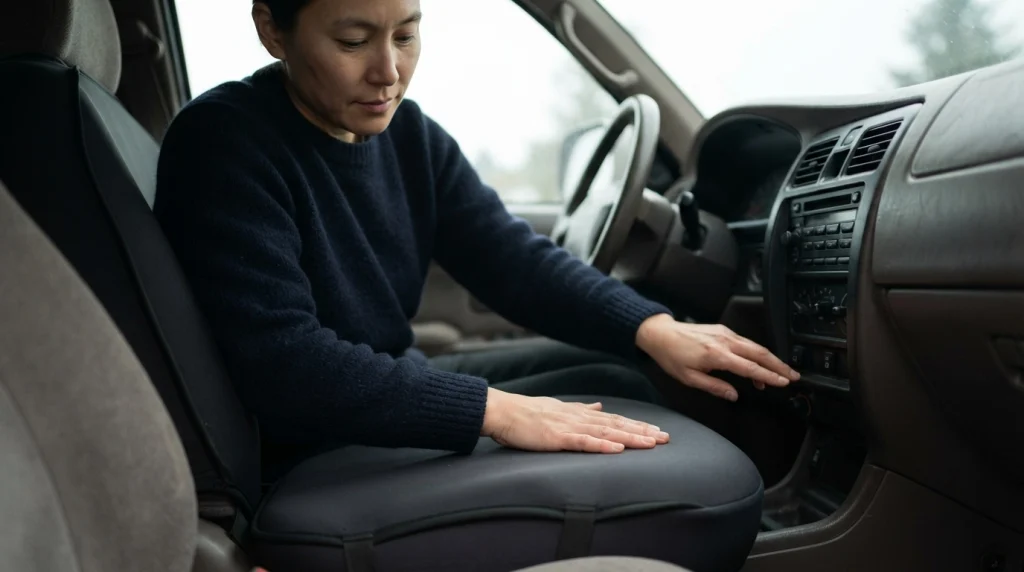
Start with your car, not the cover colour. Note the seat shape, headrest style, side-airbag seams, and heater controls.
Then look for three label claims together. The cover should state heated-seat compatibility, side-airbag compatibility where relevant, and a custom or semi-custom fit for your model.
Universal fit can work on a simple seat, but it fails more often on bolstered sport seats. Bolsters need a cover that hugs the shape without lifting.
What is the best 15-minute compatibility test?
- Fit the cover, smooth out folds, and secure all straps and hooks.
- Turn the heat to low and sit in the seat for five minutes.
- Feel the cushion centre, cushion edges, and backrest for even warmth.
- Raise the setting one step and repeat the check after five more minutes.
- Remove the cover at once if you find a sharp hot spot or a burning smell.
Compare the result with the bare seat if you can. Use the same heat setting, the same cabin temperature, and a similar wait time.
That comparison gives you a fair answer for your car. A cover that feels fine in a warm garage may feel slow on a frosty morning.
How do you care for a cover on a heated seat?
Remove the cover now and then and check the seat trim underneath. Look for wear, melted fibres, or a flattened heating area.
Wash the cover to the maker’s instructions and let it dry fully before refitting. A damp cover feels cold and can trap moisture against trim.
Keep the cover clean, since dirt and spills can stiffen fabric and change how it sits. You can clean a car seat safely without soaking the heating area, as long as you follow the care steps for your trim.
Model guides from Edmunds and road tests from Car and Driver can help you spot seat and trim differences, but they do not replace a fit test in your own car.
Section takeaway: Choose a thin, well-fitted, heated-seat-compatible cover, then prove it with a short low-heat test before winter driving.
Frequently Asked Questions
Do seat covers stop heated seats from working?
No, most covers only slow the heat down. Thin covers keep heat usable, while thick or waterproof covers can make warmth feel weak or uneven.
Can I use seat covers on leather heated seats?
Yes, if the cover fits well and states heated-seat compatibility. Thin leather or fabric covers work best, and you should check for airbag seams on seatbacks.
Will a seat cover damage my heated seat element?
A normal fitted cover should not damage a healthy element. Risk rises when heat gets trapped under thick padding, stacked covers, or an added heated pad.
Are universal seat covers okay for heated seats?
They can work on simple, flat seats with a snug fit. They suit bolstered seats less well, since loose fabric lifts away and creates cold spots.
Do heated seats take longer to warm up with a cover?
Yes, a cover adds a warm-up delay in most cases. Expect a few extra minutes with thin covers and a longer delay with thick fleece or padded covers.
Should I remove the cover in summer?
You can leave a breathable cover on all year. Remove thick covers in hot weather if they trap sweat, shift often, or hide seat wear.
What should I do if one side feels hotter than the other?
Refit the cover, smooth out folds, and test each seat on the same setting. If the fault stays with the bare seat, have the heater checked by a mechanic.
Final Takeaway: Keep the Warmth, Protect the Seat
Seat covers and heated seats can work well together. The winning mix is thin material, a snug fit, clear airbag seams, and a short test before you rely on it.
Skip thick, loose, or stacked layers if warmth matters to you. A cover that protects the seat but kills the heat has solved only half the problem.
As of 2026, the best approach stays simple. Buy for your exact seat, test on low heat, and remove any cover that traps heat or shifts while you drive.

Daniel Brooks is an automotive writer and product researcher focused on car accessories, car tech, maintenance, and practical driving guides. At Plug-in Car World, he helps drivers make smarter automotive decisions through honest reviews and research-driven content.
