
Can You Use a Cover on a Heated Steering Wheel?
Quick Answer
Generally, you should not use a steering wheel cover on a heated steering wheel unless your vehicle manufacturer explicitly permits it. A cover can reduce heat transfer, change your grip, and potentially damage or interfere with the heating system. Check your owner’s manual, because some manufacturers specifically prohibit covers and other steering wheel accessories.
What You Need to Know
- Manufacturer guidance: Follow your vehicle’s owner’s manual, such as the restrictions in the Hyundai heated steering wheel instructions.
- Reduced warmth: Thick leather, microfiber, silicone, or padded covers can slow heat reaching your hands.
- Grip and fit: A loose, oversized, or bulky cover may affect steering control.
- Possible damage: An unapproved cover may interfere with the heating system or trap heat in ways the manufacturer did not intend.
- Safer alternative: Keep the original steering wheel uncovered and use compatible winter driving gloves if you need extra warmth.
Before Installing a Cover
- Check the exact instructions for your vehicle’s make, model, and year.
- Never assume a cover is safe simply because it fits the wheel or is advertised as heat-resistant.
A heated steering wheel makes cold-weather driving more comfortable, but adding an accessory can change how the system works. If you’re considering a leather, silicone, or padded steering wheel cover, compatibility matters more than appearance.
In this guide, I’ll explain the main risks, how different cover materials affect warmth and grip, what to check before buying, and which alternatives make sense in 2026. The key is to protect your steering wheel without compromising its heating function or your control of the car.
In This Guide
- Why can a cover be a problem on a heated steering wheel?
- How do different cover materials affect heating?
- How do you check whether a cover is compatible?
- What should you do if you’ve already installed a cover?
- What are the best alternatives to a steering wheel cover?
- What mistakes should you avoid when choosing a cover?
- Frequently asked questions
Why Can a Cover Be a Problem on a Heated Steering Wheel?
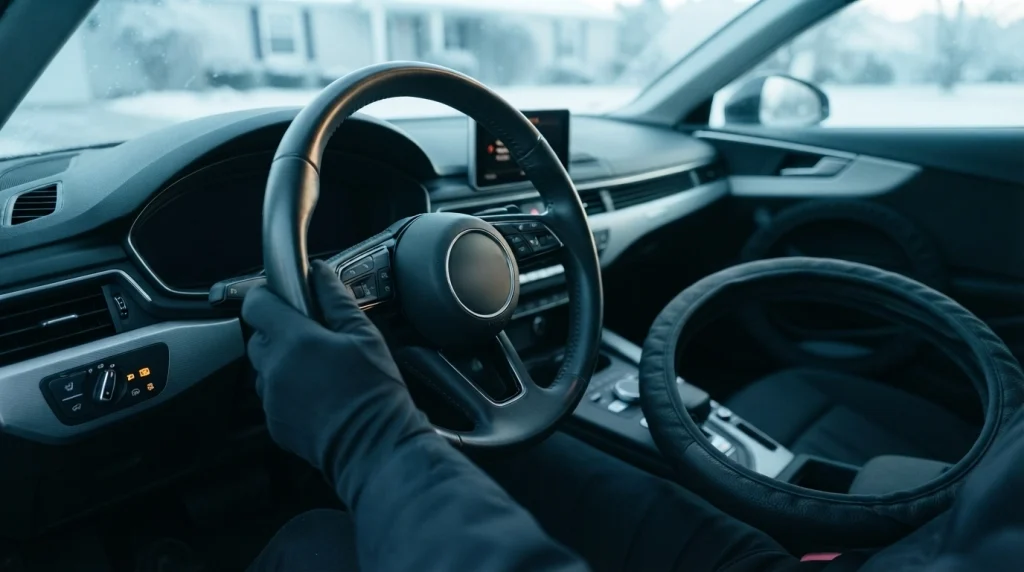
A steering wheel cover is a removable layer fitted around the steering wheel rim to change its grip, appearance, comfort, or surface protection. On a heated steering wheel, however, that extra layer sits between the built-in heating elements and your hands.
The biggest concern is compatibility, not simply whether the cover feels warm. Some manufacturers explicitly warn against installing any cover or accessory on a heated steering wheel.
Can a cover damage the heating elements?
It can create a problem if the vehicle manufacturer prohibits covers or if the accessory interferes with the system’s intended operation. The heating elements are built into the steering wheel, usually beneath its outer surface, so improper treatment can affect the system.
For example, Hyundai’s owner information warns against installing covers or accessories because they could damage the steering wheel heater system. Kia manuals also warn that grip covers may impair its function.
Not every vehicle uses identical heating technology, so don’t apply one manufacturer’s instructions to every car. Your specific owner’s manual is the best starting point.
Will a steering wheel cover make the heater less effective?
Yes, a cover can slow the transfer of warmth from the heated rim to your hands. The effect depends on the cover’s thickness, construction, material, and fit.
A thick padded cover may leave your hands feeling cool even while the heater is operating. You might then keep the heater on longer or select a higher setting, although the actual effect varies by vehicle and cover.
Can a cover affect steering control?
It can if the cover slips, bunches up, or makes the steering wheel noticeably thicker. A secure, predictable grip matters more than extra cushioning or a premium-looking finish.
Never rely on the cover’s advertised universal fit alone. A cover must fit securely, and it must also be permitted by your vehicle manufacturer.
Pro tip:
If your owner’s manual says not to install steering wheel accessories, treat that as a clear reason to leave the wheel uncovered. Don’t assume that switching off the heater makes a prohibited cover acceptable.
Section takeaway: A steering wheel cover can reduce warmth, alter grip, and conflict with manufacturer guidance. Confirm compatibility before considering any accessory.
How Do Different Cover Materials Affect Heating?
Cover material influences how quickly warmth reaches your hands, how the wheel feels, and how easily you can maintain a secure grip. However, material alone cannot establish whether a cover is safe for your particular heated steering wheel.
The comparison below explains the general trade-offs, assuming the manufacturer allows the accessory in the first place.
| Cover material | Effect on warmth | Grip and feel | Main consideration |
|---|---|---|---|
| Genuine leather | Depends on thickness and backing | Firm, premium feel | May insulate the rim and increase wheel thickness |
| PU leather | Varies with construction | Smooth or textured | Check backing, seams, and fit |
| Microfiber or suede-style | Often slower with thick padding | Soft, potentially grippy | Pile and padding affect feel and heat transfer |
| Silicone or rubber-like | Depends on thickness and design | Textured, sometimes tacky | A tight fit does not guarantee heater compatibility |
| Padded or plush fabric | Can noticeably delay warmth | Soft, thicker feel | Extra bulk and movement may affect control |
Does a thin cover work better than a thick one?
A thin cover may allow heat to pass through more readily than a thick, padded cover, but this is not a guarantee. The materials, internal layers, and design all influence the result.
Even a thin leather steering wheel cover can be unsuitable if the owner’s manual prohibits accessories. A thinner design doesn’t override that restriction.
Is a heat-resistant cover safe to use?
Not necessarily. A heat-resistant material may tolerate certain temperatures without melting or deforming, but that claim doesn’t prove the cover is compatible with an electrically heated steering wheel.
Look for explicit vehicle-specific approval rather than vague phrases such as “winter-ready,” “premium grip,” or “heat resistant.” If the manufacturer doesn’t permit covers, choose another way to protect or improve the wheel.
Section takeaway: No material is automatically safe for every heated steering wheel. Compatibility and secure grip come first; warmth and appearance come second.
How Do You Check Whether a Cover Is Compatible?
The safest way to check compatibility is to identify your exact vehicle and consult its official owner’s manual before purchasing anything. A retailer’s general fitment chart cannot replace the vehicle manufacturer’s instructions about the heating system.
Step 1: Check your owner’s manual
Search the steering wheel, heated steering wheel, or precautions section for instructions about covers and accessories. Pay attention to any warning that explicitly prohibits grip covers or other additions.
Some manufacturers provide digital manuals, making it easier to search the relevant terms. Start with the manufacturer’s official website rather than relying on an unrelated vehicle’s manual.
Step 2: Confirm your vehicle’s specifications
Check the make, model, model year, and trim level, because steering wheel equipment can vary across versions of the same vehicle. An aftermarket steering wheel or a previous owner’s modification may also change what applies.
Before buying a cover, verify these details:
- Wheel diameter: Measure only if the manufacturer permits a cover and the seller requires sizing information.
- Rim thickness: Confirm that the cover won’t create an excessively bulky grip.
- Heating compatibility: Look for explicit approval for your specific application.
- Fit and retention: Check that the design won’t rotate, slip, or bunch up.
- Installation method: Avoid designs requiring adhesives, sharp tools, or modifications to the steering wheel.
Step 3: Ask the manufacturer if instructions are unclear
If your manual doesn’t address steering wheel covers, contact the vehicle manufacturer’s customer support or an authorized dealer. Ask whether a removable cover is permitted on your exact heated steering wheel.
Also ask whether the accessory could affect warranty coverage for damage to the heating system. Warranty terms vary, so don’t assume every accessory automatically voids the entire vehicle warranty.
Step 4: Check official safety information
For broader vehicle safety information, use the National Highway Traffic Safety Administration’s recall lookup to check for relevant recalls. A recall search doesn’t establish cover compatibility, but it can help you identify separate safety issues affecting your vehicle.
Pro tip: Use your vehicle’s official manual for accessory restrictions and consult a qualified technician if you suspect the heating system has been damaged.
Section takeaway: Confirm the vehicle-specific rules first, then check fitment and warranty implications. If compatibility remains uncertain, leaving the wheel uncovered is the safer choice.
What Should You Do If You’ve Already Installed a Cover?
If you’ve already fitted a cover to a heated steering wheel, don’t panic. The important thing is to check your owner’s manual and remove the accessory if the manufacturer prohibits it.
Follow these steps
- Switch off the heater: Turn the heated steering wheel function off before handling the accessory.
- Let the wheel cool: Wait until the surface is comfortable to touch.
- Check the instructions: Confirm whether your vehicle permits covers.
- Remove the cover carefully: Follow the cover manufacturer’s removal instructions without using sharp tools or excessive force.
- Inspect the wheel: Look for unusual marks, surface damage, loose material, or other visible changes.
- Check normal operation: If you notice damage or abnormal heating, stop using the heater and seek professional inspection.
Don’t stretch, cut, or pry aggressively at a cover that has become stuck. You could damage the steering wheel’s surface or components beneath it.
What if the steering wheel no longer heats properly?
If the heater stops working, warms unevenly, or behaves differently after you install a cover, stop using the heater until the cause has been assessed. A cover may not be responsible, because electrical faults or existing component damage can produce similar symptoms.
Other warning signs include unusual odors, visible surface damage, or a steering wheel that becomes unexpectedly hot. Switch the heating system off if you notice any of these problems.
Never dismantle a heated steering wheel to inspect its heating elements unless you’re qualified to perform the specific repair. Steering wheels may contain airbag and electrical components that require manufacturer-approved service procedures.
When to Get Help
Arrange a professional inspection if the heater stops working, the wheel develops visible damage, or you notice abnormal heat or a burning smell. Don’t keep testing the system to see whether the problem disappears.
Section takeaway: Remove an unapproved cover carefully and stop using a malfunctioning heater. A qualified technician can determine whether the system needs repair.
What Are the Best Alternatives to a Steering Wheel Cover?
If you want more comfort or protection without risking a problem with the heating system, start with options that don’t require adding anything to the wheel. The right alternative depends on whether your main concern is cold hands, worn leather, or grip.
Use winter driving gloves
Thin, well-fitting driving gloves can help keep your hands warm while allowing you to use the original heated steering wheel. Choose gloves that provide dependable grip and enough finger movement for steering and operating controls.
Avoid bulky gloves that make it difficult to feel the rim or operate buttons. Always test the fit and grip while the vehicle is parked before driving.
Clean and maintain the original steering wheel
If your goal is to protect leather from dirt, sweat, or everyday wear, regular cleaning is often a better starting point than installing a cover. Use a cleaning method approved for your steering wheel’s specific surface material.
Follow the vehicle manufacturer’s cleaning guidance carefully. Some heated steering wheel manuals warn against solvents such as alcohol, gasoline, and paint thinner, which can damage the surface or associated components.
Consider professional surface repair
If the original wheel has peeling, cracking, or worn leather, ask an automotive upholstery specialist about suitable repairs. Professional assessment is particularly useful when the wheel contains built-in heating elements or other integrated controls.
Don’t assume that a universal rewrapping kit, adhesive, or replacement outer layer will work safely with a heated wheel. Any repair should account for the heating system and the vehicle manufacturer’s requirements.
Compare your options
| Option | Best for | Main advantage | Limitation |
|---|---|---|---|
| Driving gloves | Cold hands | Keeps the wheel unchanged | Glove fit and grip matter |
| Approved cleaning products | Dirt and surface care | Maintains the original finish | Won’t repair major damage |
| Professional upholstery repair | Worn or damaged surfaces | Can restore appearance | Requires compatible repair methods |
| Vehicle-approved replacement wheel | Severe wear or damage | Addresses a damaged component | Fitment and installation require care |
Section takeaway: Gloves, approved cleaning products, and compatible professional repairs can address most comfort and maintenance concerns without adding an unapproved cover.
What Mistakes Should You Avoid When Choosing a Cover?
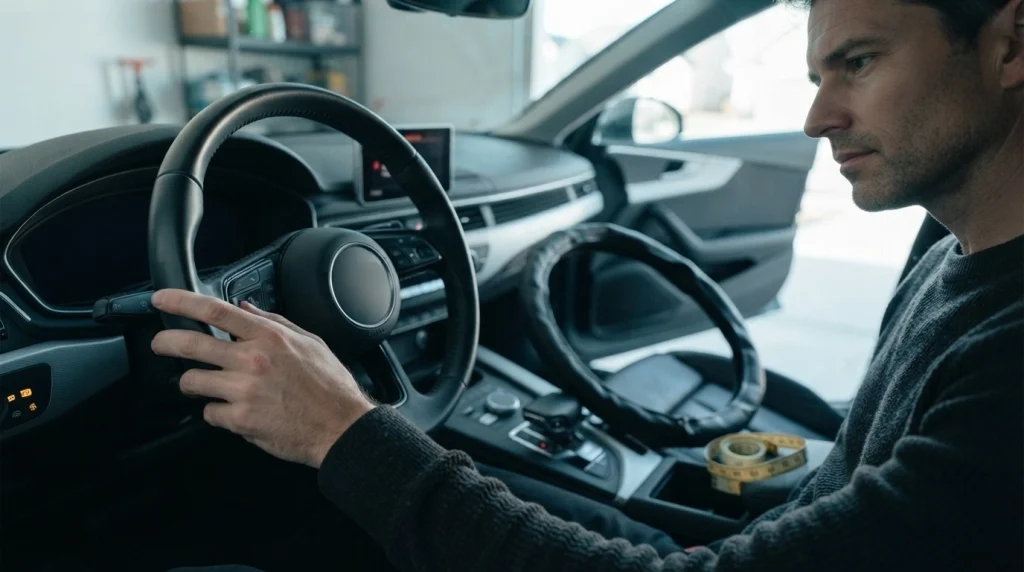
The most common mistake is buying a cover based on comfort, appearance, or price without checking whether the vehicle permits it. A product can fit securely and still be unsuitable for a heated steering wheel.
Don’t assume universal fit means universal compatibility
Universal-fit covers are designed to fit a range of steering wheel sizes, but that doesn’t mean they’re approved for every heating system. Diameter and rim thickness tell you about fitment, not electrical compatibility.
For example, a cover that fits a 15-inch steering wheel may still conflict with the manufacturer’s accessory restrictions. Always separate physical fit from permission to use the product.
Don’t choose thickness based on comfort alone
Extra padding can feel comfortable in a showroom but may reduce heat transfer and make the rim harder to grip. A noticeably thicker wheel can also change how your hands sit around the steering wheel.
If you struggle with the original wheel’s texture, consider whether approved cleaning or professional repair would solve the problem instead. Adding bulk isn’t always the best answer.
Don’t ignore slipping, seams, or loose edges
A cover that rotates or shifts under your hands can interfere with steering control. Loose seams and bunching material can also create uncomfortable pressure points during longer drives.
Never continue driving with a loose or moving steering wheel cover. Pull over safely and address the problem before continuing, provided you can do so without putting yourself at risk.
Don’t assume an aftermarket product protects your warranty
Statements such as “safe for heated wheels” or “compatible with all vehicles” aren’t substitutes for vehicle-specific approval. Check the product documentation and ask the manufacturer if the instructions are unclear.
For broader guidance on vehicle ownership and maintenance decisions, Edmunds’ automotive resources can provide useful general information, but your own vehicle’s manual should govern accessory compatibility.
Section takeaway: Prioritize manufacturer approval, dependable grip, and correct fit over attractive materials or marketing claims.
Frequently Asked Questions
Can you use a leather steering wheel cover on a heated steering wheel?
Only if your vehicle manufacturer permits it. Leather can slow heat transfer, and some manufacturers explicitly prohibit covers on heated steering wheels. Check the exact instructions for your make, model, and year before installing a leather cover.
Will a steering wheel cover stop my heated steering wheel from working?
Not necessarily, but it can reduce how much warmth reaches your hands and may interfere with the system’s intended operation. The effect depends on the cover’s construction and the vehicle’s design. Follow the manufacturer’s instructions rather than assuming the heater will work normally.
Can I use a silicone steering wheel cover on a heated wheel?
Don’t assume silicone is safe simply because it tolerates heat. The cover may still interfere with heat transfer, grip, or the heating system. Use one only if your vehicle manufacturer explicitly permits that type of accessory for your particular steering wheel.
Can I leave a steering wheel cover on if I switch the heater off?
Not if the vehicle manufacturer prohibits covers or accessories on the steering wheel. Turning off the heater doesn’t remove any restrictions on the accessory itself. Check your owner’s manual and follow its instructions even when the heating function isn’t being used.
Does a steering wheel cover make the heated wheel take longer to warm up?
It can make the wheel feel slower to warm because the added material creates another layer between the heating elements and your hands. Thick or padded covers may have a greater effect than thinner materials, although the result varies by design and vehicle.
What should I use instead of a cover on a heated steering wheel?
Well-fitting driving gloves are a practical alternative for cold hands. If your concern is dirt or worn leather, use manufacturer-approved cleaning products or consult an upholstery specialist. These options avoid installing an accessory that may conflict with your vehicle’s heating system.
Can a steering wheel cover damage my car’s warranty?
An aftermarket cover doesn’t automatically void every part of a vehicle warranty. However, damage linked to an unapproved accessory may not be covered, depending on the warranty terms and applicable law. Review your warranty documentation and ask the manufacturer about any specific concerns.
Final Takeaway: Should You Use a Cover on a Heated Steering Wheel?
In most cases, leaving a heated steering wheel uncovered is the best choice unless the vehicle manufacturer explicitly approves an accessory. You preserve the original grip, avoid unnecessary interference with heat transfer, and follow the system’s intended operating instructions.
If you’re looking for extra warmth, try suitable driving gloves. If you want to protect damaged leather or improve the wheel’s appearance, investigate approved cleaning or professional repair options first.
Before purchasing any steering wheel cover, check the owner’s manual for your exact vehicle. That simple step can help you avoid an unsuitable accessory and keep your heated steering wheel working as intended.

Daniel Brooks is an automotive writer and product researcher focused on car accessories, car tech, maintenance, and practical driving guides. At Plug-in Car World, he helps drivers make smarter automotive decisions through honest reviews and research-driven content.
