
How Do Heated Steering Wheel Covers Work?
Quick Answer
Heated steering wheel covers work by using electrical heating elements inside a removable cover to warm the surface where your hands rest. Most plug into a vehicle’s 12-volt power outlet, while some use rechargeable batteries or a separate battery pack. Unlike a factory-installed heated steering wheel, a corded cover may need to be unplugged before driving, depending on its design and instructions.
What makes them work?
- Heating element: Thin electrical wires or conductive heating material generate heat when current passes through them.
- Power supply: A 12V socket, USB power arrangement, or battery supplies electricity according to the product’s specifications.
- Outer material: Fabric, plush, or synthetic leather transfers warmth to your hands.
- Temperature control: Some models include a thermostat, multiple heat settings, or automatic overheat protection.
- Fit and grip: The cover must fit securely without making steering difficult or interfering with controls.
Important safety point
- Follow the product’s driving instructions, and never allow a power cord to interfere with steering, pedals, or other controls.
- If your car already has a heated steering wheel, check the owner’s manual before fitting an additional cover.
Heated steering wheel covers offer a practical way to warm cold hands without replacing the original steering wheel. However, their power source, heating performance, and safe use depend on the design.
I’ve approached steering wheel accessories from the perspective of fitment, grip, and everyday usability. In this guide, I’ll explain the heating process, compare the main designs, and cover what to check before using one in your car.
In This Guide
- What Is a Heated Steering Wheel Cover?
- How Does the Heating Mechanism Work?
- What Powers a Heated Steering Wheel Cover?
- How Does a Heated Cover Compare With a Factory-Heated Wheel?
- How Do You Use a Heated Steering Wheel Cover Safely?
- How Do You Choose and Maintain a Heated Cover?
- Frequently Asked Questions
What Is a Heated Steering Wheel Cover?
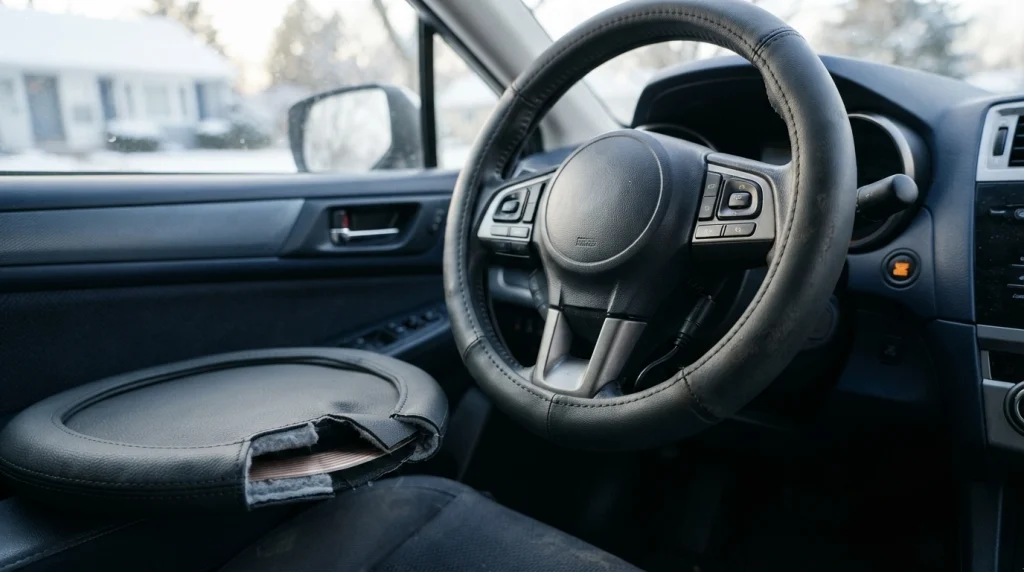
A heated steering wheel cover is a removable accessory that uses electricity to warm the grip area of a car’s steering wheel. It combines a protective outer layer, an internal heating element, and a power connection or battery.
Unlike a regular leather or silicone steering wheel cover, a heated model actively produces warmth rather than simply changing the wheel’s texture or insulation. It can make cold-weather driving more comfortable when used according to its instructions.
What parts are inside the cover?
The exact construction varies by manufacturer, but most electric designs rely on several components working together.
- Outer covering: Fabric, plush, PU leather, or another suitable material provides the surface you touch.
- Heating element: Fine resistance wires or another electrically conductive heating layer generates warmth.
- Insulating layer: Padding helps separate the heating element from your hands and limits unwanted heat loss.
- Electrical connection: A cable, plug, or battery connection supplies the required power.
- Switch or controller: Depending on the model, this component turns the heater on or off and may regulate its temperature.
These components work as a small electric heating system wrapped around the steering wheel. The cover does not need to heat the entire cabin to warm the surface you hold.
Why does the cover feel warm?
Electric current passing through a resistive heating element converts electrical energy into heat. That heat travels through the cover’s layers until the outside surface becomes warmer to the touch.
The warmth you feel depends on the element’s power, its position, the cover’s materials, the surrounding temperature, and the quality of its temperature controls. A thicker cover may feel softer but can also change how quickly heat reaches your hands.
In practical terms, the goal is a comfortably warm grip rather than a hot steering wheel. More heat is not automatically better.
How Does the Heating Mechanism Work?
A heated steering wheel cover uses resistance heating to turn electricity into warmth, then transfers that heat through its outer material. The process begins when the power source supplies current to the internal heating element.
Step 1: Electricity reaches the heating element
When you connect a compatible cover to its power source and switch it on, electricity flows through its heating circuit. The element resists that current and produces heat.
This is the same basic principle used by many electric heating devices. The exact circuit, operating voltage, and power consumption depend on the product.
Step 2: Heat spreads through the cover
The heating element sits beneath the material that contacts your hands. Heat passes through the surrounding layers and warms the grip surface.
Design matters here. An element distributed around the rim may provide more even warmth than one concentrated in a limited area, although actual performance depends on the product’s construction.
Step 3: Temperature controls manage the heat
Some covers use a simple on/off switch, while others offer multiple settings or a thermostat. A thermostat measures temperature and adjusts the heating cycle to keep the system within its intended operating range.
Not every product has automatic temperature regulation. Check the specifications rather than assuming every heated cover includes the same protection.
Step 4: Your hands receive the warmth
Once the outer material warms, it transfers heat to your fingers and palms through direct contact. The cover may also reduce the immediate cold sensation associated with touching a chilled steering wheel.
Ambient temperature affects the result. A cover used in a cold vehicle may take longer to feel comfortable than the same model used in milder conditions.
Practical Insight
When evaluating any steering wheel accessory, I look beyond its advertised heating speed. Even warmth, a secure fit, an undamaged cable, and an unobstructed grip matter just as much as how quickly the surface heats up.
What Powers a Heated Steering Wheel Cover?
Heated covers typically use a vehicle power outlet or a battery-based system. The available power source determines how the device connects, how long it can operate, and whether a cable creates an additional driving hazard.
12-volt vehicle outlet models
Many heated covers connect to the vehicle’s 12V accessory socket, commonly called the cigarette-lighter socket. The socket supplies electricity to the cover’s heating circuit through a cable and plug.
These models avoid the need to recharge a separate battery, but the cord needs careful attention. A cable attached to a steering wheel can become hazardous if it catches, restricts wheel movement, or crosses a control area.
Some manufacturers therefore instruct users to warm the cover while the vehicle is stationary, disconnect it, and remove or store it before driving. Follow the specific manual rather than assuming a corded cover is suitable for continuous use on the road.
Battery-powered heated covers
Battery-powered designs use a rechargeable or replaceable battery to supply electricity to the heating element. A cordless arrangement can avoid a cable running between the steering wheel and dashboard.
However, a battery does not automatically make a cover safe while driving. The device still needs a secure fit, suitable temperature protection, adequate battery placement, and clear compatibility with the vehicle.
USB-powered models and adapters
Some products advertise USB power, but their electrical requirements differ. Check the manufacturer’s specified voltage, current, and compatible adapter before connecting the device.
Do not assume that every USB socket or adapter can provide enough power. An incompatible supply may prevent proper operation or create an electrical problem.
What about the car battery?
A 12V heated cover draws electricity from the vehicle’s electrical system when its socket is powered. Depending on the vehicle, that socket may remain active after the ignition is switched off.
Unplug the accessory when the instructions require it, particularly before leaving the vehicle unattended. Avoid prolonged operation with the engine off if it could drain the battery.
For comparison, some factory-installed heated steering wheels operate through the vehicle’s built-in electrical system and temperature controls. Their operating logic varies by make and model.
Section Takeaway: Choose a power source that suits your routine, but treat cable routing, electrical compatibility, and safe operation as essential requirements.
How Does a Heated Cover Compare With a Factory-Heated Wheel?
A heated steering wheel cover is a removable accessory, while a factory-heated steering wheel has heating elements integrated into the steering wheel itself. Both warm the grip surface, but their installation, controls, and compatibility requirements differ.
Heated cover versus built-in heating
| Feature | Heated cover | Factory-heated wheel |
|---|---|---|
| Installation | Usually fits over the existing wheel | Heating elements are built into the wheel |
| Power | Typically a 12V socket or battery | Vehicle-integrated electrical system |
| Temperature control | Basic switch or model-dependent controller | Usually a vehicle switch with model-dependent regulation |
| Grip thickness | Usually increases the rim thickness | Retains the wheel’s original outer profile |
| Removal | Generally removable | Requires vehicle-specific repair or replacement work |
| Compatibility | Depends on wheel size, shape, controls, and manufacturer instructions | Depends on the vehicle’s original equipment and design |
A factory-heated wheel is generally the more integrated option because its heating system works with the vehicle’s original controls. A removable cover can be simpler to install, but its added thickness and external power connection may be disadvantages.
Can you put a heated cover over an already heated wheel?
Don’t assume you can safely combine the two systems. Some vehicle manufacturers explicitly warn against installing grip covers on heated steering wheels because the additional material may affect heating performance or create overheating concerns.
For example, Kia’s published owner guidance warns that a grip cover may impair the function of the factory steering wheel heater. You can review the relevant guidance in the Kia owner’s manual.
Pro tip: Check your exact vehicle’s owner’s manual and the cover manufacturer’s compatibility instructions before installation. If either prohibits the combination, don’t use the cover on that wheel.
What if your car has an aftermarket steering wheel?
Aftermarket steering wheels can have different diameters, rim profiles, materials, and control layouts. A universal heated cover may not fit securely on a flat-bottom wheel or a wheel with an unusually thick rim.
Measure the wheel and check the manufacturer’s fitment range before ordering. If you’ve installed a quick-release steering wheel or hub adapter, also consider whether the cover affects the wheel’s grip or interferes with any vehicle controls.
Never treat a heated cover as a substitute for correctly installed steering equipment. Steering feel and reliable control come first.
How Do You Use a Heated Steering Wheel Cover Safely?
Safe operation starts with a correctly fitted cover, a compatible power source, and clear instructions for use while driving. The biggest concerns are a slipping grip, excessive heat, damaged wiring, and a cord that interferes with steering.
How should you install and operate one?
Before connecting the heater, read the supplied instructions and check whether the manufacturer permits the cover to remain fitted during driving. Follow these general checks without overriding any product-specific requirements.
- Check the wheel size: Confirm that the cover matches the steering wheel’s diameter, rim thickness, and shape.
- Inspect the cover: Look for damaged fabric, exposed wires, cracked insulation, loose connections, or a bent plug.
- Fit it securely: Install the cover according to the manufacturer’s instructions and confirm that it doesn’t rotate or slip.
- Check the controls: Make sure the cover doesn’t obstruct the horn, steering-wheel buttons, paddle shifters, or any driver-assistance controls.
- Connect the correct supply: Use only the specified power source and compatible adapter.
- Test while stationary: Operate the heater as instructed and watch for unusual smells, excessive heat, or intermittent power.
- Prepare for driving: Disconnect or remove the cover if the instructions require it before moving the vehicle.
Don’t adjust the cover or handle a power connection while driving. Set up the accessory before moving, and keep your attention on the road.
Can you leave the cover plugged in while driving?
It depends on the product’s design and explicit driving instructions. Many corded models are intended to warm the steering wheel while the vehicle is stationary, then be unplugged and removed or stored before driving.
A cable between the wheel and dashboard can snag or restrict steering as the wheel turns. Never improvise a cable route or assume that a coiled cord eliminates this risk.
Even if a cover is advertised for in-motion use, verify that its manufacturer explicitly permits that use and explains how to manage the power connection safely. When instructions are unclear, don’t use the heater while driving.
What warning signs mean you should stop using it?
- Excessive heat: Switch the device off and disconnect it safely if the surface becomes uncomfortably hot.
- Burning smell or smoke: Stop using the accessory immediately and keep away from the suspected electrical fault.
- Damaged wiring: Don’t reconnect a frayed cable, cracked plug, or exposed heating element.
- Loose fit: Remove a cover that rotates, bunches up, or shifts under your hands.
- Electrical interruptions: Stop using a product that repeatedly cuts out, sparks, or causes a fuse to blow.
Do not open or repair the heating circuit unless the manufacturer provides an approved repair procedure. Replace a faulty accessory or contact a qualified technician.
Take extra care if you have reduced sensitivity to heat. Prolonged warmth can cause burns even when the temperature doesn’t initially feel excessive.
Pro tip: For general vehicle safety and recall information, consult the NHTSA vehicle safety resources. For accessory-specific risks, follow the supplied manual and contact the manufacturer.
Section Takeaway: A heated cover is only useful when it maintains a secure grip and operates within its specified limits. If the cord, temperature, or fit creates a concern, stop using it.
How Do You Choose and Maintain a Heated Cover?
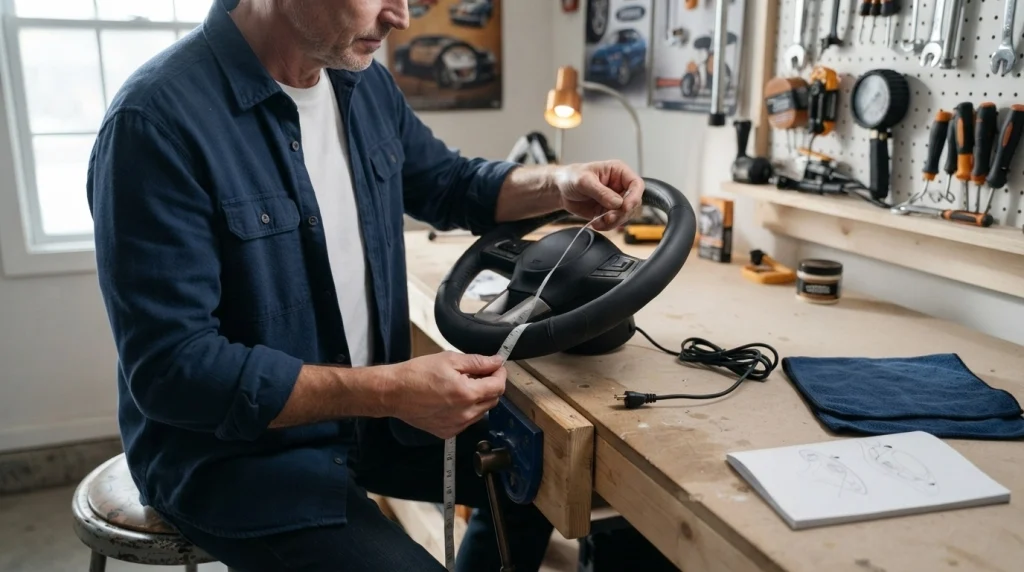
The right heated steering wheel cover should fit your wheel, use a compatible power supply, provide manageable warmth, and preserve a comfortable grip. Price and appearance matter, but they should come after fitment and safety.
Which features should you compare?
- Wheel dimensions: Measure the steering wheel’s outside diameter and check the product’s stated fitment range.
- Heating controls: Look for clearly explained switches, heat settings, and automatic temperature regulation where available.
- Power requirements: Confirm the specified voltage, current, connector type, and compatible adapter.
- Material and grip: Choose a surface that feels comfortable without becoming slippery or excessively thick.
- Safety instructions: Check whether the manufacturer permits driving with the cover installed and connected.
- Cleaning method: Confirm whether the surface can be wiped clean and how the electrical parts must be protected.
- Warranty and support: Prefer products with identifiable manufacturers, clear instructions, and a defined warranty policy.
Universal fit doesn’t mean every steering wheel is compatible. A cover designed for a conventional round wheel may fit poorly on a flat-bottom design or a wheel with an unusual rim profile.
Does cover material affect heating performance?
Yes. The outer material and padding influence how heat reaches your hands, how the surface feels, and how much the cover changes the wheel’s grip.
| Material | Potential benefit | What to check |
|---|---|---|
| Plush fabric | Soft feel and a cozy surface | Bulk, cleaning needs, and secure grip |
| PU leather | Smooth finish and straightforward surface cleaning | Heat tolerance, surface texture, and durability |
| Textured fabric | A less polished, potentially more tactile grip | Wear, dirt buildup, and cleaning instructions |
Material alone doesn’t determine heating speed or safety. The internal heating element, insulation, controller, and complete product design matter too.
How do you clean and store a heated cover?
Disconnect the cover from its power source before cleaning. Follow the manufacturer’s instructions, since some products allow gentle surface wiping while others require a specific cleaning method.
- Use only the recommended cleaning products and methods.
- Keep plugs, switches, cables, and heating connections dry.
- Never immerse an electrical heated cover in water unless its manufacturer explicitly rates it for that use.
- Allow the cover to dry completely before reconnecting it.
- Store it without sharp folds, crushing, or pressure that could damage the heating elements.
- Inspect the cable, connector, and cover before each period of seasonal use.
Don’t assume a cover is machine-washable just because its outer fabric looks like ordinary upholstery. Water and unsuitable cleaning products can damage internal electrical components.
Is a heated steering wheel cover worth it?
It can be worthwhile if you regularly encounter cold steering wheels and want a removable way to add warmth. Its value depends on how often you’ll use it and whether the design suits your vehicle.
If you need uninterrupted heating while driving, a properly equipped factory-heated wheel may be more convenient. If you prefer an accessory, prioritize a secure fit, clear driving instructions, and suitable temperature controls.
Section Takeaway: Choose a heated cover based on fit, electrical compatibility, and safe operation before considering appearance or extra features.
Frequently Asked Questions
1. How long does a heated steering wheel cover take to warm up?
Warm-up time depends on the heating element, power supply, material, and surrounding temperature. Some products advertise warmth within a few minutes, but performance varies. Check the manufacturer’s stated warm-up time and avoid assuming that all covers heat at the same speed.
2. Do heated steering wheel covers use a lot of electricity?
Power consumption depends on the product’s wattage and how long it operates. For a 12V model, current draw can be estimated by dividing its rated power in watts by 12 volts, although actual vehicle voltage and operating conditions vary. Check the product label for its electrical requirements.
3. Can a heated steering wheel cover damage my steering wheel?
A compatible product used as instructed may work without damaging the original wheel, but excessive heat, unsuitable materials, trapped moisture, or poor fit can create problems. Never cover a factory-heated wheel unless the vehicle manufacturer permits it, and discontinue use if the original surface changes or becomes unusually hot.
4. Are battery-powered heated steering wheel covers better than corded ones?
Battery-powered covers avoid a cable running to the dashboard, which may simplify power management. Corded models don’t require a separate battery recharge. Neither type is automatically safer; fitment, temperature control, battery or wiring quality, and explicit driving instructions remain essential.
5. Can I use a heated cover on a leather steering wheel?
Possibly, but check both manufacturers’ instructions first. Leather itself doesn’t establish compatibility, especially if the wheel already contains heating elements or sensitive controls. Use only a cover approved for the wheel’s material and design, and avoid any product that slips or traps excessive heat.
6. Is it safe to drive with a heated steering wheel cover switched on?
Only if the exact product is explicitly designed and approved by its manufacturer for use while driving, with safe power routing and a secure grip. Many corded covers require disconnection before driving. Never allow a cable to interfere with steering or pedals, and don’t guess when instructions are unclear.
7. What should I do if my heated cover stops working?
Disconnect it and inspect the external cable, plug, and power source for visible damage, following the manufacturer’s troubleshooting instructions. Don’t continue using a cover that overheats, smells burnt, or has exposed wiring. Avoid opening the heating circuit unless an approved repair procedure is available.
Final Takeaway: Are Heated Steering Wheel Covers Worth Using?
Heated steering wheel covers work by passing electricity through an internal heating element, which warms the cover’s outer surface and transfers heat to your hands. Most use a 12V vehicle outlet or a battery-based power system.
Before buying one, verify the wheel dimensions, material, electrical requirements, temperature controls, and instructions for driving. If your car already has a heated steering wheel, confirm that an additional cover is permitted.
For more guidance on steering wheel accessories and car modifications, explore the related guides on PluginCarWorld once their current URLs have been verified. The priority is simple: choose equipment that improves comfort without compromising your grip or control of the vehicle.

Daniel Brooks is an automotive writer and product researcher focused on car accessories, car tech, maintenance, and practical driving guides. At Plug-in Car World, he helps drivers make smarter automotive decisions through honest reviews and research-driven content.
