
Are Car Seat Covers Safe? Airbags, Driving and Safety Risks
Quick Answer
Are car seat covers safe? Yes, when the cover fits your exact seat and leaves side airbags, seat belts, and seat controls fully clear. A loose cover, or one that seals over a side airbag, can change how you sit, how a belt fits, and how an airbag opens, so fit matters more than style. Learn how to install a car seat cover correctly before your first long drive with it.
The short verdict
- Safe choice: A model-specific cover with a clear side-airbag opening or breakaway seam.
- Risky choice: A thick, universal cover that covers the seat side bolster with no airbag opening.
- Driving risk: Slipping, bunching, and blocked buckles distract you and change your seating position.
- Hidden risk: Blocked heat, ventilation, headrest movement, and seat controls can build up over time.
- Simple rule: If it moves, bunches, or hides a safety part, take it off and refit it.
Do this first
- Check your owner’s manual for side airbags and seat warnings.
- Find the airbag label on the side of your seat before you fit anything.
- Test the belt, buckle, headrest, and seat controls after fitting.
I’ve fitted covers in my own garage, helped friends sort bunched-up ones, and learned the hard way that a cover that looks neat can still be wrong underneath.
This guide goes past the sales claim and into the real checks. You’ll learn how side airbags work with covers, what to watch while driving, and how to spot a safe fit in minutes.
In This Guide
- What Is a Car Seat Cover?
- Are Car Seat Covers Safe With Side Airbags?
- How Can a Seat Cover Affect Driving, Seat Belts, and Seat Controls?
- Which Seat Covers Are Safer, and Which Should You Avoid?
- How Do You Fit and Check a Seat Cover Safely?
- FAQs About Car Seat Cover Safety
- The Bottom Line: Choose Fit and Airbag Access First
What Is a Car Seat Cover?
A car seat cover is a removable layer that slips, straps, or wraps over your car’s built-in seat.
It protects the original upholstery from spills, pets, sun, and daily wear. It can also change grip, warmth, and comfort on a long drive.
This guide covers covers for adult driver and passenger seats. It does not cover child safety seats, which follow their own manuals and harness rules.
If you mean a child seat, do not add loose padding or an aftermarket cover behind the child. That padding can change harness fit and crash performance, so follow that child seat manual first.
Common cover types include:
- Universal slip-on covers: Stretch over many seat shapes, but fit varies a lot.
- Model-specific covers: Cut for one seat shape, with openings for belts, headrests, and airbags.
- Custom covers: Made to measure for a set of seats, often with a tighter, neater fit.
- Bench and bucket covers: Shaped for a rear bench or for separate front bucket seats.
Section takeaway: A seat cover is only as safe as its fit on your exact seat, not its material or price.
Are Car Seat Covers Safe With Side Airbags?
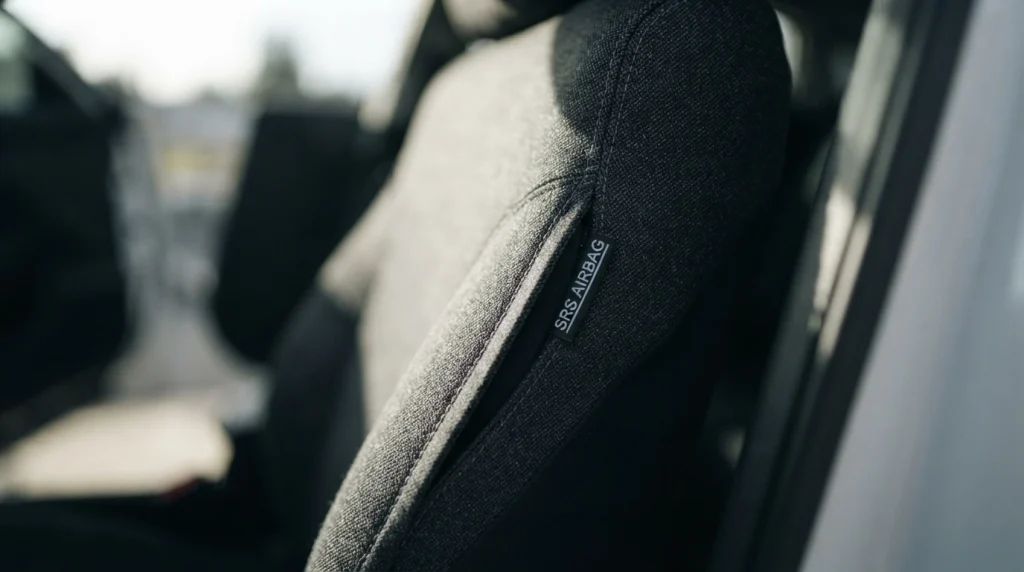
Yes, if the cover is made for seats with side airbags and keeps the airbag path clear. No, if it covers that path with thick fabric, tight stitching, or straps that cross the bolster.
A side airbag, also called a seat-mounted airbag, sits inside the outer side of the seat back. In a side crash, it must burst through the seat seam fast and with force.
A cover can slow that opening, deflect the bag, or tear in an uneven way. That risk is why the airbag seam matters more than the cover’s look.
Look for these signs of an airbag-aware design:
- Clear opening or seam: A breakaway seam or opening sits right over the side bolster.
- Side-airbag label: The maker states side-airbag use for your seat type, not just for cars in general.
- Model-specific fit: The cover lines up with your seat shape, headrest posts, and side label.
- No crossing straps: No strap, hook, or thick seam runs across the airbag area.
Watch for these red flags:
- Sealed bolster: Thick, double-stitched fabric covers the whole seat side with no weak seam.
- One-size stretch: The cover pulls tight in one spot and loose in another, so the seam sits in the wrong place.
- Added padding: Thick foam sits over the bolster and adds a layer the bag must push through.
- Vague claim: The listing says airbag safe but shows no opening, seam, or fit guide.
As of 2026, many modern cars hide side airbags in the seat, not just in the door or pillar. Check the small SRS airbag label on your seat side, then check your owner’s manual for that seat.
Pro tip: For airbag and recall questions, check your vehicle’s owner’s manual and the NHTSA recall lookup, or ask a certified mechanic, rather than trusting a listing claim alone.
For wider safety context, read about understanding car seat safety standards before you judge a cover by its label alone.
The NHTSA site is a useful starting point for vehicle safety and recall information.
Section takeaway: If you cannot find the airbag opening or confirm the fit, do not use that cover on an airbag seat.
How Can a Seat Cover Affect Driving, Seat Belts, and Seat Controls?
A snug, well-fitted cover rarely changes driving. A loose, bunched, or badly cut cover can change your position, your belt fit, and your reach to controls.
Driving safety is not just about crashes. It also covers comfort, focus, and control on every trip.
Seat belts come first. A cover must leave the buckle easy to find, easy to click, and easy to release.
It must also leave the belt path clear across your lap and chest. If the belt rides up, twists, or sits on thick padding, it may not hold you as designed.
Check these driving and control points after fitting:
- Buckle access: You can find and release the buckle without lifting the cover.
- Belt routing: The belt lies flat and does not catch on seams or straps.
- Headrest movement: The headrest still moves up, down, and locks in place.
- Seat position: You can slide, recline, and lock the seat without the cover jamming.
- Power and lumbar controls: Buttons and levers stay clear and easy to use.
- Heating and ventilation: Heat or airflow still reaches you, and no hot spot builds up under the cover.
I once fitted a cheap universal cover on a hatchback and thought the job was done. On the first drive, the base kept sliding forward at stops, and I had to keep shifting back in my seat.
That small slide changed my pedal reach and my focus. I took the cover off, checked the straps, and only refitted it once the base stayed put.
Heated and ventilated seats need extra care. A thick cover can trap heat, block airflow, and hide a warning sign like a hot seam.
Your manual may warn against covers on heated seats, so check it before you buy. If heat builds up fast or feels uneven, remove the cover and let the seat cool.
Seat sensors add another check. Some cars use a seat occupancy sensor to judge if a passenger seat is in use.
A thick or shifting cover should not be used to trick that sensor. If a warning light changes after fitting, remove the cover and check the manual.
For headrest and fit issues, see car seat head support safety and test headrest height before you drive.
Car and Driver often lists seat features by model, which can help you confirm what your seats include.
Section takeaway: A cover that changes your belt, seat position, or control reach is a driving risk, even if it feels soft.
Which Seat Covers Are Safer, and Which Should You Avoid?
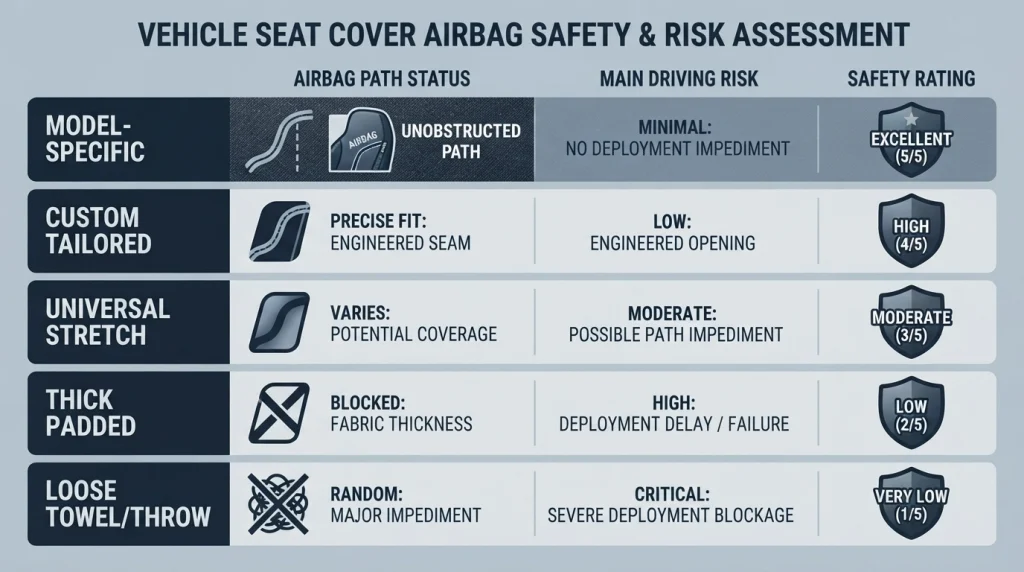
Safer covers share three traits: a model-specific fit, a clear airbag path, and a stable, non-slip base. Riskier covers slip, bunch, cover safety parts, or trap heat and moisture.
Material alone does not make a cover safe. Fit, thickness, and openings matter more than leather, neoprene, or fabric on the label.
| Cover type | Airbag path | Main driving risk | Best use |
|---|---|---|---|
| Model-specific, airbag-aware | Opening or breakaway seam | Low, if fit is checked | Cars with seat side airbags |
| Custom, made to measure | Designed around airbag seam | Low, if openings stay clear | Long-term protection and neat fit |
| Universal stretch, no airbag opening | None shown | Higher, seam may sit wrong | Only seats with no seat airbag |
| Thick padded or plush cover | Often blocked or unclear | Belt fit and heat build-up | Short, careful use only |
| Loose towel or throw | None | Slipping and bunching | Parked protection, not driving |
Choose a safer cover with these checks:
- Snug base: The base grips and does not slide when you brake or turn.
- Clear buckle and belt: No flap covers the buckle or belt anchor.
- Breathable fabric: Air can move, so sweat and heat do not build up fast.
- Easy cleaning: You can remove and clean it without stretching the fit out of shape.
Avoid a cover with these traits:
- Loose straps: Long straps hang near pedals, buckles, or seat rails.
- Thick side padding: Foam bulks up the bolster where a side airbag sits.
- Slippery backing: The cover slides on leather or vinyl with every stop.
- Strong chemical smell: A harsh smell after airing may point to poor material quality.
Waterproof covers can help with pets and spills, but they can also trap moisture underneath. Lift the cover now and then, check for dampness, and let the seat dry fully.
Leather covers can look smart and wipe clean, yet a slick surface can change grip. Neoprene can grip well and resist water, yet a thick cut can still block heat or airflow.
Learn how to wash a car seat cover without damaging it so cleaning does not stretch it loose.
Consumer Reports is a useful check for material durability and care claims before you buy.
Section takeaway: Pick fit and clear safety paths first, then pick material for comfort and cleaning.
How Do You Fit and Check a Seat Cover Safely?
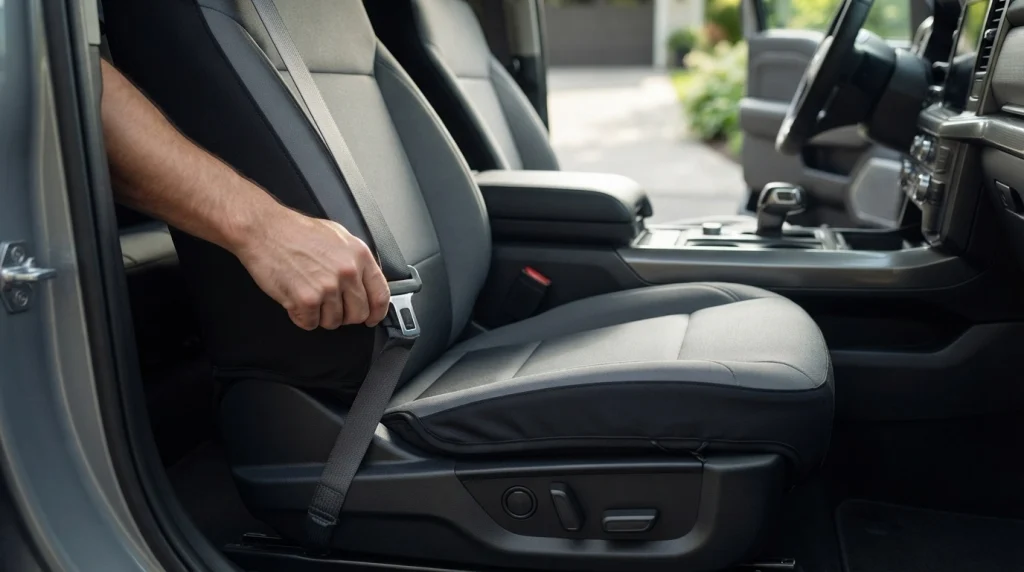
Fit it with the car parked, the seat clean, and every safety part visible. Then test it like you would test a new seat position before you drive.
Do not rush this job in the dark or with the seat pushed back. You need to see the bolster, buckle, and headrest posts clearly.
Follow these steps in order:
- Read your owner’s manual for airbag, heated seat, and cover warnings.
- Remove headrests only if the cover guide says to, then refit and lock them.
- Slide the cover over the seat back first, then settle the base without forcing seams.
- Line up the side-airbag opening with the airbag label on your seat.
- Fasten straps and hooks under the seat, away from rails and moving parts.
- Clear the buckle, belt path, and seat controls, then smooth out folds.
- Sit in the seat, buckle up, and adjust position, mirrors, and headrest.
Run this quick safety check after fitting:
- Tug test: Pull the base and back firmly to check for sliding or lifting.
- Buckle test: Click and release the belt three times without lifting fabric.
- Headrest test: Move the headrest and confirm it locks at the right height.
- Control test: Use seat, lumbar, heat, and ventilation controls if fitted.
- Airbag test by eye: Confirm no strap or thick seam crosses the airbag bolster.
When Should You Remove a Seat Cover Right Away?
Remove it at once if it fails any safety check. Do not wait for a long trip to find out.
Remove it if you notice:
- The cover slides, bunches, or lifts at the base while you drive.
- The belt twists, rides up, or will not click cleanly.
- The headrest will not lock, or the seat will not slide and lock.
- Heat builds up fast, smells odd, or feels uneven under the cover.
- A strap, hook, or seam sits over the side-airbag area.
- Dampness, mould, or skin irritation appears under the cover.
Re-check the fit after washing, after a passenger moves the seat, and after any repair. A cover that fit last month may not fit after it stretches or shrinks.
When you need to take it off for cleaning, follow a safe method to remove a car seat cover for cleaning without tearing straps or seams.
Pro tip: If you are unsure about airbags, seat sensors, or heated seats, check your owner’s manual first, then ask a certified mechanic or dealer for your exact model.
Edmunds can help you confirm your model, trim, and seat features before you order a model-specific cover.
Section takeaway: A five-minute parked check can catch most seat cover risks before they reach the road.
FAQs About Car Seat Cover Safety
Are all seat covers airbag compatible?
No, not all covers are airbag compatible. A safe cover needs a clear opening or breakaway seam over the side airbag, plus a fit that keeps that seam in the right place.
Can a seat cover stop an airbag from working?
A cover is unlikely to stop an airbag fully, but it can slow, deflect, or change how it opens. Thick fabric, tight stitching, or straps over the bolster raise that risk, so never cover that area blindly.
Are seat covers safe for heated seats?
They can be safe if your manual allows covers and the cover does not trap excess heat. Check for hot spots, uneven warmth, or a blocked ventilation path, and remove the cover if heat builds up fast.
Can seat covers damage leather seats?
Yes, a poor cover can damage leather over time through friction, trapped moisture, and heat. Use a breathable, well-fitted cover, lift it to clean underneath, and remove it if dampness or wear marks appear.
Should I put a cover on a child safety seat?
No, do not add an aftermarket cover or padding to a child safety seat unless its manual clearly allows it. Added layers can change harness tightness and fit, so use only parts made for that exact child seat.
How do I know if my car has seat airbags?
Look for an SRS or airbag label on the outer side of the seat back, then confirm it in your owner’s manual. Your dealer can also confirm side airbags for your exact model and trim.
The Bottom Line: Choose Fit and Airbag Access First
Car seat covers can protect your seats and make driving more comfortable. They stay safe only when they fit your seat, leave airbags and belts clear, and stay put while you drive.
Before you buy, check your manual, confirm side airbags, and choose a model-specific cover with a clear airbag path. After fitting, test the belt, headrest, and controls while parked, then re-check the fit after washing or moving the seat.

Daniel Brooks is an automotive writer and product researcher focused on car accessories, car tech, maintenance, and practical driving guides. At Plug-in Car World, he helps drivers make smarter automotive decisions through honest reviews and research-driven content.
