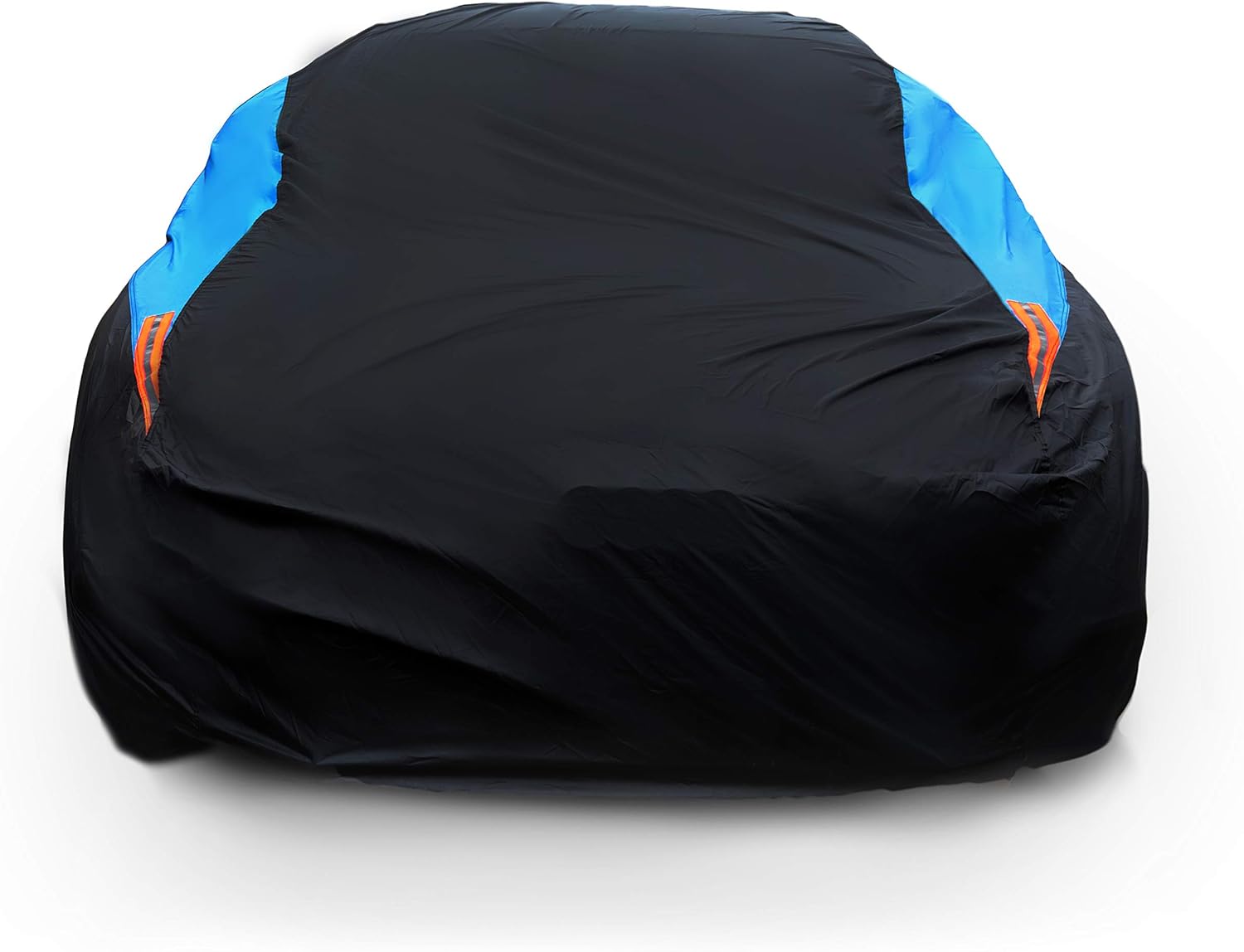
Stop Car Cover Flapping & Paint Damage Fast
⚡ Quick Answer
A car cover flaps when it’s too loose or under-secured, and that flapping grinds trapped grit into your clear coat like sandpaper. Stop it by tightening the fit, adding gust straps at all four corners, and locking down the center strap under the chassis.
Fastest Fixes For A Flapping Cover
-
1
Run the center strap under the car and cinch it tight -
2
Clip gust straps to both front and rear hems -
3
Wash the car first so no grit gets trapped
Mistakes That Make Flapping Worse
-
✓
Skipping the center strap to save time -
✓
Buying a universal cover instead of custom-fit -
✓
Covering a dirty car right after a dusty drive
You hear it before you see it. A snap, then a steady slap-slap-slap against the hood as the wind picks up overnight. By Daniel Brooks. By morning, what should have been a clean, protected car looks like it lost a fight with a sandstorm.
That flapping isn’t just annoying. It’s actively grinding dust and grit into your clear coat every time the fabric lifts and drops. The good news is the fix doesn’t require a new cover. It just requires using the one you have correctly.
Below, you’ll find exactly why covers flap, how to stop it in under ten minutes, and what to do if your current setup keeps failing.
📌 Key Takeaways
-
→
Flapping causes damage by dragging trapped dirt across your paint like sandpaper. -
→
Loose fit is the root cause in most cases, not bad luck with the weather. -
→
The center strap under the chassis stops the cover from ballooning in the middle first. -
→
Parking direction matters since a flat rear end catches more wind than a nose-first park.
Why Does a Car Cover Flap in the Wind?
A cover flaps when wind gets underneath it and has room to move. Once air slips under the hem, it lifts the fabric like a sail. Then gravity pulls it back down against the paint.
That up-and-down motion repeats with every gust. Carcover.com notes that poor fit, lightweight materials, and improper securing are the main reasons covers fail in wind. Gaps from a bad fit give wind a way in.
So what does this mean for you? If your cover is loose anywhere, that’s the spot where flapping starts first.
📋 The Three Reasons Covers Flap
-
Loose fit: Universal covers leave extra fabric that wind can grab and lift. -
Missing straps: No tie-downs means nothing holds the hem against the car. -
Wrong parking angle: A flat rear end catches more wind than a pointed nose.
Here’s why that matters: each of these has its own fix, and you likely only need to solve one or two to stop the flapping completely.
How Does Flapping Actually Damage Paint?
Flapping damages paint through friction, not impact. Dust, pollen, and grit settle between the cover’s lining and your clear coat. When the cover moves, those particles act like fine sandpaper.
This happens with every single gust, not just in storms. A breezy afternoon can do as much damage as one windy night, just more slowly.
1000s
of friction cycles in one windy night
4
corners that need securing
1
center strap that stops most ballooning
You might be thinking flapping just looks bad and doesn’t really hurt the paint. Here’s why that’s not the case: the friction etches fine swirl marks into the clear coat over time, and that damage doesn’t buff out easily once it’s there.
Edges, mirrors, and high points take the worst of it. Loose fabric whips hardest at corners and body lines, which is exactly where this kind of wear shows up first.
How Do You Stop a Car Cover From Flapping?
You stop flapping by removing the gaps wind can get into and anchoring the cover at every loose point. Start with the fit, then add restraints, then check your parking spot.
Do this in order. Each step builds on the last one.
🔢 Step-by-Step: Securing a Flapping Car Cover
-
1
Wash the car first
Never cover a dirty car. Trapped grit is what turns flapping into scratches.
-
2
Lock down the center strap
Pass it under the middle of the car and pull it tight. This stops the cover from billowing up first.
-
3
Add gust straps at all four corners
Clip elastic straps to the front and rear hems. This kills the flapping at the spots that move most.
-
4
Tuck loose fabric around bumpers and tires
Any slack left hanging is fabric the wind can still catch.
-
✓
Park nose-first into the wind
Your car is now secured against most everyday gusts.
That’s not all. If you’ve done all five steps and it’s still flapping, the cover itself is probably the wrong size for your car. We’ll cover that next.
What If Your Cover Keeps Flapping Even After Securing It?
If a properly strapped cover still flaps, the fit is the problem, not your technique. A universal cover almost always has slack somewhere a custom-fit one wouldn’t.
This is the most common reason DIY fixes stop working. You can strap down a baggy cover all you want, but the extra fabric has to go somewhere.
Here’s how universal and custom-fit covers compare on the factors that actually control flapping.
| Factor | Universal Cover | Custom-Fit Cover ✓ Best |
|---|---|---|
| Excess fabric | Common around mirrors and roofline | ✓ Minimal, shaped to your car |
| Flapping risk in wind | High, even with straps | ✓ Low when straps are used |
| Typical price | $30–$80 | ✓ $100–$300 |
If straps alone haven’t solved it, the table above shows why: a snug, custom shape removes the loose fabric at the source.
💡 Key Insight
Straps and a good fit work together. Straps can’t fully fix a bad fit, and a great fit still needs straps in real wind. You need both.
What Gear Actually Stops the Flapping?
Two cheap accessories handle most flapping problems: gust strap kits and soft-coated magnetic weights. Both attach to a cover you already own.
Gust strap kits clip to the cover’s hem near each wheel well, then connect with a bungee cord pulled tight underneath the car. They take about a minute per corner to install.
Magnetic weights sit on top of the cover at flap-prone spots like the hood and roof. The soft coating keeps them from scratching anything as they hold the fabric down.
Recommended Accessory
AllGuard Gust Strap Wind Protector Kit
A simple clip-and-bungee setup that anchors the front and rear hems of a cover you already own, without needing to buy a whole new one.
As an Amazon Associate, we earn from qualifying purchases.
So if you’re not ready to buy a new cover, this is the fastest way to make your current one behave.
What Most People Get Wrong About Car Cover Flapping
⚠️ Warning
A cover that isn’t moving doesn’t need washing as often. That’s backwards. A still cover traps less new dirt, but old grime already inside still grinds the paint with any movement at all.
Most people blame the wind for flapping. In reality, it’s almost always the fit or the missing straps. Wind is the trigger, not the root cause.
Another common belief is that a thicker, heavier cover automatically resists flapping better. Thickness helps with durability, but a heavy cover with a loose fit will still lift and slap in strong gusts.
Last, many drivers think one strap in the middle is enough. Car Covers and Shelter explains that the central strap stops billowing in the middle, but corners and edges still need their own restraints.
Conclusion
Flapping isn’t random bad luck. It’s a sign your cover has a gap somewhere wind can use. Fix the fit, add straps at every corner, and the slapping stops.
One thing to do right now: go check your center strap. If it isn’t pulled tight under the car, that’s your flapping right there.
Frequently Asked Questions
Why does my car cover keep blowing off?
Your cover blows off when wind gets under a loose edge and lifts the whole sheet like a sail. Poor fit, missing straps, and a bad parking angle are the three biggest causes. Tightening the fit and adding corner straps fixes most cases.
Can a car cover scratch your paint?
Yes, if it’s used improperly. The cover fabric itself rarely causes damage. The real culprit is dirt and grit trapped underneath that grinds into the clear coat when the cover moves in the wind.
How do I stop my car cover from flapping in the wind?
Secure the center strap under the chassis first, then clip gust straps to the front and rear hems. Tuck any loose fabric around the bumpers and tires. If it still flaps after that, your cover is likely too loose-fitting for your car.
Are magnetic weights safe to use on a car cover?
Yes, as long as they’re soft-coated. Soft-coated automotive magnetic weights add downward pressure to hold the cover flat without making direct metal-to-paint contact, so they won’t scratch the finish underneath.
Does parking direction affect how much a cover flaps?
Yes. Parking nose-first into the wind lets air flow smoothly over the front of the car instead of catching the flatter rear end. A flat surface facing the wind creates more lift and turbulence, which increases flapping.
Should I wash my car before putting the cover on?
Always wash the car first. Covering a dirty car traps dust, sand, and grime against the paint. When wind moves the cover even slightly, that trapped grit acts like sandpaper and causes micro-scratches.
Is a custom-fit cover worth it over a universal one?
If you park outside regularly, yes. Custom-fit covers remove the excess fabric that universal covers leave at the mirrors, roofline, and rear, which is exactly where flapping and abrasion start.

Daniel Brooks is an automotive writer and product researcher focused on car accessories, car tech, maintenance, and practical driving guides. At Plug-in Car World, he helps drivers make smarter automotive decisions through honest reviews and research-driven content.