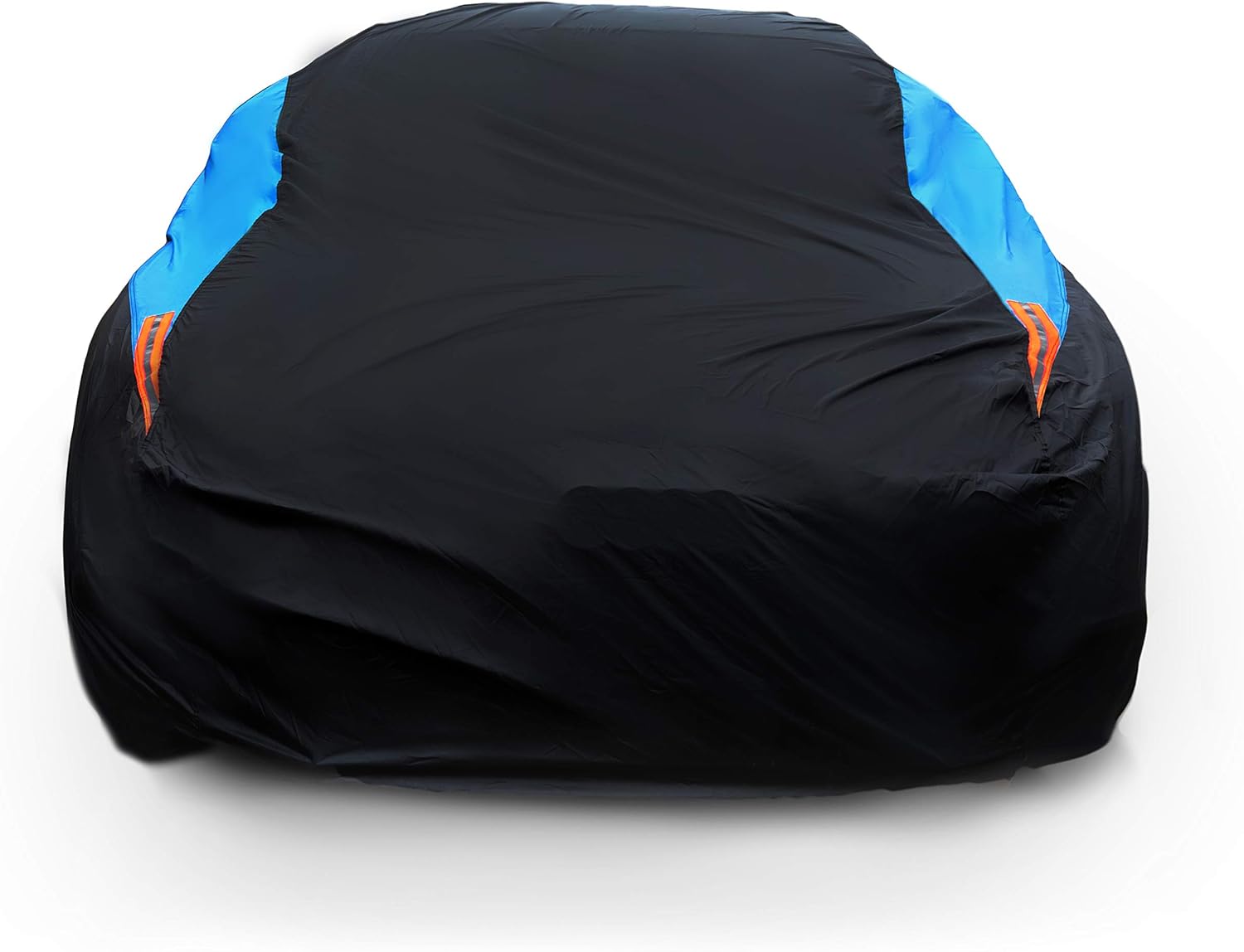
How to Store a Car Cover the Right Way (So It Lasts for Years)
⚡ Quick Answer
To store a car cover the right way: clean it, let it dry completely, fold or roll it tightly on a clean surface, place it inside a breathable storage bag, and keep it somewhere cool, dry, and dark. Never store a damp cover — mold grows within 24–48 hours.
How to store a car cover — 5 steps:
-
1
Shake out loose dust and debris from the cover -
2
Clean and fully air-dry — bone dry, no damp spots -
3
Fold in half lengthwise, press out air, roll tightly -
4
Place inside a breathable storage bag -
5
Store in a cool, dark, dry location away from sunlight
Biggest mistakes to avoid:
-
✓
Never fold on a dirty floor — dirt transfers to the cover -
✓
Never store damp — mold destroys fabric fast -
✓
Never crumple into a ball — creases weaken fabric over time
You pull the cover off your car and toss it in the corner of the garage. It’s just a cover, right? Wrong — I’m Daniel Brooks, and after testing and reviewing car protection products for years, I can tell you that how you store a car cover directly affects how long it protects your vehicle.
A cover stored the wrong way collects mold, develops permanent creases, and transfers grit straight back onto your paint. Here’s exactly how to avoid all of that.
📌 Key Takeaways
-
→
Moisture is the enemy. A damp car cover stored in a bag creates ideal mold conditions within 24–48 hours. -
→
Roll, don’t crumple. Tight rolling prevents permanent fabric creases that weaken cover integrity over time. -
→
Use a breathable bag. Airtight plastic traps moisture; a breathable storage bag lets residual humidity escape. -
→
Location matters as much as folding. Direct sunlight and extreme heat degrade cover fabric even inside a bag.
Why Does Proper Car Cover Storage Matter So Much?
Storing a car cover carelessly costs you more than you think. A quality car cover runs $50 to $400 or more. Improper storage can destroy it in a single season.
Here’s the problem most car owners don’t see coming. Dirt trapped in folded fabric acts like sandpaper. The next time you put the cover on, those trapped particles scratch your paint every time the cover moves in the wind.
But it gets worse. Mold colonies can establish themselves in damp fabric in under 48 hours. Once mold sets into a car cover’s fibers, it’s nearly impossible to fully remove — and it will transfer directly to your vehicle’s paint and trim.
There’s also the structural issue. Crumpling a cover into a ball creates sharp, repeated folds in the same spots. Over time, those creases weaken the fabric at those exact points, causing the material to tear prematurely. Proper storage isn’t just housekeeping — it’s protection for a product that’s there to protect your car.
Should You Clean the Car Cover Before Storing It?
Yes — always. Storing a dirty car cover locks contaminants into the fabric permanently.
Bird droppings, tree sap, and road grime don’t just sit on the surface. They bond to fabric fibers over time, especially when compressed and stored. What washes off easily after 2 weeks becomes a permanent stain after 6 months of storage.
✅ Tip
For a quick clean before storage, shake the cover vigorously outside first. Remove loose dust and debris before any washing. For a full clean, many covers are machine-washable in a commercial-grade laundromat machine — check your cover’s label. Use cold water and a mild detergent with no bleach or fabric softener.
The single most important rule after cleaning: the cover must be 100% dry before you fold and store it. Not “mostly dry.” Not “dry enough.” Completely dry.
Run your hand across every section of the fabric. If any spot feels even slightly cool to the touch — that’s residual moisture. Keep air-drying until every part feels the same temperature as the surrounding air.
How Do You Dry a Car Cover Quickly?
The fastest method is air drying outdoors on a clean surface or draped over a railing or fence in a shaded area. Avoid direct sunlight during drying — UV rays degrade cover fabric even during short exposure windows.
If drying indoors, good airflow is key. Set up a fan to circulate air around the cover. Expect 2–4 hours for most covers, longer for thicker multi-layer fabrics. Never use a clothes dryer unless your cover’s manufacturer specifically states it’s safe — heat destroys many cover coatings.
How Do You Fold and Roll a Car Cover for Storage?
Folding technique is where most people go wrong. The goal is a tight, compact shape with no sharp crease points that repeat in the same location.
Here’s the method that works best for all cover sizes — the same technique used by professional detailers.
🔢 Step-by-Step: How to Fold and Roll a Car Cover
-
1
Choose a clean, open area
Use a clean garage floor, driveway, or large table. Never fold on grass or a dirty surface — loose debris transfers into the fabric instantly.
-
2
Fold in half lengthwise
Bring both long sides together to create a narrow strip. This halves the width and makes the roll manageable for any cover size.
-
3
Press out all trapped air
Run your hands along the folded cover to push out air pockets. Think of it like rolling a sleeping bag or tent — air makes the roll bulky and loose.
-
4
Roll tightly from one end to the other
Start at the front edge and roll toward the back. Keep tension even as you go. A tight, even roll prevents creases and keeps the bundle compact.
-
✓
Place directly into storage bag
Slide the rolled cover into its storage bag immediately. Don’t set it down again — that’s how it picks up new debris before you’ve even stored it.
You might be thinking: “Can’t I just fold it into a square instead?” You can — and for smaller covers, neat accordion-style folding works fine. The key rule is the same: avoid folding the same crease into the same spot every single time.
So if you do use a folding method instead of rolling, vary the fold points slightly each time you store. This distributes stress across the fabric rather than weakening one line repeatedly.
Do You Really Need a Car Cover Storage Bag?
Yes — a storage bag is not optional if you want the cover to last. It’s the single most effective thing you can add to your storage routine beyond drying the cover first.
Without a bag, even a clean, dry cover sitting on a garage shelf picks up dust, absorbs humidity from the air, and can get knocked, snagged, or dragged across rough surfaces. All of these degrade the fabric and introduce the exact contaminants you just washed out.
Here’s what a proper storage bag actually protects against and why each matters:
A storage bag is a one-time investment of $15–$30 that extends the life of a $100–$400 car cover by years.
What Type of Storage Bag Should You Use?
Use a breathable bag — not an airtight plastic bag. This is a critical distinction.
An airtight bag traps any residual moisture that even a “fully dry” cover can release after packing. That trapped humidity has nowhere to go. Mold and mildew follow.
A breathable bag made from woven polyester or fabric allows that tiny amount of residual moisture to evaporate over the first few hours after storage. Your cover stays dry long-term, and no odor develops.
Recommended Product
Covermates Deluxe Car Cover Storage Bag — Elite Plus Collection — 3 YR Warranty
★★★★★ Highly rated on Amazon
Built from scratch-resistant 600D polyester with reinforced carry straps, a double-pull zipper, and an ID window — exactly what’s needed for long-term car cover storage.
As an Amazon Associate, we earn from qualifying purchases.
Where Is the Best Place to Store a Car Cover?
Where you store the bag matters just as much as how you fold it. The ideal car cover storage location has 4 properties: cool, dry, dark, and ventilated.
Let’s break down each one.
📋 What makes an ideal car cover storage location
-
Cool temperature (50–75°F / 10–24°C): Extreme heat speeds up fabric degradation and damages special coatings. Extreme cold makes some fabrics brittle. A garage shelf, interior closet, or climate-controlled space all work well. -
Low humidity: High humidity grows mold even in a dry-stored cover. Humid basements and unventilated sheds are the worst locations. If humidity is unavoidable, add silica gel packets to the storage bag. -
Away from direct sunlight: UV exposure causes fading and fabric breakdown even through a storage bag. Keep the bag on a shelf away from windows or in a closed cabinet. -
Good airflow: Don’t seal the bag inside a closed airtight bin. The area around the bag should have some air circulation to prevent stale, musty buildup.
Now here’s something most people get wrong. They store the car cover in the car’s trunk.
This works fine if you use the cover daily and need quick access. But for seasonal or long-term storage, a trunk is actually one of the worst options. Trunks trap heat in summer (reaching 140°F / 60°C on hot days), collect humidity, and offer no ventilation. All 4 ideal storage conditions fail in a sealed hot trunk.
For daily-use covers you put on and take off regularly, trunk storage is a practical convenience. For seasonal storage, always move it inside to a proper location.
⚠️ Warning
If you must store in a humid area like a basement, place the storage bag inside a breathable plastic bin — not an airtight one. Add 2–3 silica gel packets inside the storage bag. Check the cover every 30 days for signs of mold (white or gray spots, musty smell). Mold that reaches the inner lining will scratch your paint on next use.
How Often Should You Clean a Car Cover for Storage?
Clean your car cover at least twice per year — once when taking it off for the season, and once before putting it back on.
The “before putting it back on” clean is the one most people skip. It seems pointless to wash something you’re about to use. But a cover stored for 6 months collects residual dust even inside a bag, and that dust goes straight onto your paint.
For covers used year-round, a quick shake-out every time you remove the cover is essential. A full wash every 2–3 months prevents permanent staining from accumulated contaminants.
Here’s what to avoid when washing a car cover:
✓ Car cover washing checklist
-
✓
Use cold or warm water only — hot water shrinks fabric and damages waterproof coatings -
✓
Use a mild detergent only — no bleach, no fabric softener, no fragrance additives -
✓
Use a commercial-size washing machine if your cover is large — home machines are often too small and agitate too harshly -
✓
Air-dry only unless manufacturer specifically says tumble dry low is safe -
✓
Spot-clean bird droppings and sap immediately — don’t let them sit and bond to fabric
What Most People Get Wrong About Storing a Car Cover
Most car cover mistakes come from treating it like a tarp rather than a precision protective product. Here are the 3 most common and most damaging errors.
**Misconception 1: “My cover looks clean, so it’s fine to store as-is.”**
Looks are deceptive. What’s invisible to the eye — fine grit, environmental pollutants, invisible moisture — is exactly what destroys covers and paint over long storage periods. Always clean before storing, even when the cover looks clean.
**Misconception 2: “An airtight plastic bin keeps it safer than a breathable bag.”**
It seems logical. But airtight containers trap humidity and prevent any residual moisture from escaping. A breathable storage bag is the correct choice — it protects against external contaminants while allowing moisture vapor out.
**Misconception 3: “Folding technique doesn’t matter as long as it fits in the bag.”**
Crumpling or bunching a car cover into random ball shapes creates permanent crease lines. Over 2–3 seasons, those crease points thin and eventually tear. Proper rolling or accordion-folding takes under 3 minutes and extends the cover’s life by years.
💡 Key Insight
The 3-minute storage routine — shake, dry, roll, bag, shelf — is all it takes. Car covers that fail early almost always fail because of one skipped step. The most skipped step is confirming the cover is truly dry before sealing the bag.
Car Cover Storage: Indoor vs. Outdoor Location Comparison
Not every storage situation is ideal. Here’s how to make the best choice based on what’s available to you.
| Storage Location | Risk Level | Best For ✓ Best |
|---|---|---|
| Indoor closet / laundry room | Very Low | ✓ Seasonal or long-term storage |
| Garage shelf (ventilated) | Low | ✓ Year-round daily-use storage |
| Car trunk | Medium (heat) | Daily use only, not seasonal |
| Basement (humid) | High (mold risk) | Only with dehumidifier + silica gel |
| Outdoor shed (unventilated) | Very High | Avoid — last resort only |
When in doubt, store inside the house — even a hallway closet beats most garage and trunk scenarios for long-term cover health.
Conclusion
Storing a car cover the right way takes 3 minutes and 5 steps. Clean it, dry it completely, roll it tightly on a clean surface, seal it in a breathable bag, and keep it somewhere cool and dark. Skip any one of those steps — especially the drying — and you’re shortening both the cover’s life and your paint’s protection.
The right storage routine is what separates a car cover that lasts 5–10 years from one that falls apart in 2.
**One thing to do right now:** Pick up your car cover, give it a shake, and check if it’s actually dry. If it smells even slightly musty, air it out for 2 hours before re-storing. That check takes 30 seconds and prevents mold damage that costs $100+ to fix.
Frequently Asked Questions
Can a wet car cover cause mold on my car?
Yes. A damp cover stored against or near a vehicle creates a humid microenvironment between the fabric and paint. Mold can appear within 24–48 hours. Always ensure the cover is completely dry before placing it on the car or putting it into storage.
Should I keep my car cover in the trunk?
Only if you use the cover daily. For seasonal or long-term storage, avoid the trunk — it can reach 140°F (60°C) in summer and traps humidity. Indoor storage on a cool shelf in a breathable bag is far better for the cover’s long-term condition.
How do you fold a car cover to prevent creases?
Fold in half lengthwise on a clean surface, press out all air, then roll tightly from one end to the other — like rolling a tent. This distributes the fold lines across the entire fabric rather than creasing the same spot repeatedly, which is what weakens and tears covers over time.
How often should I clean my car cover before storing it?
Clean it at minimum twice a year — once when removing it for the off-season and once before putting it back on. If you use it year-round, shake it out every time you remove it and do a full wash every 2–3 months to prevent permanent staining from accumulated grime.
Can a car cover damage paint if stored incorrectly?
Yes. A dirty or improperly stored cover that collects grit and debris will act like fine sandpaper against your paint the moment wind moves the cover. Storing clean and dry prevents this entirely — the cover protects paint rather than scratching it.
Is it okay to store a car cover in a plastic bag?
No. Airtight plastic bags trap moisture and create ideal mold conditions even for a “dry” cover. Always use a breathable fabric or woven polyester storage bag. The small amount of airflow it allows is exactly what keeps residual moisture from building up over weeks of storage.
What temperature is too hot or too cold to store a car cover?
The ideal range is 50–75°F (10–24°C). Temperatures above 95°F (35°C) accelerate fabric degradation and can damage waterproof coatings on multi-layer covers. Freezing temperatures make some fabrics brittle. A climate-controlled indoor space is best for long-term storage.

Daniel Brooks is an automotive writer and product researcher focused on car accessories, car tech, maintenance, and practical driving guides. At Plug-in Car World, he helps drivers make smarter automotive decisions through honest reviews and research-driven content.