How to Protect Your Car From Hail Damage Fast
⚡ Quick Answer
Get your car under solid cover fast, or wrap it in thick padding. A garage stops hail completely. If you’re stuck outside, a padded hail car cover or layered moving blankets absorb most of the impact and can keep dents off your hood, roof, and trunk.
If a storm is minutes away, do this:
-
1
Pull into a garage, carport, or parking deck if one’s close -
2
No shelter? Throw on a hail car cover or moving blankets -
3
Fold in your side mirrors and stay away from the car
Don’t make it worse:
-
✓
Never duct-tape blankets to your paint -
✓
Don’t drive through a hailstorm if you can avoid it -
✓
Skip thin cardboard — it falls apart when wet
The sky turns that strange greenish-gray, and your phone buzzes with a severe thunderstorm warning. Your car is sitting in the driveway, completely exposed. That sinking feeling is real — hail can dent a hood in seconds and turn a clean windshield into a spiderweb.
Daniel Brooks here. I’ve spent years covering vehicle protection for plugincarworld.com, and hail is one of the few weather events where a few minutes of prep genuinely saves thousands in repair bills. The good news: you don’t need a garage to fight back.
Below, you’ll find the fastest defenses to use right now, how to pick a cover that actually holds up, and the mistakes that turn a bad storm into a worse repair bill.
📌 Key Takeaways
-
→
Covered parking is the only option that stops hail completely. -
→
Padded hail covers use EVA foam or thick layers to absorb impact, not just block water. -
→
Hail accounts for roughly 15% of comprehensive car insurance claims nationwide. -
→
Duct tape ruins paint — never use it to secure a blanket or cover.
5 Ways to Protect Your Car From Hail Right Now
Covered parking beats every other option, but if you’re stuck outside, padding the exposed panels still cuts dent risk significantly. Here’s the order that actually works, fastest and most effective first.
🔢 Step-by-Step: Protecting Your Car From Hail
-
1
Find any roof
A parking garage, gas station awning, or highway underpass (briefly, and only if it’s legal and safe to stop) beats nothing.
-
2
Deploy a padded hail cover
A cover built with EVA foam or multi-layer padding on the roof and hood absorbs impact instead of just blocking water.
-
3
Layer moving blankets if that’s all you have
Drape thick blankets or a comforter over the roof, hood, and windshield. They’ll get soaked, but soften the impact.
-
4
Use floor mats on the windshield
Rubber side up. It’s a last resort, but it shields the most expensive panel from cracking.
-
✓
Fold in your mirrors and step back
Mirrors crack easily. Once your car is covered, get yourself somewhere safe.
Here’s why that matters: small hailstones can fall at speeds around 25 mph, fast enough to dent a roof or hood on impact. So if your car spends even one storm fully exposed, you’re rolling the dice on a repair bill that can run into the thousands.
Should You Fold In Your Mirrors?
Yes, every time. Side mirrors are thin, exposed, and one of the cheapest things hail breaks — but they’re also one of the priciest parts to replace once the glass or housing cracks.
Folding them in cuts their exposed surface area dramatically. It takes two seconds and costs nothing, so there’s no reason to skip it, even if you’re already covering the car with a blanket or cover.
✅ Tip
Make folding your mirrors a habit anytime you park outside during storm season — you won’t have to think about it when a warning hits.
But here’s the thing: mirrors are a small fix for a small problem. The roof, hood, and trunk take the real beating, which is where a proper cover earns its keep.
Choosing the Right Hail Car Cover
Not every car cover protects against hail. A standard cover blocks rain and dust, but it won’t stop a dent. You need a cover built with thick padding — usually EVA foam, multi-layer cotton, or an inflatable air-cushion system — specifically on the roof, hood, and trunk.
Here’s how the three main cover types stack up for everyday hail protection.
For drivers who park outside often, a dedicated padded cover earns its cost back the first time it prevents a repair bill.
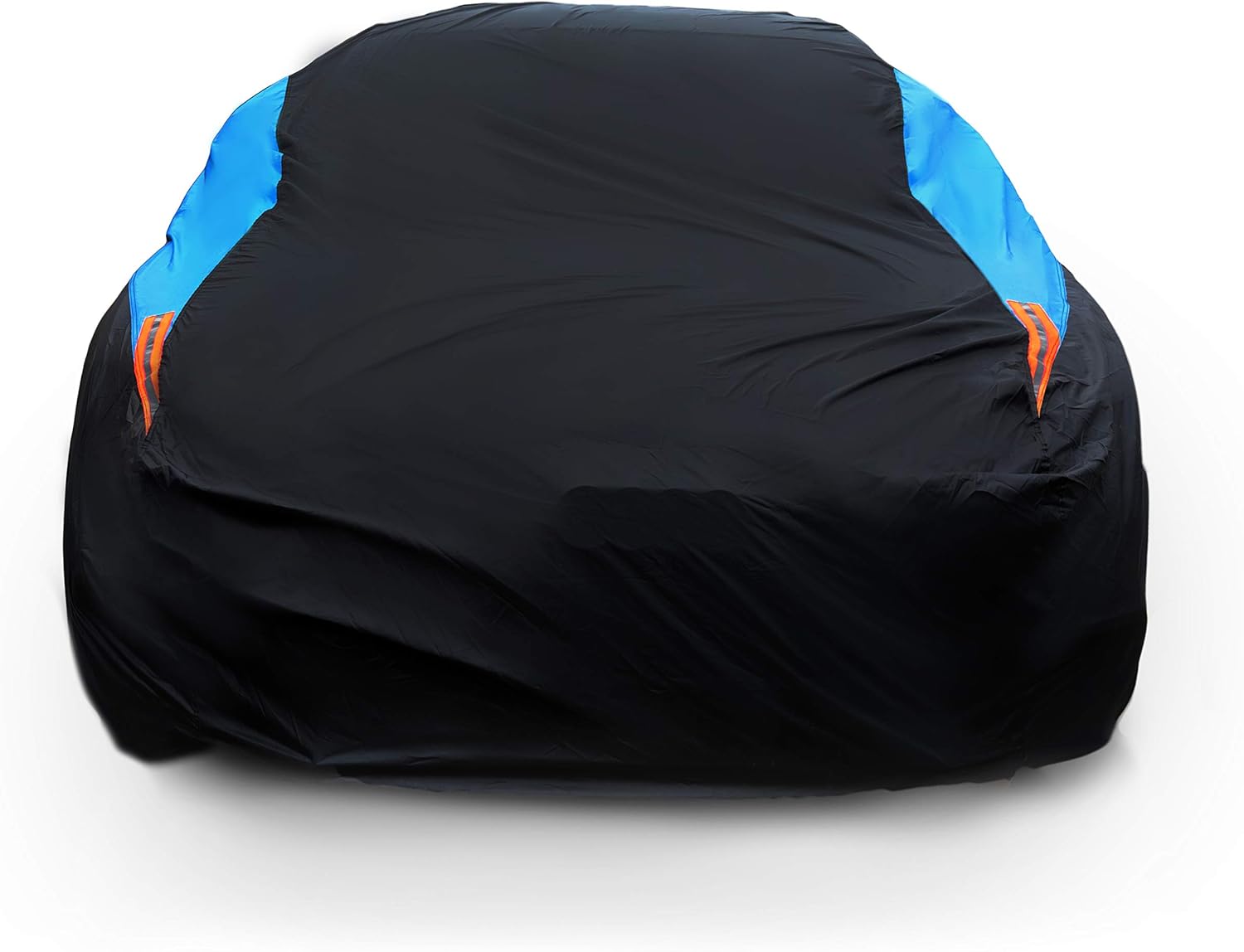
If you only need everyday all-weather protection rather than dedicated hail padding, a heavy-duty multi-layer cover still adds a meaningful buffer against smaller hailstones while doubling as rain, sun, and dust protection the rest of the year.
Recommended Product
EzyShade 10-Layer Car Cover Waterproof All Weather
★★★★☆ 4.3 stars, 13,000+ Amazon reviews
A solid everyday all-weather pick — its bond-pressed, machine-cut layering and click-tight strap system hold up well in wind and rain, making it a smart year-round companion to dedicated hail protection during peak storm season.
As an Amazon Associate, we earn from qualifying purchases.
Mistakes That Make Hail Damage Worse
A few common “fixes” actually backfire. Skip these, no matter how tempting they look in a rush.
⚠️ Warning
Never duct-tape a blanket or tarp to your car. The adhesive peels paint, and the tape is brutal to remove once the storm passes. Use bungee cords or tie-downs at the wheels instead.
Thin cardboard is another trap. It looks like free padding, but it gets soaked in the rain that usually comes with hail and disintegrates before the storm’s even over. If you’re going the DIY route, only use thick, corrugated panels — and even then, treat it as a backup, not your main defense.
You might be thinking a tarp alone will do the job. Here’s why that’s risky: a plain tarp has no cushioning. It blocks water just fine, but hail will dent right through it the same as it would dent bare metal.
How to Know a Hailstorm Is Coming
Hail forms inside thunderstorm updrafts, when raindrops get carried into freezing air and grow layer by layer until they’re too heavy for the storm to hold up. That process can happen fast, so a few minutes of warning is often all you get.
- Turn on push alerts for severe thunderstorm warnings on your phone
- Watch for a greenish-gray sky and a sudden temperature drop
- Keep a cover or blankets in your trunk during peak storm months (April–June in much of the U.S.)
Want to dig into how hailstorms actually form? NOAA’s research breaks down exactly why some storms drop small pellets and others drop baseball-sized stones.
What Most People Get Wrong About Protecting Cars From Hail
Many drivers assume a regular car cover offers hail protection. It doesn’t. Without padding built into the roof and hood, a standard cover just adds a thin barrier that hail punches straight through.
Another common belief is that parking under a tree is always safer than staying in the open. Sometimes it helps with light hail, but if wind comes with the storm, falling branches can cause more damage than the hail itself.
Last one: people think any insurance policy covers hail. It doesn’t. Hail damage falls under comprehensive coverage specifically — a liability-only policy won’t pay for it at all.
Conclusion
Hail catches most drivers off guard, but a covered car almost always comes out fine. Garage, padded cover, or blankets — in that order — beats leaving your car exposed every time. One thing to do right now: toss a hail cover or a couple of thick moving blankets in your trunk before the next storm season hits, so you’re never caught without an option.
Frequently Asked Questions
What is the best protection for a car that has to stay outside?
A padded hail car cover is your best bet. Look for one with EVA foam or thick multi-layer padding over the roof and hood, since that’s where most dent damage happens. Reinforce it with straps so wind can’t pull it loose mid-storm.
Does car insurance cover hail damage?
Only if you carry comprehensive coverage. Liability-only policies won’t pay for hail dents or cracked glass. Hail accounts for roughly 15% of all comprehensive auto claims, so it’s worth checking your policy before storm season starts.
How much does hail damage cost to repair?
Minor hail damage typically runs $1,000 to $3,500, while severe damage with multiple deep dents or cracked glass can exceed $5,000. Paintless dent repair is usually the cheaper fix when the paint itself isn’t broken.
Is it safe to drive during a hailstorm?
Avoid it if you can. Reduced visibility and slick roads make driving in hail genuinely dangerous, not just hard on your paint. If you’re caught in it, pull over somewhere safe, away from trees and power lines, and wait it out.
Can a regular car cover protect against hail?
Not reliably. Standard covers block rain, dust, and UV rays, but without dedicated padding they offer little resistance to dents. For real hail protection, choose a cover specifically built and marketed for hail.
What household items can protect my car from hail in an emergency?
Moving blankets, comforters, and car floor mats (rubber side up on the windshield) all work as last-resort padding. Thick corrugated cardboard helps too, but avoid thin pieces since rain will quickly break it down.
Is parking under a tree safe during a hailstorm?
It can reduce hail impact if there’s little wind, but it’s risky if the storm brings strong gusts, since falling branches can cause worse damage than the hail itself. Open, sturdy shelter is always the safer choice.

Daniel Brooks is an automotive writer and product researcher focused on car accessories, car tech, maintenance, and practical driving guides. At Plug-in Car World, he helps drivers make smarter automotive decisions through honest reviews and research-driven content.