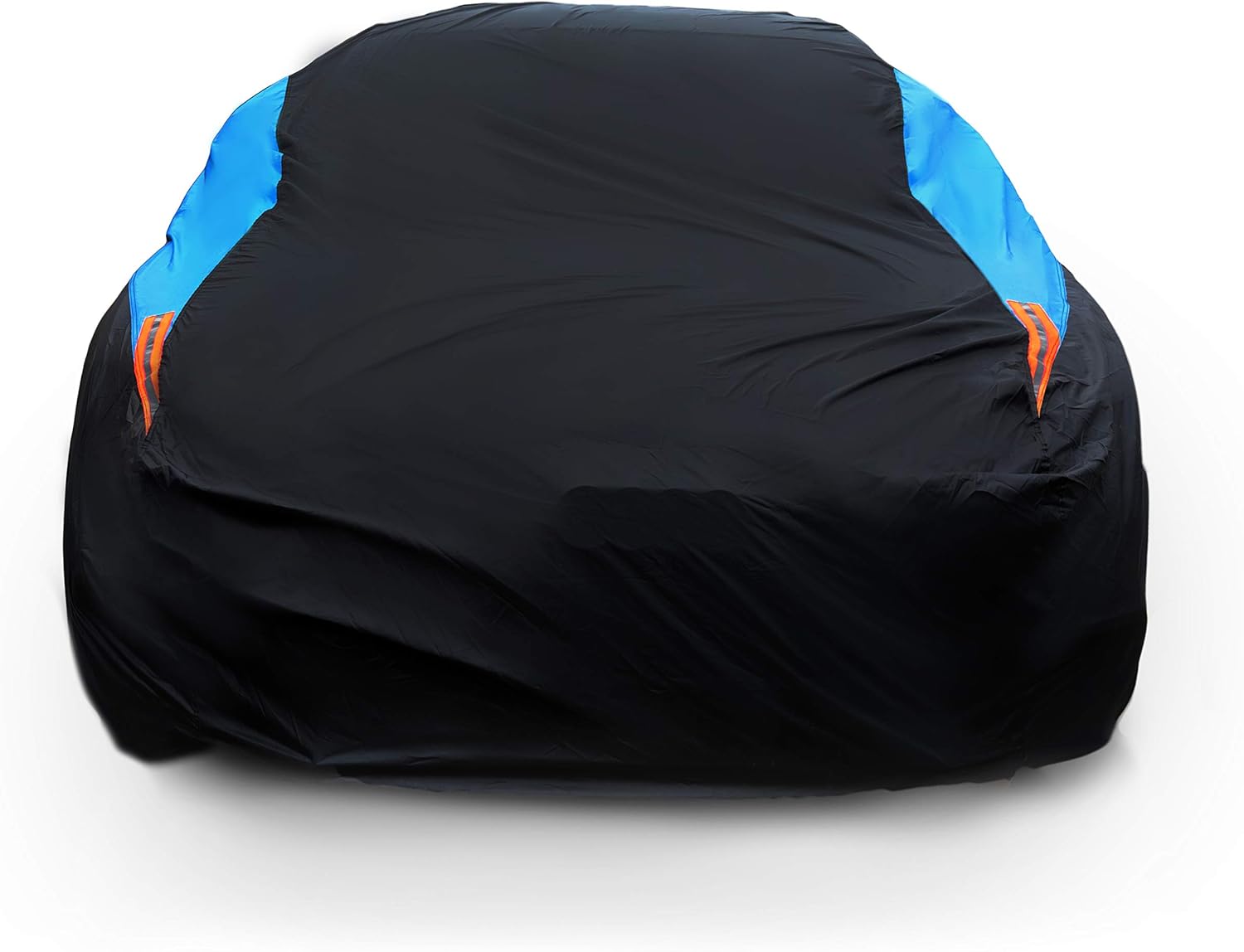
Why Your Hail Protection Cover Failed (And the Fix)
⚡ Quick Answer
Your cover most likely failed because it was too thin to absorb impact, not secured tightly enough, or rated for weather, not hail. Standard car covers stop UV rays and rain. They do not stop a falling block of ice.
Check these 4 things first
-
1
Check the cover’s labeled thickness and padding -
2
Check how the cover was secured against wind -
3
Check the hailstone size the storm actually produced -
4
Check for tears, thin spots, or loose fit on the cover
If the dents are already there
-
✓
Photograph the damage before you move the car -
✓
Call your comprehensive insurance provider that day -
✓
Add padding under the cover before the next storm
You ran outside the second the sky turned green. You threw the cover over the hood, clipped the straps, and ran back in. Twenty minutes later, the hail stopped, and so did your heart, because the dents were still there.
Daniel Brooks has spent years writing about car care gear, and the question he hears most after a storm is simple: “I had a cover on it. Why didn’t it work?” The honest answer is that most covers were never built to stop hail in the first place.
Below, you’ll find exactly why your cover let you down, what actually stops hail damage, and what to do differently before the next storm rolls in.
📌 Key Takeaways
-
→
Weatherproof means water and wind resistant, not impact resistant. -
→
A one-inch hailstone hits with roughly 15 to 25 pounds of force on a dime-sized spot. -
→
Standard covers run under half an inch thick, with no real cushioning layer. -
→
A loose or unsecured cover flaps in wind and can scratch the paint it’s meant to protect.
Why Did My Car Cover Not Stop Hail Damage?
Your cover failed because it could not absorb the energy of the impact. A standard car cover is built from one or two thin layers of fabric. Its job is to block sun, dust, and light rain.
Hail is a different problem entirely. A one-inch hailstone strikes with about 15 to 25 pounds of force packed into an area smaller than a dime. NOAA’s National Severe Storms Laboratory notes that hail causes billions of dollars in damage every year, because that force has nowhere to go on a thin surface.
Hailstone size changes the force dramatically. This table shows why a “small” storm can still dent a hood.
Once stones pass an inch wide, a flat cover with no depth simply cannot absorb the hit. The National Weather Service hail size chart uses these same object comparisons for storm reports.
Think of it like falling onto a yoga mat instead of an air mattress. The mat barely slows you down because it has no depth to absorb energy. A flat cover does the same thing against a hailstone. So if your cover is thin, it was never going to stop a real hit, no matter how well you secured it.
Was Your Cover Even Rated for Hail?
Many drivers buy a “weatherproof” cover and assume it covers hail too. It usually does not. So check the label again before you blame the storm.
⚠️ Warning
“Weatherproof” almost always means water- and wind-resistant only. It does not mean impact-resistant. Look for the words “hail,” “padded,” or “impact” on the label instead.
That’s the trap. A thin nylon shell can be fully weatherproof and still offer close to zero hail protection. You might be thinking your premium cover should have handled it. Here’s why it didn’t: premium often means better stitching and UV coating, not more padding.
📋 What Real Hail Protection Needs
-
Depth: at least 0.5 to 1 inch of foam, EVA, or quilted padding. -
Multiple layers: a hard outer shell plus a soft, cushioned inner layer. -
Full coverage: hood, roof, and trunk fully padded, since flat panels dent first. -
A snug fit: straps or hooks that keep it from shifting in wind.
Did Wind and a Loose Fit Make It Worse?
A loose cover does more than slip. It rubs against the paint every time the wind gusts. Over time, that friction wears thin spots into the fabric right where you need strength the most.
So what does that mean for your next storm? A cover that isn’t strapped down tight can shift mid-storm, leaving a panel exposed right as the biggest stones fall. A poorly fitted or loosely fastened cover can fray and stop protecting the car at all over time.
✅ Tip
Check straps and grommets every season. A cover that flaps even slightly in normal wind will fail faster in a hailstorm’s gusts.
How Do You Actually Protect a Car From Hail?
Shelter beats every cover, every time. If a garage, carport, or parking structure is within reach, use it before the storm hits. Nothing else comes close.
If you’re stuck outside, layering is your best move. Add a padded layer underneath your existing cover, then secure both tightly against the wind.
🔢 Step-by-Step: Layering a Cover for an Approaching Storm
-
1
Move the car if shelter exists
A garage or carport beats any cover. Check this first.
-
2
Lay padding on the flat panels first
Cover the hood, roof, and trunk with blankets or foam mats.
-
3
Secure the padding before the cover
Use bungee cords so it can’t shift once the wind picks up.
-
✓
Strap the outer cover down tight
Now the panels have real depth between the stone and the paint.
Recommended Product
2024 Upgraded Hail Protector Car Cover for Sedan/SUV/MPV, 4-Layer Padded Cover, Snowproof Waterproof Windproof, UV Protection
★★★★☆ Highly rated on Amazon
This is a four-layer padded cover, not a single thin sheet, so it actually has the depth a hail-rated cover needs.
As an Amazon Associate, we earn from qualifying purchases.
What Most People Get Wrong About Hail Protection Covers
“Weatherproof” means hail-proof. It doesn’t. Weatherproof only promises resistance to rain, wind, and sun, not impact.
Any cover is better than nothing. A thin cover with no padding offers close to zero defense against stones over an inch wide, and a loose one can even scuff your paint.
Insurance won’t help if you used a cover. Most comprehensive auto policies still cover hail damage even when a cover was in place and simply wasn’t enough.
What’s Your Next Move?
A failed cover almost always comes down to one thing: not enough padding between the stone and the paint. Fix that, and you fix most of the problem.
Shelter still wins every time it’s available. When it isn’t, layering padding under a snug, hail-rated cover is your strongest backup plan.
Do this right now: go check your current cover’s thickness and how snug the straps are. If either one feels thin or loose, that’s exactly what failed last time.
Frequently Asked Questions
Do car covers protect against hail?
Standard covers offer little to no real hail protection because they lack padding. Only thick, multi-layer covers built with foam or padded layers reduce dent risk, and even those can’t stop large hail.
What size hail actually causes dents?
Hail at one inch in diameter, quarter-sized, is the point where the National Weather Service classifies a storm as severe and dents typically begin. Anything past that size raises the risk fast.
Can I use moving blankets instead of a hail cover?
Yes, as a backup. Moving blankets and foam pads add more cushion than a thin cover alone, but they need to be secured tightly so wind doesn’t blow them off mid-storm.
Why did my cover scratch my paint during the storm?
A loose or poorly fitted cover flaps in wind, and that friction can fray the fabric and rub fine scratches into the paint underneath. A snug, properly secured fit prevents this.
Does insurance cover hail damage if I had a cover on the car?
Usually yes. Comprehensive auto coverage typically pays for hail damage regardless of whether a cover was used, since covers reduce risk but don’t void a claim.
How thick should a hail-rated car cover be?
Look for at least half an inch of padded depth, ideally with multiple layers including a foam or cotton cushion. Anything thinner behaves like a single sheet against an impact.
Is a garage really better than any hail cover?
Yes. A solid overhead barrier blocks impact entirely, while even the best cover only reduces force. If shelter is available before a storm, use it over any cover.

Daniel Brooks is an automotive writer and product researcher focused on car accessories, car tech, maintenance, and practical driving guides. At Plug-in Car World, he helps drivers make smarter automotive decisions through honest reviews and research-driven content.