Car Cover Challenges in Coastal Areas: Salt Air Guide
⚡ Quick Answer
A car cover helps in coastal areas, but only if it’s breathable and salt-resistant. Salt air corrodes metal faster than inland air, and a non-breathable cover traps moist, salty air against your paint, making things worse instead of better.
What Coastal Car Covers Need to Handle
- Salt deposition: airborne chloride settles on the cover and the car beneath it.
- High humidity: traps moisture under the cover if it can’t breathe.
- Constant UV exposure: breaks down cheap fabrics fast near open water.
Fast Fixes for Coastal Cover Owners
- ✓Choose a breathable, treated polyester cover, not plastic tarp material.
- ✓Rinse the cover and car with fresh water every 1-2 weeks.
- ✓Let the cover dry fully before storing it folded.
Daniel Brooks has spent years writing about car care for drivers who park within sight of the water. The smell hits you first — salt, brine, a little decay. Then, a few months later, it shows up on your bumper clips as a fine orange dust.
If you live near the ocean, you already know your car ages faster than your cousin’s car three towns inland. A car cover can slow that down. But the wrong cover, used the wrong way, can quietly trap the very salt and moisture it was supposed to block.
This guide walks through what actually happens to a car cover near the coast, which materials hold up, and the small habits that decide whether your cover protects your car or works against it.
📌 Key Takeaways
- →Salt air speeds up rust by forming a conductive film on exposed metal.
- →Non-breathable covers trap humidity, which can speed up corrosion instead of slowing it.
- →Treated polyester resists salt and UV better than basic cotton or vinyl covers.
- →Dried salt turns gritty, and wind can rub those crystals into your paint like sandpaper.
Why Salt Air Is So Hard on a Car Cover
Salt doesn’t just sit on your car. It reacts with it. Tiny chloride particles land on metal and absorb moisture from the air, even on a dry-looking day.
That forms a thin, salty film that conducts electricity at a microscopic level. NOAA’s coastal research programs have tracked these chemical processes along U.S. shorelines for decades, and atmospheric testing run with NASA at a Florida beachside site found that chloride buildup near open water can reach the highest corrosion-risk category defined by international standards.
So what does that mean for you? If you live within a mile or so of the ocean, your car cover isn’t just blocking sun and rain anymore. It’s the only thing standing between that chemical process and your paint and trim.
But here’s the thing — a cover that can’t breathe just holds that salty moisture closer to the surface. That’s the real challenge: not whether to use a cover, but which one, and how you care for it.
⚠️ Warning
Bird droppings near the coast often mix with sea salt. That combination turns more acidic than droppings inland and can etch into paint within a single hot day if left uncovered.
Which Car Cover Materials Actually Hold Up Near the Ocean
Not every “waterproof” cover is built for salt. Some trap moisture. Others break down under constant sun. Here’s how the common materials compare for coastal use.
Treated polyester and multi-layer woven covers strike the best balance: they shed salt spray while still letting trapped moisture escape.
A Cover Worth Considering
Recommended Product
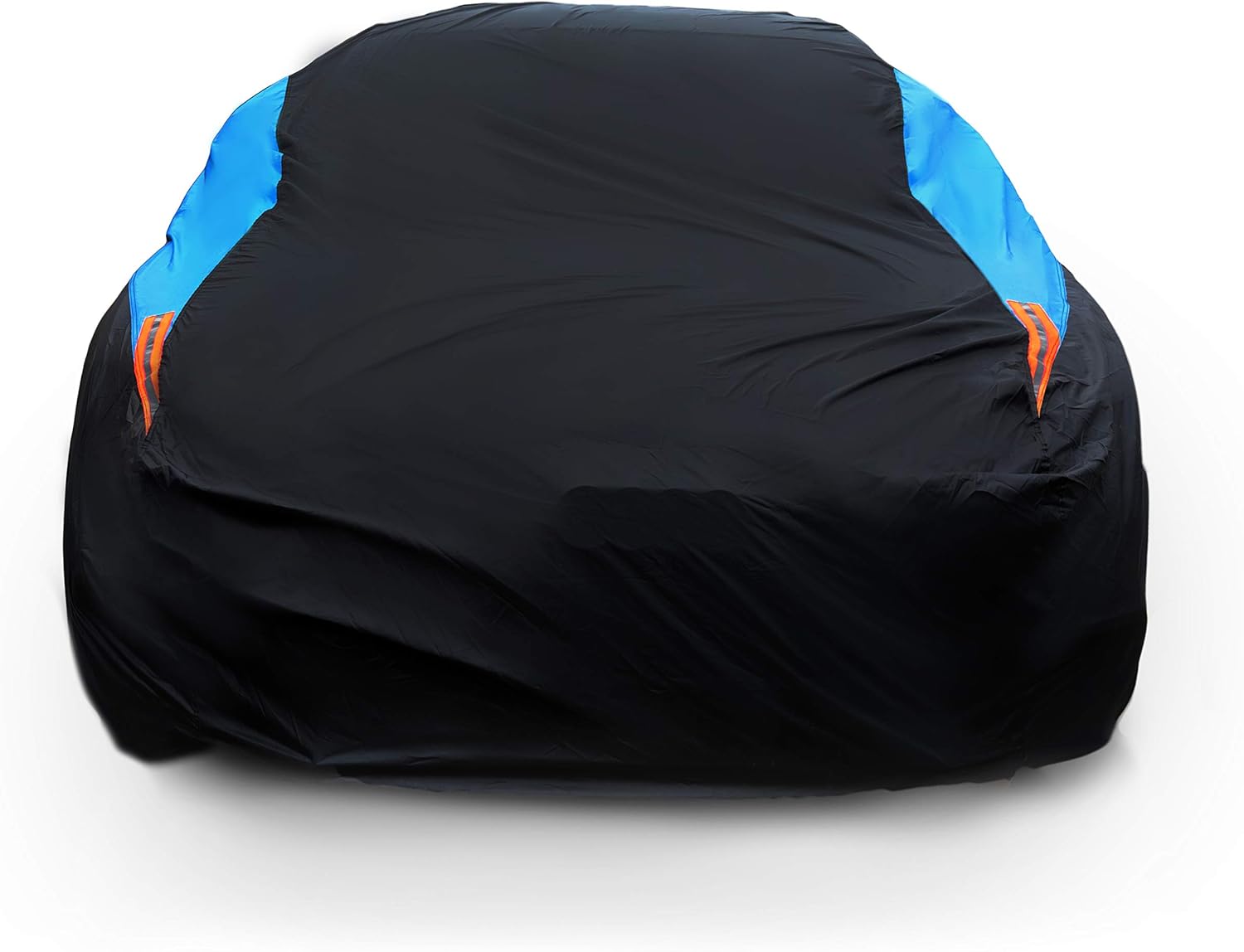
Kayme Sedan Car Cover, 10-Layer Waterproof All-Weather Cover with Zipper
★★★★☆ Highly rated on Amazon
Its multi-layer build sheds water and reflects UV, and the maker specifically notes resistance to bird droppings, tree sap, and salt-air fallout — exactly the mix coastal drivers deal with.
As an Amazon Associate, we earn from qualifying purchases.
Should You Cover Your Car Near the Ocean at All?
This one splits opinion among coastal drivers, and for good reason. A cover blocks direct salt spray and UV. But if it’s the wrong type, it can also seal moist, salty air against your paint overnight.
So what does that mean for your driveway? It depends on your cover and your habits, not just whether you use one.
✅ Pros
- +Blocks direct salt spray and bird droppings
- +Cuts UV fading on paint and trim
- +Far cheaper than repeated detailing or rust repair
⚠️ Cons
- −A non-breathable cover can trap salty moisture
- −Needs regular rinsing, not just occasional use
- −Dried salt crystals can scratch paint in wind
How to Keep a Coastal Car Cover Working for You, Not Against You
A good cover still needs upkeep near the coast. Skip these steps and even a quality cover can do more harm than leaving the car bare.
🔢 Step-by-Step: Coastal Car Cover Maintenance
-
1
Rinse the cover with fresh water weekly
This washes off salt before it can dry into sharp crystals.
-
2
Let it dry fully before folding
Folding it damp invites mildew, even with breathable fabric.
-
3
Wash the car before covering it
Covering a salty car just seals the salt in instead of out.
-
✓
Inspect for tears every few months
A torn seam lets salt spray straight through to the paint.
What Most People Get Wrong About Coastal Car Covers
Most coastal drivers make the same three assumptions. Each one quietly shortens a car cover’s useful life.
“Waterproof means it’s good near the ocean.” Waterproof only blocks rain. It says nothing about whether the fabric resists salt or lets trapped moisture escape.
“A thicker cover is always safer.” Thick, non-breathable tarp material traps humidity underneath, which can speed up corrosion instead of slowing it down.
“Covering the car means I can skip washing it.” A cover protects from new exposure. It doesn’t remove the salt already on the car when you put the cover on.
The Bottom Line for Coastal Car Owners
Coastal living is hard on cars, and a car cover won’t undo that completely. It will slow it down — but only the right cover, used the right way.
Pick a breathable, salt-resistant fabric. Rinse it often. Wash the car before you cover it, not after.
One thing to do right now: check your current cover’s care label for “breathable” or “vented.” If it doesn’t say either, plan to replace it before your next humid week.
Frequently Asked Questions
Does a car cover protect against salt air?
Yes, a breathable, salt-resistant car cover blocks most direct salt spray and bird droppings. It works best when paired with regular rinsing, since salt still settles on the cover itself over time.
Can a car cover trap moisture and cause rust?
Yes, if the cover isn’t breathable. Non-vented plastic or vinyl covers can hold humid, salty air against the paint overnight, which can speed up corrosion instead of preventing it.
How often should I wash a car cover near the beach?
Rinse it with fresh water roughly every one to two weeks. In a salt-spray zone right on the shoreline, weekly rinsing keeps salt crystals from drying and scratching the paint underneath.
What’s the best car cover material for coastal areas?
Treated, multi-layer polyester is the strongest all-around choice. It resists salt and UV breakdown while staying breathable enough to let trapped moisture escape, unlike basic vinyl or PVC tarps.
Why does salt air rust cars faster than inland air?
Airborne chloride particles absorb moisture and form a thin conductive film on metal. That film speeds up the electrochemical reaction behind rust, which is why coastal corrosion can outpace inland corrosion several times over.
Should I cover my car before or after washing it near the ocean?
Always wash first. Covering a car that still has salt residue on it traps that salt against the paint, defeating the purpose of using a cover in the first place.
Do car covers protect against bird droppings and tree sap near the coast?
Yes. A cover acts as a physical barrier, so droppings and sap land on the fabric instead of the paint. Near the coast, droppings mixed with sea salt are more corrosive, making this barrier especially useful.

Daniel Brooks is an automotive writer and product researcher focused on car accessories, car tech, maintenance, and practical driving guides. At Plug-in Car World, he helps drivers make smarter automotive decisions through honest reviews and research-driven content.