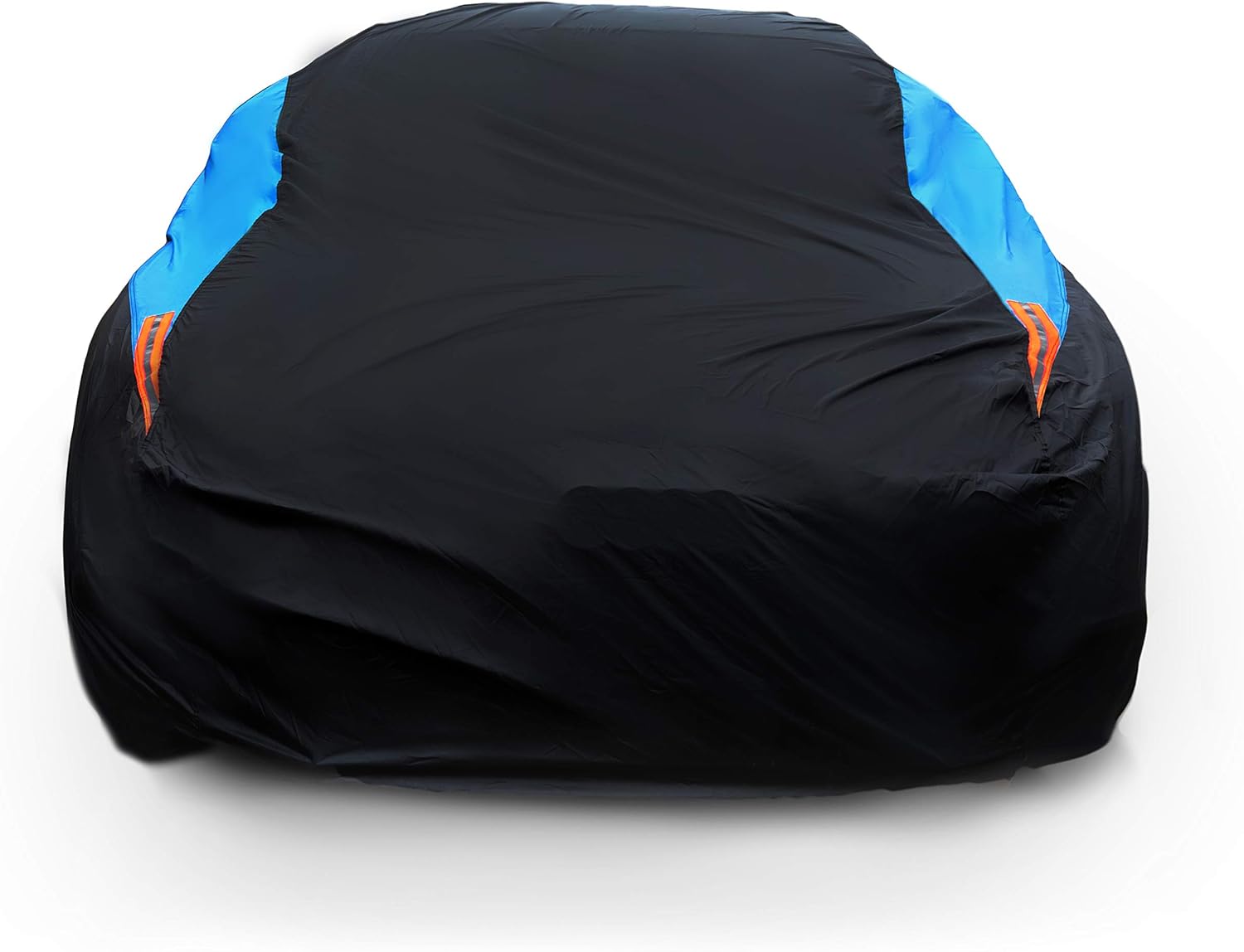
7 Best Foam-Padded Car Covers for 2026: Softer Paint Protection
The strongest 7 best foam-padded car covers options are JOYTUTUS Hail Protector, EzyShade 10-Layer, and Kayme 10-Layer for different protection needs. We evaluated 7 covers using documented construction, cushioning, weather protection, and secure-fit features. Most padded covers look similar but differ sharply in lining thickness, wind retention, and moisture management. Whether you need hail cushioning, paint-safe outdoor storage, or softer everyday coverage, this guide gives you one clear answer.
Quick Comparison: All 7 Products Ranked
| # | Product | Best For | Rating | Badge | |
|---|---|---|---|---|---|
| 1 | JOYTUTUS Hail Protector Car Cover | True foam impact cushioning | 4.8/5 | Best Overall | Buy |
| 2 | EzyShade 10-Layer Car Cover | Balanced all-weather use | 4.7/5 | Best All-Around | Buy |
| 3 | Kayme 10-Layer Sedan Car Cover | Sedan storage | 4.6/5 | Best for Sedans | Buy |
| 4 | iautaxesoriz 6-Layer Car Cover | Value-focused sedan owners | 4.5/5 | Best Value | Buy |
| 5 | Tecoom 3-Layer Fleece-Lined Car Cover | Soft fleece contact | 4.4/5 | Best Fleece Lining | Buy |
| 6 | Seal Skin Covers Soft Cotton-Lined Sedan Cover | Wind security | 4.3/5 | Best Wind Control | Buy |
| 7 | Holthly 10-Layer Car Cover | Thick multi-layer coverage | 4.2/5 | Best Heavy-Duty Alternative | Buy |
How We Chose These Car Covers
What we evaluated
Seven covers were compared using current product documentation, sizing information, published manuals, material specifications, and available independent reporting.
Our 3 scoring criteria
Cushioning and paint safety, weather protection, and fit/security were scored consistently across all seven selections.
Evidence standard
No named expert or hands-on laboratory test is claimed here; recommendations are based on documented construction and published evidence.
What we excluded
Thin unlined plastic covers were excluded because they do not meet the padded or paint-cushioning intent of this guide.
What to Look for When Buying Foam-Padded Car Covers
The word “padded” covers two different designs: true impact-absorbing foam and softer cotton or fleece liners intended mainly to reduce abrasion. Choose the construction that matches the damage you actually need to prevent.
1. Foam Thickness and Cushioning Type
For hail exposure, prioritize actual EVA or similar foam over ordinary fabric padding. A cotton or fleece lining is useful for paint contact but does not provide the same impact absorption. JOYTUTUS documents 5 mm EVA padding over vulnerable upper surfaces, while most alternatives here focus on soft inner layers rather than structural foam.
2. Fit and Wind Retention
Loose fabric can flap against paint and can lift in strong wind. Measure vehicle length and check the maker’s body-style chart before ordering. The site’s custom-fit car cover problem guide explains why excessive looseness creates abrasion and retention problems.
3. Moisture Management
A cover needs to manage water from both directions: outside rain and condensation forming underneath. Never trap a damp vehicle under a heavy cover. For longer storage, review this guide to prevent moisture under a car cover and allow the car to dry fully before covering.
4. UV, Rain, and Surface Protection
Outdoor use requires more than soft padding. Look for a reflective or UV-resistant outer layer, sealed or reinforced seams, secure straps, and an interior that will not abrade clear coat. A silver or reflective outer face can also reduce heat absorption compared with dark fabric.
JOYTUTUS Hail Protector Car Cover — True Foam Cushioning
Drivers specifically searching for foam padding should start here because this is the clearest match to that requirement. JOYTUTUS uses approximately 5 mm EVA cushioning over the roof and window areas, with a multi-layer weather shell surrounding the impact zone. Five reinforced straps and elastic hems help control movement during wind, while reflective details improve nighttime visibility. The main trade-off is bulk: a true padded hail cover is heavier and more cumbersome to fit, dry, fold, and store than cotton-lined alternatives. Choose it when impact reduction matters more than everyday convenience.
- 5 mm EVA impact padding
- Five reinforced wind straps
- Coverage extends across vulnerable upper panels
- Bulkier than ordinary lined covers
- Foam coverage varies by body area
5.0/5
4.8/5
4.6/5
EzyShade 10-Layer Car Cover — Balanced Multi-Layer Protection
If you need soft paint contact without the bulk of a dedicated hail blanket, EzyShade offers a practical middle ground. Its documented 10-layer construction combines weather-resistant layers with a soft cotton interior designed to reduce abrasion against paint. Mirror pockets, a driver-side zipper, reflective details, and retention straps make it easier to live with during routine outdoor storage. The main limitation is that its cotton cushioning should not be confused with thick EVA hail foam. Choose this model for broad weather defense and paint-friendly contact rather than maximum impact absorption.
- Soft cotton inner lining
- Ten-layer documented construction
- Useful zipper and mirror pockets
- Not true impact-absorbing foam
- Careful sizing remains essential
4.5/5
4.8/5
4.8/5
Kayme 10-Layer Sedan Car Cover — Thick Sedan Coverage
Sedan owners who want substantial layered material and a gentle inner surface should consider Kayme. The cover combines PE and PEVA weather layers, reflective aluminum, and soft cotton against the vehicle, while a driver-door zipper helps with cabin access. Front and rear wind straps, reflective strips, and an elasticized fit add everyday practicality. It is heavier than lightweight fabric covers, which can make solo installation and storage less convenient. Like EzyShade, the cotton layer helps with paint contact but is not equivalent to thick EVA hail padding.
- Soft cotton paint-contact layer
- Reflective aluminum sun layer
- Convenient driver-door zipper
- Heavier than simple fabric covers
- Cotton lining is not hail foam
4.5/5
4.8/5
4.5/5
iautaxesoriz 6-Layer Car Cover — Strong Feature Value
This six-layer option suits buyers who want a soft cotton lining, reflective outer construction, and useful retention hardware without moving to a thick dedicated hail pad. Available sizing includes sedan ranges such as 187–198 inches, and the cover adds three underbody wind straps, an adjustable hem, reflective strips, a storage bag, and driver-side zipper access. Its biggest limitation is fit specificity: ordering the wrong length range can create loose fabric or incomplete coverage. For compatible sedans, it offers a convincing mix of cushioning, weather resistance, and convenience.
- Six-layer composite construction
- Soft cotton inner contact
- Three underbody straps
- Requires careful length matching
- No dedicated EVA impact foam
6 layers | cotton lining | reflective UV layer | three wind straps | driver zipper | reflective strips
Cushioning 4.4/5 | Weather protection 4.6/5 | Fit/security 4.5/5
Tecoom 3-Layer Fleece-Lined Car Cover — Softest Contact Feel
Tecoom takes a simpler three-layer approach but gives special attention to the vehicle-facing surface. Its thick cotton-fleece lining is designed to reduce direct abrasion, while reflective aluminum and PE/PEVA layers handle sunlight and precipitation. Front and rear buckle straps, an elastic hem, mirror pockets, anti-theft hardware, and a driver-door zipper add useful everyday details. The trade-off is lower structural thickness than ten-layer designs, and fleece still does not equal impact-rated foam. Choose Tecoom when paint-safe softness and easy handling matter more than maximum layer count.
- Thick cotton-fleece lining
- Driver-door zipper access
- Anti-theft lock included
- Only three main layers
- Fleece offers limited impact cushioning
3-layer build | cotton-fleece lining | PE/PEVA barrier | reflective aluminum | zipper access | mirror pockets
Cushioning 4.5/5 | Weather protection 4.4/5 | Fit/security 4.4/5
Seal Skin Covers Soft Cotton-Lined Sedan Cover — Secure Everyday Fit
Seal Skin’s sedan cover emphasizes retention as much as its paint-contact lining. The documented design uses a soft cotton inner layer, PEVA weather material, front, middle, and rear windproof straps, an elastic hem, reinforced grommets, and a driver-side zipper. That combination makes it appealing for open driveways where loose fabric movement is a concern. Its softness is useful against direct cover contact, but it is not a substitute for dense foam during hail. Buyers should also confirm the correct length range because the same design is sold in multiple sedan sizes.
- Three-position strap system
- Soft cotton lining
- Reinforced security grommets
- No thick hail foam
- Multiple sizes require careful selection
PEVA construction | soft cotton lining | three wind straps | elastic hem | zipper access | reflective strips
Cushioning 4.2/5 | Weather protection 4.3/5 | Fit/security 4.7/5
Holthly 10-Layer Car Cover — Thick Multi-Layer Alternative
Holthly is another substantial multi-layer option for buyers who prefer a thick cover with soft inner contact. Its documented ten-layer composite includes a waterproof PE-based exterior, UV-resistant construction, and a softer interior intended to protect paint. Vehicle-specific size-chart matching is central to getting the best result, and the design is available across several body styles. The main compromise is the same one seen with other heavy covers: more layers increase bulk without turning the cover into a true foam hail shield. It makes the most sense for general weather exposure rather than severe impact protection.
- Ten-layer composite construction
- Soft paint-facing material
- Multiple vehicle size options
- Heavier to install and store
- Not true EVA foam padding
10-layer composite | PE exterior | soft inner surface | UV protection | all-weather design | multiple fit ranges
Cushioning 4.2/5 | Weather protection 4.4/5 | Fit/security 4.1/5
Top 3 Head-to-Head: JOYTUTUS vs EzyShade vs Kayme
These three cover different priorities: true impact foam, balanced multi-layer protection, and sedan-focused cotton-lined coverage.
| Feature | JOYTUTUS | EzyShade | Kayme |
|---|---|---|---|
| Cushioning | 5 mm EVA — Best | Soft cotton | Soft cotton |
| Everyday handling | Bulky | Balanced — Best | Heavier |
| Sedan focus | Size dependent | Broad fit system | Sedan-oriented — Best |
| Choose if… | Hail cushioning is primary | You want broad versatility | You store a sedan outdoors |
Who These Covers Are Not For
A heavy padded cover is unnecessary for every vehicle. Indoor-only cars needing dust protection are usually better served by a lighter breathable cover, while drivers who uncover and recover a daily commuter several times each day may find thick multi-layer designs inconvenient.
They are also not a substitute for sheltered parking during extreme hail. Even padded covers have impact limits. Before extended outdoor storage, review the site’s long-term car cover storage mistakes so cushioning does not create a false sense of security.
Common Mistakes to Avoid
Most problems come from choosing the wrong construction or using a good cover incorrectly.
Frequently Asked Questions About Foam-Padded Car Covers
Do padded car covers protect against hail?
A genuinely foam-padded cover can reduce impact energy from smaller hail, but protection depends on foam thickness, coverage area, hail size, and wind. Soft cotton or fleece lining alone should not be treated as dedicated hail protection. For severe storms, covered parking remains safer because no portable fabric cover can guarantee against dents from large or wind-driven hail.
Can a car cover scratch paint?
Yes, especially when dirt is trapped between the cover and paint or when loose fabric repeatedly moves in wind. A soft cotton or fleece liner lowers direct abrasion risk, but it cannot neutralize grit. Apply covers only to a clean, dry vehicle, choose the correct size, and secure all straps so the fabric does not flap across painted panels.
Is a waterproof or breathable car cover better?
For long-term storage, moisture management matters as much as rain resistance. Look for a weather-resistant outer construction that can still allow trapped humidity to escape rather than a simple plastic tarp. Always let a wet or freshly washed vehicle dry completely before covering it, because even a breathable design cannot instantly remove large amounts of trapped water.
How thick should a hail car cover be?
There is no universal thickness that guarantees hail protection. More cushioning generally provides more impact absorption, but foam density, coverage, hail diameter, and storm speed also matter. The JOYTUTUS model in this guide uses approximately 5 mm EVA over key upper areas, which is materially different from products that advertise only soft cotton or fleece interior lining.
Should a car be clean before putting on a cover?
Yes. A clean, dry surface is one of the most important steps before covering a vehicle. Dust, sand, and road grit can become abrasive when trapped beneath the fabric, especially if wind moves the cover. Drying also reduces the amount of moisture sealed underneath, lowering the chance of condensation-related mildew, staining, or corrosion during longer storage.
How do I stop a car cover blowing off?
Start with the correct size, then fasten every supplied underbody strap, buckle, elastic hem, and security grommet. A loose oversized cover gives wind more material to lift. Covers with multiple strap positions are useful in exposed locations, but inspect the hardware periodically because stretched elastic or loosened buckles can reduce retention after repeated use.
Can I leave a padded car cover on for months?
You can use one for long storage, but the vehicle should still be inspected periodically. Lift the cover on dry days, check for trapped moisture, dirt, pests, strap wear, and fabric damage, then refit it only when everything is dry. A thick cover is not a maintenance-free sealed garage, and neglected moisture can create problems even under soft lining.
Our Final Verdict
Foam-padded and soft-lined covers solve different problems. JOYTUTUS is the clearest choice when actual EVA impact cushioning matters, while cotton- and fleece-lined alternatives are easier everyday options for reducing direct fabric abrasion and handling ordinary weather. Match the cover carefully to your vehicle and storage conditions.

Daniel Brooks is an automotive writer and product researcher focused on car accessories, car tech, maintenance, and practical driving guides. At Plug-in Car World, he helps drivers make smarter automotive decisions through honest reviews and research-driven content.