
What Are Beaded Car Seat Covers For? Uses and Benefits
Quick Answer
Beaded car seat covers are primarily used to improve airflow between your body and the vehicle seat, reduce the sticky feeling of upholstery, and provide a gentle massage-like sensation while driving. Their raised wooden or plastic beads can make warm-weather driving more comfortable, but they don’t provide medical treatment or guaranteed back support. Before installing one, check your vehicle’s seat-cover restrictions and NHTSA’s guidance on aftermarket seat covers.
Main Uses and Benefits
- Better airflow: Spaces between beads allow more air movement against your back.
- Less sticky contact: Raised beads reduce continuous contact with warm upholstery.
- Gentle massage: Small body movements create a subtle rolling or pressure sensation.
- Long-drive comfort: Some drivers find the ventilated surface more comfortable during extended trips.
- Upholstery coverage: A well-fitted cover can reduce direct contact with the original seat surface.
Important Safety Reminder
- Check compatibility: Don’t use a cover that interferes with airbags, seat sensors, seat belts, or adjustment controls.
- Prevent sliding: The cover must remain securely positioned during braking and cornering.
Ever noticed those wooden-bead covers hanging over taxi seats, delivery vans, or older family cars? They’re more than a traditional interior accessory, although their benefits are sometimes exaggerated.
I like to judge car accessories by what they change during everyday driving, not just what their packaging promises. This guide explains how beaded covers work, where they help, and when they’re better left off your seat.
In This Guide
What Are Beaded Car Seat Covers and How Do They Work?
Beaded car seat covers are removable seat accessories made from rows of rounded beads connected by flexible cords or mesh. They create a raised surface between your clothing and the vehicle’s original upholstery.
Definition: A beaded car seat cover is a ventilated seat overlay that uses connected beads to create air gaps and a textured sitting surface.
Most designs cover the seatback and cushion, although smaller versions cover only one area. They typically attach around the head restraint or use straps behind the seat.
How Do the Beads Create Airflow?
Ordinary upholstery presses directly against your clothing, especially around your back and thighs. Beads reduce that uninterrupted contact by lifting portions of your body away from the fabric.
Air can move through the spaces between individual beads, allowing some moisture to evaporate. The effect depends on bead spacing, clothing, cabin temperature, and airflow.
There is no fan or refrigeration system inside a traditional wooden-bead cover. It improves ventilation through its physical shape rather than actively cooling the seat.
What Materials Are Beaded Seat Covers Made From?
- Wooden beads: A traditional choice with a firm, rounded surface and natural appearance.
- Plastic beads: Often lightweight and available in different shapes, colors, and finishes.
- Bamboo-style beads: Used in some natural-looking designs, with durability depending on construction.
- Connecting cords: Hold the beads in rows and allow the cover to flex with the seat.
- Mesh or fabric backing: Adds support and may help prevent excessive rubbing against upholstery.
The finish and construction matter more than appearance alone. Rough beads, weak connecting cords, or a slippery backing can turn a simple comfort accessory into an inconvenience.
What Are Beaded Car Seat Covers Used For?
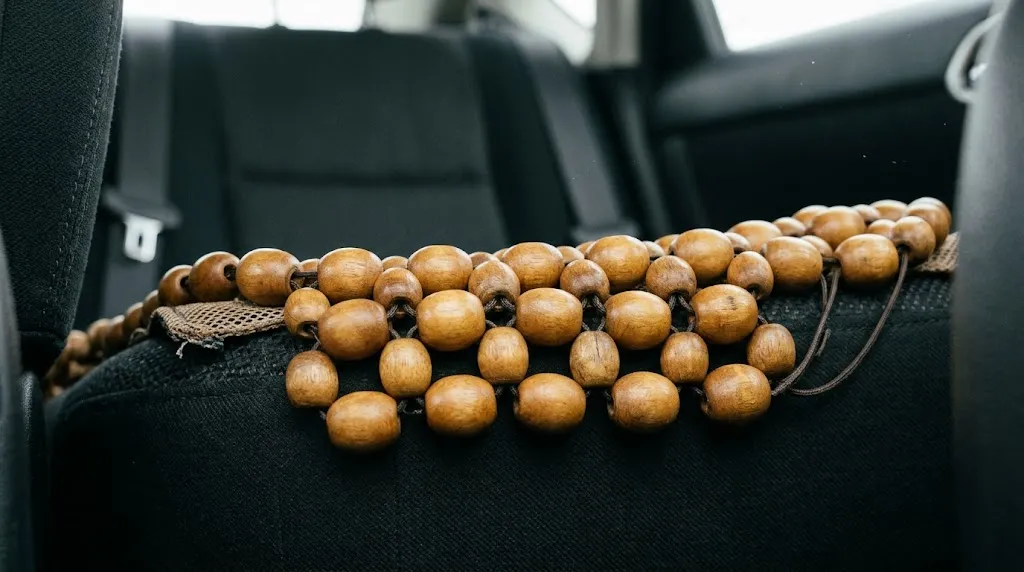
The main purpose of beaded covers is to make contact with a vehicle seat feel cooler and less restrictive. Drivers also use them for a textured massage sensation and modest protection from direct clothing contact.
1. Improving Comfort During Hot Weather
Warm seats can trap moisture against your back, especially when you’re wearing thicker clothing. A beaded overlay creates small spaces that may help reduce that damp feeling.
This is particularly appealing in cars with non-ventilated leather or vinyl seats. However, the beads can become hot themselves when a vehicle sits in direct sunlight.
2. Making Long Drives More Comfortable
Long periods of sitting can make even a comfortable vehicle seat feel tiring. Some drivers prefer the firmer, ventilated sensation of a beaded surface on longer journeys.
Others find the pressure points uncomfortable after an hour. A cover that feels pleasant during a short commute may behave differently on a three-hour road trip.
3. Creating a Gentle Massage-Like Sensation
The rounded beads press against your clothing and shift slightly as your body moves. This can feel similar to a light, passive massage.
However, a beaded cover doesn’t have powered rollers, controlled pressure, or a therapeutic massage mechanism. Its sensation comes from ordinary movement and contact.
4. Reducing Direct Contact With Upholstery
A cover creates a barrier between your clothing and the original seat material. That may reduce direct exposure to body oils and perspiration in covered areas.
It isn’t complete upholstery protection, though. Moving beads, trapped grit, and abrasive backing materials can damage delicate seats over time.
5. Adding a Traditional Interior Style
Wooden-bead covers have a distinctive appearance associated with classic cars, taxis, trucks, and commercial vehicles. Some owners choose them partly for that familiar style.
Natural finishes often suit older interiors, while darker beads may blend better with modern cabins. Appearance should always come after fit and safety.
Section Takeaway: Beaded covers are primarily airflow and comfort accessories. Their usefulness depends on the seat, driving conditions, and personal preference.
What Are the Benefits and Disadvantages of Beaded Car Seat Covers?
Beaded car seat covers can offer noticeable ventilation and a different seating feel, but their benefits aren’t universal. They also introduce pressure, friction, and compatibility concerns that ordinary upholstery doesn’t have.
Potential Advantages
- Passive ventilation: Spaces around the beads can improve airflow without using electricity.
- Reduced sticky feeling: Less continuous contact may make warm seats feel more pleasant.
- Simple removal: Many designs can be removed without permanently changing the seat.
- Different seating texture: Firm beads offer an alternative to soft fabric or foam.
- Low maintenance: Finished beads can often be cleaned with a damp cloth.
Important Disadvantages
- Uneven pressure: Large or widely spaced beads can concentrate force on sensitive areas.
- Possible sliding: Loose covers can shift beneath the driver during vehicle movement.
- Upholstery wear: Dirt trapped under moving beads can scratch or polish delicate surfaces.
- Noise: Beads can click against one another or nearby trim.
- Safety conflicts: Some covers can interfere with airbag deployment or seat sensors.
- Limited support: Beads cannot replace an ergonomically designed seat or medical support device.
Beaded Seat Covers vs. Other Seat Cover Types
Different seat accessories solve different comfort problems. The following comparison focuses on typical design characteristics rather than guaranteed performance.
| Cover Type | Main Purpose | Typical Feel | Main Limitation |
|---|---|---|---|
| Wooden beaded cover | Passive airflow | Firm and textured | Pressure points |
| Breathable mesh cover | Ventilation | Flexible and soft | Performance varies by backing |
| Memory foam cushion | Extra padding | Soft and conforming | Can retain heat and change seat height |
| Full fabric seat cover | Upholstery coverage | Depends on material | Fit and airbag compatibility |
A beaded cover makes the most sense when ventilation is your main concern. If you need substantial cushioning, a properly selected support cushion may suit that goal better.
Do Beaded Seat Covers Improve Blood Circulation?
Manufacturers sometimes claim that beads improve blood circulation by stimulating pressure points. However, those claims shouldn’t be treated as established medical benefits without suitable clinical evidence.
The rolling sensation may feel relaxing, but it doesn’t prove improved circulation or reduced risk from prolonged sitting. If you experience persistent numbness, swelling, or back pain, seek professional medical advice.
For long journeys, regular breaks and comfortable posture remain important. No seat overlay removes the need to move your body.
Can Beaded Covers Help With Back Pain?
Some drivers find that the firm bead pattern feels pleasant against their lower back. Others experience greater discomfort because the beads concentrate pressure.
A typical beaded cover doesn’t provide individually adjustable lumbar support. It also cannot correct a seat with poor dimensions or an unsuitable backrest angle.
Try adjusting your factory seat before adding accessories. Persistent pain deserves proper evaluation rather than relying on massage claims.
Section Takeaway: Beaded covers may improve subjective comfort, especially in warm conditions. They are not a substitute for proper seat ergonomics or medical care.
Are Beaded Car Seat Covers Safe for Modern Cars?
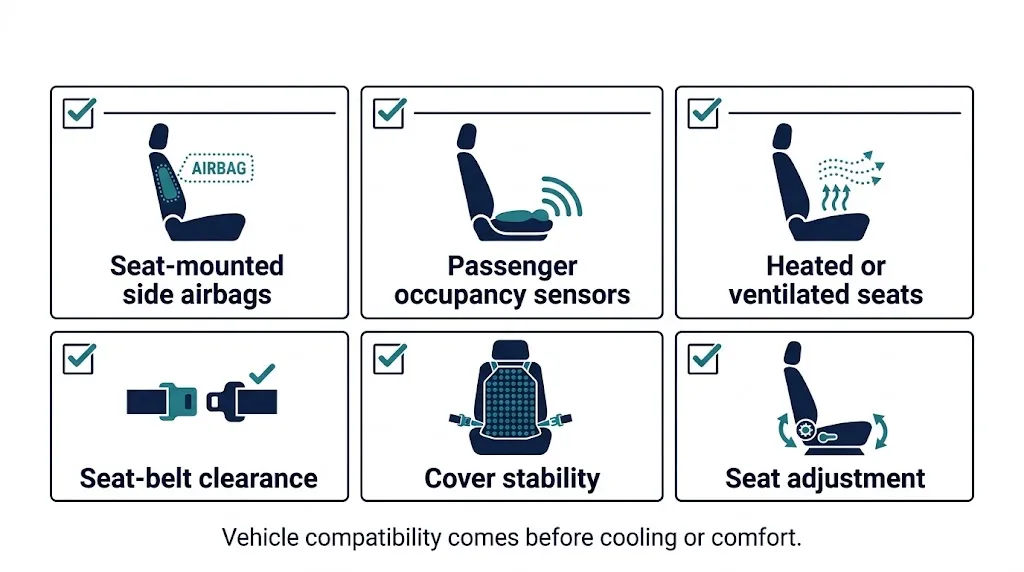
Beaded covers aren’t automatically safe for every vehicle, even when a package says “universal fit.” Modern seats can contain airbags, occupant sensors, heating systems, and other components that require careful compatibility checks.
Can Beaded Covers Interfere With Side Airbags?
Yes. Seat-mounted side airbags may deploy from the outer edge of the seatback, where an incorrectly fitted cover could obstruct the deployment path.
The NHTSA airbag safety guide explains the role of vehicle airbags in crash protection. Aftermarket accessories should never reduce the effectiveness of those systems.
A product label claiming “airbag compatible” isn’t enough by itself. Confirm that the vehicle manufacturer permits that type of accessory and that the cover has appropriate compatibility documentation.
Pro tip: Read your owner’s manual before installing anything over an airbag-equipped seat. If the manual prohibits accessory covers, don’t install one.
What About Passenger Occupancy Sensors?
Some passenger seats use occupant classification systems to help determine airbag operation. An added cushion or overlay can interfere with those systems in certain vehicles.
Never assume a cover is acceptable because it leaves the seatback’s outer edge exposed. Check the manufacturer’s restrictions for both the cushion and backrest.
If an airbag warning or passenger-airbag status behaves unexpectedly, remove the accessory and seek qualified assistance. Don’t attempt to bypass a sensor.
Can You Use Beaded Covers With Heated or Ventilated Seats?
Compatibility depends on the vehicle and cover design. An extra layer can change heat transfer, airflow, and how the seat feels during use.
Some beaded-cover manufacturers specifically advise against using their products with heated seats. Others make compatibility claims that require verification against the vehicle manual.
If the manufacturer doesn’t clearly permit the combination, don’t assume it’s safe. Factory ventilation and heating systems are designed around the original seat construction.
Other Safety Problems to Check
- Seat-belt clearance: Nothing should block the buckle, belt route, or normal belt positioning.
- Cover stability: The overlay must not slide forward during braking.
- Seat adjustment: Straps and hooks must stay clear of motors, rails, and moving mechanisms.
- Head restraint: The attachment must not stop the head restraint from operating correctly.
- Loose components: Broken beads or cords can create distractions and hazards.
- Child restraints: Don’t place an aftermarket beaded cover inside a child car seat or between its installation surfaces unless the child-restraint manufacturer explicitly permits it.
It’s also worth checking your vehicle for existing safety issues using the NHTSA recall lookup. A comfort accessory should never distract from addressing an active safety recall.
Section Takeaway: Vehicle compatibility comes before cooling or comfort. When safety-system compatibility cannot be confirmed, leave the cover off.
How Do You Choose the Right Beaded Car Seat Cover?
Choose a beaded cover based on vehicle compatibility, secure attachment, and bead quality rather than appearance alone. A cover that fits poorly can be uncomfortable even when its materials look impressive.
Check the Vehicle Before Shopping
Start with the exact make, model, year, and seat configuration. A removable head restraint, integrated headrest, or unusually shaped sport seat can change attachment options.
Review these details:
- Manufacturer restrictions on aftermarket seat accessories.
- Seat-mounted airbag locations and deployment areas.
- Passenger occupancy-sensor requirements.
- Heated or ventilated seat compatibility.
- Seatback width and cushion dimensions.
- Available attachment points that don’t interfere with seat operation.
Inspect Bead and Backing Quality
Smooth, rounded beads are preferable to rough pieces with splinters or sharp molding seams. The connecting cords should remain secure when the cover flexes.
Check the backing for exposed knots, abrasive edges, and weak stitching. Soft backing matters particularly on leather or delicate upholstery.
Choose a Secure Attachment System
A good attachment system prevents the cover from shifting during normal driving. Adjustable straps and a suitable non-slip backing may help, provided the vehicle manufacturer permits their use.
Avoid improvised hooks around electrical wiring, seat tracks, and structural components. Never attach a cover to seat-belt or airbag hardware.
Consider Price and Long-Term Value
As of 2026, individual beaded covers appear in different price tiers, from relatively inexpensive basic models to specialty designs costing several dozen dollars. Prices vary with bead material, dimensions, backing, and construction.
Don’t choose based on price alone. Clear fit information, a reasonable return policy, and durable materials are often more useful than decorative features.
Who Should Consider a Beaded Cover?
- Hot-weather commuters: Drivers seeking passive airflow on compatible seats.
- Long-distance drivers: People who prefer a firmer, ventilated contact surface.
- Older-car owners: Drivers whose vehicle permits removable accessories without safety-system interference.
- Drivers seeking padding: Usually better served by an appropriate support cushion instead.
- Drivers with incompatible modern seats: Should avoid beaded covers and retain the factory seating arrangement.
How Do You Install, Clean, and Maintain a Beaded Car Seat Cover?
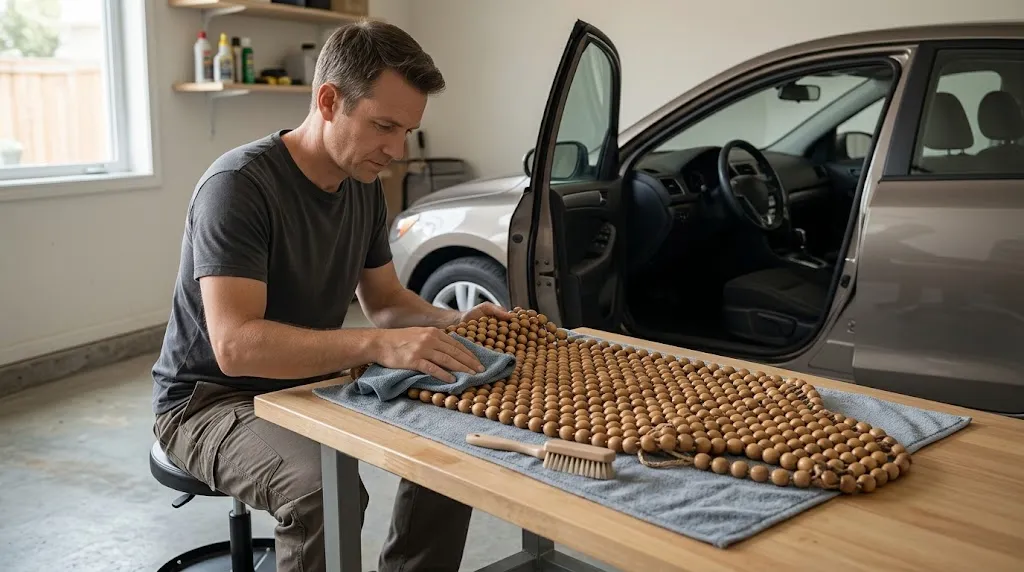
Installation should be simple, but only after confirming that the accessory is permitted for your vehicle. Always follow the cover manufacturer’s directions rather than improvising attachment points.
How to Install a Compatible Beaded Cover
- Park securely: Switch off the vehicle and prepare the seat with the car stationary.
- Inspect the cover: Check the beads, straps, backing, and connecting cords for damage.
- Check the seat: Identify any restricted areas, controls, sensors, and airbag locations.
- Position the cover: Lay it against the seat according to its instructions, without blocking the head restraint or belt.
- Secure the attachments: Use only the attachment points allowed by both manufacturers.
- Check your posture: Sit naturally and confirm that you can operate the pedals and steering wheel correctly.
- Check for movement: Ensure the overlay stays stable when you shift your weight.
If the cover slides, bunches, or changes your seating position, remove it. Don’t attempt to compensate for poor fit with extra cords or improvised fasteners.
How Do You Clean Beaded Seat Covers?
Most finished wooden or plastic beads need gentle surface cleaning rather than aggressive washing. The right method depends on the bead finish and backing material.
- Remove the cover from the vehicle if permitted by its instructions.
- Shake away loose dirt and use a soft brush for dust between beads.
- Wipe suitable finished surfaces with a slightly damp microfiber cloth.
- Use only a mild cleaner approved by the cover manufacturer when needed.
- Allow the entire cover and its backing to dry thoroughly before reinstalling.
Avoid soaking untreated wood or using harsh solvents. Excess moisture can affect some wooden finishes and connecting materials.
How Often Should You Inspect the Cover?
Give the cover a quick visual check before regular use, especially when it has been moved or adjusted. Remove it periodically to inspect the original upholstery.
Look for the following signs:
- Broken or missing beads.
- Frayed connecting cords.
- Loose attachment straps.
- Scratches, impressions, or discoloration on upholstery.
- Trapped grit or moisture beneath the backing.
- Unexpected movement while seated.
Replace a damaged cover instead of continuing to use it. For broader vehicle-care information, Edmunds’ car maintenance resources offer practical advice on routine ownership and upkeep.
Section Takeaway: A clean, stable cover is easier to live with, but maintenance cannot fix an incompatible design. Remove any accessory that damages the seat or affects driving safety.
Frequently Asked Questions About Beaded Car Seat Covers
Are wooden beaded car seat covers comfortable?
Wooden beaded covers can feel comfortable if you enjoy firm, textured seating and improved ventilation. However, larger beads may create unpleasant pressure during long drives. Comfort varies by individual, clothing, bead size, seat design, and how securely the cover fits.
Do beaded seat covers keep you cool in summer?
They may make warm-weather driving more comfortable by allowing air to move through the spaces between beads. However, they don’t lower cabin temperature or actively cool your body. The beads can also heat up when exposed to direct sunlight.
Do beaded car seat covers help with sciatica?
There’s insufficient evidence that ordinary beaded covers treat sciatica or its underlying causes. Some people may appreciate the textured surface, while others may experience increased pressure or discomfort. Seek medical advice for persistent or worsening nerve-related symptoms.
Can beaded covers damage leather car seats?
Yes. Repeated movement, trapped dirt, rough backing, or hard beads may cause scratches, polished patches, or lasting marks on leather. Choose smooth materials, confirm compatibility, and inspect the upholstery regularly. Stop using the cover if damage appears.
Can you use beaded car seat covers on heated seats?
Only when the vehicle manufacturer and cover manufacturer explicitly permit the combination. Beaded overlays can change heat transfer and may conflict with seat-system instructions. Some cover manufacturers advise against heated-seat use, so never rely on universal-fit advertising alone.
Are beaded covers better than regular car seat covers?
Beaded covers may be better for passive ventilation, while ordinary fabric covers often provide broader upholstery coverage. Foam cushions focus on padding rather than airflow. The best choice depends on your comfort needs, vehicle compatibility, and the accessory’s safety characteristics.
Can beaded car seat covers improve posture?
A beaded cover may change how your back feels against the seat, but it doesn’t automatically improve spinal alignment. Proper posture depends more on seat geometry, backrest adjustment, lumbar support, and driving position. Use the factory adjustments first.
Final Takeaway:
Beaded car seat covers are primarily designed for ventilation, a gentle massage-like feeling, and a different seating texture. They can be useful comfort accessories, particularly in warm weather, but they’re not medical devices or universal upgrades.
Before buying one, check your vehicle’s owner’s manual, choose a secure and compatible design, and consider your own comfort preferences. If a cover interferes with safety equipment or makes the seat less stable, the original seat is the better option.
Make comfort a priority, but never compromise the safety systems protecting you on the road.

Daniel Brooks is an automotive writer and product researcher focused on car accessories, car tech, maintenance, and practical driving guides. At Plug-in Car World, he helps drivers make smarter automotive decisions through honest reviews and research-driven content.
