
What Are Car Seat Covers Used For? Benefits and Uses
Quick Answer
Car seat covers are removable covers fitted over a car’s built-in seats. They protect the original upholstery from spills, wear, sun, and pet hair, while also changing comfort, grip, and the look of the interior. Learn how to install a car seat cover correctly before you buy, so fit and safety checks come first.
Main uses at a glance
- Protection first: A cover takes the daily wear so the seat under it stays cleaner for longer.
- Comfort upgrade: Padding, breathable mesh, or a cooling layer can change how a seat feels on long drives.
- Easy cleaning: Many covers lift off for washing, which beats scrubbing fixed upholstery in place.
- Fresh look: A cover can hide worn fabric and give an older interior a tidier finish.
- Work and pets: Water-resistant or heavy-duty covers help with mud, tools, wet gear, and pet claws.
Check before you fit one
- Keep seatbelt buckles, seat controls, and any side-airbag seam clear and working.
- Check your vehicle owner’s manual if your seats have side airbags or active head restraints.
This guide explains car seat covers in plain terms. It covers what they do, when they help, when they do not, and how to pick one without guesswork.
It is written as general guidance, not as a test report. No fitting or testing experience was supplied with this brief, so it makes no claim about a specific car or cover tested here.
In This Guide
- What Is a Car Seat Cover?
- What Are Car Seat Covers Used For?
- What Benefits Do Car Seat Covers Offer?
- Which Car Seat Cover Material Fits Your Needs?
- Are Car Seat Covers Safe to Use?
- How Do You Choose, Fit, and Care for a Car Seat Cover?
- Frequently Asked Questions
- The Bottom Line: Are Car Seat Covers Worth It?
What Is a Car Seat Cover?
A car seat cover is a removable layer that fits over a vehicle’s built-in seat. It covers the seat base, the backrest, and often the headrest as one set or as separate pieces.
Think of it as a protective skin for the seat, not a new seat. The original seat, its frame, and its safety parts stay in place under it.
How is a vehicle seat cover different from a child car seat?
This guide covers seats that belong to the car itself. A child car seat is a separate restraint that straps a child in, and it follows its own maker instructions.
Do not treat a vehicle seat cover as a child-restraint part, an approval, or a fix for a child seat. If a child seat is in use, follow that seat’s manual and your vehicle manual for what may sit under or behind it.
What parts does a typical set include?
Most sets cover the front seats first. Some sets add rear bench covers, headrest covers, and separate armrest pieces.
Fit varies by design, and that variation matters more than style. A universal set stretches over many shapes, while a custom set follows one seat shape more closely.
- Slip-on covers: Pull over the seat and secure with straps, hooks, or elastic.
- Custom-fit covers: Match a specific seat shape, with cutouts for controls and buckles.
- Bench covers: Cover a rear seat, sometimes with a split for folding seats.
- Seat protectors: Cover only the base or back, often for pets or work use.
Section takeaway: A car seat cover protects and refreshes the car’s own seats, and it is not a child restraint or a substitute for one.
What Are Car Seat Covers Used For?
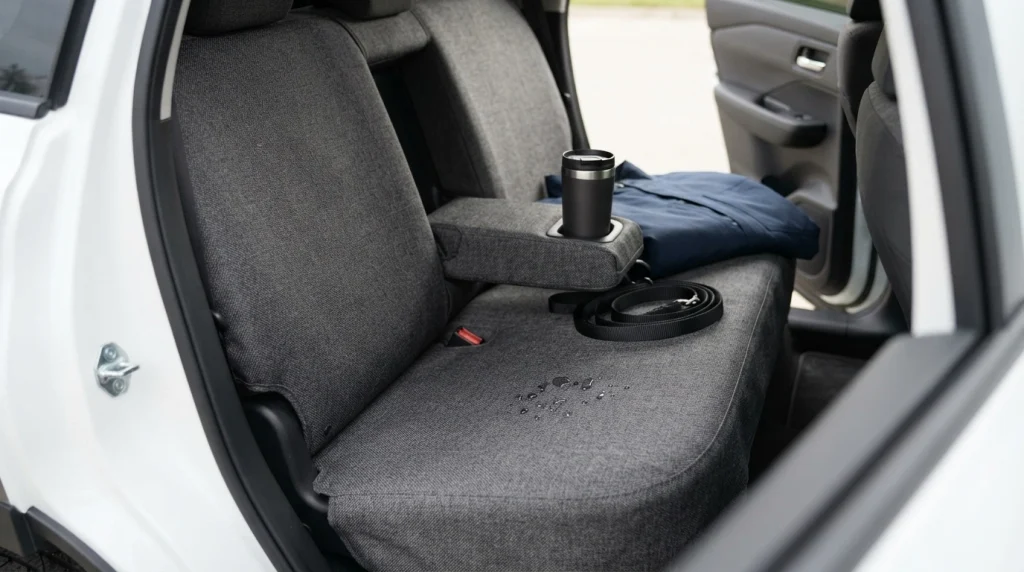
Drivers use car seat covers for one main reason: to shield the seat they sit on every day. The best use depends on how you use the car, not on the cover alone.
Start with your main problem, then match the cover to it. A cover bought for looks alone may fail at the job you need most.
Protection from daily wear
Seats wear at the same points again and again. The outer edge of the base takes scuffs as you slide in, and the backrest takes pressure from bags, jackets, and seatbelts.
A cover absorbs that contact first. When the cover wears out, you can replace the cover instead of repairing the seat.
Spills, stains, and food
Coffee, juice, snacks, and muddy shoes reach seats fast. Cloth seats soak up liquid, and leather seats can stain if a spill sits too long.
A water-resistant cover gives you time to wipe a spill away. A washable cover lets you remove the soiled layer and clean it away from the car.
Pets, kids, and outdoor gear
Pet claws, wet paws, and shedding fur test any interior. Kids add crumbs, sticky hands, and sports gear on top of that daily load.
Drivers in this group often want a tough, washable surface. A smooth, wipe-clean cover suits mud and fur, while a padded cover suits long family trips.
Comfort in hot and cold weather
Leather can feel hot in summer and cold in winter. Cloth can feel damp after rain or a sweaty commute.
Breathable mesh helps air move across the seat. A cooling cover or a padded layer changes surface feel, though it cannot change the car’s heating or cooling system itself.
Work use and resale care
Tradespeople, delivery drivers, and field workers carry tools, dust, and wet clothing. A heavy-duty cover keeps that grime off the original trim.
Resale care works the same way in reverse. A clean seat under a cover can present better than a seat that has taken years of direct wear.
As an illustrative example only, not a tested case: a driver who carries a dog on weekends and commutes daily might pick a washable rear cover for pet trips and a simple front set for workdays. The point is to match the cover to the trip, not to buy one cover for every job.
Section takeaway: Car seat covers are used to protect seats, manage spills and pets, improve comfort, and keep an interior tidier for longer.
What Benefits Do Car Seat Covers Offer?
Benefits fall into four groups: protection, comfort, cleaning, and appearance. A good cover helps in at least two of those groups, while a poor fit can cancel the gain.
Judge a cover by what it does on your seat, not by its photos alone. Fit, material, and care rules decide the result.
Longer life for original upholstery
Sun fades fabric and dries leather over time. Friction thins cloth at the seat edge, and sharp items can nick a surface in one trip.
A cover blocks direct sun on the seat face and takes friction instead. That shield matters most for cars parked outdoors or driven daily.
Easier cleaning after real life
Fixed upholstery needs spot cleaning in a tight space. A removable cover moves the job to a sink, a washing machine, or a flat surface, where the maker’s care label allows it.
Check the care label before you buy, not after the first stain. Some covers need hand washing, while others allow a gentle machine wash.
More grip, padding, or airflow
Some drivers slide on smooth leather, while others sink into soft cloth. A textured cover can add grip, and a padded cover can soften a firm seat.
Airflow covers help in a different way, as mesh or ventilated panels let heat escape. For hot-weather driving, a cooling car seat cover review explains how one cooling design approaches that problem.
A lower-cost refresh than reupholstery
Reupholstering a seat costs far more than a cover set in most cases. A cover offers a visual refresh without removing trim or changing the seat frame.
That refresh has limits, and honest limits help here. A cover hides worn fabric, yet it cannot repair a broken seat spring, a torn side bolster seam, or a failed seat control.
What benefits are often overstated?
No cover makes a seat safer by itself. No cover fixes a sagging seat, and no thin cover adds deep cushioning on its own.
Claims about universal fit need the same caution. A stretch cover may fit many seats, yet it may still bunch at the sides or block a lever on your model.
- Real benefit: Protection, easier cleaning, and a tidier look.
- Possible benefit: Better grip, padding, or airflow, depending on material.
- Not a benefit: Crash protection, seat repair, or a change to airbag performance.
Section takeaway: The strongest benefits are protection and easier cleaning, with comfort gains that depend on material and fit.
Which Car Seat Cover Material Fits Your Needs?
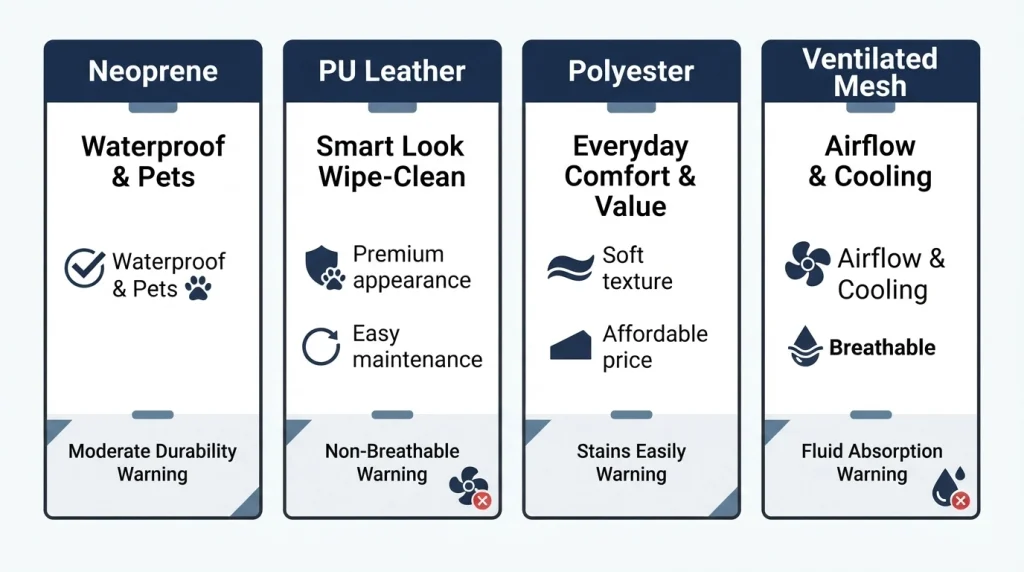
Material sets the feel, the cleaning routine, and the weak points. Choose material after you name your main use, not before.
The table below compares common options in general terms. Check the maker’s spec sheet for your exact cover, since blends and coatings change performance.
| Material | Best for | Watch out for | Typical care |
|---|---|---|---|
| Neoprene | Water resistance, pets, and wet gear | Can feel warm in summer heat | Wipe clean; follow the care label for washing |
| Leather or PU leather | A smart look and wipe-clean spills | Can feel slippery or hot at first | Wipe with a damp cloth; condition leather as the maker directs |
| Fabric or polyester | Everyday comfort and lower cost | Stains soak in if spills sit too long | Often machine washable; check the label first |
| Microfiber or suede-style | Grip and a soft, premium feel | Needs gentle cleaning to avoid matting | Brush and spot clean; avoid harsh scrubbing |
| Mesh or ventilated | Airflow in hot weather | Offers less spill protection than a sealed cover | Wipe or wash as the label allows |
| Waterproof or vinyl-style | Work use, mud, and heavy spills | Can feel stiff and trap heat | Wipe clean with a damp cloth |
How do you pick between looks and toughness?
Start with cleaning, then looks. A beautiful cover that you dread cleaning will stay dirty, while a plain tough cover will get used.
For a daily family car, washability often wins. For a weekend car, look and grip may matter more than spill resistance.
Do branded cover reviews help?
Reviews help when they describe fit, material, and care for a named cover. They help less when they only praise looks or price.
Read a review for seat-shape notes and care limits. A Sprints car seat cover review and an Astonish car seat cover review give two named examples in that same vehicle seat-cover cluster, for comparison of style and use rather than as child-seat guidance.
Section takeaway: Match material to cleaning and comfort needs first, and treat looks as the tie-breaker, not the starting point.
Are Car Seat Covers Safe to Use?
A well-fitted vehicle seat cover can be safe for everyday driving. A loose cover, a blocked control, or a covered airbag seam can create a problem instead.
Safety here means fit and access, not crash protection. A cover does not add crash protection to a seat.
What about side airbags in seats?
Many front seats carry side airbags in the outer bolster. Those airbags need a clear deployment path through a seam or opening.
Use only a cover the maker states as side-airbag compatible for your seat type. Check the cover for a labelled airbag seam or opening, and check your vehicle manual for seat airbag notes.
Pro tip: For airbag, recall, or safety questions, check your vehicle owner’s manual and NHTSA before you fit a cover, rather than relying on a product listing alone.
What must stay clear after fitting?
Seatbelt buckles must stay easy to reach and latch. Seat levers, power controls, and folding mechanisms must move freely.
Headrests must still adjust and lock. A cover that pushes a headrest forward, blocks its posts, or hides an active head restraint needs refitting or removal.
- Seatbelt path: No bunching over the buckle or the belt guide.
- Seat controls: No cover over a lever, switch, or handle you need while driving.
- Airbag seam: No thick layer over a side-airbag deployment area.
- Headrest: Full adjustment and locking after the cover goes on.
What about child seats on top of a vehicle cover?
A child seat has its own fit rules, and a thick vehicle cover can change how that seat sits. Follow the child seat maker’s manual for what may go under it.
Do not add unapproved inserts, pads, or thick layers under a child seat to fix a loose fit. If the child seat moves too much on a covered vehicle seat, remove the cover under it and refit the child seat on the bare seat, then recheck it.
For general vehicle and safety context, Consumer Reports and Edmunds publish broad car safety and buying guidance that can help you frame questions for your manual or dealer.
Section takeaway: A cover is safe to use when it fits snugly, keeps every control and belt clear, and respects side-airbag and headrest rules in your manuals.
How Do You Choose, Fit, and Care for a Car Seat Cover?
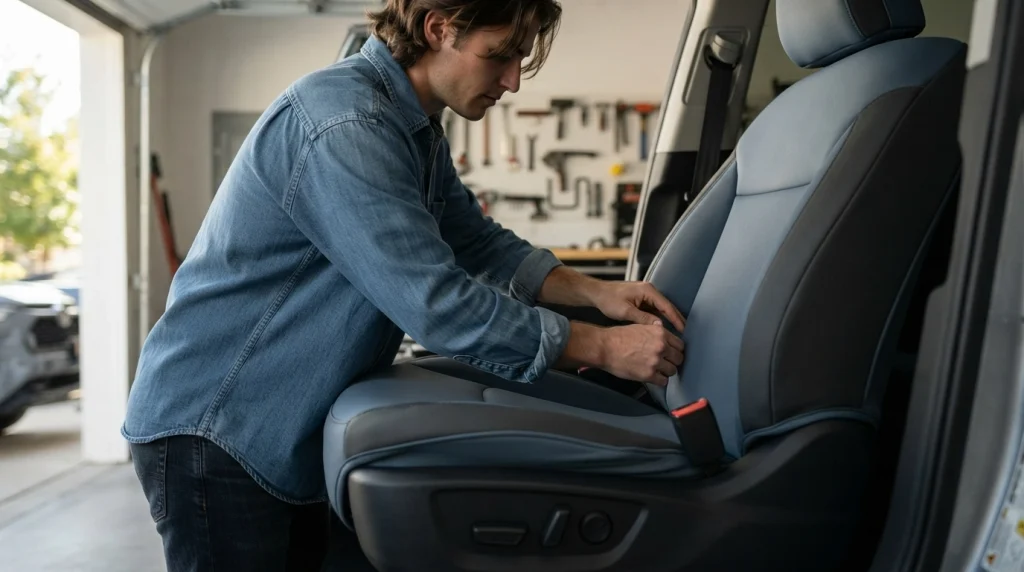
Choosing well takes three checks: seat shape, safety features, and care routine. Skip one check and the cover may look right yet fail in daily use.
Work through the checks in order, so a style you like does not hide a fit problem.
How do you check fit before you buy?
Note your seat type first: bucket, bench, split-folding rear, or seats with built-in headrests. Note side bolsters, armrests, and any seatback pockets or levers.
Compare those notes with the cover maker’s fit list and size guide. A cover listed for many models still needs a check against your seat’s controls and airbag layout.
How do you fit a cover without bunching?
Fit the backrest first, then the base, then the headrest if it is separate. Smooth the fabric from the centre outward, and secure straps under the seat as the maker directs.
Recheck every control after fitting, not before. Sit in the seat, move it through its range if it is adjustable, and confirm belts, levers, and headrest locks still work.
- Remove loose items from the seat and clean the surface first.
- Fit the backrest cover, then tuck and secure its straps.
- Fit the base cover, then align seams with the seat edge.
- Fit the headrest cover, if separate, and lock the headrest in place.
- Test belts, controls, and headrest movement before you drive.
How do you clean and store a cover?
Shake off loose dirt before washing, and treat stains early. Follow the care label for water temperature, detergent, and drying, since heat can shrink some fabrics.
Air-dry a cover when the label allows it, and refit it only when it is fully dry. A damp cover can trap odour under the seat.
For step-by-step care, see how to wash a car seat cover without damaging it. For removal before a deep clean, see how to remove a car seat cover for cleaning.
When should you replace a cover?
Replace a cover when straps fail, seams split at a control cutout, or the fit turns loose. A loose cover can bunch under you and distract you while driving.
Replace it sooner if it blocks a control or airbag seam after washing or shrinkage. Cleaning cannot fix a fit that no longer matches the seat.
For broader car ownership context, Car and Driver and Kelley Blue Book publish general vehicle guides that can help with resale and interior-care questions.
Section takeaway: Check seat shape, safety features, and care rules before you buy, then retest belts and controls after every fit.
Frequently Asked Questions
What are car seat covers mainly used for?
Car seat covers mainly protect a car’s built-in seats from spills, wear, sun, and pet damage. They also add comfort, grip, or a fresh look, depending on material and fit.
Do car seat covers protect leather seats?
Yes, a well-fitted cover shields leather from direct wear, spills, and sun on the seat face. It cannot repair leather that is already cracked or torn.
Are car seat covers worth it for a daily driver?
They often are, when cleaning and protection matter more than a perfect factory look. A washable, snug cover pays off fastest for commuters, families, and pet owners.
Can a car seat cover damage the seat underneath?
A loose or gritty cover can rub fabric over time, and trapped moisture can cause odour. A snug, clean, dry cover lowers that risk, so refit and cleaning checks matter.
Do seat covers work with heated seats?
Some covers work with heated seats, while thick or insulating covers can dull the heat. Check the cover maker’s guidance and your vehicle manual before fitting one over a heated seat.
Can I use a car seat cover with side airbags?
Only use a cover the maker states as side-airbag compatible for your seat type. Keep the airbag seam clear, and check your vehicle manual if you are unsure.
How often should I wash a car seat cover?
Wash it when it is soiled, after pet or muddy trips, and on the routine in the care label. Let it dry fully before refitting, to avoid trapped moisture and odour.
The Bottom Line: Are Car Seat Covers Worth It?
Car seat covers are worth it when they solve a clear problem. Protection, easier cleaning, and a tidier interior are the gains most drivers can count on.
They are less useful when fit is loose, controls get blocked, or care feels like a chore. In those cases, a simpler protector or no cover may serve you better.
As of 2026, the smart test stays simple. Pick a cover for your main use, check fit and safety features first, and retest belts and controls after fitting.
If that test passes, a cover can keep your seats cleaner and your car feeling fresher for longer. If it fails, change the cover, not your safety checks.

Daniel Brooks is an automotive writer and product researcher focused on car accessories, car tech, maintenance, and practical driving guides. At Plug-in Car World, he helps drivers make smarter automotive decisions through honest reviews and research-driven content.
