
Understanding Car Seat Age, Height, and Weight Requirements
Quick Answer
Car seat age, height, and weight requirements determine which child restraint provides appropriate protection at each stage of growth. Children should remain rear-facing until they outgrow their seat’s rear-facing limits, then use a forward-facing harness, followed by a booster seat until the vehicle seat belt fits correctly. Age is a guide, but the manufacturer’s limits and your child’s fit determine when to transition. Follow the NHTSA car seat safety recommendations alongside your specific seat manual.
The Essential Requirements
- Birth and infancy: Use an appropriate rear-facing car seat from the first ride.
- Rear-facing stage: Continue until the child reaches the manufacturer’s maximum rear-facing height or weight.
- Forward-facing stage: Use a five-point harness and top tether after outgrowing rear-facing limits.
- Booster stage: Use a belt-positioning booster after outgrowing the forward-facing harness.
- Seat belt readiness: Transition only when the lap-and-shoulder belt fits without a booster, often around 4 feet 9 inches tall.
- Back-seat protection: Keep children younger than 13 properly restrained in the rear seat.
Safety reminder: Never move a child into the next restraint stage based on a birthday alone. Always follow the seat label, instruction manual, vehicle manual, and applicable local law.
Understanding car seat age, height, and weight requirements can feel confusing when every child grows differently. I find it easier to start with three measurements and the car seat’s actual operating limits.
A child who looks tall might still fit a rear-facing convertible seat. Another child of the same age might need a different model because of height, weight, or seated proportions.
This guide explains how each restraint stage works, how to recognize outgrown seats, and how to avoid early transitions. It also covers installation, booster-seat readiness, and the practical safety checks that matter most.
In This Guide
- What Do Car Seat Age, Height, and Weight Requirements Mean?
- How Long Should a Child Stay Rear-Facing?
- When Can a Child Use a Forward-Facing Car Seat?
- When Is a Child Ready for a Booster Seat?
- When Can a Child Stop Using a Booster Seat?
- How Do You Check Car Seat Fit, Installation, and Safety?
- Frequently Asked Questions
What Do Car Seat Age, Height, and Weight Requirements Mean?
Car seat requirements are the age-related recommendations and manufacturer-specified size limits that determine safe restraint use. They help parents choose between rear-facing seats, forward-facing harnesses, boosters, and vehicle seat belts.
A car safety seat is a child restraint designed to secure a child during vehicle travel. Unlike an ordinary fabric seat cover, it uses specialized harnesses, structural components, and tested attachment systems.
Why Age Alone Is Not Enough
Age gives parents a general picture of a child’s development. It does not establish whether a particular car seat still fits that child.
Children of the same age can have noticeably different body proportions. Their torso length, standing height, and body weight can affect how they fit a restraint.
Before changing seats, check these factors:
- Age: Follow the minimum age requirements and recommended restraint stages.
- Standing height: Compare the child’s measurement with the seat’s stated height limit.
- Body weight: Stay within the allowed weight range for the chosen installation mode.
- Harness fit: Confirm that the straps and head position meet the manual’s instructions.
- Development: Make sure the child can maintain the required sitting position.
- Vehicle compatibility: Confirm that the seat installs correctly in the intended seating position.
Car Seat Requirements by Age and Stage
The following comparison summarizes common U.S. safety recommendations as of 2026. These age ranges are guidance, not universal transition deadlines or legal minimums.
| Restraint Type | Typical Age Guidance | When to Transition |
|---|---|---|
| Rear-facing car seat | Birth through approximately ages 2–4 | When the manufacturer’s rear-facing height or weight limit is reached |
| Forward-facing harness | After rear-facing is outgrown, generally through at least age 5 | When the forward-facing harness is outgrown and the child meets booster requirements |
| Belt-positioning booster | School-age years, often until ages 9–12 | When the vehicle seat belt fits correctly without the booster |
| Vehicle seat belt | When proper belt fit is achieved | Use a lap-and-shoulder belt on every trip; remain in the back seat until age 13 |
The CDC’s child passenger safety guidance describes these stages and explains why correctly matched restraints are essential.
How Do Height and Weight Limits Work Together?
Each car seat has specific limits for its different operating modes. A convertible seat may have separate rear-facing and forward-facing capacities.
For example, imagine a rear-facing seat rated for children up to 40 pounds and 40 inches. A child measuring 39 inches and weighing 34 pounds remains within those numerical limits.
That does not automatically guarantee proper fit. The child must also satisfy the manufacturer’s head-clearance, harness-position, and other fit instructions.
A child weighing 41 pounds would exceed the example seat’s rear-facing weight limit. The child needs another appropriate restraint, even if their standing height remains below 40 inches.
Section Takeaway: Both height and weight matter, and the manufacturer’s complete fit requirements control the decision. Do not treat age as permission to ignore either limit.
How Long Should a Child Stay Rear-Facing?
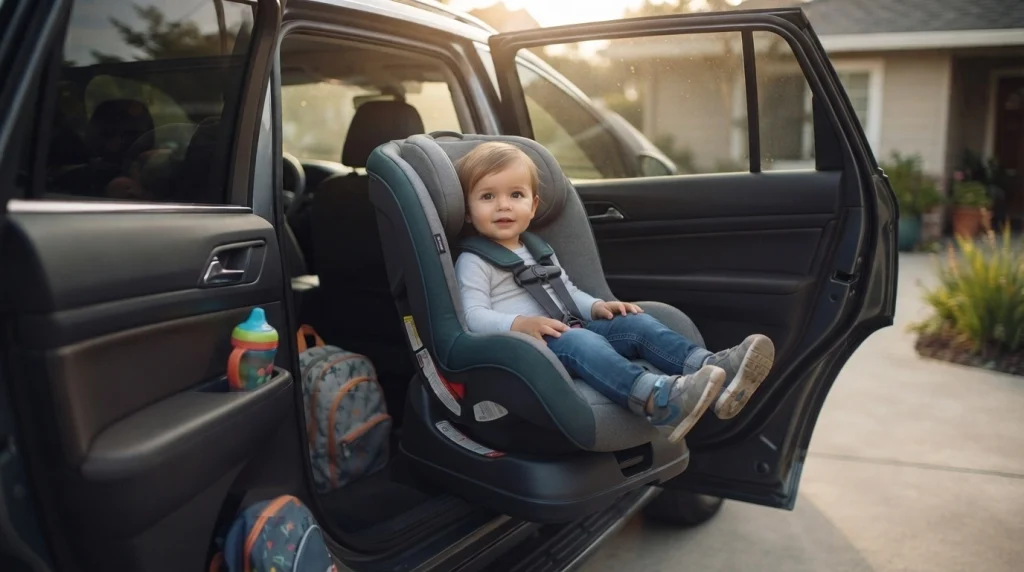
Children should remain in a rear-facing car seat until they reach its maximum permitted rear-facing height or weight. The American Academy of Pediatrics recommends keeping infants and toddlers rear-facing as long as their seats allow.
A rear-facing restraint supports the child’s head, neck, and back during a frontal collision. That positioning is particularly important while a young child’s body continues developing.
Rear-Facing Requirements for Newborns and Infants
A newborn needs an appropriate rear-facing seat for the first car ride. Parents can choose a rear-facing-only infant seat or a compatible convertible seat approved for the child’s size.
Rear-facing-only infant seats commonly accommodate children up to approximately 22–35 pounds, depending on the model. Their height and head-clearance requirements also vary.
Before using a rear-facing infant seat, confirm:
- The baby’s weight meets the seat’s stated minimum.
- The baby’s height and head position meet the seat’s instructions.
- The harness sits at or below shoulder level.
- The seat follows the correct manufacturer-specified recline angle.
- The harness fits snugly without thick clothing beneath it.
- The seat is securely installed in an approved rear seating position.
Some newborns, including premature or medically fragile infants, may have specialized transportation needs. Their healthcare team can recommend additional evaluation or suitable restraints.
Can a Toddler Stay Rear-Facing After Age Two?
Yes. Many convertible and all-in-one car seats allow rear-facing use beyond a child’s second birthday.
These seats often have greater rear-facing height and weight capacities than infant carriers. A child who outgrows an infant carrier may therefore continue rear-facing in a convertible seat.
The American Academy of Pediatrics car seat guide explains why longer rear-facing use remains the preferred approach.
What If a Rear-Facing Child’s Legs Look Cramped?
Bent legs alone do not mean a child has outgrown a rear-facing restraint. Many toddlers naturally sit with their legs bent or crossed.
I would check the manufacturer’s fit measurements before interpreting leg position as a reason to change direction. Headroom, stated height limits, and weight restrictions are more useful indicators.
Never turn a seat forward simply because a child’s feet touch the vehicle seatback. If positioning creates a genuine concern, consult the seat manufacturer or a certified technician.
Signs a Rear-Facing Seat Has Been Outgrown
- The child reaches the maximum rear-facing weight specified by the manufacturer.
- The child reaches the maximum permitted rear-facing standing height.
- The head no longer has the required clearance from the top of the seat shell or headrest.
- The harness cannot be positioned correctly according to the manual.
- The seat no longer fits the child under the manufacturer’s complete instructions.
Reaching the limit of an infant carrier does not necessarily mean it’s time to face forward. A larger rear-facing convertible restraint may be the appropriate next seat.
Pro tip: Review your exact model’s instructions before changing its direction. A certified child passenger safety technician can help assess a difficult fit.
Section Takeaway: Rear-facing is the preferred position for infants and young toddlers. Keep using it until the selected restraint’s permitted rear-facing capacity is reached.
When Can a Child Use a Forward-Facing Car Seat?
A child can transition to a forward-facing harness after outgrowing the rear-facing limits of an appropriate seat. The child must also satisfy the forward-facing minimum age, height, and weight requirements.
Do not assume that reaching age two means forward-facing is automatically safer. A child who still fits a suitable rear-facing seat generally benefits from remaining rear-facing.
Understanding Forward-Facing Height and Weight Limits
Forward-facing harness capacities differ among convertible, combination, and all-in-one seats. Some harness systems accommodate children up to 65 pounds or more.
However, the weight rating is only part of the fit assessment. Children may outgrow harness height limits before reaching the maximum weight.
Check the following before every transition:
- Minimum requirements: Confirm the child meets the forward-facing age and size minimums.
- Maximum weight: Stay within the harness’s upper weight capacity.
- Maximum height: Follow standing-height and seated-fit limits.
- Shoulder position: Follow the manufacturer’s harness-slot or headrest requirements.
- Top tether: Connect the seat’s tether to the approved vehicle anchor when required or permitted.
Why the Five-Point Harness Matters
A five-point harness secures the child at the shoulders, hips, and between the legs. It distributes restraint forces across designated parts of the body.
For forward-facing use, harness straps generally start at or above shoulder level. This differs from rear-facing use, where straps generally begin at or below the shoulders.
The harness should lie flat without twisting. Tighten it until you cannot pinch excess strap material at the shoulder.
Do Forward-Facing Seats Need a Top Tether?
Forward-facing car seats generally use a top tether to help reduce the child’s forward head movement during a collision. The tether connects the upper rear portion of the child restraint to a designated vehicle anchor.
It is not the same as a lower anchor. A tether anchor also should not be confused with a cargo hook or another convenient-looking attachment point.
For a typical forward-facing harness installation:
- Position the seat in an approved rear seating location.
- Secure it using the vehicle seat belt or permitted lower anchors.
- Route and tighten the top tether according to both manuals.
- Test movement at the belt path.
- Position and tighten the child’s harness correctly.
Some car seats have special installation procedures. Always use the instructions for your specific combination of seat and vehicle.
When Is the Forward-Facing Harness Outgrown?
A forward-facing seat is outgrown when the child reaches a stated maximum or fails a required harness-fit measurement. A higher-capacity harness seat may remain an option before moving to a booster.
For example, a child might approach a seat’s shoulder-height limit while still weighing substantially less than its stated maximum. That child needs a new fit assessment instead of waiting for the weight limit.
When the harness stage is genuinely outgrown, the next step is usually a belt-positioning booster. The child must meet the booster’s requirements and sit correctly throughout the ride.
Pro tip: Consult the car seat manual and vehicle owner’s manual for tether instructions. If you’re unsure about the attachment point, request a professional seat inspection.
Section Takeaway: The forward-facing stage begins after rear-facing is outgrown, not merely after a birthday. Keep using an appropriate harness until its maximum permitted capacity is reached.
When Is a Child Ready for a Booster Seat?
A child is generally ready for a booster after outgrowing the forward-facing harness and meeting the booster’s age and size requirements. The child must also sit properly with the vehicle belt throughout the journey.
A booster seat raises the child so the vehicle’s lap-and-shoulder belt contacts the appropriate parts of the body. It does not replace the vehicle belt with a built-in five-point harness.
Is 40 Pounds Enough to Use a Booster Seat?
Some booster seats permit children weighing 40 pounds, but that number is not universal permission to switch. Different boosters have different stated minimums.
Weight also does not show whether a child can remain correctly seated. A young child who leans forward or moves the shoulder belt behind their back may not be ready.
Before choosing a booster, confirm:
- The forward-facing harness stage has been outgrown.
- The child meets the booster’s minimum age, weight, and height requirements.
- The vehicle has an appropriate lap-and-shoulder belt.
- The booster positions both belt portions correctly.
- The child can remain seated upright without moving the belt out of position.
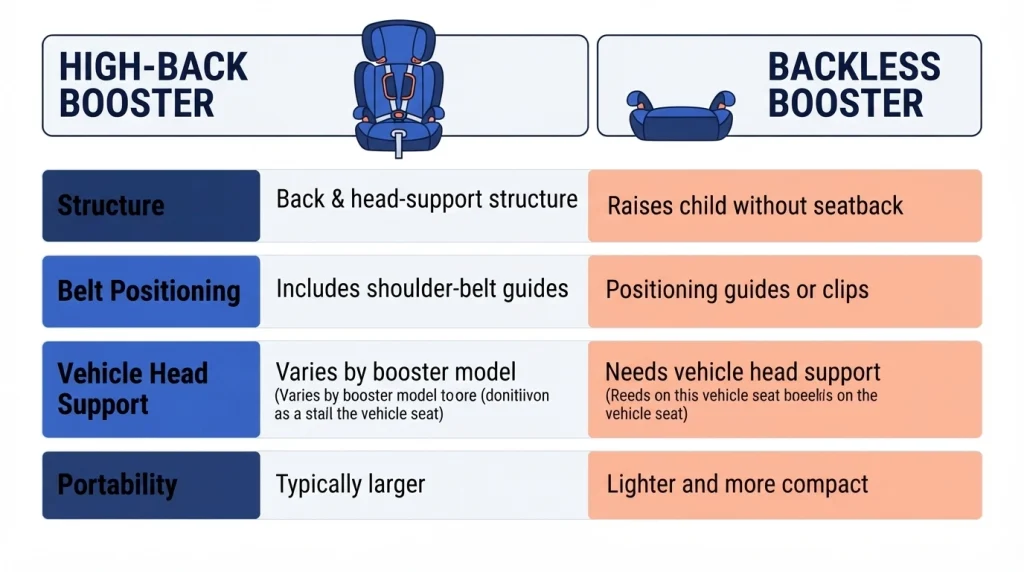
High-Back Booster vs. Backless Booster
Both types position the vehicle seat belt for a child who no longer uses a forward-facing harness. Their suitability depends on the child’s fit, vehicle seating position, and manufacturer’s instructions.
| Feature | High-Back Booster | Backless Booster |
|---|---|---|
| Structure | Includes a back and head-support structure | Raises the child without a dedicated seatback |
| Belt positioning | Usually includes shoulder-belt guides | May include positioning guides or clips |
| Vehicle head support | Requirements vary by booster model | Usually needs adequate vehicle head and back support |
| Portability | Typically larger | Often lighter and more compact |
A high-back booster can be useful when a vehicle lacks suitable head support or has challenging shoulder-belt geometry. A backless booster may work well when adequate vehicle support and proper belt fit are available.
How Should the Seat Belt Fit in a Booster?
The lap belt should lie low across the child’s upper thighs, close to the hips. It must not ride up over the soft abdomen.
The shoulder belt should cross the middle of the shoulder and chest. It must not sit against the neck, slip off the shoulder, or pass behind the back.
Use these practical checks:
- Keep the child’s back against the vehicle or booster seatback.
- Follow the booster’s belt-guide instructions.
- Use both lap and shoulder portions of the vehicle belt.
- Check belt positioning after the child settles into the seat.
- Confirm the belt stays correctly positioned throughout the journey.
Never use a standard belt-positioning booster with a lap-only belt. A suitable lap-and-shoulder belt is required.
Section Takeaway: Booster readiness depends on harness capacity, the booster’s requirements, and the child’s ability to sit properly. Reaching a particular weight does not automatically mean a child is ready.
When Can a Child Stop Using a Booster Seat?
A child can stop using a booster when the vehicle’s lap-and-shoulder belt fits correctly without it. This often happens around 4 feet 9 inches, or 57 inches (approximately 145 cm), and between ages 8 and 12.
However, height and age are reference points rather than guarantees. A child may fit properly in one vehicle and still need a booster in another.
The Five-Step Seat Belt Fit Check
I prefer checking belt fit directly instead of relying on height alone. This quick assessment reveals whether the vehicle belt follows the child’s body correctly.
- Back position: Can the child sit with their back against the vehicle seatback?
- Knee position: Do their knees bend comfortably at the front edge of the seat cushion?
- Lap belt: Does the belt lie low across the upper thighs rather than the stomach?
- Shoulder belt: Does it cross the middle of the shoulder and chest rather than the neck or face?
- Consistent posture: Can the child maintain that position for the entire ride without slouching?
If any answer is no, the child probably still needs a suitable booster. Check the applicable booster manual and local requirements before making the transition.
Why Age Eight Is Not an Automatic Booster Graduation
Some child-restraint laws use age eight as an important legal threshold. That does not mean every eight-year-old fits an adult seat belt.
Vehicle belts are designed around body size and seating geometry. A child with shorter legs or a shorter torso may still need a booster despite meeting a legal age minimum.
Parents should distinguish legal minimum requirements from best-practice safety recommendations. When the two differ, choose the appropriate restraint that offers better protection while following the law.
When Can a Child Sit in the Front Seat?
U.S. safety recommendations advise keeping children younger than 13 in the back seat. This applies even when a child has already outgrown a booster.
Front passenger airbags create additional risks for smaller occupants. Never place a rear-facing child restraint in front of an active frontal airbag.
For vehicles without conventional rear seating, follow the vehicle and child-restraint manufacturer instructions. Seek qualified guidance for unusual seating configurations.
Section Takeaway: A correctly fitting lap-and-shoulder belt, rather than a specific birthday, determines booster graduation. Children should continue riding in the back seat until at least age 13.
How Do You Check Car Seat Fit, Installation, and Safety?
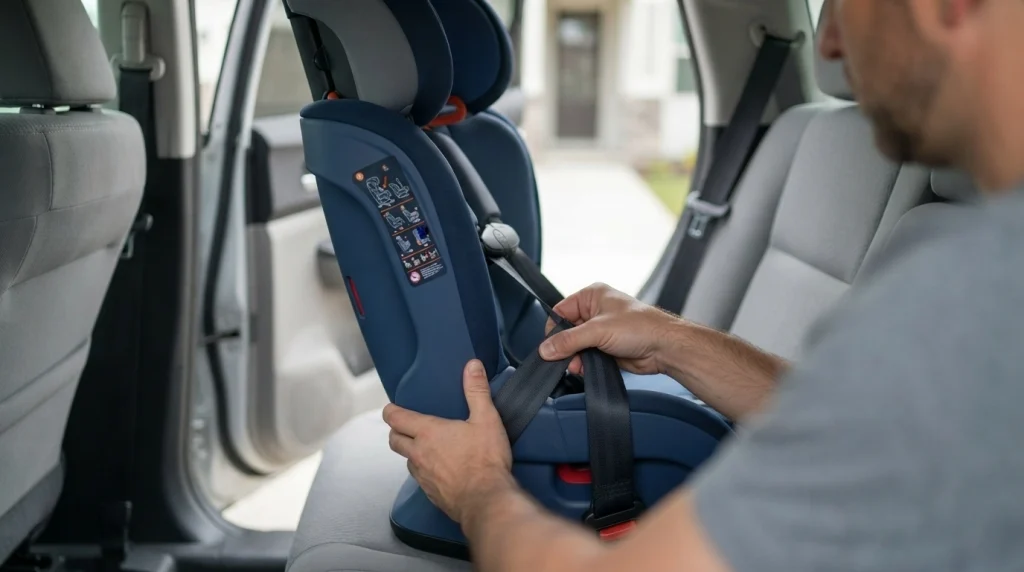
Even a correctly sized car seat needs proper installation and harness adjustment. A suitable restraint cannot offer its intended protection if the attachment system or belt routing is incorrect.
My starting point is always the same: check the car seat label, review both manuals, and inspect the installation at the actual belt path. These checks take priority over how secure a seat merely looks.
Check the Car Seat Label and Manual
Find the manufacturer’s label on the side, rear, or underside of the seat. Record the model information so you can locate the correct instructions and identify recalls.
Confirm these details:
- Model number and manufacture date.
- Minimum and maximum child height and weight.
- Separate limits for rear-facing and forward-facing modes.
- Headrest, harness, and shoulder-height requirements.
- Approved recline and installation methods.
- Expiration or service-life information.
- Any restrictions on vehicle seating locations.
Understand Seat Belt Installation and LATCH
LATCH means Lower Anchors and Tethers for Children. It provides designated attachment points for compatible child restraints in many U.S. vehicles.
Car seats can generally be installed with either a properly locked vehicle seat belt or permitted lower anchors. Using both methods together is not recommended unless both manufacturers explicitly authorize it.
Lower anchors have weight restrictions independent of the seat’s child-weight capacity. Depending on the seat, you may need to change from lower anchors to a seat-belt installation as the child grows.
When checking an installed seat:
- Follow the approved belt path for the selected restraint mode.
- Lock or tighten the attachment system as instructed.
- Grip the seat at the belt path.
- Check that it moves no more than one inch side-to-side or front-to-back at that location.
- Verify the recline angle and tether use where applicable.
Use the NHTSA car seat installation tips for additional guidance on installation and harness positioning.
Check Harness Position and Clothing
A properly tightened harness should lie close to the child’s body. Heavy winter coats can create unwanted space beneath the straps.
Use a thin clothing layer while securing the harness. If needed, place a blanket or coat over the already-fastened harness without interfering with its operation.
Also check that:
- The chest clip is positioned at armpit level when the seat has one.
- Harness straps are flat and free of twists.
- Extra strap material cannot be pinched at the shoulder.
- The buckle is fully engaged.
- Harness routing matches the selected rear-facing or forward-facing mode.
Can Aftermarket Car Seat Covers Affect Safety?
They can. Some decorative covers, cushions, and harness accessories may change how the restraint fits or performs.
A car seat cover that sits between the child and harness can interfere with the intended fit. It may also introduce material the manufacturer has not approved for that restraint.
Before using any accessory:
- Check whether the car seat manufacturer specifically approves it.
- Avoid adding unapproved padding underneath or behind the child.
- Do not cover harness guides, buckles, adjustment controls, or required labels.
- Use only manufacturer-approved replacement fabric components.
- Follow the seat’s washing and reassembly instructions.
Decorative vehicle seat covers also deserve attention. Make sure they do not interfere with car seat installation, vehicle seat belts, anchors, or other safety equipment.
Check Expiration Dates, Crash History, and Recalls
Car seats have manufacturer-specific service-life requirements. There is no single expiration period that applies to every child restraint.
Check the manufacture date and manufacturer’s guidance before reusing an older seat. Do not use a seat with unknown crash history, missing essential parts, or unresolved safety concerns.
Use the NHTSA recall search to check for reported car seat safety recalls. Contact the manufacturer for the appropriate remedy if your model is affected.
After a moderate or severe crash, replacement is generally recommended. For a minor crash, follow the seat manufacturer’s instructions and the applicable safety criteria.
Do Car Seat Laws Differ by Location?
Yes. Legal child-restraint requirements differ between U.S. states and across countries.
Some laws specify minimum ages for rear-facing use. Others establish restraint requirements using age, height, weight, or combinations of those factors.
Check current requirements in your jurisdiction before traveling. Legal compliance should be considered alongside manufacturer instructions and accepted child passenger safety recommendations.
Pro tip: If you’re uncertain about installation, have a certified child passenger safety technician inspect the seat. Use verified manufacturer instructions and official safety resources rather than untested online shortcuts.
Section Takeaway: Correct sizing is only one part of child passenger safety. Secure installation, correct harness fit, approved accessories, and a seat in usable condition are equally important.
Frequently Asked Questions About Car Seat Requirements
What Is the Minimum Age for a Forward-Facing Car Seat?
The minimum depends on the seat’s instructions and applicable law, but children should remain rear-facing until they outgrow their restraint’s rear-facing limits. Children younger than one must ride rear-facing under U.S. safety recommendations. Do not switch solely because a child has reached their first or second birthday.
Can a Three-Year-Old Use a Booster Seat?
A three-year-old generally should remain in an appropriate harnessed restraint rather than move to a booster. Booster readiness requires outgrowing the harness, meeting the booster’s minimum age and size requirements, and maintaining proper seat-belt positioning. Young children usually benefit from continued harness use.
What Happens If My Child Exceeds the Car Seat Weight Limit?
Stop using the restraint in that mode once the applicable limit is reached. Review the manual for another approved mode or choose a suitable replacement seat. Never exceed the stated maximum because the child appears comfortable or the harness still closes.
Can My Child Outgrow a Car Seat by Height Before Weight?
Yes. A child may reach the maximum standing height, shoulder-height limit, or head-clearance restriction while remaining below the weight maximum. Height and weight must both remain within the manufacturer’s instructions. Check the complete fit requirements instead of relying on one number.
Does a Child Still Need a Booster Seat at Age Ten?
Possibly. Some ten-year-olds still need boosters because the vehicle seat belt does not fit properly. Check whether the lap belt sits on the upper thighs, the shoulder belt crosses the chest, and the child can sit upright comfortably for the entire journey.
Are All Car Seats Suitable for Every Vehicle?
No. Vehicle seat shape, available anchors, belt geometry, seating space, and manufacturer restrictions affect compatibility. A child restraint should fit both the child and the vehicle. Confirm installation requirements in both manuals before assuming a specific seat will work.
Should I Buy a Larger Car Seat Before My Child Reaches the Current Limit?
You can prepare for the next stage before the existing seat is outgrown. However, a larger seat does not automatically justify an earlier transition. Compare the new restraint’s permitted modes and limits, then continue using the current appropriate stage for as long as recommended.
Final Takeaway: Understanding car seat age, height, and weight requirements comes down to choosing the correct restraint and using it correctly at every growth stage. Rear-facing, forward-facing harnesses, boosters, and adult seat belts each have a specific purpose.
Check your child’s current measurements against the car seat manual today. If anything about the fit or installation seems uncertain, arrange a professional car seat safety check before the next journey.

Daniel Brooks is an automotive writer and product researcher focused on car accessories, car tech, maintenance, and practical driving guides. At Plug-in Car World, he helps drivers make smarter automotive decisions through honest reviews and research-driven content.
