
How to Protect a Child From Sun Exposure in a Car Seat
Quick Answer
To protect a child from sun exposure in a car seat, use a secure rear-window sunshade, lightweight clothing, and comfortable air conditioning. Keep infants younger than 6 months out of direct sunlight whenever possible. Never drape a blanket over an occupied car seat or leave a child unattended in a vehicle. Follow the NHTSA child passenger safety guidance when choosing accessories.
Six Essential Protection Tips
- Block direct sunlight: Install a securely attached window shade that does not obstruct the driver’s view.
- Choose breathable clothing: Dress children in lightweight, loose-fitting layers.
- Manage cabin temperature: Cool the vehicle before buckling your child into the seat.
- Protect exposed skin: Use age-appropriate sunscreen and shade, following pediatric guidance.
- Keep harnesses safe: Avoid aftermarket accessories that change how the restraint fits.
- Check your child: Watch for unusual sweating, flushed skin, weakness, or other heat-related symptoms.
Important: A window shade does not prevent dangerous heat buildup inside a parked vehicle.
Learning how to protect a child from sun exposure in a car seat makes summer driving safer and more comfortable. Sunlight entering a side window can reach a child’s face, arms, and legs throughout a journey.
I look at this problem from two angles: controlling sunlight inside the car and preserving the child restraint’s safety. This guide explains practical solutions without recommending accessories that compromise the car seat.
In This Guide
- Why Is Sun Exposure Dangerous for Children in Car Seats?
- What Are the Best Ways to Block Sunlight?
- Are Sun Covers and Car Seat Accessories Safe?
- How Can You Keep a Child Cool During Car Rides?
- How Should Sun Protection Change With Age?
- What Should You Check Before a Sunny Road Trip?
- Frequently Asked Questions
Why Is Sun Exposure Dangerous for Children in Car Seats?
Sun exposure in a car can create two separate problems: ultraviolet radiation reaching the skin and excessive cabin heat. Both deserve attention, especially when transporting babies and toddlers.
A child may remain in the same seated position for an extended drive. That makes it difficult to move away from sunlight passing through a side window.
Can Sunlight Through Car Windows Cause Sunburn?
Yes, sunlight passing through vehicle windows can expose children to ultraviolet radiation. Windshields generally block substantial UV radiation, but side-window protection varies.
UVA radiation can pass through many types of glass and contributes to skin damage. UVB, the primary cause of sunburn, is usually blocked more effectively by ordinary automotive glass.
That doesn’t mean every window provides complete UV protection. Vehicle glass, tint, window position, and sun angle all affect exposure.
- Direct sunlight: Can reach exposed skin through side windows.
- UVA radiation: Contributes to long-term skin damage.
- UVB radiation: Causes most sunburns and is largely blocked by many vehicle windows.
- Visible sunlight: Can still cause discomfort and contribute to interior heating.
According to the CDC’s sun safety guidance, shade, protective clothing, and appropriate sunscreen work together to reduce harmful exposure.
Why Are Babies More Vulnerable to Heat?
Young children depend on caregivers to recognize uncomfortable temperatures and change their environment. Babies cannot reliably communicate that sunlight or heat has become dangerous.
Their temperature regulation also differs from that of adults. This makes monitoring the child and the cabin particularly important.
Common warning signs of overheating may include:
- Unusually hot skin or excessive sweating.
- Red or flushed appearance.
- Irritability or unusual sleepiness.
- Weakness or reduced responsiveness.
- Vomiting or other signs of illness.
Heatstroke is a medical emergency. If a child becomes confused, unresponsive, or seriously ill from heat, stop safely, move them to a cooler environment, and call emergency services.
Why Is a Parked Car Especially Dangerous?
A parked car can become dangerously hot even when the weather feels relatively mild. Sunshades, cracked windows, and shaded parking cannot make unattended vehicle time safe.
The NHTSA explains that vehicle temperatures can rise rapidly and children develop heat-related emergencies faster than adults.
Its vehicle heatstroke prevention campaign emphasizes one non-negotiable rule: never leave a child alone inside a vehicle.
Section Takeaway: Protecting children requires managing both sunlight and temperature. Neither a sunshade nor a car seat cover replaces adult supervision.
What Are the Best Ways to Block Sunlight in a Child’s Car Seat?
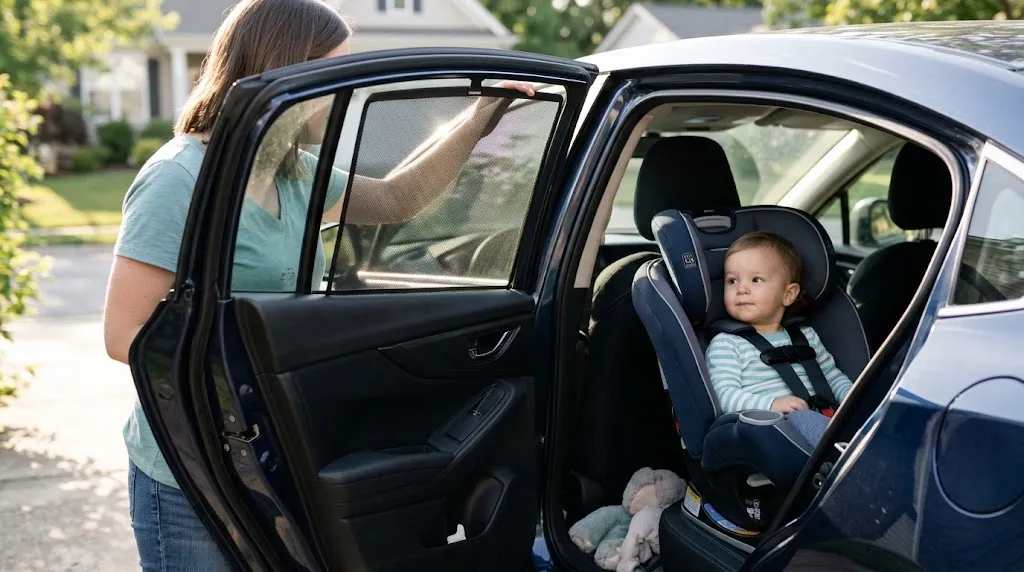
A securely installed rear-window shade is often the simplest way to reduce direct sunlight. Combine it with suitable clothing and cabin cooling for more complete protection.
Use a Secure Rear-Side Window Sunshade
A window sunshade blocks or filters sunlight before it reaches the child’s seating area. Mesh shades can reduce brightness while preserving some visibility.
Choose one that fits your vehicle’s window and stays attached during normal driving. Avoid products with loose hard components that could become hazards in a crash.
When comparing sunshades, check these features:
- Window compatibility: Fits the rear passenger-side glass properly.
- Secure attachment: Does not detach easily or interfere with window operation.
- Visibility: Does not obstruct the driver’s required field of view.
- UV specifications: Has credible, documented UV protection claims.
- Simple removal: Can be repositioned without disturbing the car seat.
Some shades advertise UV protection, but percentages vary by product and testing method. Avoid assuming a dark-looking mesh automatically provides high UV protection.
Consider Professionally Installed UV-Blocking Window Film
UV-blocking window film can provide more consistent protection across a window. It may be useful when children frequently ride beside exposed side glass.
However, UV protection and visible-light darkness are different characteristics. A light-colored or nearly clear film may still offer meaningful UV filtering.
Check the product’s tested specifications and confirm that installation complies with local vehicle-tint rules. Avoid applying films that interfere with safety systems or required visibility.
Choose Lightweight Sun-Protective Clothing
Clothing provides a physical barrier between sunlight and the child’s skin. Lightweight, breathable fabrics are useful when traveling in warm weather.
A garment with a documented ultraviolet protection factor, or UPF, provides measured protection against UV radiation. UPF 50 fabric, for example, is rated to transmit approximately one-fiftieth of incident UV radiation under its test conditions.
- Choose loose-fitting, breathable long sleeves when practical.
- Use lightweight pants to protect exposed legs.
- Remove bulky layers that interfere with proper harness fit.
- Avoid clothing that causes unnecessary overheating.
Hats can protect a child when outside the vehicle, although a hat inside the car must not interfere with positioning or the restraint. Prioritize an unobstructed airway and correct harness fit.
Compare Different Sun Protection Methods
| Method | Main Benefit | Limitation |
|---|---|---|
| Window sunshade | Reduces direct sunlight and glare | UV protection depends on construction |
| UV window film | Can reduce UVA transmission across the glass | Requires verified film and legal installation |
| UPF clothing | Protects covered skin | Doesn’t protect exposed skin |
| Sunscreen | Protects exposed skin when applied correctly | Age guidance and reapplication matter |
| Air conditioning | Helps control cabin temperature | Does not block UV radiation |
No single method solves every sun-related problem. A combination is usually more practical than relying on a single accessory.
Section Takeaway: Start with a secure window shade and lightweight clothing. Add verified UV protection where necessary, without compromising vehicle visibility or car seat installation.
Are Sun Covers and Car Seat Accessories Safe for Children?
Not every product marketed as a baby car seat sun cover is safe to use while driving. Accessories must not interfere with the harness, ventilation, or the child restraint’s protective design.
Why You Should Never Cover an Occupied Car Seat With a Blanket
Draping a blanket over an occupied infant car seat can restrict airflow and trap heat. It can also prevent caregivers from noticing changes in the baby’s condition.
A blanket may look like an easy solution to direct sunlight. However, creating an enclosed space around the child can introduce a different danger.
A better approach is to shade the vehicle window instead of enclosing the child. This allows airflow and maintains visibility of the baby.
Are Built-In Infant Car Seat Canopies Safe?
Some infant car seats include manufacturer-designed sun canopies. These may help reduce direct sunlight when used according to their instructions.
Use only the canopy configurations approved in the car seat manual. Keep the child’s face and airway unobstructed, and avoid enclosing the seating area in hot conditions.
If the canopy restricts your ability to observe the baby, check the child frequently during travel. A canopy never replaces temperature control.
Can Aftermarket Car Seat Covers Affect Crash Safety?
Yes, some aftermarket covers and inserts can change how a child restraint performs. Extra padding may interfere with harness tension, child positioning, or manufacturer-tested components.
Consider the following distinctions:
- Manufacturer-approved replacement cover: Designed and authorized for the specific restraint model.
- Aftermarket seat liner: May add untested material beneath the child or harness.
- Window-mounted shade: Does not normally contact the harness, but must remain securely attached.
- Loose blanket or canopy: May trap heat or restrict observation when placed over the occupied seat.
Check both the accessory instructions and the child restraint manual before installation. Don’t assume that a product labeled universal is suitable for every car seat.
Pro tip: For restraint compatibility questions, consult the car seat manufacturer and the vehicle owner’s manual. A certified child passenger safety technician can help review installation concerns.
How Can You Keep a Child Cool During Car Rides?
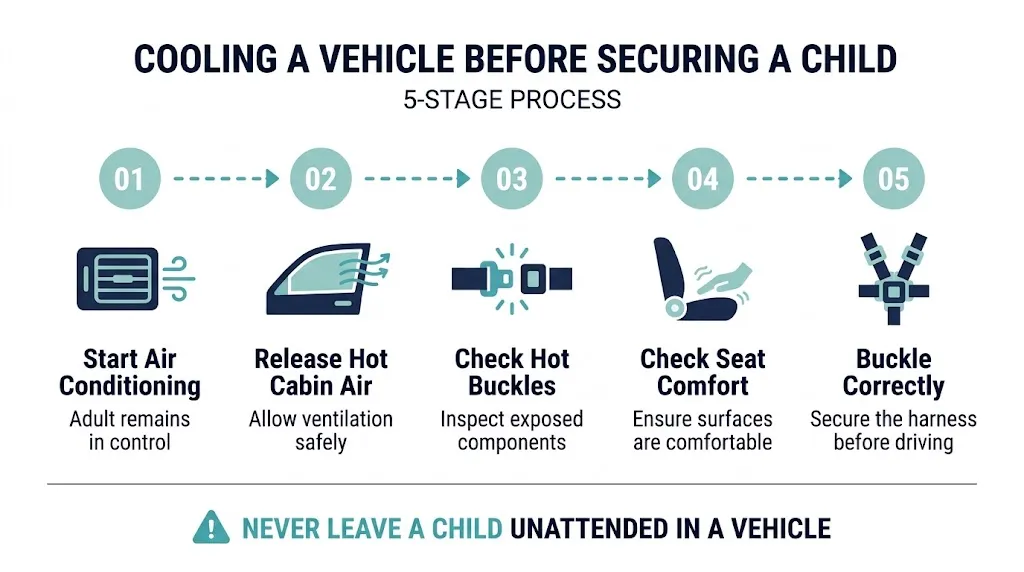
Keeping a child cool begins before the trip. Lower the cabin temperature, check hot contact surfaces, and maintain appropriate airflow throughout the journey.
Cool the Car Before Putting Your Child Inside
Vehicles parked in direct sunlight can develop extremely hot seats, buckles, and interior trim. Allow the passenger compartment to cool before securing your child.
A practical departure routine includes:
- Start the vehicle’s air conditioning while an adult remains in control.
- Allow hot air to escape safely from the cabin.
- Check the child seat buckle and exposed components for heat.
- Confirm the seating surface is comfortable.
- Buckle the child correctly before driving.
Never leave a running vehicle unattended with a child inside. Even short absences can expose children to significant risks.
Position Airflow Without Making the Child Uncomfortable
Use the vehicle’s climate controls to maintain a comfortable cabin. Make sure the rear seating area receives adequate cooling.
Avoid directing an extremely cold, forceful stream of air continuously at a baby’s face. Instead, aim for balanced airflow throughout the cabin.
Check the child’s neck or chest for signs of excessive warmth. Hands and feet alone may not reliably indicate overall comfort.
Plan Breaks and Watch for Overheating
Long trips require more than a comfortable temperature setting. Plan regular stops to check the child, meet feeding needs, and allow appropriate breaks from the car seat.
For young infants, discuss suitable travel intervals with their pediatrician, particularly if they were born prematurely or have medical concerns.
- Stop somewhere safe to assess discomfort.
- Offer breast milk or formula according to the infant’s usual feeding needs.
- Offer older children age-appropriate fluids.
- Check that clothing and the harness remain correctly positioned.
- Watch for unusual drowsiness, weakness, or illness.
If serious heat illness is suspected, seek emergency medical help immediately. Move the child to a cooler location and begin cooling while awaiting assistance.
Does Parking in the Shade Keep a Child Safe?
Shaded parking can reduce direct sunlight on the vehicle. However, it does not make a parked car safe for an unattended child.
Interior temperatures can still increase dangerously. A partly open window does not provide dependable heatstroke protection.
Section Takeaway: Cool the vehicle, check hot surfaces, and observe the child during travel. Never treat shaded parking or air conditioning as permission to leave a child alone.
How Should Sun Protection Change With a Child’s Age?
Sun protection should account for age, skin sensitivity, and how much of the child’s body remains exposed. Infants need especially careful shade and temperature management.
Babies Younger Than Six Months
For babies under 6 months, avoiding direct sunlight is the preferred protective strategy. Use window shading and suitable lightweight clothing before relying on sunscreen.
The American Academy of Pediatrics advises keeping young infants out of direct sunlight where possible. If shade and clothing are inadequate, ask a pediatrician about limited sunscreen use on small exposed areas.
For additional guidance, visit HealthyChildren.org from the American Academy of Pediatrics.
- Keep direct sun away from the baby’s face and body.
- Choose breathable clothing that covers exposed skin.
- Maintain comfortable ventilation.
- Keep the child visible and the airway clear.
- Never use an enclosing blanket as a sun barrier.
Babies Six Months and Older
For children aged 6 months and older, broad-spectrum sunscreen is another useful layer of protection. Choose an age-appropriate product with SPF 30 or higher for exposed skin.
Apply it according to the label and reapply as directed, generally at least every two hours during continued sun exposure. Reapplication may be needed after swimming or heavy sweating.
Mineral sunscreens containing zinc oxide or titanium dioxide are often suitable for sensitive skin. However, sunshades and clothing remain valuable because sunscreen cannot prevent overheating.
Toddlers and Older Children
Older children may spend more time riding near side windows in forward-facing restraints or boosters. Their shoulders, arms, and faces can remain exposed to sunlight.
Encourage age-appropriate sun-safe habits while keeping the restraint fitted correctly. A lightweight shirt and properly positioned window shade can make routine travel more comfortable.
| Age Group | Primary Protection | Key Consideration |
|---|---|---|
| Under 6 months | Shade and protective clothing | Avoid direct sun; consult pediatrician about sunscreen exceptions |
| 6–12 months | Shade, clothing, and suitable sunscreen | Monitor comfort and overheating |
| 1–3 years | Window shading and exposed-skin protection | Maintain correct harness fit |
| Older children | Shade, clothing, and sunscreen | Maintain correct booster or seat-belt positioning |
These age groups describe sun protection needs, not car seat transition requirements. Always select restraints according to manufacturer height and weight limits.
What Should You Check Before a Sunny Road Trip With a Child?
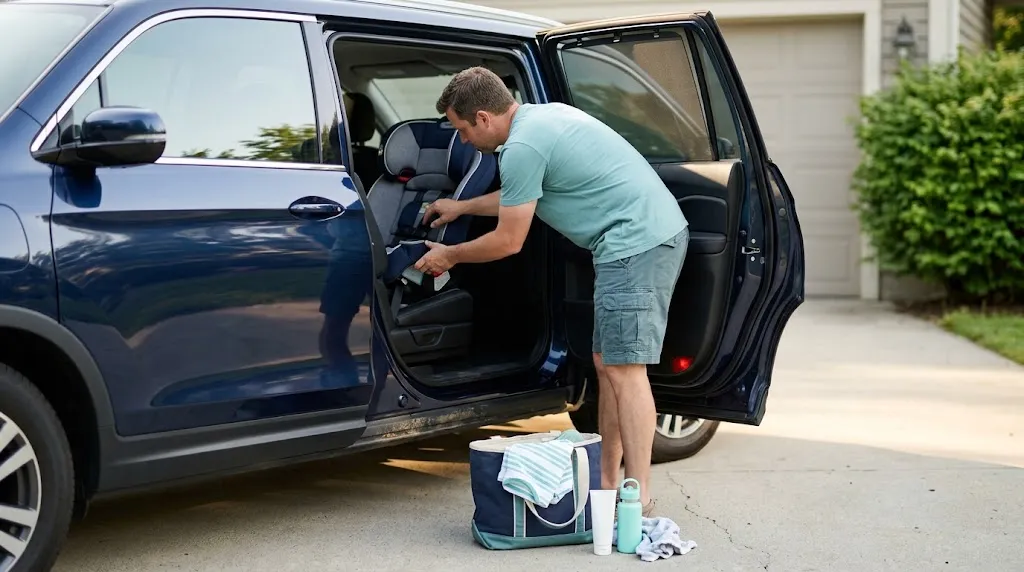
A short pre-trip inspection helps prevent avoidable discomfort. Focus on the car seat, window protection, temperature controls, and the child’s immediate needs.
Inspect the Car Seat and Harness
Start with the child restraint rather than the sunshade. Confirm that the seat remains installed correctly and its harness fits the child.
- Check that the car seat is securely installed.
- Confirm the correct recline angle for the restraint.
- Inspect the harness for twists and looseness.
- Remove unapproved extra pads or inserts.
- Check hot buckles before seating the child.
Do not alter the restraint’s installation to create more shade. The safest position is the one permitted by the vehicle and restraint manuals.
Check Sunshade Placement and Vehicle Visibility
Inspect every sunshade before driving. It should remain secure and avoid obstructing important mirrors, windows, or driver sightlines.
For a practical check, sit in the driver’s seat and inspect visibility around the vehicle. Make any adjustments before leaving.
Prepare a Summer Travel Kit
Keep essential supplies accessible to an adult passenger or available during scheduled stops. Avoid storing loose heavy objects near the child’s restraint.
- Extra lightweight clothing.
- Age-appropriate sunscreen.
- Drinking water for adults and children old enough to have it.
- Usual infant feeding supplies.
- A soft cloth for wiping sweat.
- Emergency contact and medical information.
Choose Practical Travel Times
Sunlight and UV intensity often peak around the middle of the day. When possible, plan travel during cooler periods to reduce discomfort.
However, the angle of sunlight can change which window receives direct exposure. A low afternoon sun may shine directly onto a rear passenger’s face.
Check where sunlight falls during the trip instead of assuming morning or evening travel automatically eliminates the problem.
Build a Reliable Arrival Routine
Always check the entire passenger compartment before locking the vehicle. Make this routine consistent across every driver and caregiver.
Useful habits include keeping a personal item near the child restraint and checking the back seat at every stop. Keep keys away from children and lock parked vehicles.
Section Takeaway: A few minutes of preparation can improve comfort and safety. Proper restraint installation, clear visibility, and active supervision always come first.
Frequently Asked Questions
Can a baby get sunburned while sitting inside a car?
A baby can receive ultraviolet exposure through vehicle windows, particularly UVA through some side glass. The risk depends on the window and exposure conditions. Use appropriate shade, protective clothing, and age-specific sunscreen guidance instead of assuming the glass blocks every harmful ray.
Is it safe to put a blanket over a baby car seat to block sunlight?
No, draping a blanket over an occupied car seat is not recommended. It may restrict ventilation, trap heat, and prevent caregivers from observing the child. Use a secure window sunshade or a manufacturer-approved canopy configuration that maintains airflow.
What is the safest car window shade for a baby?
Look for a shade compatible with your vehicle that attaches securely, has credible UV protection information, and does not obstruct the driver’s view. Avoid loose hard components and never attach accessories directly to the child restraint unless its manufacturer approves them.
Should I put sunscreen on a baby before a car ride?
For babies under 6 months, shade and protective clothing are the first choices. Ask a pediatrician about sunscreen when exposed areas cannot otherwise be protected. For children 6 months and older, use suitable broad-spectrum sunscreen on exposed skin according to label directions.
Can tinted windows replace sunscreen and sunshades?
Not necessarily. Some automotive glass and UV-filtering films block substantial ultraviolet radiation, but performance varies. Tint darkness alone does not establish UV protection. Confirm tested specifications and use additional protection when exposed skin receives sunlight.
How do I know if my child is overheating in a car seat?
Watch for unusually hot skin, excessive sweating, flushing, irritability, weakness, or abnormal sleepiness. Stop safely and move the child to a cooler environment if overheating is suspected. Seek emergency medical help for confusion, unresponsiveness, or severe heat-related symptoms.
Can I leave my child in a shaded car for a few minutes?
No. A parked car can become dangerously hot even in shade or with windows partly open. Never leave a child unattended in a vehicle, even briefly or with the engine running. Always check the rear seat before locking the vehicle.
Final Takeaway: Protect Your Child Without Compromising Car Seat Safety
The best way to protect a child from sun exposure in a car seat is to combine safe window shading, age-appropriate skin protection, lightweight clothing, and effective cabin cooling. These measures help reduce direct sunlight while keeping the child comfortable.
Remember that an accessory should never interfere with the car seat harness, ventilation, or visibility. No sunshade or cover makes an unattended parked vehicle safe.
Before your next family drive, inspect the window shade, check the restraint’s fit, and cool the cabin. Small, consistent safety habits make sunny journeys easier for everyone.

Daniel Brooks is an automotive writer and product researcher focused on car accessories, car tech, maintenance, and practical driving guides. At Plug-in Car World, he helps drivers make smarter automotive decisions through honest reviews and research-driven content.
