
Car Seat Safety Tips for Hot Weather: A Complete Parent’s Guide
Quick Answer
The most important car seat safety tips for hot weather are to cool your vehicle before loading your child, check hot buckles, use lightweight clothing, maintain a snug harness, and never leave a child unattended in a parked car. Even a short stop can become dangerous. Follow the NHTSA heatstroke prevention guidance for additional protection.
Essential Summer Safety Rules
- Cool the cabin: Run the air conditioning before securing your child whenever possible.
- Check hot hardware: Touch buckles and other exposed surfaces before they contact your child’s skin.
- Choose light clothing: Use breathable, lightweight fabrics without bulky padding beneath the harness.
- Avoid unsafe covers: Never use unapproved inserts or coverings that trap heat or interfere with restraints.
- Never leave children alone: Shade, cracked windows, and a running air conditioner do not make unattended vehicles safe.
- Check the back seat: Look before locking the car after every journey.
Before Every Summer Drive
- Confirm the car seat is cool enough, correctly installed, and appropriate for your child’s size.
- Prepare age-appropriate fluids and plan cooling breaks for longer trips.
Hot weather creates safety challenges for babies and young children riding in car seats. A seat that feels comfortable in the morning can become painfully hot after an afternoon in the sun.
I approach summer car seat safety with two priorities: preventing overheating and preserving crash protection. Cooling accessories should never interfere with the harness, seat installation, or manufacturer’s instructions.
This guide covers everything from hot buckles and car seat covers to hydration, heatstroke warning signs, and safe summer travel routines.
In This Guide
- Why Is Hot Weather Dangerous for Children in Car Seats?
- How Do You Prepare a Car Seat for Hot Weather?
- Are Car Seat Covers Safe During Summer?
- How Can You Keep a Child Cool During Car Rides?
- How Can Parents Prevent Heatstroke in Cars?
- What Should You Check Before a Summer Road Trip?
- Frequently Asked Questions
Why Is Hot Weather Dangerous for Children in Car Seats?
Hot weather increases the risk of overheating, dehydration, heat-related illness, and burns from sun-heated car seat components. Young children are particularly vulnerable because they cannot regulate body temperature as effectively as adults.
Car seats also surround a child’s body with padding and protective side structures. These features support crash safety but can limit airflow around the child.
How Quickly Does a Parked Car Heat Up?
A parked car can become dangerously hot within minutes, even when the outdoor temperature feels manageable.
According to the National Highway Traffic Safety Administration, a vehicle’s interior temperature can rise almost 20°F during the first 10 minutes. Opening windows slightly does little to prevent this increase.
Consider a car parked outside a shopping center on a warm afternoon. Sunlight heats the dashboard, seats, interior trim, and surrounding surfaces.
Those materials then release heat into the passenger compartment. Children remain vulnerable even when the vehicle is parked in partial shade.
Why Are Babies More Vulnerable to Heat?
Babies and young children have a greater risk of developing heat-related illness than healthy adults.
NHTSA explains that a child’s body temperature can rise three to five times faster than an adult’s in dangerous hot-car conditions.
- Limited temperature regulation: Young children have less effective cooling mechanisms.
- Restricted movement: Infants cannot independently escape a hot car seat.
- Dependence on caregivers: Babies cannot reliably communicate overheating or thirst.
- Heat-trapping surroundings: Seat padding and a poorly ventilated cabin can make cooling harder.
- Greater fluid needs: Children depend on adults for age-appropriate hydration.
Can Hot Car Seat Buckles Burn a Child?
Yes. Metal buckles, plastic components, and dark fabric surfaces can become hot enough to cause discomfort or burns after direct sun exposure.
Sunlight passing through a vehicle window may heat the buckle more intensely than the surrounding air.
Before placing your child in the restraint, touch each exposed buckle and harness component with your hand. If anything feels excessively hot, allow it to cool first.
Don’t place a hot buckle directly against exposed skin. Protecting these small contact points is an easy summer safety habit.
Section Takeaway: A parked vehicle can become hazardous surprisingly quickly. Check cabin temperature, seating surfaces, and restraint hardware before every hot-weather trip.
How Do You Prepare a Car Seat for Hot Weather?
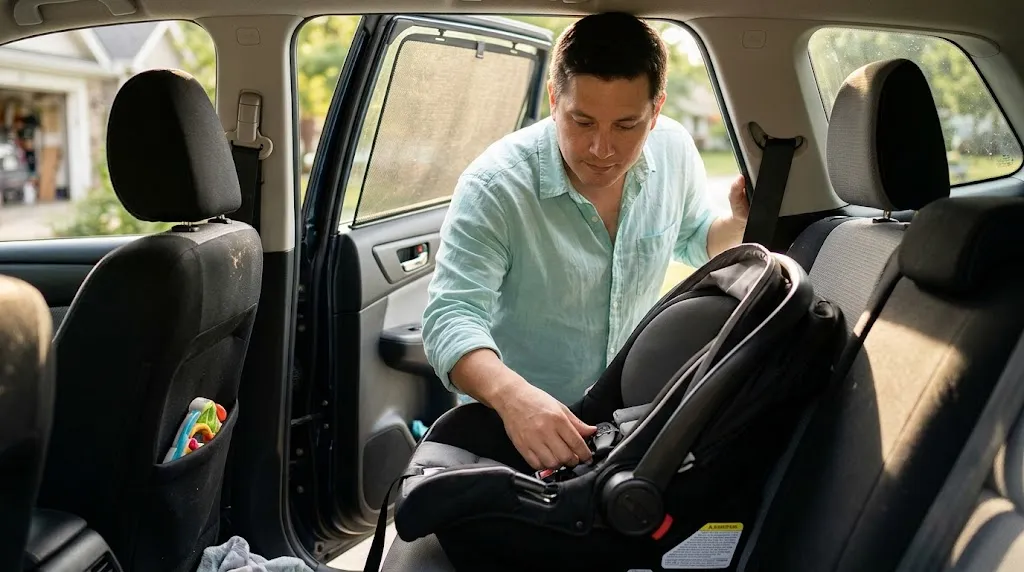
Prepare a car seat by cooling the cabin, checking its surfaces, and keeping the restraint properly installed. The goal is to make your child’s environment more comfortable without changing essential safety features.
Cool the Vehicle Before Buckling Your Child
Air conditioning is one of the most useful tools for managing cabin temperature during summer travel.
Start the vehicle safely in an open, ventilated location. Never idle an engine inside a closed garage or other enclosed space.
- Open the doors briefly to release accumulated heat.
- Start the air conditioning while an adult remains with the vehicle.
- Check whether cooler air reaches the rear seating area.
- Feel the car seat padding and buckle before loading your child.
- Secure your child once the seating surfaces and cabin are comfortable.
A cool front dashboard does not guarantee that the rear seating area is comfortable. Check the actual location where your child will ride.
Use Shade Without Blocking Safety Features
Parking under shade can help reduce direct sunlight on the car seat and its hardware. However, shade does not prevent a closed vehicle from developing dangerous interior temperatures.
When using sunshades, choose vehicle-compatible designs that won’t interfere with visibility, airbags, or window operation.
- Vehicle window shades: Help reduce sunlight reaching a child’s seating area.
- Windshield shades: Limit direct sunlight on the dashboard while parked.
- Shaded parking: Reduces some direct solar exposure.
- Climate control: Provides active cooling while the occupied vehicle operates safely.
Secure removable accessories so they cannot become loose projectiles during sudden braking or a collision.
Inspect the Harness Before Each Ride
Heat protection must never weaken the car seat’s primary purpose: protecting your child in a crash.
The harness should lie flat against the body, with no twists or unnecessary slack.
- Use the correct harness height for the seat’s rear-facing or forward-facing configuration.
- Tighten the harness until you cannot pinch excess webbing at the shoulder.
- Position the chest clip at armpit level when the seat uses one.
- Check the buckle for secure engagement.
- Follow the car seat manufacturer’s instructions for installation and adjustment.
A correctly installed car seat generally should not move more than one inch at its designated belt path. Always follow the manufacturer and vehicle manuals.
Pro tip: Consult the car seat manual and your vehicle owner’s manual before adding accessories or adjusting installation hardware. A certified child passenger safety technician can also help check installation.
Protect the Empty Seat From Direct Sunlight
When your child is not using the seat, you can reduce sunlight exposure with a manufacturer-permitted protective covering.
Remove any temporary covering completely before placing your child inside. Never leave a loose blanket or parking cover beneath or around the harness.
For quick trips, make checking the seat temperature part of your loading routine. That small habit can prevent uncomfortable contact with heated surfaces.
Are Car Seat Covers Safe During Summer?
Some car seat covers may be suitable for summer, but compatibility matters more than marketing claims. An aftermarket cover can change harness fit, interfere with restraint performance, or trap heat.
A car seat cover is a fabric or protective accessory placed over part of a child restraint. Depending on its design, it may protect the seat while parked or remain around the restraint during use.
These two functions require different safety considerations.
Understand the Different Types of Covers
Car seat products marketed for summer have different purposes. Compare how they work before choosing one.
| Cover or Accessory | Main Purpose | Safety Consideration |
|---|---|---|
| Temporary parked-seat cover | Reduces direct sunlight on an empty seat | Remove completely before use |
| Manufacturer-approved replacement cover | Provides the intended upholstery surface | Must match the specific seat model |
| Aftermarket padded seat liner | Advertised for softness or comfort | Avoid unless expressly approved for the seat |
| Canopy or draped blanket | Blocks sunlight | Can restrict airflow or trap heat |
| Vehicle window sunshade | Reduces direct sunlight through windows | Must be securely fitted and vehicle-compatible |
Are Breathable Car Seat Covers Better?
Breathable fabrics may feel more comfortable than thick, insulating materials. However, fabric breathability alone does not establish crash safety or compatibility.
A thin cotton or mesh accessory can still be unsafe if it changes harness positioning or adds material beneath the child.
Use the original car seat fabric or a replacement specifically approved by the restraint manufacturer.
Can You Put a Cooling Pad Under a Baby?
Do not add an unapproved cooling pad, gel cushion, or aftermarket liner between your baby and the car seat.
Extra layers can alter how the harness restrains your child during a collision. Some cooling products also introduce leakage, temperature, or maintenance concerns.
If your child regularly becomes uncomfortable in the seat, first evaluate cabin cooling, clothing, seat fit, and travel conditions.
Contact the manufacturer about accessories approved for the exact model rather than assuming a universal product is suitable.
What Should You Look for in a Summer Cover?
- Model-specific approval: The restraint manufacturer permits the product.
- Correct fit: Harness slots, buckle access, and head-support positioning remain unchanged.
- Easy maintenance: Materials can be cleaned according to manufacturer instructions.
- Appropriate airflow: The accessory does not enclose the child’s face or trap warm air.
- Secure placement: Nothing loose interferes with the restraint or becomes a projectile.
The American Academy of Pediatrics warns against adding untested accessories beneath children or between their bodies and harness straps.
Review the American Academy of Pediatrics guidance on car seat covers and harness safety before choosing additional products.
Section Takeaway: A product described as breathable, cooling, or universal is not automatically safe. Manufacturer-approved compatibility should always come first.
How Can You Keep a Child Cool During Car Rides?
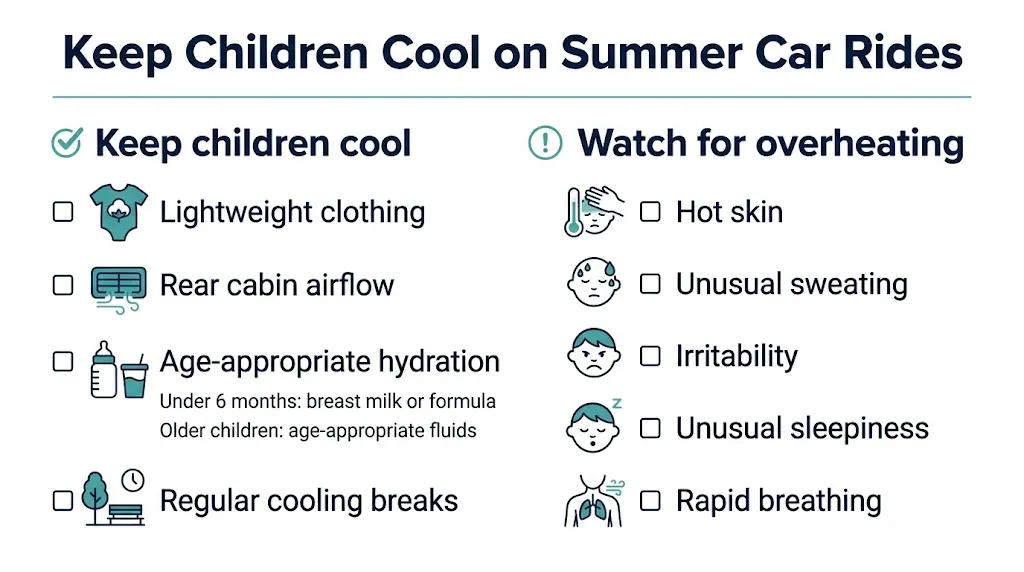
Keep children cool by controlling cabin temperature, choosing lightweight clothing, maintaining airflow, and providing suitable hydration. On long journeys, schedule opportunities to stop safely and move into a cooler environment.
Dress Babies in Lightweight Clothing
Lightweight clothing helps reduce unnecessary heat buildup beneath the car seat harness.
Choose comfortable fabrics that allow movement and avoid bulky layers that affect restraint fit.
- Use lightweight cotton or other breathable clothing appropriate for the temperature.
- Avoid thick jackets, heavily padded outfits, and bulky blankets beneath the harness.
- Remove unnecessary layers before securing the child.
- Check the back or chest for excessive warmth and sweating.
- Make sure clothing does not interfere with the buckle or harness.
Infants may need fewer layers during hot conditions. The appropriate amount depends on the child’s age, health, and surrounding temperature.
Keep Air Moving Through the Rear Cabin
Adequate airflow makes summer driving more comfortable, especially in vehicles with limited rear ventilation.
Direct vehicle air-conditioning vents toward the cabin without placing your child in an uncomfortable blast of cold air.
If the vehicle has rear climate controls, use them to maintain a comfortable back-seat temperature.
Don’t attach unauthorized fans, cords, or electronics directly to the child restraint. Loose or improperly mounted objects can create additional hazards.
Offer Age-Appropriate Hydration
Hydration requirements differ between young infants and older children. Parents should not use the same approach for every age group.
- Babies under six months: Offer breast milk or properly prepared formula as appropriate; don’t routinely add plain water unless a clinician advises it.
- Older infants: Follow pediatric guidance on introducing water alongside breast milk or formula.
- Toddlers: Offer regular water breaks during warm-weather activities and travel.
- Older children: Encourage drinking before they become excessively thirsty.
Never dilute infant formula to provide extra water. Prepare formula according to the manufacturer’s directions.
The American Academy of Pediatrics extreme heat guidance explains hydration and heat precautions for different ages.
Plan Regular Cooling Breaks
Long drives increase the importance of checking your child’s comfort, breathing, position, and hydration needs.
When practical, plan a stop roughly every two hours for infants and young children. Babies with special medical or feeding needs may require a different schedule.
During breaks, remove your child from the restraint in a safe location. Allow time for feeding, movement, diaper changes, and cooling.
Never remove a child from the harness while the vehicle is moving. Stop and park safely before making adjustments.
How Do You Know Your Baby Is Too Hot?
Excessive sweating, unusual fussiness, flushed skin, and unusual tiredness may indicate overheating. However, serious heat illness can also develop without heavy sweating.
Pay attention to changes from your child’s normal behavior. Persistent or worsening symptoms require prompt medical evaluation.
- Skin that feels unusually hot
- Excessive sweating or unusual lack of sweating
- Unusual irritability or crying
- Weakness or unusual sleepiness
- Rapid breathing
- Vomiting or signs of dehydration
Move into a cool environment if you suspect overheating. Seek urgent medical help for severe symptoms, especially confusion, collapse, or difficulty waking.
Section Takeaway: Keeping children cool requires more than a breathable seat. Clothing, ventilation, hydration, and frequent checks all work together.
How Can Parents Prevent Heatstroke in Cars?
The strongest heatstroke prevention rule is simple: never leave a child unattended in a vehicle, even briefly. No car seat cover, window shade, remote starter, or cooling gadget makes an unattended parked car safe.
This rule applies during quick shopping trips, fuel stops, driveway parking, and visits to childcare facilities.
Why Is Leaving a Child in a Parked Car So Dangerous?
Vehicle temperature can increase rapidly after the engine or climate-control system stops. Dangerous heat exposure can develop before a caregiver realizes the severity of the situation.
According to NHTSA, heatstroke begins when core body temperature reaches approximately 104°F, or 40°C. Around 107°F, or 41.7°C, body temperature can become fatal.
Even relatively mild outdoor conditions can lead to dangerous interior temperatures. Never use outdoor temperature alone to judge whether an unattended car is safe.
Make Back-Seat Checks Automatic
Daily routines can become distracting, especially when travel schedules change. A consistent back-seat check helps reduce the risk of forgetting a child.
- Check the back seat every time you park.
- Place a necessary personal item in the rear passenger area as a reminder.
- Use an appropriate rear-seat reminder feature if your vehicle provides one.
- Arrange childcare arrival notifications when possible.
- Confirm your child is safely with the intended caregiver before leaving.
Rear-seat reminder technology can support safer habits. It does not replace personally checking the vehicle.
Keep Unused Vehicles Locked
Children can also enter unlocked parked vehicles while playing and become trapped inside.
Make car security part of your household safety routine.
- Lock vehicles whenever they are not in use.
- Keep keys and remote fobs outside children’s reach.
- Teach children that cars are not play areas.
- Check the vehicle and trunk promptly if a child is missing.
- Teach older children how to ask for help in an emergency.
What Should You Do If a Child Shows Signs of Heatstroke?
Suspected heatstroke is a medical emergency. Act immediately rather than waiting to see whether symptoms improve.
- Call your local emergency number immediately.
- Move the child out of the hot environment as quickly and safely as possible.
- Begin cooling in a shaded or air-conditioned location.
- Remove unnecessary clothing and use cool water or other rapid cooling methods as directed by emergency professionals.
- Do not give anything by mouth to a child who is unconscious or unable to swallow safely.
- Follow emergency responder instructions until help arrives.
If you discover a child trapped inside a parked vehicle, call emergency services immediately. Report the child’s condition and location clearly.
Do not assume that a sleeping or quiet child is safe. Heat illness can progress rapidly.
Pro tip: Use official NHTSA child safety resources for current heatstroke prevention guidance and recommended family safety practices.
Section Takeaway: Never leave a child alone in a vehicle, regardless of the weather or expected stop duration. Build consistent habits that ensure every child leaves the car with a caregiver.
What Should You Check Before a Summer Road Trip?
A good summer road trip begins with a properly installed car seat and a working cooling system. Preparing before departure reduces preventable discomfort and safety problems.
Inspect Your Car Seat and Vehicle
Check the restraint before loading luggage or planning extended travel.
- Seat installation: Confirm the base or seat remains securely installed.
- Harness condition: Look for twisting, damage, and improper adjustments.
- Buckle operation: Confirm it locks and releases correctly.
- Seat suitability: Review your child’s height and weight against seat limits.
- Air conditioning: Check that the cooling system operates effectively.
- Window protection: Secure approved sunshades properly.
- Vehicle maintenance: Inspect tires, fluids, and other travel essentials.
A car seat’s expiration information, crash history, and recall status matter regardless of the season.
Follow the manufacturer instructions and consider the NHTSA recall lookup when checking child restraints or related vehicle safety equipment.
Pack a Summer Travel Safety Kit
Pack useful supplies within easy reach of an adult, but secure them so they cannot become dangerous projectiles.
- Age-appropriate drinking water, breast milk, or formula
- Extra lightweight clothing
- Diapers and wipes
- Feeding supplies
- A vehicle-compatible window sunshade
- A charged phone and charging cable
- Basic first-aid supplies
- Necessary medications and emergency contact information
Store temperature-sensitive supplies according to their storage requirements. Never leave infant formula, medication, or other heat-sensitive items inside a hot vehicle unnecessarily.
Common Summer Car Seat Mistakes to Avoid
| Common Mistake | Safer Alternative |
|---|---|
| Loading a child into an overheated vehicle | Cool the cabin and check seat surfaces first |
| Adding an unapproved cooling cushion | Use original or manufacturer-approved seat components |
| Covering an occupied infant seat with a blanket | Maintain airflow and use appropriate vehicle sun protection |
| Loosening the harness for comfort | Keep the harness snug and adjust cabin temperature |
| Leaving a child inside during a quick errand | Take the child with you every time |
| Assuming shade prevents heatstroke | Never leave children unattended, even in shade |
Should You Change the Car Seat Recline Angle in Summer?
No. Never change a car seat’s recline angle solely to increase ventilation or reduce sweating.
Recline angles are designed around child size, restraint performance, and airway protection. Improper adjustment can create significant safety risks.
Use the manufacturer’s required recline range for your child’s age and size. If the child seems uncomfortable, address the cabin temperature rather than changing safety-critical settings.
When Should You Delay a Summer Journey?
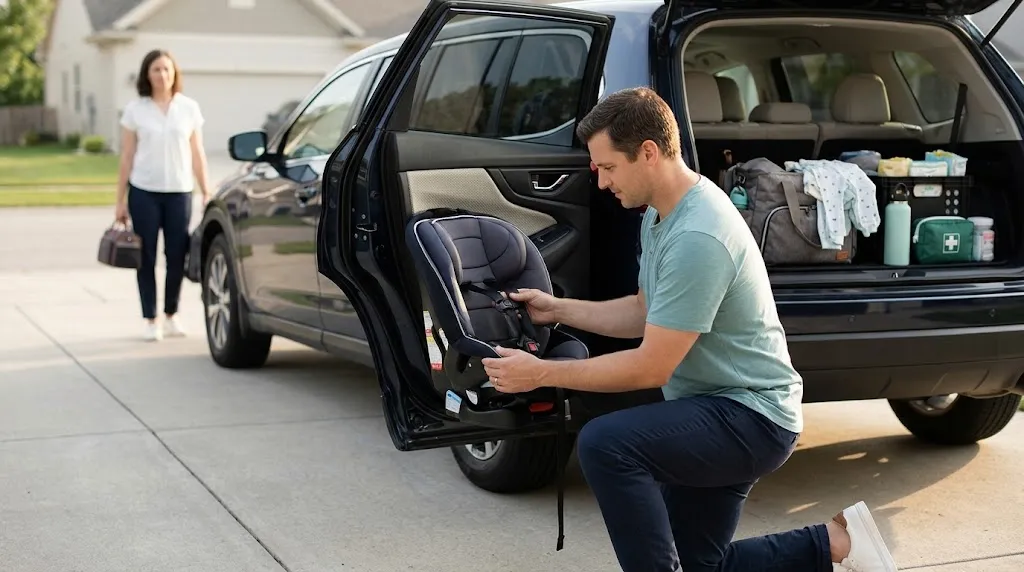
Consider postponing nonessential travel if the vehicle’s air conditioning fails during extreme heat. Young infants and medically vulnerable children may face greater risks.
Choose a cooler departure time when possible. Morning or evening travel can reduce direct sun exposure, although safe cabin temperatures still require attention.
If your child appears unwell, unusually sleepy, or unable to tolerate the conditions, stop safely and seek appropriate medical guidance.
Section Takeaway: Prepare the restraint, cooling system, and travel supplies before leaving. Never compromise harness fit or seat installation to improve comfort.
Frequently Asked Questions
How do I keep my baby’s car seat cool in summer?
Park in shade when possible, use suitable vehicle sunshades, and cool the cabin before placing your baby inside. Check buckles and padding for excessive heat. Use lightweight clothing and maintain a snug harness without adding unapproved cooling liners or inserts.
Can I use a blanket to cover a baby car seat in hot weather?
Do not drape a blanket over an occupied infant car seat or carrier. It can restrict airflow and trap heat around the baby. Use safe vehicle shade solutions and maintain comfortable cabin ventilation instead.
Are cooling car seat covers safe for infants?
Only use accessories expressly approved by the manufacturer for your exact car seat model. Universal cooling covers and pads may interfere with harness fit or add unsafe material beneath the child. Cooling the vehicle is generally the safer first approach.
Can a baby overheat while the air conditioning is running?
Yes. Air conditioning lowers the risk, but a baby may still overheat if airflow is inadequate, clothing is too heavy, or sunlight heats the seating area. Check your baby’s condition regularly and maintain an appropriate cabin temperature.
How often should I stop when driving with a baby in hot weather?
Plan opportunities to stop and check your baby regularly. A break approximately every two hours is a practical planning guideline for many trips, but newborns and children with medical needs may require more frequent stops or individualized advice.
Is it safe to leave a child in a car for five minutes?
No. Never leave a child alone in a vehicle for any amount of time. Interior temperatures can rise rapidly, and an unattended child may face additional emergencies. Cracked windows, shade, or a running air conditioner do not eliminate the risks.
What are the first signs of overheating in a car seat?
Early signs can include unusual sweating, flushed skin, irritability, weakness, and discomfort. More serious symptoms include confusion, vomiting, rapid breathing, collapse, or difficulty waking. Move the child to a cooler environment and seek emergency medical assistance for severe symptoms.
Final Takeaway: Make Hot-Weather Car Seat Safety a Daily Habit
Summer car seat safety depends on a few consistent habits. Keep the vehicle cool, check hot surfaces, dress your child appropriately, and use only compatible restraint accessories.
Never loosen the harness to improve airflow. A properly fitted restraint remains essential during every journey.
Most importantly, take your child out of the vehicle whenever you leave. No parked-car cooling solution replaces active adult supervision.
Before your next family trip, review your car seat manual and complete a quick safety check. A few minutes of preparation can make summer travel safer and more comfortable.

Daniel Brooks is an automotive writer and product researcher focused on car accessories, car tech, maintenance, and practical driving guides. At Plug-in Car World, he helps drivers make smarter automotive decisions through honest reviews and research-driven content.
