
How to Protect Children From Hot Car Seat Buckles
Quick Answer
To protect children from hot car seat buckles, park in the shade when possible, shade the empty car seat, ventilate the vehicle, and check every buckle before securing your child. Metal buckles and other exposed restraint parts can become painfully hot inside parked vehicles. Never place a child against a hot buckle, and follow the American Academy of Pediatrics’ car seat safety guidance when choosing accessories.
Five essential prevention steps
- Choose shade: Reduce direct sunlight on your child’s car seat whenever practical.
- Shield the buckle: Use a removable shade while the seat is empty, taking it off before travel.
- Cool the cabin: Ventilate the vehicle before bringing your child inside.
- Check every surface: Carefully test buckle parts, harness adjusters, and nearby surfaces before contact.
- Maintain safe restraints: Never modify buckles or add unapproved padding beneath the harness.
Important: Never leave a child unattended in a parked vehicle, even while cooling the interior.
Few things are more upsetting than hearing your child cry because a car seat buckle feels scorching hot. This often happens when a parked vehicle sits in direct sunlight.
I always recommend checking the restraint before bringing a child into a warm car. A few simple precautions can make summer trips safer and more comfortable.
This guide explains why buckles heat up, how to prevent burns, which accessories to avoid, and what to do if contact causes an injury.
In This Guide
Why Do Car Seat Buckles Get So Hot?
Car seat buckles become hot because sunlight heats exposed restraint components inside a parked vehicle. The surrounding cabin also traps heat, making surfaces uncomfortable to touch.
Metal components can transfer heat quickly to a child’s skin. Plastic buckle housings, harness hardware, and dark seat fabrics can also become uncomfortably warm.
How sunlight heats car seat hardware
Sunlight enters through vehicle windows and warms surfaces throughout the cabin. Some heat remains trapped as the vehicle interior becomes hotter.
A buckle exposed to direct sunlight can feel hotter than nearby shaded materials. This difference becomes especially noticeable during summer afternoons.
- Direct sunlight: Exposes buckle tongues and other hardware to concentrated solar heating.
- Dark materials: Can absorb more sunlight than comparable light-colored surfaces.
- Closed windows: Allow the cabin to accumulate heat while parked.
- Long parking periods: Give interior materials additional time to warm.
- Limited ventilation: Reduces the removal of heated cabin air.
Why children are especially vulnerable
Young children have delicate skin and may struggle to explain where something hurts. A hot buckle can touch their thighs, abdomen, or hands unexpectedly.
Infants may also be unable to move away from a hot object without help. Adults should therefore check the restraint before positioning a child.
Can buckle temperatures become dangerous?
Yes. A sufficiently hot buckle can cause a contact burn, depending on its temperature and how long skin touches it.
There is no single outdoor temperature that guarantees a buckle is safe. Sun exposure, vehicle design, parking duration, and material all influence heating.
The National Highway Traffic Safety Administration’s heatstroke guidance explains how quickly parked vehicles can become dangerous for children.
Hot buckles and vehicle heatstroke are different hazards. Both deserve attention before every warm-weather trip.
Section Takeaway: Don’t judge buckle safety by outdoor temperature alone. Inspect the actual restraint surfaces before placing your child inside.
How Can You Protect Children From Hot Buckles?
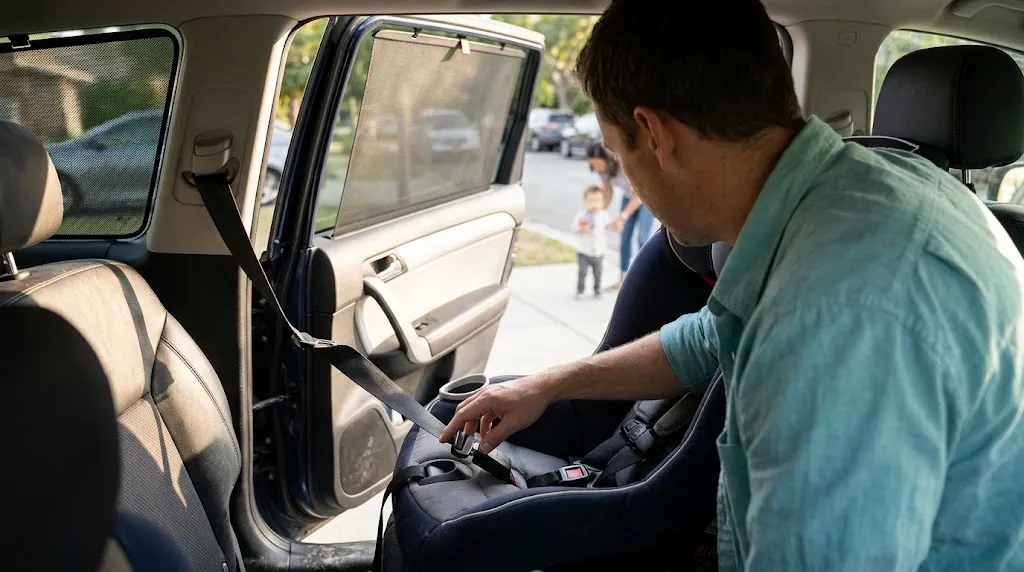
The safest approach combines shade, ventilation, careful inspection, and correct car seat use. No single accessory replaces these basic precautions.
Start preventing heat buildup before you park. Then check the restraint carefully before every departure.
1. Park in a shaded location
Choose covered parking or a shaded spot whenever available. Reducing direct sunlight on the child restraint helps limit surface heating.
Remember that shade moves throughout the day. A seat protected in the morning might receive direct sunlight later.
- Use covered parking where practical.
- Consider the sun’s position during longer stops.
- Check which side of the vehicle receives direct sunlight.
- Remember that shade does not make a parked vehicle safe for an unattended child.
2. Shade the buckle while the car is parked
A temporary barrier can reduce direct sunlight reaching exposed hardware. This works best when the barrier stays outside the restraint’s operating system.
For example, you can place a lightweight shade over an empty car seat while parked. Remove it completely before putting your child in the seat.
Never allow a temporary covering to interfere with the harness, buckle, chest clip, or restraint installation.
3. Use vehicle window sunshades
Properly secured window sunshades can reduce direct sunlight entering through side windows. They are particularly useful when the car seat faces a sunny window.
Choose shades compatible with your vehicle. Avoid poorly secured accessories that could detach during sudden braking or a collision.
Window shades reduce solar exposure but cannot guarantee cool buckle temperatures. Always perform the physical inspection.
4. Check buckle surfaces before seating your child
Inspect both the metal tongues and plastic buckle housing. Also check chest clips, harness adjusters, and other parts that might touch exposed skin.
Use your own fingers cautiously to check for excessive heat. If a surface feels uncomfortable, do not place it against your child’s skin.
- Open the vehicle and begin ventilating the cabin.
- Locate the buckle and harness components.
- Carefully check whether exposed hardware feels hot.
- Allow overheated components to cool.
- Recheck everything before securing your child.
5. Keep buckle components away from direct sunlight when possible
When the seat is empty, you can arrange the loose harness components to reduce direct sunlight, provided the manufacturer allows it.
Before travel, return all straps and hardware to their proper positions. Never leave the buckle routed incorrectly or trapped beneath the child.
6. Dress children for comfort without compromising harness fit
Comfortable, lightweight clothing can reduce exposed-skin contact with warm surfaces. Clothing does not replace cooling dangerously hot hardware.
Always tighten the harness according to the car seat manual. Avoid bulky garments or added padding that prevent a snug fit.
Pro tip: Check your child’s car seat instructions before adjusting harness routing or using accessories. Correct restraint function always takes priority over convenience.
Section Takeaway: Shade and ventilation help prevent overheating, but the final safety check happens immediately before buckling your child.
Can Car Seat Covers Prevent Buckle Burns?
Some removable sun-protection covers can help shade an empty child restraint while the vehicle is parked. However, ordinary car seat covers and buckle accessories are not automatically safe for child restraints.
The main distinction is whether a product stays completely outside the restraint system or alters how the restraint works.
Parking covers versus in-use accessories
A parking-only cover shields an empty child seat from sunlight. It should be removed completely before the child occupies the restraint.
In-use accessories can create additional concerns. Extra harness pads, buckle covers, or seat liners may affect restraint fit or buckle access.
The American Academy of Pediatrics advises against adding products that did not come with a child restraint unless its manufacturer specifically approves them.
Comparison of common heat-protection methods
Different methods offer different levels of convenience and potential risk. The following comparison focuses on practical use rather than unverified temperature-reduction claims.
| Method | Main benefit | Important limitation |
|---|---|---|
| Shaded parking | Reduces direct sunlight | Cabin can still become dangerously hot |
| Window sunshade | Shields interior surfaces | Must be securely fitted and does not guarantee cool buckles |
| Removable parking cover | Shades an empty restraint | Must be completely removed before use |
| Cabin ventilation | Helps reduce accumulated heat | Hardware may remain hot after cabin air cools |
| Aftermarket buckle padding | May reduce direct skin contact | Do not use without specific car seat manufacturer approval |
What should parents look for in a parking cover?
For a cover used only while parked, prioritize complete removability and compatibility with the restraint manufacturer’s instructions.
- Easy removal: The cover should come off fully before the child enters.
- Secure storage: Store the removed cover where it cannot become a projectile.
- Simple construction: Avoid loose cords or parts accessible to children.
- Appropriate materials: Follow the restraint manufacturer’s cleaning and accessory guidance.
- Clear instructions: Avoid products claiming crash protection without reliable supporting information.
Are aftermarket buckle covers safe?
Not necessarily. An accessory can interfere with buckle release, harness positioning, or the way restraint components operate.
Do not assume a product is safe because its packaging says universal or crash-tested. Ask the car seat manufacturer whether that exact accessory is approved for your model.
A related car seat safety checkup from HealthyChildren.org explains why correct installation and restraint condition matter.
Section Takeaway: A removable parking shade is different from an accessory worn or used inside the restraint. Never compromise harness or buckle operation to reduce heat.
How Do You Cool a Hot Car Seat Safely?
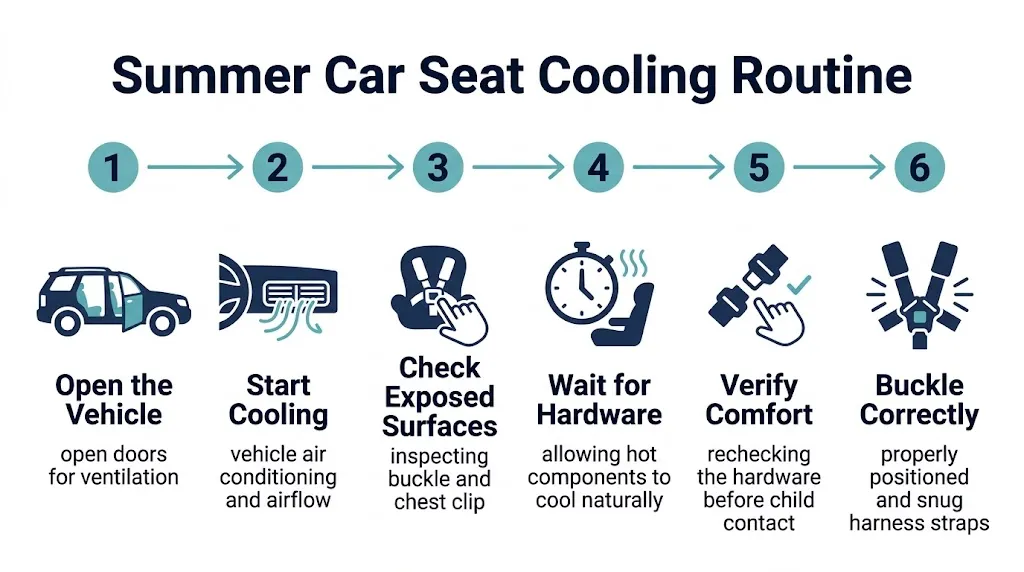
To cool a hot child car seat, ventilate the vehicle and allow heated components to lose heat before use. Check the hardware again before bringing the child into contact with it.
Cooling the cabin air and cooling a hot buckle are not always the same thing. Hardware may stay warm even after the air becomes comfortable.
Step-by-step cooling routine
- Open the vehicle: Open doors or windows while staying with the vehicle and keeping children safely supervised.
- Start cooling: Run the vehicle’s ventilation or air conditioning when safe and appropriate.
- Check exposed surfaces: Carefully assess the buckle, chest clip, and nearby materials.
- Wait for hardware: Give warm restraint parts enough time to cool naturally.
- Verify comfort: Recheck every part likely to touch your child’s skin.
- Buckle correctly: Follow your restraint’s instructions and check harness snugness.
Can you use ice or cold water on a hot buckle?
Avoid placing ice packs directly against car seat components. Extreme cooling, condensation, and added moisture are unnecessary when safer methods are available.
Do not soak the buckle or pour water into its mechanism. Moisture, residue, or improper cleaning can affect components.
If cleaning or moisture exposure is a concern, follow the manufacturer-specific instructions. Some restraint buckles require particular cleaning methods.
Should you loosen the harness when the weather is hot?
No. Hot weather does not justify leaving the harness loose.
Follow the manufacturer’s harness-fit instructions every time. A snug, properly positioned harness is essential for crash protection.
You can improve comfort by cooling the vehicle, choosing suitable clothing, and checking that no exposed hardware is overheated.
What about long road trips?
Road trips introduce repeated exposure when vehicles are parked for meals, fuel stops, and sightseeing. Each stop can allow sunlight to reheat the restraint.
Build a quick buckle check into every departure routine. A restraint that felt comfortable earlier may heat up again while parked.
- Choose shaded parking at stops when available.
- Use an appropriate removable shade while the restraint is empty.
- Remove parking-only accessories before use.
- Ventilate the vehicle before reboarding.
- Check buckle temperature every time.
- Keep children supervised during every stop.
Section Takeaway: Allow both the vehicle interior and restraint hardware to cool. Never trade correct harness fit for temporary comfort.
What Should You Do if a Buckle Burns Your Child?
If a hot buckle burns your child, immediately stop contact with the hot surface and cool the affected skin under cool running water for 20 minutes. Seek medical advice promptly, especially for infants, young children, or blistering injuries.
Burns can vary significantly in severity. Early first aid helps limit further injury.
Immediate first aid steps
- Remove the heat source: Carefully release the restraint and separate the affected skin from the hot buckle.
- Cool the burn: Use cool running water for 20 minutes as soon as possible.
- Remove nearby restrictive items: Gently remove clothing near the burn unless it is stuck to the skin.
- Protect the injury: Cover the cooled area loosely with a suitable clean, non-stick dressing.
- Get medical guidance: Contact a healthcare professional for assessment when needed.
The NHS burns and scalds guidance recommends immediate cooling and explains when emergency care is necessary.
What should you avoid?
Some common home remedies can worsen the problem. Use appropriate burn first aid instead.
- Do not apply ice directly to burned skin.
- Do not use butter, oil, or toothpaste.
- Do not burst blisters.
- Do not pull clothing stuck to a burn.
- Do not delay medical attention for a serious injury.
When should you seek urgent medical care?
Get urgent assessment for deep burns, significant blistering, severe pain, or burns affecting sensitive areas. Seek immediate emergency help if the injury appears extensive or serious.
For babies and young children, contact a healthcare professional even when the injury initially appears small if you are uncertain about its severity.
Skin appearance may change after the initial injury. Watch for increasing pain, swelling, redness, or signs of infection.
Prevent another buckle burn
After addressing the injury, investigate where sunlight reached the restraint. Check whether a different parking position or suitable shade would help.
Inspect the car seat for damage before reuse. Contact the manufacturer if you have concerns about the buckle’s operation or condition.
Section Takeaway: Cool a burn promptly and obtain medical help when appropriate. Prevention should never involve modifying safety-critical restraint components.
Summer Car Seat Safety Checklist
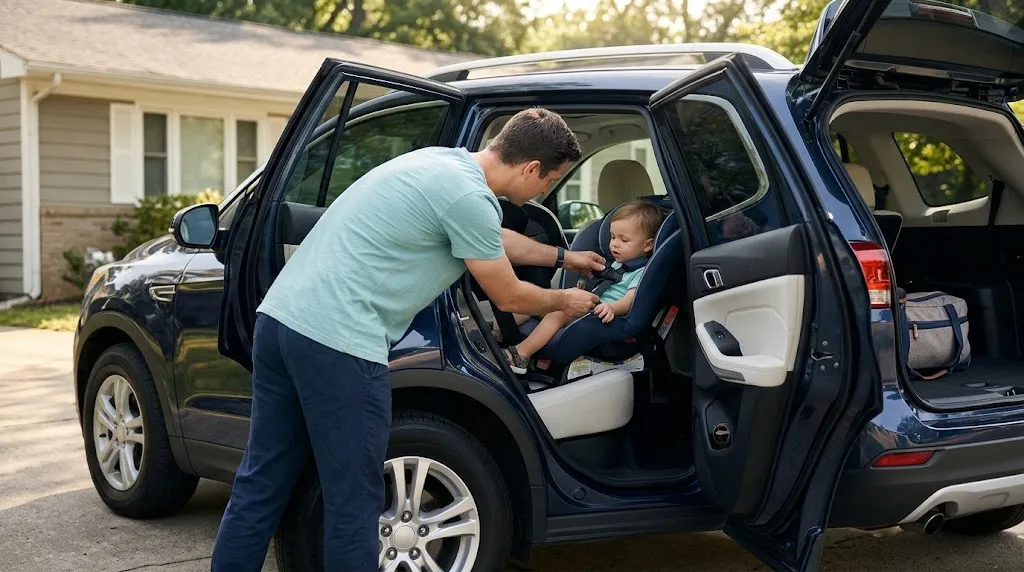
A consistent routine makes hot buckle prevention easier. The goal is to check the restraint before your child ever touches it.
Before parking
- Look for a shaded parking space.
- Consider sunlight reaching the child’s seating position.
- Apply an appropriate window shade if available.
- Remove the child from the vehicle whenever you leave.
- Lock the empty vehicle and keep keys out of children’s reach.
Before your child gets inside
- Open the vehicle and release accumulated heat.
- Start climate control when appropriate.
- Remove any parking-only seat covering.
- Check metal buckle tongues and plastic housings.
- Inspect chest clips, harness hardware, and seating surfaces.
- Allow hot components to cool completely before contact.
Before driving away
- Verify the car seat is installed according to its manual.
- Confirm all buckle parts engage correctly.
- Position and tighten the harness as instructed.
- Remove loose accessories from the child’s seating area.
- Check that the child is comfortable and properly restrained.
Common mistakes to avoid
Even experienced caregivers can overlook a hot buckle during a rushed school pickup or grocery trip.
- Trusting cabin temperature: A cool-feeling cabin does not guarantee cool buckle hardware.
- Using unapproved padding: Extra materials can interfere with restraint performance.
- Leaving parking covers installed: Covers intended for empty seats must come off before travel.
- Skipping repeat checks: Buckles can reheat during another parking stop.
- Leaving children unattended: Shaded parking and open windows do not eliminate heatstroke risk.
As of 2026, the best general approach remains prevention through shade, cooling, and correct restraint use. Always consult your current car seat manual for model-specific directions.
The NHTSA child safety resources also provide information about car seats, vehicle heat hazards, and protecting children around automobiles.
Pro tip: If your child’s buckle appears damaged, sticks, or will not latch correctly, stop using that restraint until the manufacturer or a qualified child passenger safety technician advises you.
Section Takeaway: Make buckle temperature checks part of every warm-weather departure. A brief inspection can prevent painful contact burns.
Frequently Asked Questions
Can a hot car seat buckle burn a baby?
Yes. Hot metal or plastic buckle components can cause contact burns when they touch sensitive skin. Babies cannot reliably move away from an overheated buckle, so caregivers should carefully check every exposed restraint component before securing them.
What is the safest way to cover a car seat buckle in summer?
Shade the empty restraint while parked, using a method compatible with the manufacturer’s instructions. Remove any temporary cover before seating the child. Avoid accessories that attach to or interfere with the buckle unless the restraint manufacturer specifically approves them.
Are metal buckles more dangerous than plastic ones?
Metal often transfers heat to skin more quickly than many plastics, but both materials can become uncomfortably hot. Neither material should be assumed safe after prolonged sunlight exposure. Check the actual contact surfaces before buckling your child.
Can window tint prevent hot car seat buckles?
Window tint may reduce some solar heat entering the vehicle, depending on the film and installation. However, it cannot guarantee safe buckle temperatures or prevent parked-car heatstroke. Always inspect restraint hardware regardless of the vehicle’s window treatment.
Should I put a towel over my child’s car seat?
A clean, lightweight towel may temporarily shade an empty seat while parked, provided it creates no hazard and the manufacturer permits it. Remove the towel completely before travel. Never place it beneath your child, behind their back, or between the harness and their body.
Can I cool a hot buckle with air conditioning?
Air conditioning helps cool the vehicle interior, but a buckle heated by sunlight may need additional time to cool. Allow air to circulate and carefully check the hardware before contact. Never place your child against a buckle that still feels too hot.
How often should parents check car seat buckles during summer?
Check before every trip, particularly when the vehicle has been parked outdoors. Repeat the inspection after longer stops or renewed sun exposure. This simple routine is useful even when the vehicle has window shades, tinted glass, or air conditioning.
Final Takeaway: Keep Buckles Cool and Children Safe
Protecting children from hot car seat buckles starts before the drive begins. Shade, ventilation, and careful buckle checks reduce the chance of painful contact with overheated hardware.
Choose preventive methods that preserve the child restraint’s original design and function. Never replace proper car seat installation or a snug harness with an unapproved accessory.
Before your next summer drive, make one habit non-negotiable: check the buckle before your child touches it.
A little preparation can make every journey safer and more comfortable for your family.

Daniel Brooks is an automotive writer and product researcher focused on car accessories, car tech, maintenance, and practical driving guides. At Plug-in Car World, he helps drivers make smarter automotive decisions through honest reviews and research-driven content.
