How Do You Clean a Car Seat Buckle? 7 Steps to Fix a Sticky Buckle
Quick Answer
How do you clean a car seat buckle? Rinse it in warm water only, press the red release button several times under the water, shake out the water, and let it air-dry fully before you test it. Use a safe cleaner for a baby car seat on the outside shell only, and never put soap, oil, or spray lubricant inside the buckle.
The fast fix in 7 steps
- Check the manual first: Your manual gives the exact cleaning method for your model.
- Remove the buckle if you can: Many child-seat buckles unclip from the shell or strap.
- Rinse in warm water: Hold the buckle under warm running water for 30 to 60 seconds.
- Work the button: Press and release the red button 10 to 15 times while it is wet.
- Shake and drain: Turn it upside down and shake out all trapped water.
- Air-dry fully: Leave it out for several hours until no moisture remains inside.
- Test it five times: Click both tongues in and out until every click feels crisp and firm.
If it still sticks
- Repeat the warm-water rinse once more, then stop and replace the buckle if it still feels soft, slow, or loose.
- A buckle that will not latch is a safety problem, not a cleaning problem.
I’ve cleaned a sticky car seat buckle in a driveway with a juice box still dripping from the cup holder. It took ten minutes, a cup of warm water, and a lot of patience.
This guide goes deeper than a quick rinse. You’ll learn why buckles stick, what to use, what to avoid, and when cleaning is no longer enough.
In This Guide
- What Is a Car Seat Buckle and Why Does It Stick?
- Is It Safe to Clean a Car Seat Buckle With Water?
- What Do You Need to Clean a Car Seat Buckle?
- How Do You Clean a Car Seat Buckle? Step-by-Step
- How Do You Clean a Stuck Car Seat Buckle That Won’t Click?
- What Should You Never Put on a Car Seat Buckle?
- When Should You Replace a Car Seat Buckle Instead of Cleaning It?
- How Do You Keep a Car Seat Buckle Clean Longer?
- Frequently Asked Questions
What Is a Car Seat Buckle and Why Does It Stick?
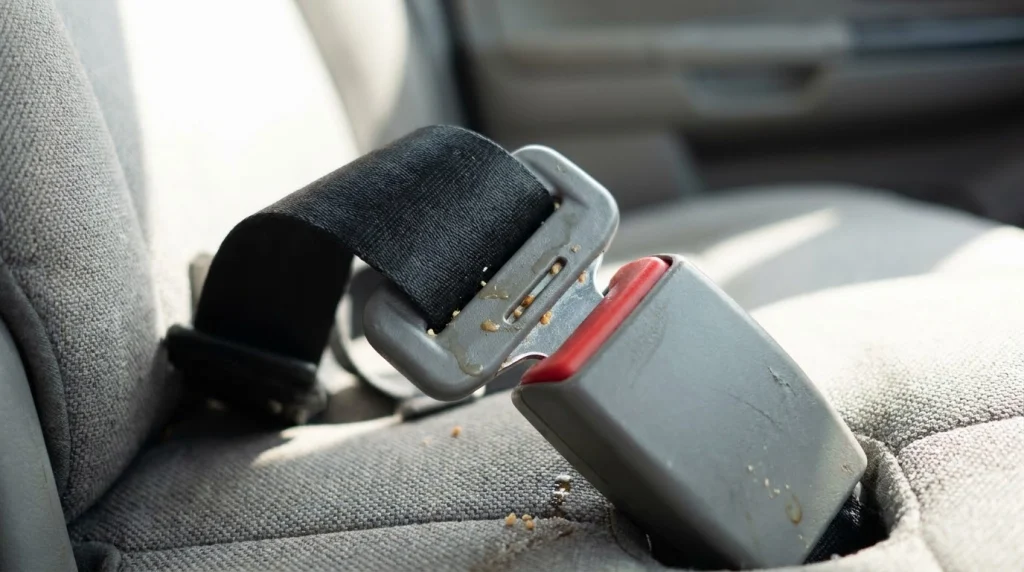
A car seat buckle is the locking housing that joins the two harness tongues at your child’s waist. It holds the harness in place during a sudden stop or a crash.
Inside that small housing, a spring and a latch catch each tongue. The red release button lifts the latch when you press it.
That design works well until food, milk, juice, crumbs, sand, or dried sunscreen get inside. Those bits coat the latch and slow the spring.
Heat makes the problem worse. A sticky drink dries into a thin film inside the buckle on a hot day.
Why does my car seat buckle feel sticky or hard to press?
The most common cause is dried liquid or food trapped around the release button. The button still moves, but it feels slow or gritty.
A second cause is wear. After years of use, the spring can lose tension and the latch can feel soft.
- Sticky button: Dried juice, milk, or food is coating the moving parts.
- Hard to insert: Crumbs or sand are blocking one or both tongue slots.
- Slow click: The latch is dirty, or the spring is weak.
- No click at all: The latch is jammed, damaged, or worn out.
Cleaning fixes the first three causes in most cases. It will not fix a cracked housing or a broken spring.
Safety note: Treat the buckle as a safety part, not a trim piece. If it will not latch firmly, do not use the seat until it is fixed or replaced.
Section takeaway: A sticky buckle is usually dirty, not broken, but a buckle that will not click is unsafe to use.
Is It Safe to Clean a Car Seat Buckle With Water?
Yes, warm water is the safest cleaning method for most car seat buckles. Most child-seat makers list warm water as the approved method in the owner’s manual.
Water dissolves dried milk, juice, and food without leaving a film. It also rinses grit out of the tongue slots.
Do not soak the whole harness strap in water unless your manual allows it. This guide covers the buckle, not the straps.
Some buckles can be removed from the seat shell. Others stay attached to a short crotch strap.
Can water damage a car seat buckle?
Warm tap water will not damage a standard plastic and metal buckle. Hot water can warp plastic, so keep it warm, not boiling.
Trapped water is the real risk. Shake the buckle well and let it air-dry before you reinstall it.
If your buckle cannot be removed, use a small cup to pour warm water through it. Keep the rest of the seat as dry as you can, and check what happens when car seat foam gets wet before you soak a fixed buckle.
Section takeaway: Warm water is safe for the buckle itself, but trapped moisture must be shaken out and dried fully.
What Do You Need to Clean a Car Seat Buckle?
You need very little gear for this job. Most of it is already in your kitchen.
Skip the fancy cleaners for the inside of the buckle. Warm water does the main work.
- Warm water: A bowl, cup, or running tap is enough.
- Soft cloth: Use it to wipe the outside housing and the release button.
- Mild soap: Use it only on the outside shell, never inside the mechanism.
- Soft toothbrush: Use it to brush crumbs from the tongue slots.
- Clean towel: Use it to catch drips and dry the outside.
- Owner’s manual: Use it to check removal steps, cleaning limits, and part numbers.
Do not use a pressure washer, steam cleaner, or strong spray. High pressure can force dirt deeper into the latch.
Do not use cotton swabs with loose fibers inside the buckle. Loose fibers can add to the jam.
Section takeaway: Warm water, a soft cloth, and your manual beat every spray cleaner for the inside of a buckle.
How Do You Clean a Car Seat Buckle? Step-by-Step
This method works for most infant carriers, convertible car seats, and booster seats with a harness buckle. Always check your manual first, because removal steps differ by brand and model.
Work on a clean table or towel. Keep small parts where you can see them.
Step 1: Check the manual and remove the buckle
Look up “buckle cleaning” or “buckle removal” in your manual. Some buckles twist out of the shell, while others unclip from the crotch strap.
If the manual says the buckle is not removable, leave it attached. You can still rinse it in place with a cup of warm water.
Step 2: Shake out loose dirt
Turn the buckle upside down and tap it gently. Crumbs and sand often fall out before you add water.
Use a soft toothbrush around the slots. Brush outward, not deeper into the housing.
Step 3: Rinse in warm water
Hold the buckle under warm running water for 30 to 60 seconds. Let the water flow through both tongue slots.
If the buckle is fixed in place, pour warm water slowly through it. Catch the runoff with a towel under the seat.
Step 4: Work the release button
Press and release the red button 10 to 15 times while the buckle is wet. This moves water through the latch and spring.
You should feel the button get smoother with each press. If it stays gritty, rinse for another 30 seconds and repeat.
Step 5: Shake, drain, and dry
Shake the buckle hard, upside down, until no more water drips out. Wipe the outside with a clean cloth.
Leave it in open air for several hours. Do not use a hair dryer, and do not reinstall it while it feels damp inside.
Step 6: Test the buckle before you reinstall it
Insert both harness tongues one at a time. Each one should click in with a firm snap.
Pull each tongue firmly to check the latch. Then press the release button and confirm both tongues pop out cleanly.
Repeat the test five times. A good buckle feels the same on the fifth click as it did on the first.
Step 7: Reinstall and do a final check
Put the buckle back the same way it came out. Check that the crotch strap is not twisted.
Buckle your child in and tighten the harness. The straps should lie flat, with no slack at the shoulders.
Safety note: If the buckle still feels loose after drying, do not force it or add lubricant. Stop and check the replacement steps below.
Section takeaway: Rinse, work the button, dry fully, and test five times before you trust the buckle again.
How Do You Clean a Stuck Car Seat Buckle That Won’t Click?
A stuck buckle needs the same warm-water rinse, with more patience. Do not pry the housing open with a screwdriver.
Prying can crack the shell or bend the latch. A cracked buckle must be replaced, even if it clicks again.
- Soak it longer: Hold it in warm water for two to three minutes to soften dried food.
- Press under water: Work the button slowly while the buckle is fully wet.
- Try each tongue alone: Test the left tongue, then the right tongue, to find which side is jammed.
- Rinse and repeat: Run clean warm water through it and test again after it dries.
I once had a buckle that clicked only after the second rinse. The first rinse loosened the dried milk, and the second rinse flushed it out.
If the button moves but the tongue will not stay in, the latch may be worn. Cleaning will not restore a worn latch.
Call the seat maker with your model name, date of manufacture, and part number if you need a replacement. That information is usually on a label on the seat shell.
Section takeaway: A stuck buckle gets two warm-water rinses, not force, oil, or a pry tool.
What Should You Never Put on a Car Seat Buckle?
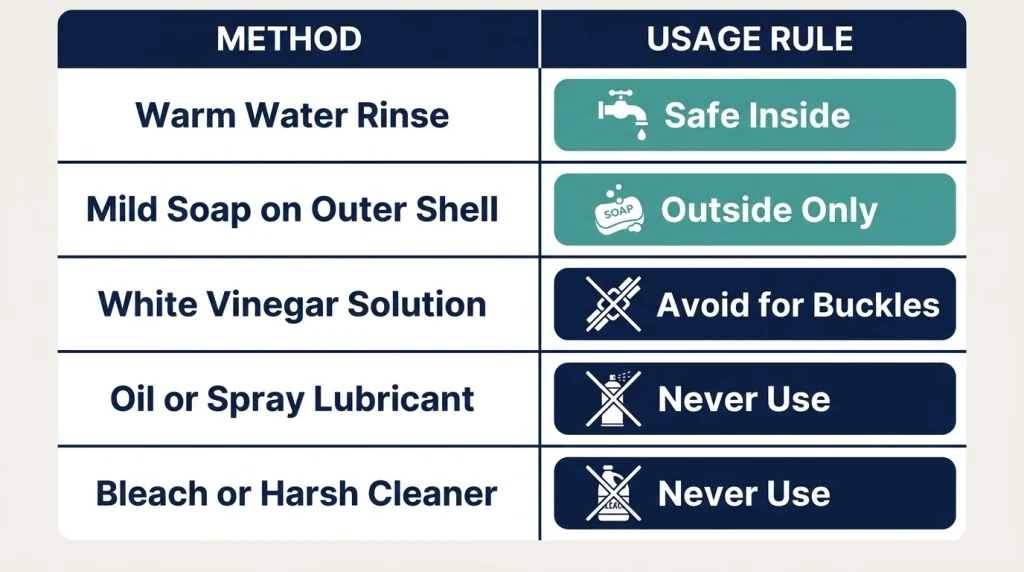
Many common cleaners and sprays seem helpful, but they can leave a film inside the buckle. That film attracts dirt and can make the latch slower over time.
Lubricants are the biggest mistake. Oil, silicone spray, and WD-40 can coat the latch and change how it grips.
Strong solvents can also damage plastic. Bleach, ammonia cleaners, and harsh degreasers have no place near a child safety seat.
| Method | Safe inside buckle? | Why | Best use |
|---|---|---|---|
| Warm water rinse | Yes | Dissolves food and grit without residue | Main cleaning method |
| Mild soap on outer shell | Outside only | Soap can leave a film inside the latch | Wipe the housing |
| White vinegar solution | No | Acid can affect metal parts and leaves odor | Avoid for buckles |
| Oil or spray lubricant | No | Coats the latch and attracts dirt | Never use |
| Bleach or harsh cleaner | No | Can damage plastic and harm a child | Never use |
When in doubt, use warm water only. Your manual is the final word for your model.
Section takeaway: Warm water cleans the latch, while soap, oil, and harsh cleaners can make it worse.
When Should You Replace a Car Seat Buckle Instead of Cleaning It?
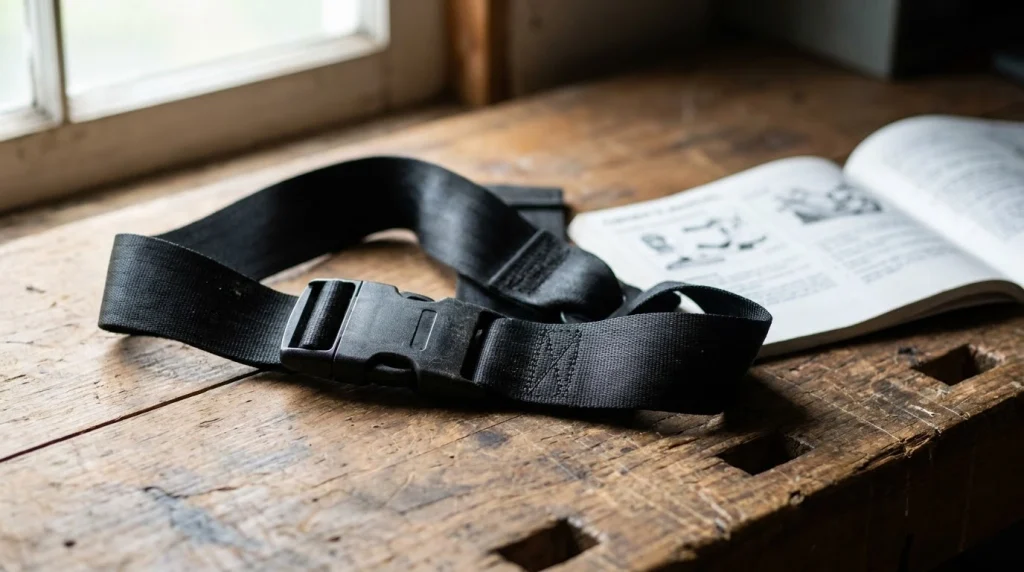
Cleaning has a clear limit. If the buckle still fails after two full rinses and a full dry, replace it.
Do not keep using a seat with a weak latch while you wait for a part. Use a backup seat or another vehicle if you can.
- Cracked housing: Replace the buckle, even if it still clicks.
- Loose tongue: Replace it if a tongue pulls out with light force.
- Button stays down: Replace it if the release button does not spring back.
- Missing click: Replace it if one side clicks and the other does not.
- After a crash: Follow your manual and the NHTSA guidance, and replace the seat or buckle as directed.
Order an OEM buckle made for your exact model when you can. OEM means original equipment manufacturer, the company that made the seat or its approved part.
An aftermarket buckle may look the same, but fitment can differ by model, year, and trim. Check the part number and fitment guide before you buy.
Cheap seats and cheap parts can hide real trade-offs in fit, materials, and warranty support. Read are cheap car seats safe before you choose a low-cost replacement, and check Consumer Reports and AAA car-care guidance for general safety checks.
Section takeaway: Replace the buckle if it cracks, stays loose, or fails after two clean rinses.
How Do You Keep a Car Seat Buckle Clean Longer?
Prevention takes less time than a deep clean. A quick wipe after a spill stops most sticky buckles.
Keep food and open drinks away from the buckle area when you can. A spill mat under the seat can help on long trips.
- Wipe spills fast: Dab milk or juice from the buckle area before it dries.
- Check it weekly: Press the button and click both tongues in once a week.
- Brush out crumbs: Tip the seat forward and brush the buckle area after road trips.
- Store it dry: Do not leave a damp seat closed up in a hot car.
Learn the right seat type for your child’s age and size before you buy a replacement. Start with what to look for when buying a car seat, and check the convertible car seat fit guide if you need a seat that grows with your child.
The Car Care Council also lists regular inspection as a basic part of vehicle care. A buckle check fits that habit well.
As of 2026, the rule has not changed: warm water, a full dry, and a firm test click. That simple routine keeps most buckles working for years.
Section takeaway: Wipe spills fast and test the buckle weekly to stop most sticky-buckle problems.
Frequently Asked Questions
Can I use soap to clean a car seat buckle?
Use warm water only inside the buckle, because soap can leave a film on the latch. You can use mild soap on the outside housing, then wipe it clean with a damp cloth.
Can I use WD-40 on a sticky car seat buckle?
No, do not use WD-40, oil, or spray lubricant on a car seat buckle. Lubricant can coat the latch, attract dirt, and change how firmly the tongues lock.
How do I clean a car seat buckle that won’t open?
Rinse it in warm water for two to three minutes, then press the release button slowly under the water. If it still will not open after a second rinse and full drying, replace the buckle.
Can I remove a car seat buckle to clean it?
Many buckles can be removed, but the steps differ by brand and model. Check your owner’s manual first, and do not force a buckle that is meant to stay attached.
How long should a car seat buckle take to dry?
Let it air-dry for several hours, or overnight if it was soaked. Shake out all water first, and do not reinstall it while moisture remains inside the housing.
When should I replace a car seat buckle?
Replace it if it cracks, pulls loose, fails to click, or still sticks after two warm-water rinses. Order the OEM part for your exact model and check the part number before you buy.
A clean buckle should click with a firm snap every time. If yours does not, clean it once more with warm water, dry it fully, and test it five times.
If it still fails, replace it and do not use the seat until the new buckle locks firmly. That one test protects every trip after it.

Daniel Brooks is an automotive writer and product researcher focused on car accessories, car tech, maintenance, and practical driving guides. At Plug-in Car World, he helps drivers make smarter automotive decisions through honest reviews and research-driven content.