
How Much Do Car Seat Covers Cost? Price Guide
Quick Answer
Most car seat covers cost $20 to $600 or more per set as of 2026. A basic universal pair for the front seats often runs $20 to $60, while a full custom leather set can reach $400 to $600 or more. Start with the best budget car seat covers if you want solid protection without paying for a perfect fit.
What Drives the Price Most
- Fit type: Universal covers cost least, semi-custom covers sit in the middle, and custom covers cost most.
- Material: Polyester and neoprene are cheaper than genuine leather and heavy-duty canvas.
- Coverage: Two front covers cost far less than a full front-and-rear set.
- Vehicle type: Trucks, SUVs, and split-bench seats often need larger or split sets.
- Features: Airbag cutouts, heated-seat compatibility, and waterproof backing add cost.
My Short Rule
- Pay for fit and material first, then pay for extras only if you will use them every week.
- Get local quotes before you buy, because prices vary by seller, size, and shipping.
I’ve fitted covers to a dusty 2018 Honda Civic, a family-hauling 2021 Toyota RAV4, and a work-worn Ford F-150.
Each job taught me the same lesson: the sticker price is only part of the cost.
This guide breaks down real price ranges by type, material, and fit, so you can spot a fair deal fast.
In This Guide
How Much Do Car Seat Covers Cost?
A car seat cover is a fitted or slip-on layer that protects your original seat fabric or leather from dirt, spills, wear, and sun damage.
Most drivers pay $20 to $150 for a usable set, while drivers who want leather, custom fit, or full-row coverage often pay $200 to $600 or more.
The range is wide because “a set” means different things.
Some sets cover only two front seats, while others cover front seats, rear bench, headrests, and armrests.
What Is the Average Cost for Most Drivers?
For a normal sedan or small SUV, expect $40 to $120 for a decent universal full set.
That price usually buys polyester, neoprene, or a polyester blend with straps, hooks, and headrest covers.
I paid about $55 for a universal set for my Civic years ago, and it lasted through two winters of muddy boots.
The fit was not perfect, but the protection was real.
What Does a Full Set Cost Compared to Front Seats Only?
Front-only covers often cost $20 to $80.
A full front-and-rear set often costs $60 to $250 for universal or semi-custom styles.
Rear covers add material, stitching, and split-seat design.
That extra work shows up in the price.
- Front pair only: $20 to $80 for universal, $80 to $250 for custom.
- Full set, sedan: $40 to $150 for universal, $200 to $500 for custom.
- Full set, SUV or truck: $60 to $200 for universal, $250 to $600 or more for custom.
- Single seat cover: $15 to $60 for universal, $60 to $180 for custom.
Always check what “set” means before you compare two listings.
One seller may count headrest covers separately, while another includes them.
Are Cheap Car Seat Covers Worth It?
Cheap covers can work well for short-term protection.
They suit a leased car, a dog run, or a messy work commute.
They often slip, bunch, or fade faster than mid-range covers.
I have seen $25 covers slide after a month of daily use.
That does not make them useless, but it does make fit checks important.
Section Takeaway: Most drivers should budget $40 to $150 for a solid universal set, and $200 to $600 or more only when they want custom fit, leather, or full SUV and truck coverage.
What Determines the Price of a Car Seat Cover?
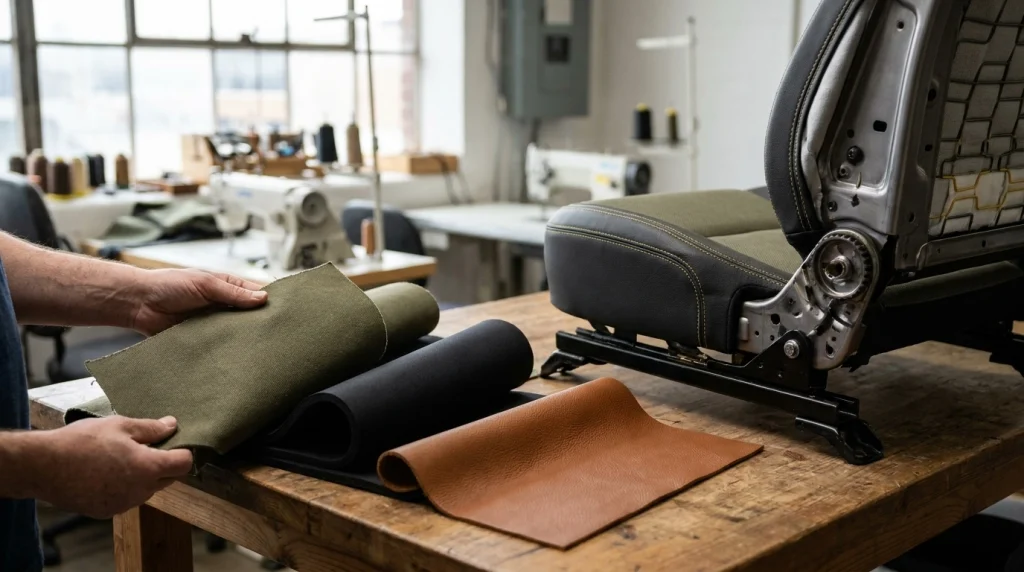
Price follows fit, material, coverage, and safety design.
A cover that fits one exact seat pattern costs more to make than a cover made to fit many cars.
Material choice changes the price just as fast.
How Does Material Affect Car Seat Cover Cost?
Polyester is the cheapest common material.
It resists stains, dries fast, and works well for daily drivers.
Neoprene costs more because it feels thicker, grips better, and handles water well.
Canvas and heavy-duty Cordura-style fabric cost more again, mainly for trucks and work use.
Genuine leather is the most expensive common choice.
It looks premium, feels cool or warm with the season, and needs more care than fabric.
PU leather, also called faux leather, sits between polyester and genuine leather on price.
It looks like leather at a glance, but it can crack sooner in strong sun.
- Polyester: Low cost, light, easy to clean, and widely available.
- Neoprene: Mid-range cost, water-resistant, and grippy.
- Canvas: Mid-to-high cost, tough, and good for pets and work gear.
- PU leather: Mid-to-high cost, leather look, and less upkeep than real leather.
- Genuine leather: High cost, premium feel, and longest life when cared for.
Does Fit Type Change the Price More Than Material?
Yes, fit often matters more than material.
A custom polyester cover can cost more than a universal leather-look cover.
Custom makers cut patterns for one year, make, and model.
That pattern work, plus smaller production runs, pushes the price up.
What Features Add Cost Without Adding Much Value?
Some features earn their price, and some do not.
Airbag-compatible seams matter for safety, so do not skip them to save $10.
Heated-seat compatibility also matters if your car has heated seats.
Decorative stitching, bold logos, and extra pockets look nice.
They rarely improve protection or comfort.
Waterproof backing is worth it for kids, dogs, and coffee spills.
It costs more, but it protects the foam underneath.
Check Consumer Reports for independent buying guidance before you pay extra for a feature you may not need.
Section Takeaway: Fit and material set the base price, while safety-ready seams, waterproof backing, and heated-seat compatibility are the extras most worth paying for.
How Much Do Car Seat Covers Cost by Type?
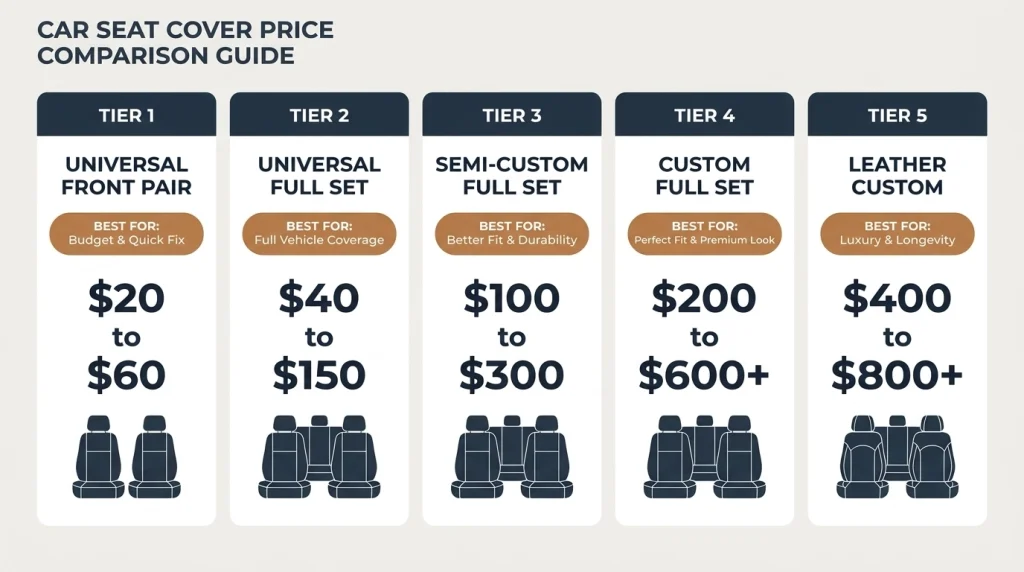
Price makes more sense when you compare like with like.
A universal front pair and a custom full leather set are not the same product.
Use the table below as a starting range, then check local listings for your exact car.
| Cover type | Typical price range | Best for | Watch out for |
|---|---|---|---|
| Universal, front pair | $20 to $60 | Quick protection, low cost | Loose fit, sliding, airbag fit |
| Universal, full set | $40 to $150 | Family cars, pets, daily use | Rear split fit, seat controls |
| Semi-custom, full set | $100 to $300 | Better fit without full custom cost | Trim-level differences |
| Custom, full set | $200 to $600+ | Exact fit, premium look | Long lead time, no returns |
| Leather, custom full set | $400 to $800+ | Luxury feel, long-term use | Care needs, heat and sun wear |
| Pet or bench cover | $25 to $100 | Dogs, kids, rear-seat mess | Seat-belt access, anchor fit |
These are general U.S. price ranges as of 2026.
Sales, shipping, and trim differences can move a price outside these bands.
How Much Do Leather Car Seat Covers Cost?
Genuine leather covers usually start near $300 for a front pair.
A full custom leather set often runs $400 to $800 or more.
PU leather full sets are cheaper, often $120 to $350.
The gap comes from hide cost, cutting, and stitching time.
Leather also needs cleaning and conditioning to avoid cracks.
That care cost adds up over years, even if the cover lasts longer.
How Much Do Neoprene Car Seat Covers Cost?
Neoprene front pairs often cost $50 to $120.
Full neoprene sets often cost $120 to $300.
I fitted neoprene covers to the RAV4 before a beach trip, and they handled wet towels well.
They felt snug and stayed put better than thin polyester.
They also held heat on hot days, so breathability matters if you park in sun.
How Much Do Car Seat Covers Cost for Trucks and SUVs?
Trucks and SUVs cost more because seats are wider and rows are larger.
A universal truck set often runs $60 to $200.
A custom truck set often runs $250 to $600 or more.
Split rear seats, center consoles, and rear storage add pattern complexity.
Check the best car seat covers for your vehicle size before you assume one set fits all rows.
Section Takeaway: Use the table to match price to type first, then check leather, neoprene, and truck sizes separately because each one moves the total by $100 or more.
Universal vs Custom Car Seat Covers: Which Costs More?
Custom covers almost always cost more than universal covers.
The question is whether that extra cost buys you enough fit, safety, and comfort to justify it.
For many drivers, the answer is no.
For others, it is a clear yes.
What Do Universal Car Seat Covers Cost?
Universal covers are made in standard sizes.
They fit many cars, but they rarely fit any car perfectly.
Most universal full sets cost $40 to $150.
Front pairs often cost $20 to $60.
They are the fastest option to buy and install.
I have installed a universal set in under 30 minutes, with no tools.
The trade-off is movement, wrinkles, and blocked controls on some seats.
What Do Custom Car Seat Covers Cost?
Custom covers are cut for your exact year, make, model, and trim.
They follow seat curves, headrest posts, airbag seams, and seat controls.
Most custom full sets cost $200 to $600 or more.
Leather custom sets can pass $800.
Lead times are often 2 to 6 weeks.
Returns can be limited because the cover was made for your car.
Is Custom Worth the Extra Cost?
Custom is worth it when fit affects safety or daily comfort.
It helps when you have side airbags, heated and cooled seats, or power controls.
It also helps when you plan to keep the car for five years or more.
Universal is often enough when you want basic protection for a year or two.
It also works well for a second car, a work truck, or a pet run.
- Choose universal if: You want low cost, fast install, and basic protection.
- Choose semi-custom if: You want a closer fit without the full custom price.
- Choose custom if: You want exact fit, clean looks, and long-term use.
Compare the best custom car seat covers with the best universal car seat covers side by side before you decide.
Look at fit photos for your exact seat shape, not just the product name.
Pro tip: Check your owner’s manual and the NHTSA recall and safety information at NHTSA before you fit any cover over a seat with side airbags.
Section Takeaway: Custom costs two to four times more than universal, so pay for it only when exact fit, airbag clearance, or long-term use makes the difference.
What Hidden Costs Should You Budget For?
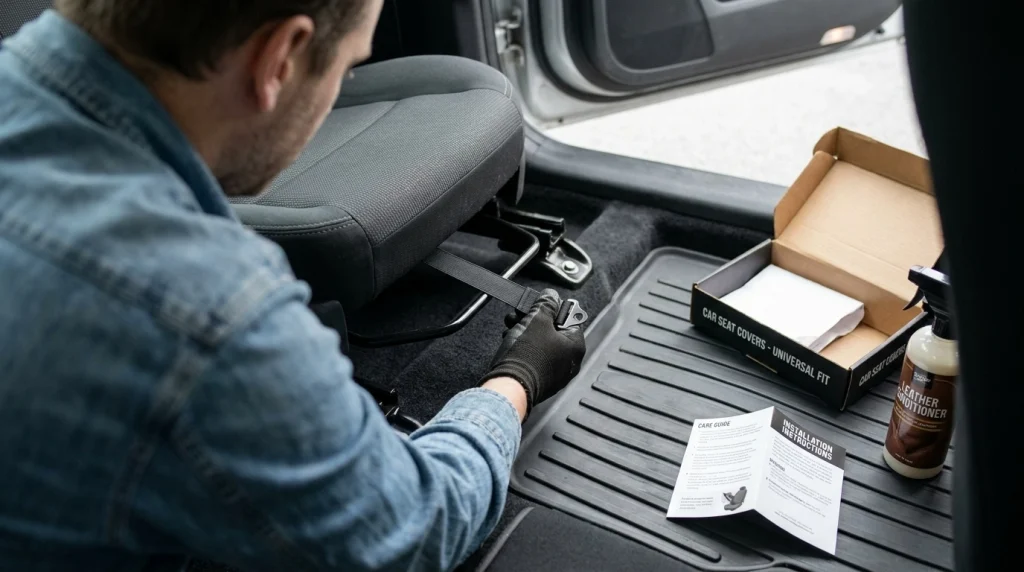
The product price is not the full cost.
Shipping, install time, cleaning, and replacement all add up.
I learned this on the F-150 job, when a cheap set needed extra straps and a second fitting.
How Much Does Installation Cost?
Most drivers install covers themselves in 20 to 60 minutes.
That time is free, but it still counts.
Professional install is rare for universal covers.
Some upholstery shops charge $50 to $150 for a tight custom fit.
That fee makes sense when the cover has many straps, seat controls, or airbag seams.
Follow the steps to install a car seat cover correctly before you pay for help.
A careful DIY fit often beats a rushed shop fit.
What About Shipping, Tax, and Returns?
Shipping can add $10 to $40 for a full set.
Large truck sets cost more to ship than front pairs.
Tax depends on your state and seller.
Returns can cost you return shipping, especially for custom covers.
Some custom sellers charge a restocking fee.
Read the return policy before you order, not after it arrives.
How Much Does Cleaning and Replacement Cost Over Time?
Machine-washable fabric covers cost little to clean.
Leather covers need cleaner and conditioner, often $15 to $30 per kit.
Cheap covers may need replacement in 1 to 2 years.
Mid-range covers often last 3 to 5 years with normal use.
Custom leather covers can last longer, but only with care.
Work out cost per year, not just cost today.
A $120 cover that lasts 4 years costs $30 per year.
A $40 cover that lasts 1 year costs $40 per year.
- Budget for: Shipping, tax, extra straps, and cleaning supplies.
- Budget for: Possible professional help for a tight custom fit.
- Budget for: Replacement sooner if you carry pets, kids, or work gear daily.
Section Takeaway: Add $20 to $80 for shipping, cleaning, and fitting help to your first-year cost, then compare covers by cost per year, not by sticker price alone.
How to Get the Best Value Without Overpaying
Value is not the lowest price.
Value is the right fit, material, and safety design for how you use your car.
Start with your real use, then match the cover to it.
What Should You Check Before You Buy?
Measure your seats and check your trim level.
Note side airbags, heated seats, seat controls, and rear split ratios.
Check headrest posts and ISOFIX or LATCH anchor access if you use child seats.
Read the listing for what is included in the set.
Look for real fit photos, not just studio shots.
How Do You Compare Prices Fairly?
Compare full sets with full sets.
Compare front pairs with front pairs.
Check material, fit type, and included pieces in each listing.
Check seller reviews for fit complaints on your car model.
Use Edmunds and Kelley Blue Book to confirm your exact trim and seat layout before you order a custom set.
A wrong trim choice is the most common costly mistake I see.
When Is It Smart to Spend More?
Spend more when you drive daily and keep the car long-term.
Spend more when you have leather seats to protect or side airbags to clear.
Spend more when pets, kids, or work gear hit the seats every day.
Save money when the car is short-term, low-use, or already worn.
Save money when you only need rear-seat protection for occasional trips.
- Step 1: List your must-haves: fit, airbag clearance, waterproofing, or heated-seat use.
- Step 2: Set a total budget that includes shipping and cleaning.
- Step 3: Compare 3 listings with the same coverage and material.
- Step 4: Test fit at home, check all controls, then drive for a week.
Section Takeaway: Buy for your real use and exact trim, compare equal sets, and spend more only when fit, safety, or daily wear makes it pay off.
Frequently Asked Questions
How much should I spend on car seat covers?
Most drivers should spend $40 to $150 for a good universal full set. Spend $200 to $600 or more only for custom fit, leather, or a large SUV or truck set. Always include shipping and cleaning in your total budget before you buy.
Are expensive car seat covers worth it?
Expensive covers are worth it when they fit exactly, clear side airbags, and last for years of daily use. They are less worth it for short-term cars, low-use seats, or basic spill protection. Compare cost per year, not just the price on the listing page.
How much do leather car seat covers cost?
PU leather full sets often cost $120 to $350, while genuine leather custom full sets often cost $400 to $800 or more. Front leather pairs start lower, often near $150 to $300. Leather also needs regular cleaning and conditioning to avoid cracking and fading.
Do car seat covers cost more for trucks and SUVs?
Yes, trucks and SUVs usually cost more because seats are wider and rows are larger. Universal truck sets often run $60 to $200, while custom sets often run $250 to $600 or more. Split rear seats and center consoles also add pattern and material costs.
What is the cheapest way to protect car seats?
The cheapest useful option is a universal front pair for $20 to $60, or a basic rear bench cover for $25 to $60. Choose washable polyester, check airbag and seat-belt access, and test the fit before a long trip. Replace it sooner if it slips or blocks a control.
Do I need to pay for professional installation?
Most drivers do not need professional installation for universal covers, which usually take 20 to 60 minutes at home. Pay for help only for a tight custom fit, complex seat controls, or airbag seams you are unsure about. A careful DIY fit often works well when you follow the maker instructions.
Bottom line: start with your car, your use, and your total budget.
A $60 universal set that fits safely beats a $500 custom set that blocks a control.
Pick the cover that protects your seats without getting in the way of driving.

Daniel Brooks is an automotive writer and product researcher focused on car accessories, car tech, maintenance, and practical driving guides. At Plug-in Car World, he helps drivers make smarter automotive decisions through honest reviews and research-driven content.
