
Do Car Seat Covers Damage Leather Seats? Protection and Risks
Quick Answer
Car seat covers do not damage leather seats by themselves, but a poor fit, rough backing, or trapped heat and moisture can cause wear, fading, and dull patches over time. A soft, breathable, well-fitted cover usually protects leather from sun, spills, and daily wear, especially when you lift it and check the seat underneath. Start by learning how to install a car seat cover correctly before you tighten straps or tuck edges.
Main risks to watch for
- Friction wear: A loose cover shifts as you slide in and out, and that rubbing can dull the leather surface.
- Trapped moisture: A non-breathable cover can hold sweat and dampness against leather, mainly in hot or humid weather.
- Heat buildup: Dark, sealed covers can get hot in parked cars, and heat speeds drying and cracking.
- Pressure marks: Tight straps, hard seams, and bunched fabric can leave creases or dents.
- Airbag blockage: A cover that is not made for side airbags can slow or block deployment, so fitment is a safety issue too.
When covers help most
- Choose a soft-backed, breathable cover that matches your seat shape closely.
- Lift the cover once a month to clean, dry, and inspect the leather.
- Use a side-airbag-compatible design if your seats have built-in side airbags.
I’ve fitted covers to my own cars and to friends’ cars, and I’ve seen both sides of this question up close. A good cover kept a daily driver’s seats looking fresh through years of commuting, pets, and coffee runs.
A bad cover did the opposite on another car. It shifted, trapped heat, and left dull patches I could have avoided with a better fit and a monthly check.
In This Guide
- What Do Car Seat Covers Actually Do to Leather?
- How Can a Seat Cover Damage Leather Seats?
- When Do Seat Covers Protect Leather Instead?
- Which Seat Cover Materials Are Safest for Leather?
- How Do You Fit and Maintain Covers Without Harming Leather?
- Should You Use Seat Covers on Leather Seats?
- Frequently Asked Questions
- Final Takeaway
What Do Car Seat Covers Actually Do to Leather?
A well-fitted cover acts as a shield, not a second skin. It takes the scuffs, sun, and spills that would otherwise reach the leather directly.
A car seat cover is a removable layer that sits over a vehicle seat to protect the original upholstery. On leather seats, it changes three things at once: friction, airflow, and exposure to light and liquids.
Most modern car leather has a coated surface, which resists light stains better than raw hide. That coating still wears with repeated rubbing, heat, and drying, and it can lose its sheen if dirt stays trapped under a cover.
Leather also needs some air movement to stay supple. A cover that breathes lets heat and light moisture escape, while a sealed cover holds them close to the surface.
That difference explains why two drivers can have opposite results. One uses a breathable, snug cover and checks underneath, while the other leaves a loose, plastic-feeling cover in place for a year.
- Barrier effect: The cover absorbs jeans rivets, pet claws, food, and drink before they reach leather.
- Friction effect: The cover moves against leather each time you get in, so fit and backing matter.
- Heat effect: The cover can shade leather from sun or trap warmth, depending on material and colour.
- Moisture effect: The cover can block a spill or hold dampness, depending on how it breathes and drains.
Section takeaway: Covers change how leather ages, and the net effect depends on fit, backing, and airflow rather than on covers in general.
How Can a Seat Cover Damage Leather Seats?
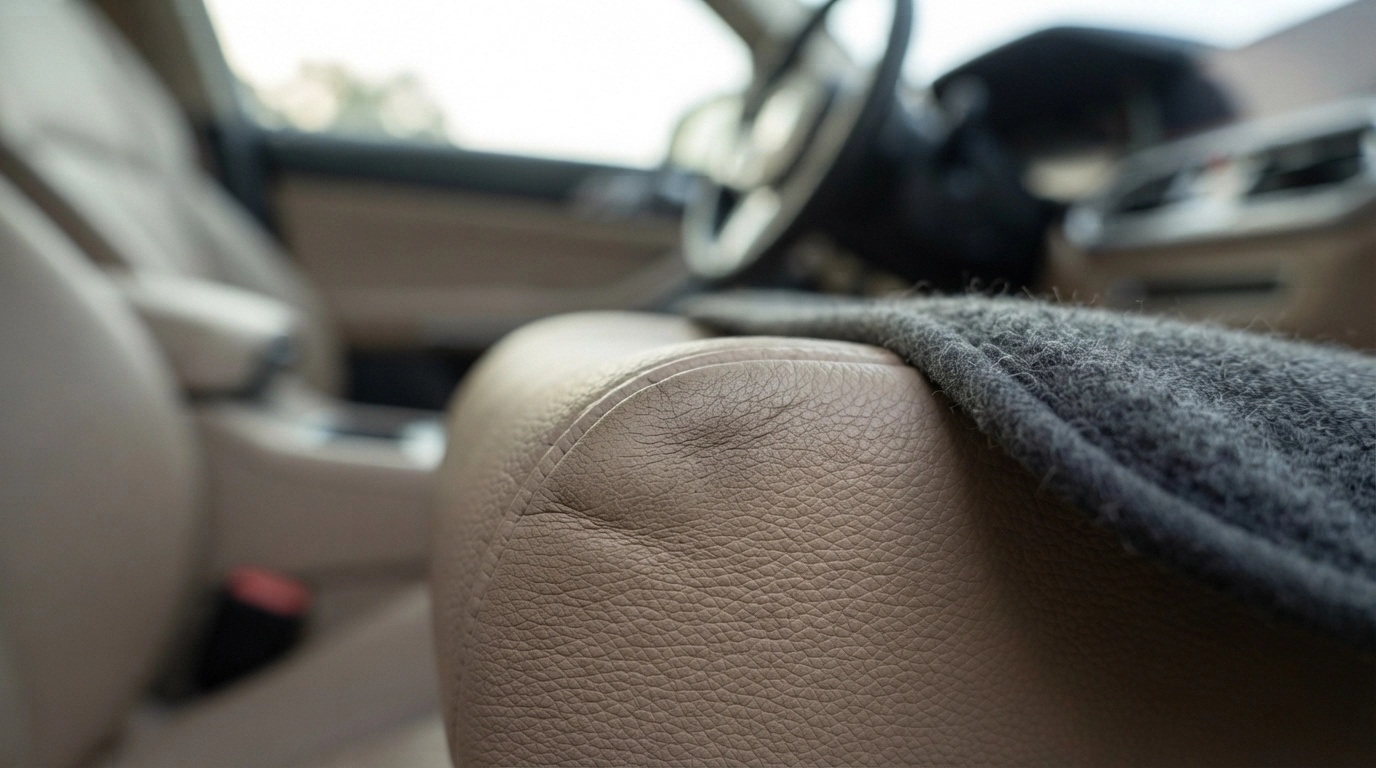
A seat cover damages leather mainly through repeated friction, trapped moisture, heat, dye transfer, or pressure. None of these happen overnight, which is why slow damage often goes unnoticed.
I learned this on a used sedan with light tan leather. The cover looked fine from above, but the seat bolster had dulled where the loose fabric creased and rubbed.
Can friction wear down leather?
Yes, friction is the most common cause of cover-related wear. Every entry and exit slides your weight across the seat edge, and a shifting cover adds a second rubbing surface.
Bolsters take the worst of it, since they flex and bear weight as you turn into the seat. Rough backing, exposed zips, and thick seams raise the risk, mainly on high-wear areas.
- Choose a smooth, soft backing that sits flat against leather.
- Avoid covers with rough mesh or hard trim on the contact side.
- Smooth out folds before you drive, since a fold becomes a wear line.
Does trapped moisture harm leather?
Yes, trapped moisture can dull leather and, over time, weaken its finish. Sweat, rain on clothes, and spilled drinks can stay damp under a sealed cover.
Hot climates make this worse, since heat plus dampness creates a warm, closed space. That mix can also leave a musty smell that lingers after you remove the cover.
Perforated leather needs extra care here, since small holes can hold moisture and dirt. A breathable cover helps, but it does not replace drying and cleaning.
Can colour or dye transfer to leather?
Yes, dye transfer happens, mainly from dark, cheap, or wet covers onto light leather. New covers are the highest risk, since excess dye has not washed out yet.
Wet jeans, sunscreen, and damp towels can speed the transfer. Light tan, cream, and grey leather show marks first, even when the stain feels faint at first.
- Wash a new fabric cover before first use, if its care label allows it.
- Test a dark cover on a hidden seat area for a few days.
- Wipe light leather promptly after it gets wet or stained.
Do tight straps and seams leave marks?
Yes, tight straps, buckles, and bunched fabric can press lasting creases into leather. The risk rises when a cover is one size too small or pulled hard to fit.
Leather softens with heat, so a strap that feels firm on a cold morning can bite deeper on a hot afternoon. Check the seat after the first week, not just on fitting day.
Can a seat cover block a side airbag?
Yes, a non-compatible cover can slow or block a seat-mounted side airbag. Many cars hide side airbags in the outer seat bolster, where a cover sits tightest.
This is a safety risk, not just a cosmetic one. Use only covers marked side-airbag compatible for your seat type, and keep seams clear of the airbag zone.
Pro tip: Check your owner’s manual and the airbag labels on your seats before fitting any cover, and confirm side-airbag compatibility with the cover maker if the listing is unclear.
Section takeaway: Most cover damage is slow, preventable wear from fit, friction, heat, and moisture, plus one serious safety check for side airbags.
When Do Seat Covers Protect Leather Instead?
Seat covers protect leather best when daily use would otherwise wear, stain, or fade it faster than a good cover would. That trade-off favours covers for many everyday drivers.
Sun is a clear example, since parked cars bake seats through glass for hours. A light-coloured cover shades the leather and cuts direct UV exposure on the top surface.
Spills tell a similar story, since coffee, juice, and muddy shoes reach a cover first. A cover you can remove and wash beats scrubbing the same spill from leather seams.
- Pets: Claws and fur stay on the cover, not in leather grain and stitching.
- Kids: Snacks, drinks, and muddy boots meet a washable layer first.
- Work use: Tools, dusty clothes, and wet jackets add less wear to covered seats.
- Long commutes: Daily sliding wear lands on the cover, which costs less to replace than a leather repair.
Covers also help resale appearance when they keep bolsters and seat faces even in tone. Buyers notice worn bolsters first, and even wear looks better than a shiny, rubbed patch.
That said, a cover does not fix neglected leather. If a spill soaks through, lift the cover and deal with the seat underneath, or the stain can set while hidden.
For help after a spill, read how to remove stains from a car seat before the mark dries into the finish.
Section takeaway: Covers earn their place when sun, spills, pets, or daily wear would damage leather faster than a soft, breathable cover will.
Which Seat Cover Materials Are Safest for Leather?
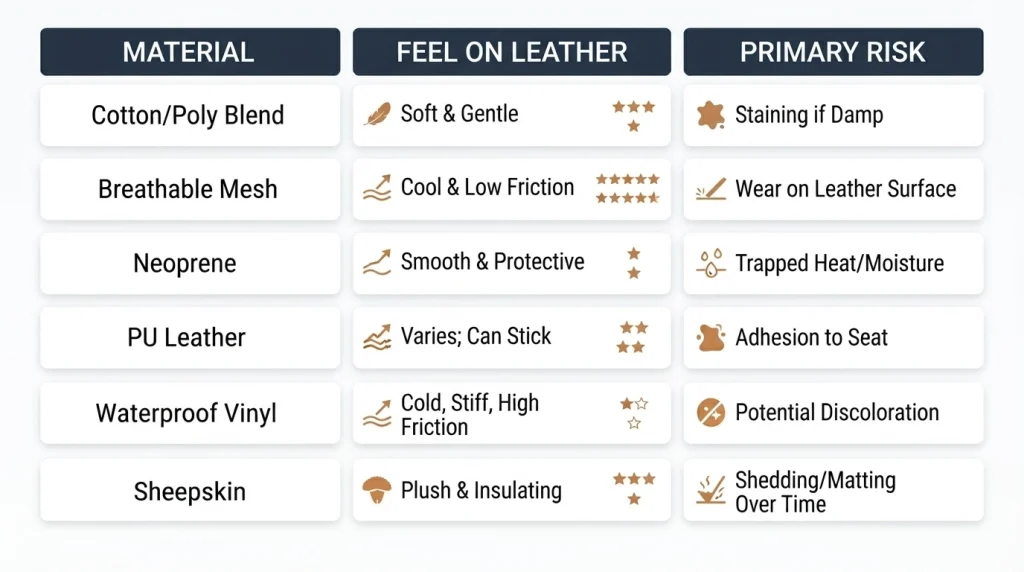
Soft, breathable fabrics with a smooth backing are usually safest for leather. Hard vinyl, rough mesh, and stiff plastic backings raise the risk of rubbing and heat buildup.
Material choice matters more than brand claims, since the layer touching leather does the real work. Feel the backing with your hand, and check for hard seams on the seat face and bolster areas.
| Cover material | Feel on leather | Main risk | Best for |
|---|---|---|---|
| Cotton or polyester blend | Soft and breathable | Can shift if too loose | Daily driving and hot climates |
| Mesh or breathable fabric | Light with good airflow | Rough mesh can rub bolsters | Summer use and sweaty commutes |
| Neoprene | Snug and water-resistant | Can trap heat and moisture | Wet gear, pets, and spill-prone use |
| Leather or PU leather cover | Smooth and close-fitting | Stiff seams can press marks | A factory-style look |
| Waterproof vinyl or PVC | Sealed and easy to wipe | High heat and moisture risk | Short-term mess protection only |
| Sheepskin or faux fur | Soft and warm | Can hold dust and heat | Cold weather comfort |
Light colours help in sunny cars, since they absorb less heat than black covers. That small choice can keep both the cover and the leather cooler on a parked summer day.
Washing matters too, since a dirty cover grinds grit against leather. Learn how to wash a car seat cover without damaging it so grit, salt, and sunscreen do not stay in the fabric.
- Pick a soft backing with no hard plastic grip dots on leather contact areas.
- Pick a snug, seat-specific shape over a loose universal fit.
- Pick breathable fabric for daily use, and save sealed vinyl for short, messy jobs.
Section takeaway: Breathable, soft-backed, seat-specific covers protect leather best, while sealed or rough covers trade spill protection for heat and friction risk.
How Do You Fit and Maintain Covers Without Harming Leather?
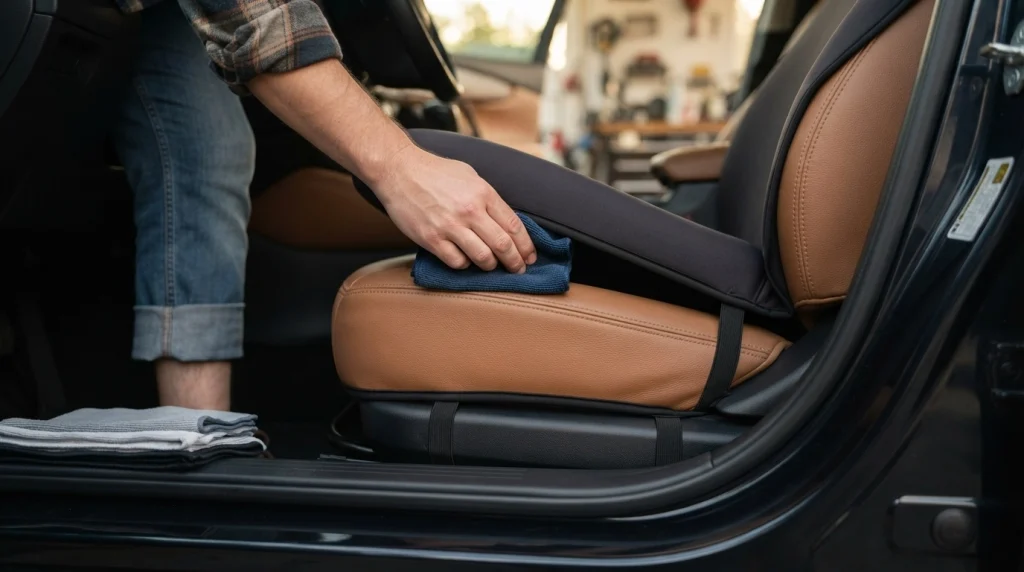
Fit covers on clean, dry leather, keep them smooth and snug without overtightening, and lift them monthly for a check. That routine prevents most slow damage before it becomes visible.
Start with the seat itself, since dirt under a cover acts like sandpaper. Vacuum the seat, wipe it with a leather-safe cleaner, and let it dry fully before fitting.
Conditioning helps only if your leather type allows it, so follow the owner’s manual or cleaner label. Coated leather often needs cleaning more than heavy conditioner, and excess product can sit under a cover.
- Check the side-airbag label on your seat and choose a compatible cover design.
- Clean and dry the leather, then fit the cover without forcing straps or hooks.
- Smooth the seat face and bolsters, and remove folds, twists, and bunched fabric.
- Secure straps just enough to stop shifting, with no hard buckle pressing leather.
- Test the seat position, recline, and headrest, then recheck fit after one week.
After fitting, build a simple monthly habit that takes about 10 minutes per seat. Lift the cover, vacuum crumbs, wipe the leather, and look for dull patches, creases, or damp spots.
If the leather feels damp, leave the cover off until the seat dries. That pause costs little time and prevents moisture from sitting against the finish for weeks.
When you need to take a cover off for a wash, follow a careful routine to remove a car seat cover for cleaning without dragging hooks or clips across the leather.
For the seat underneath, use a gentle method to clean a car seat safely, and test any cleaner on a hidden area first. Harsh chemicals can strip coating faster than a cover ever would.
Pro tip: For airbag, heated-seat, and ventilation questions, trust your owner’s manual and NHTSA safety guidance over a cover listing that makes a vague safety claim.
Section takeaway: Clean first, fit snug but not tight, and check monthly, since most cover damage comes from what stays hidden underneath.
Should You Use Seat Covers on Leather Seats?
Yes for most daily drivers, no for some special cases, and it depends on your seats, climate, and habits. Use the checklist below as a fast decision test.
Choose covers if you park in strong sun, carry pets or kids, eat in the car, or commute daily. In those cases, the cover takes wear that leather would otherwise absorb every day.
Skip or rethink covers if your seats have complex side airbags, built-in ventilation you use daily, or very light, soft leather you want to show off. A poor cover can dull that look and block airflow you paid for.
- Use covers when: Sun, spills, pets, work clothes, or long commutes wear seats fast.
- Pause when: You cannot confirm side-airbag compatibility for your exact seat.
- Skip when: You prefer the leather look and clean the seats often already.
- Reconsider when: A cover shifts, bunches, or traps heat despite refitting.
Heated and ventilated seats need a separate check, since thick covers can mute heat and block airflow. Test heat and ventilation after fitting, and remove a cover that leaves seats slow to warm or cool.
Seat condition also affects long-term value, and Kelley Blue Book and Edmunds both treat interior condition as part of a car’s appeal. Covers help most when they keep wear even, not when they hide damage for years.
Consumer Reports is also a useful cross-check for car care and product claims, since its testing approach favours measured results over marketing copy. Compare its guidance with your manual before you trust a cover claim.
Section takeaway: Covers make sense when real daily wear beats cover risk, and they fail when fit, airflow, or airbag safety cannot be confirmed.
Frequently Asked Questions
Do seat covers cause leather to crack?
Cracking usually comes from heat, sun, and dryness, not a cover alone. A tight, rough, or heat-trapping cover can speed wear on already dry leather, so keep the leather clean and check it often.
Can seat covers fade leather seats?
A cover usually reduces sun fading by shading the leather from direct light. Dye transfer is the reverse risk, since a dark or wet cover can stain light leather, mainly when new.
Are waterproof seat covers bad for leather?
Waterproof covers block spills well, but sealed vinyl can trap heat and sweat against leather. Use them for short, messy jobs, and choose breathable covers for daily driving.
Do seat covers affect heated seats or side airbags?
Thick covers can mute heated seats and block ventilation, while non-compatible covers can interfere with seat-mounted side airbags. Check your manual, test heat after fitting, and use only airbag-compatible designs.
How often should I remove seat covers to check leather?
Check underneath at least once a month, and sooner after spills, rain-soaked clothes, or long hot spells. Look for damp spots, dull bolsters, creases, and any colour transfer.
Should I condition leather before fitting seat covers?
Clean the leather first, then condition only if your leather type and product label allow it. Let the seat dry fully before fitting, since trapped conditioner and moisture can dull the finish.
Final Takeaway
Seat covers are not leather’s enemy, and they are not a set-and-forget shield either. The best result comes from a soft, breathable, seat-specific cover that fits well and leaves side airbags clear.
As of 2026, my garage rule stays simple: clean first, fit snug, check monthly, and remove any cover that shifts, overheats, or hides damp leather. Do that, and covers will protect your leather far more than they wear it.

Daniel Brooks is an automotive writer and product researcher focused on car accessories, car tech, maintenance, and practical driving guides. At Plug-in Car World, he helps drivers make smarter automotive decisions through honest reviews and research-driven content.
