Can Bed Bugs, Lice or Scabies Live on a Car Seat? Yes — Here’s How Long
Quick Answer
Yes, bed bugs, lice, and scabies can all end up on a car seat, but they do not live there the same way. Bed bugs can hide in seams and under a child car seat for weeks or months, while lice and scabies mites usually survive off a person for only a short time. The safest first step is to vacuum every seam, wash what you can, and use heat or cold the right way, as shown in our guide to how to clean a car seat safely.
How long each pest can last
- Bed bugs: They can hide and wait for a blood meal for weeks, and often much longer in a cool, quiet car.
- Head lice: They need a human head to feed and usually die within a day or two off the scalp.
- Body lice: They live mainly in clothing and seams, so a car seat is less likely than a coat or blanket.
- Scabies mites: They can live off skin for a few days, so a recently used seat can still pass them on.
- Child car seats: They need gentler cleaning than an adult seat, so always check the manual first.
Do this first
- Vacuum seams, buckles, and the gap under the seat, then empty the vacuum outside.
- Wash removable covers and soft items on hot water if the label allows it.
- Do not use a bug bomb inside a closed car or on a child car seat.
I’ve pulled a child car seat out of a car and found crumbs, a lost sock, and a smell I could not place. That tight, warm space is easy to forget until something starts biting, itching, or showing up in the seams.
This guide covers adult car seats and child car seats, because the answer changes a little for each one. You’ll learn how long each pest can live, how to tell them apart, and how to clean the seat without ruining the fabric, foam, or safety parts.
In This Guide
- Can Bed Bugs Live on a Car Seat?
- Can Lice Live on a Car Seat?
- Can Scabies Live on a Car Seat?
- Bed Bugs vs Lice vs Scabies on a Car Seat
- How Do Bed Bugs, Lice, and Scabies Get Into a Car?
- How to Tell What Is on Your Car Seat
- How to Get Rid of Bed Bugs, Lice, and Scabies From a Car Seat
- Can You Still Use the Car Seat After Treatment?
- How to Keep Pests Out of Your Car Seat
- Frequently Asked Questions
Can Bed Bugs Live on a Car Seat?
Yes, bed bugs can live on a car seat. They do not need a bed, and they do not need to stay on your skin.
They hide in dark, tight spots during the day. A car seat gives them plenty of those spots.
Where do bed bugs hide in a car?
Bed bugs love seams, piping, stitching, and the small gap where the backrest meets the base. They also hide under a child car seat, behind headrests, and inside seat pockets.
Leather seats are not safe by default. The bugs may not live in smooth leather, but they can still hide in the seams, the stitching, and the plastic trim around the seat.
Fabric seats are harder to check. The weave gives them cover, and a dark stain or shed skin can blend in fast.
How long can bed bugs live in a car without feeding?
Bed bugs can go weeks without a blood meal. In a cool car that sits unused, they can often last much longer.
That is why one ride is not the whole story. A bug can hitch a ride on Monday, hide for days, and bite on a long drive the next week.
Do bed bugs live in a child car seat?
Yes, they can hide in a child car seat too. The harness slots, the cover seams, and the foam underneath are all good hiding places.
Check the cover edge, the buckle area, and the space where the seat touches the vehicle seat. Look for tiny rust-colored bugs, pale shed skins, or small dark spots.
Section Takeaway: Bed bugs are the biggest long-term risk of the three, because they can hide in a car seat for weeks and wait for their next meal.
Can Lice Live on a Car Seat?
Lice can end up on a car seat, but they do not live there for long. They need a human host to feed and stay warm.
That short window still matters. If a child with head lice just rode in the seat, the next rider can pick up a louse from a headrest or cover.
How long can head lice live off a person?
Head lice usually die within one to two days away from a human scalp. They dry out and starve fast without blood.
Their eggs, called nits, need the warmth of a scalp to hatch. A nit that falls onto a cool car seat is far less likely to hatch and survive.
What about body lice and pubic lice?
Body lice live mainly in clothing, not on skin. They hide in seams and only move to skin to feed.
That makes a coat, a blanket, or a bag left on a car seat more risky than the seat itself. Pubic lice also need close body contact and do not set up a home in a car seat.
Can lice eggs hatch on a car seat?
It is unlikely, but not impossible in a warm car. The seat would need to stay warm and close to body heat for the egg to have a real chance.
Do not rely on luck here. Vacuum the headrest and wash the cover if you can, and treat the person, not just the car.
Section Takeaway: Lice are a short-term car seat risk, so quick vacuuming and washing matter more than a long treatment plan.
Can Scabies Live on a Car Seat?
Yes, scabies mites can live on a car seat for a short time. They burrow into skin to live and lay eggs, but they can survive off the body for a few days.
That makes a shared car seat a real, if lower, risk than shared bedding or clothing. The risk is highest right after an infested person sat there for a long ride.
How long can scabies mites survive off skin?
Scabies mites usually live off a person for two to three days. Cool, dry air shortens that time, while warm, humid air can help them last a bit longer.
They do not fly or jump. They move by crawling, so they need direct contact with skin, fabric, or a surface that just touched skin.
How do scabies spread in a car?
They spread when skin, clothing, or a blanket touches the seat for a long time. A short ride with light contact is lower risk than a long nap against the seat.
A child car seat can hold mites in the fabric for a day or two. That is why you should clean it soon after an infested child uses it.
Do scabies live in the foam inside a seat?
No, scabies mites do not burrow into foam or live deep inside a seat. They stay on the surface fabric, in seams, or in soft items left on the seat.
That is good news for cleaning. A good vacuum, a hot wash for covers, and time away from use can break the cycle.
Section Takeaway: Scabies mites are a short-term risk, but a seat used in the last two to three days should still be cleaned before the next rider uses it.
Bed Bugs vs Lice vs Scabies on a Car Seat
These three pests look different, bite different, and need different cleaning. Mixing them up can waste time and leave the real problem in the seat.
A bed bug is a small, flat, reddish-brown insect that hides in seams and feeds on blood at night. A louse is a tiny, wingless insect that lives on a human host and feeds often. A scabies mite is a microscopic mite that burrows into skin and causes intense itching, often worse at night.
| Pest | Can it live on a car seat? | How long off a person? | Main risk in a car |
|---|---|---|---|
| Bed bugs | Yes, for weeks or months | Weeks, often longer when cool | Hiding in seams and under child seats |
| Head lice | Only briefly | Usually 1 to 2 days | Headrest and cover after a recent ride |
| Body lice | Rarely on the seat itself | Days in clothing seams | Coats and blankets left in the car |
| Scabies mites | Yes, for a few days | Usually 2 to 3 days | Long skin or fabric contact with the seat |
Use the table as a quick check, not a diagnosis. If you see bites, itching, or bugs you cannot name, take a clear photo and ask a pest professional or a clinician for help.
Section Takeaway: Bed bugs need a long, careful clean, while lice and scabies need a fast clean and treatment of the person who carried them.
How Do Bed Bugs, Lice, and Scabies Get Into a Car?
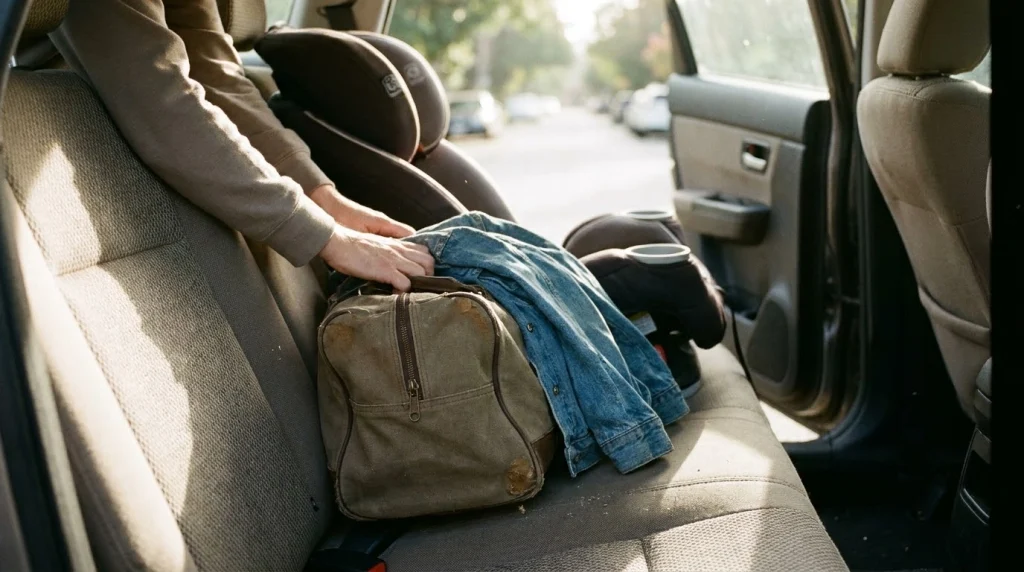
They rarely walk into a car on their own. They ride in on people, bags, clothes, and used seats.
Once they are in, a warm car with soft fabric makes it easy for them to stay. The trick is to find the ride they took in.
Common ways bed bugs get into a car
- Used car seats: A secondhand child seat or adult seat can carry bugs in the seams.
- Luggage and bags: A bag set on an infested bed or floor can bring bugs into the trunk or back seat.
- Rideshares and taxis: A previous rider can leave a bug behind without knowing it.
- Moving boxes: Boxes stored near a bed or couch can carry bugs into the car.
Common ways lice and scabies get into a car
- Shared headrests: A head resting on a seat can leave lice behind for a short time.
- Shared blankets: A blanket used by an infested person can transfer lice or mites to the seat.
- Long car naps: A child sleeping against a seat gives mites more time to move.
- Used clothing: A coat tossed on the seat can carry body lice in its seams.
I once helped a friend check a used child seat from a yard sale. The shell looked clean, but the cover seam had a cluster of tiny dark spots.
We passed on that seat. A cheap seat is not a deal if it brings bed bugs home.
Section Takeaway: Most car seat pests arrive on something else, so check bags, blankets, coats, and used seats before you blame the car.
How to Tell What Is on Your Car Seat
Do not guess from a bite alone. Bites can look alike, and itching can come from dry skin, heat, or a new fabric.
Look for the pest, its signs, and where it hides. That will tell you more than a red mark ever will.
What do bed bug signs look like?
- Live bugs: Apple-seed-shaped, flat, reddish-brown insects, about 4 to 7 mm long.
- Shed skins: Pale, empty shells in seams and under the seat.
- Dark spots: Small black or rust-colored marks from droppings, often in a line along a seam.
- Bites: Itchy red welts, often in a cluster or a rough line, usually found in the morning.
What do lice signs look like?
- Live lice: Tiny, gray-white insects near the scalp, not in the middle of a seat.
- Nits: Small white or yellow eggs stuck firmly to hair shafts.
- Itching: Strong scalp itch, often behind the ears and at the back of the neck.
What do scabies signs look like?
- Intense itch: Itching that gets worse at night and does not stop after a shower.
- Thin lines: Tiny raised lines or burrows between fingers, on wrists, or around the waist.
- Rash: Small red bumps or blisters, often where skin touched fabric for a long time.
If you find live bed bugs, do not move the seat into your house. Bag it, seal it, and get advice from a pest professional before you carry it inside.
Section Takeaway: Look for bugs, skins, droppings, and burrows first, because bites alone cannot tell bed bugs, lice, and scabies apart.
How to Get Rid of Bed Bugs, Lice, and Scabies From a Car Seat
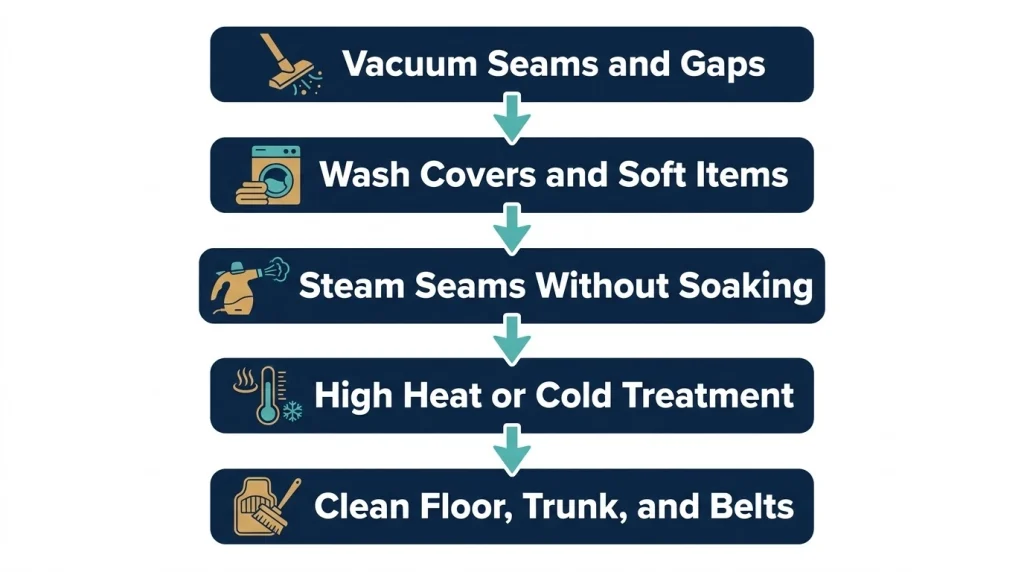
Start with the simplest tools first. Vacuum, heat, and washing do more than most sprays, and they are safer for a child seat.
Do not use a bug bomb in a car. It can leave residue on fabric and plastic, and it often pushes bugs deeper into seams instead of killing them.
Step 1: Vacuum every seam and gap
Use a crevice tool on every seam, stitch line, buckle slot, and seat track. Lift the child seat out and vacuum the vehicle seat underneath it too.
Empty the vacuum canister or bag into a sealed bag outside, away from the house. Do not empty it in the garage or near the front door.
Step 2: Wash covers and soft items
Remove the cover if your manual allows it. Wash it on hot water and dry it on high heat if the label allows that.
For a baby seat, use a mild cleaner made for that seat. You can find the right type in our guide to what cleaner is safe for a baby car seat.
If the cover cannot be washed, vacuum it twice and leave it in direct sun for a few hours. Sun helps, but it is not a full treatment on its own.
Step 3: Use steam the right way
Steam can kill bed bugs, lice, and mites on contact if it is hot enough. Move the steamer slowly along seams and let the heat reach the fabric.
Do not soak the seat. Too much water can trap dampness in foam and cause mold later.
Safety note: Let the seat cool and dry fully before you use it again, and keep children away from hot steam. Check your owner’s manual before you steam a child car seat.
Step 4: Use heat or cold for items you cannot wash
Put small soft items in a dryer on high heat for 30 minutes if the label allows it. For items that cannot take heat, seal them in a bag and freeze them for several days if you have space.
A hot car is not a reliable treatment. The temperature inside a car is uneven, and the seats in the shade may never get hot enough.
Step 5: Treat the car, not just the seat
Vacuum the floor, the trunk, and the seatbelts too. Bed bugs can hide in the carpet edge and under floor mats.
For a bad bed bug case, call a pest professional who treats cars. They can use heat or a targeted treatment that is safe for the interior.
You can also remove the cover the right way first, so steam and vacuuming can reach the foam and straps. See how to remove a car seat cover for cleaning before you pull at seams or straps.
Section Takeaway: Vacuum, hot washing, and steam beat bug bombs for a car seat, and a professional is the right call for a heavy bed bug problem.
Can You Still Use the Car Seat After Treatment?
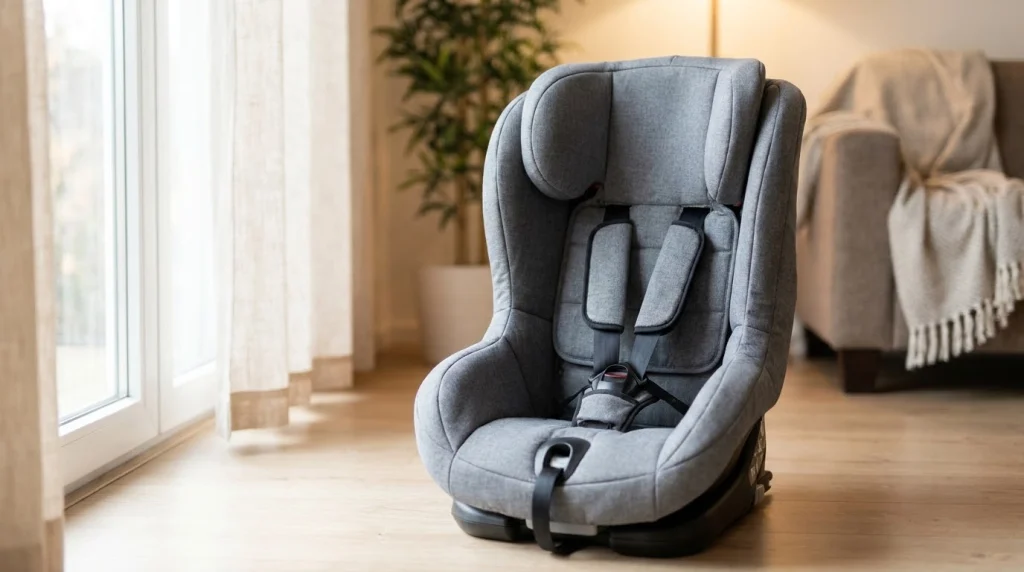
Yes, in most cases you can use the seat again after a good clean. The key is to check the seat, not just the smell.
A child car seat has stricter rules than an adult seat. The harness, buckle, and shell must all work the way the maker designed them.
What to check on a child car seat
- Harness straps: They should lie flat, pull smoothly, and show no fraying or sticky residue.
- Buckle: It should click cleanly and release with normal pressure, with no grit inside.
- Shell and foam: They should be dry, firm, and free of cracks or soft spots.
- Cover fit: The cover should fit tight, with no loose fabric near the harness slots.
When should you replace a child car seat?
Replace it if the foam is soaked through, the straps were cleaned with harsh chemicals, or the buckle no longer works right. Do not use a seat with a cracked shell or a missing part.
Check your manual for cleaning limits. Some makers ban bleach, harsh solvents, and machine washing for straps.
Wet foam is a common problem after a deep clean. Learn what to watch for in can car seat foam or styrofoam get wet before you soak a seat or leave it damp overnight.
For general car seat safety checks, the NHTSA site has car seat and booster seat guidance for parents. Use it to confirm fit, use, and recall checks.
Section Takeaway: A cleaned child seat is safe to use again only if the harness, buckle, foam, and cover all pass a hands-on check.
How to Keep Pests Out of Your Car Seat
Prevention is easier than a full clean. A few small habits can stop most hitchhikers before they settle in.
Think of your car as a second living room. If you would not bring a used mattress into your bedroom without a check, do not bring a used seat into your car without one.
Simple habits that help
- Inspect used seats: Check seams, straps, and the underside with a flashlight before you buy or accept one.
- Keep bags off seats: Put luggage in the trunk and keep it off beds and hotel floors.
- Wash travel items: Wash blankets and clothes after a trip, and vacuum the car the same day.
- Use a washable cover: A good cover makes it easier to wash away lice, mites, and crumbs.
What about seat covers and car covers?
A washable, waterproof seat cover can protect fabric from spills and pests. It also gives you a layer you can remove and wash fast.
See the best options in best waterproof car seat covers if you want a cover that is easy to clean after trips, kids, or pets.
Bugs can also hide under an outdoor car cover, so do not forget the outside of the car. Our guide to how to prevent bugs from hiding under a car cover covers that side of the problem.
For bed bug facts and control steps, the EPA bed bug page is a good starting point. For lice and scabies, the CDC parasites page links to current guidance.
Section Takeaway: Inspect used seats, wash travel gear fast, and use a washable cover to make the next clean much easier.
Frequently Asked Questions
Can bed bugs live in a car for months?
Yes, bed bugs can live in a car for weeks or months if they have a hiding place. They can wait a long time between meals, especially in a cool car that sits unused.
Can lice live on a leather car seat?
Lice can sit on leather for a short time, but they cannot live there for long. They need a human scalp to feed, and they usually die within one to two days off a person.
Can scabies spread from a car seat to a child?
Yes, scabies can spread from a recently used car seat, but the risk is lower than from shared bedding. The risk is highest if an infested person sat or slept on the seat in the last two to three days.
Will a hot car kill bed bugs?
A hot car may kill some bed bugs, but it is not a reliable treatment. Heat is uneven inside a car, and bugs in shaded seams or under a seat may never get hot enough.
Can I use bug spray on a child car seat?
No, do not spray a child car seat with bug spray or a bug bomb. The residue can irritate skin and lungs, and it can damage straps and buckles.
How do I know if my car has bed bugs or just dirt?
Look for live bugs, shed skins, and dark spots along seams. Dirt wipes away, but bed bug droppings often leave a rust-colored mark and shed skins stay in the seam.
Clean the seat, vacuum the seams, and treat the person who may have carried the pest. If you still see live bed bugs after two careful cleans, call a pest professional.
Do not wait for a small problem to become a car-wide one. A quick check today can save you a full interior treatment later, and it keeps the next rider safe too.

Daniel Brooks is an automotive writer and product researcher focused on car accessories, car tech, maintenance, and practical driving guides. At Plug-in Car World, he helps drivers make smarter automotive decisions through honest reviews and research-driven content.