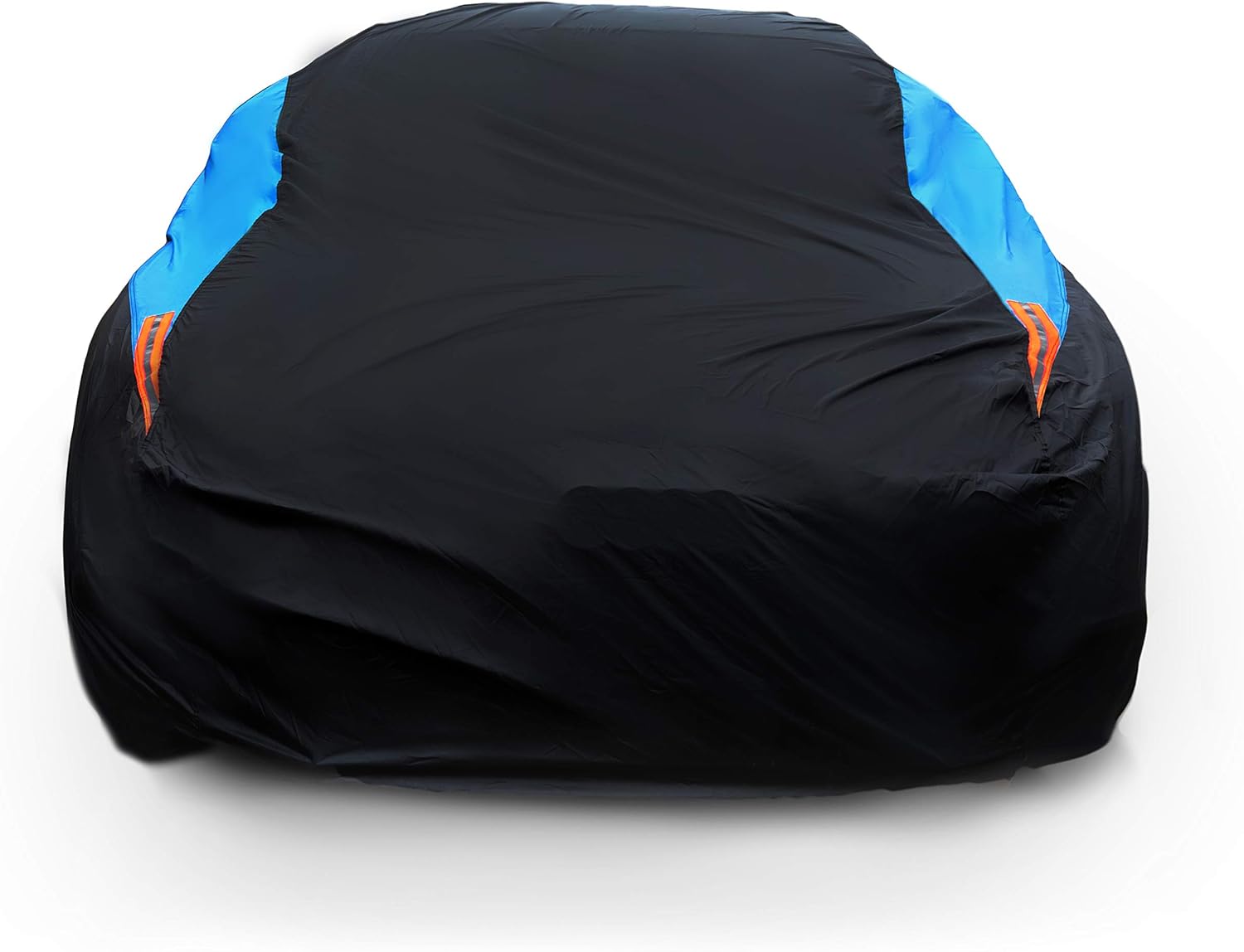
What to Do If Your Car Cover Is Stolen (Step-by-Step)
⚡ Quick Answer
If your car cover is stolen, check the area first to rule out wind or removal by a neighbor. Then file a police report — it costs nothing and creates a paper trail. Check your homeowners or renters insurance, since most auto policies don’t cover a car cover. Then replace it and secure the new one with a cable lock.
What to do right now — in order:
-
1
Check the area — confirm it’s stolen, not blown off or moved -
2
File a police report — even for small thefts, this is required for insurance -
3
Call your homeowners or renters insurer — auto insurance won’t help here -
4
Replace and secure the new cover with a cable lock through the grommets
Key facts to know:
- Auto insurance: doesn’t cover a stolen car cover — it’s not part of the vehicle
- Homeowners/renters: may cover it as personal property — check your deductible first
- Cable locks: thread through grommets under the car to stop future theft fast
You walk out to your car and the cover is gone. No wind. No neighbor. Just gone — and you just paid good money for it. I’m Daniel Brooks, and this is exactly the situation we’re going to solve right now.
Car covers are easy targets. They’re light, portable, and can be resold or reused quickly. But knowing what to do in the next 30 minutes makes all the difference — both for any insurance claim and for protecting your car going forward.
This guide covers every step: from confirming the theft to filing a claim to securing your next cover so it doesn’t happen again.
📌 Key Takeaways
-
→
Auto insurance won’t cover a stolen car cover — it’s treated as personal property, not a vehicle part. -
→
A police report is required before you can file any insurance claim — even for small items. -
→
Homeowners or renters insurance may reimburse you under off-premises personal property coverage. -
→
A cable lock threaded through grommets under the car is the single best theft deterrent for any cover.
What to Do First When Your Car Cover Is Stolen
The moment you realize your cover is gone, take a breath and work through these steps in order. Acting fast — especially with the police report — gives you the best chance of a smooth insurance claim and a faster resolution.
🔢 Step-by-Step: Immediate Action After Car Cover Theft
-
1
Confirm the cover is actually stolen
Check nearby bushes, drains, and the road around your car. Strong wind can pull an unsecured cover 50+ feet away. Rule this out before calling anyone.
-
2
Check for security camera footage nearby
Look for cameras on nearby homes, shops, or parking lots. If you see one, note the address. You can give this to police when you file the report.
-
3
File a police report — online or in person
Most cities let you file minor theft reports online in under 10 minutes. Have the cover’s brand, color, and approximate value ready. This report number is required for any insurance claim.
-
4
Photograph the area where the cover was
Take photos of your car without the cover, the parking location, and any signs of forced removal. These photos support both your police report and insurance claim.
-
5
Check online marketplaces for your cover
Search Facebook Marketplace, Craigslist, and OfferUp for your cover’s brand and color. Car cover theft is often opportunistic — thieves resell locally within hours. If you spot it, don’t confront anyone. Send the listing to police.
-
✓
Contact your insurance provider
Call your homeowners or renters insurance — not your auto insurance. Have your police report number and the cover’s purchase price ready when you call.
So why file a police report for something as small as a car cover? Because without that report number, no insurer will process a theft claim. It takes 10 minutes and costs nothing — and it creates an official record if the thief strikes again in your area.
According to the National Insurance Crime Bureau (NICB), property theft from vehicles — including accessories — is dramatically underreported. Reporting every incident helps local law enforcement spot patterns and catch repeat offenders faster.
Does Insurance Cover a Stolen Car Cover?
Here’s the answer most people don’t expect: your car insurance almost certainly won’t help. A car cover is personal property — it’s not a built-in part of your vehicle — so it falls outside the scope of comprehensive auto coverage, which only covers the car itself and its permanently attached components.
But here’s the good news. Your homeowners or renters insurance very likely does cover it. Most policies include what’s called “off-premises personal property coverage.” This protects your belongings even when they’re away from your home — including items stored on or around your parked car.
📋 What determines whether your insurance pays out:
-
Your deductible: If your cover cost $80 and your deductible is $500, filing a claim won’t make financial sense. Do the math first. -
Policy type: Renters and homeowners policies cover personal property off-premises. Liability-only policies do not. -
Cover value: Insurers reimburse actual cash value (ACV) — meaning the current depreciated worth, not what you paid. -
Police report: Every insurer will require a filed theft report before processing your claim — no exceptions.
You might be thinking: “My cover only cost $60 — is it even worth calling my insurer?” In many cases, no. If your deductible exceeds the cover's value, skip the claim and replace it out of pocket. But for premium custom-fit covers that cost $150–$400, a claim can absolutely be worth it.
For a broader look at how personal property theft works after vehicle-related incidents, the team at Insurance.com breaks down property theft claims in detail — including the off-premises coverage rules that most drivers don’t know about.
How to Replace a Stolen Car Cover the Right Way
Once the report is filed, it’s time to replace your cover — and this is the moment to upgrade, not just repeat the same purchase. The cover that was stolen was likely an easy target. A better-fitted, heavier cover is harder to steal and protects your car better.
Here’s how the main cover types compare so you can choose the right one for your situation:
Custom-fit covers are harder to strip quickly, and their built-in security grommets let you run a cable lock — which makes theft far less likely.
When shopping for a replacement, look for these 3 features: built-in security grommets along the bottom hem, a multi-layer outdoor fabric rated for UV and rain, and an elastic hem that hugs your car’s body panels. These features cost a little more upfront but make the cover far less appealing to a thief in a hurry.
⚠️ Warning
Don’t buy a replacement without checking if your insurer will reimburse you first. Get the claim number and settlement amount before you spend. You may be entitled to actual cash value — apply that toward an upgraded cover instead.
How to Lock Your Car Cover to Prevent Future Theft
A cable lock is the single most effective tool for stopping car cover theft. It threads through the grommets sewn into the bottom hem of your cover, runs under the car, and locks with a padlock — making it nearly impossible to remove the cover without a key or bolt cutters.
The installation takes under 3 minutes and costs less than $20. Most car owners who’ve had a cover stolen once never skip this step again.
🔢 Step-by-Step: How to Install a Car Cover Cable Lock
-
1
Place the cover on your car as normal
Smooth it over the body panels and let the bottom hem hang at the door sills. Find the grommets — they’re small metal rings sewn into both sides of the hem.
-
2
Thread the narrow cable end through one grommet
Push the narrow terminal end of the cable through the grommet on one side. Then thread it through the looped end of the cable to anchor it on that side.
-
3
Run the cable under the car to the other side
Walk the remaining cable length under the car’s chassis to the opposite grommet. Keep it flat against the ground — no need to loop it around any components.
-
4
Thread through the second grommet and lock
Push the cable end through the second grommet, then click the padlock closed through the cable’s loop. Give it a firm tug to confirm it’s secure.
-
✓
Store one key somewhere separate from the car
Keep the spare key in your home or on your keychain — not under the car or in the glove box. The lock only works if the key is truly inaccessible to a thief.
Recommended Product
Master Lock 715DAT Braided Steel Car Cover Cable with Laminated Steel Padlock, 7 ft
★★★★☆ Highly rated on Amazon
A 7-foot braided steel cable with a laminated steel padlock — specifically designed for car cover grommets and built to resist cutting, dirt, and outdoor corrosion.
As an Amazon Associate, we earn from qualifying purchases.
Beyond the cable lock, 3 other habits make a real difference. Park in lit, visible areas — thieves skip cars where they can be seen. Mark your cover’s inner hem with your license plate number using a permanent marker. And if you park outdoors regularly, choose a spot closer to foot traffic or a security camera.
How to Mark Your Cover So You Can Identify It If Recovered
If your cover turns up — at a pawn shop, online marketplace, or recovered by police — you need to prove it’s yours. Without any identifying marks, that’s nearly impossible. Adding permanent identification takes 2 minutes and could save you a $200+ replacement cost.
✅ Tip
Write your license plate number on the inner lining of the cover’s hem using a black permanent marker. Do all 4 corners. Thieves selling a marked cover take a real risk — it ties them directly to the theft. This small step dramatically reduces the cover’s resale value to a thief.
You can also sew in a fabric label with your name and phone number. These labels cost under $5 at any craft store and survive years of outdoor use. A thief won’t see it until they’ve already taken the cover — but police and pawn shops will.
Some car cover brands now include QR code patches that register to your account. If someone scans it, you’re notified. This tech is still new but it’s worth looking for when choosing your replacement cover.
What Most People Get Wrong About Car Cover Theft
Most car cover owners make at least one of these mistakes — either before the theft happens or in the hours right after it. Knowing what’s actually true puts you ahead of the situation.
📋 Common misconceptions about car cover theft:
-
“My car insurance will cover it.” It won’t. Comprehensive auto coverage protects your vehicle and its permanently installed parts — not removable accessories like a car cover. You need homeowners or renters insurance for this. -
“It’s not worth filing a police report for something so small.” Wrong. Without a police report, you can’t file an insurance claim at all. The report takes 10 minutes online and is the foundation for everything else. -
“A cheap cover isn’t worth stealing.” Thieves don’t evaluate value before they steal. Opportunistic theft — grabbing whatever is easy and fast — is the most common type. Any cover without a cable lock is a target.
💡 Key Insight
The most effective theft deterrent isn’t a better lock — it’s visibility. Parking in a well-lit, high-traffic area where someone would be clearly seen removing your cover stops most opportunistic thieves before they even approach the car.
Conclusion
A stolen car cover is frustrating, but it’s a fixable problem with clear next steps. File the police report first — everything else depends on it. Then check your homeowners or renters policy before buying a replacement.
When you do replace the cover, spend 3 minutes installing a cable lock through the grommets. It’s the one action that stops the same thing from happening twice.
Do this right now: Look up whether your city lets you file a minor theft report online. Most do. Set a timer for 10 minutes and get it done while this is still fresh.
Frequently Asked Questions
Can I file a police report for a stolen car cover?
Yes, you can and should. Most police departments accept minor theft reports online, by phone, or in person. You’ll need the cover’s brand, approximate value, and the theft location. This report number is required before any insurer will process a personal property claim.
Does car insurance cover a stolen car cover?
No. Comprehensive auto insurance covers the vehicle and its permanently installed parts — not removable accessories. A car cover is classified as personal property. Your homeowners or renters insurance is the right policy to contact, subject to your deductible and personal property limits.
Will my homeowners or renters insurance cover a stolen car cover?
It may. Most homeowners and renters policies include off-premises personal property coverage, which protects belongings stolen away from your home — including items on your parked car. Whether it’s worth claiming depends on your deductible compared to the cover’s actual cash value.
How do I lock my car cover so it won’t get stolen again?
Use a cable lock kit designed for car covers. Thread the braided steel cable through the security grommets sewn into the cover’s bottom hem, run it under the car, and padlock the two ends together. The Master Lock 715DAT is a widely used option with a 7-foot cable and laminated steel padlock.
Why do thieves steal car covers?
Car cover theft is almost always opportunistic. Covers are lightweight, portable, and easy to resell locally. A thief can remove an unsecured cover in under 30 seconds. High-quality covers — especially custom-fit ones — can sell for $80–$200 on local marketplaces, making them an easy low-risk target.
How do I identify my car cover if police recover it?
Mark the inner hem of your cover with your license plate number using a permanent marker before using it. Write it in all 4 corners. You can also sew in a fabric label with your name and contact number. Any unique marking you can describe to police counts as identifying evidence.
What’s the best way to replace a stolen car cover?
File your insurance claim first to find out what you’ll be reimbursed. Then choose a custom-fit cover with built-in security grommets — it will fit tighter and is compatible with a cable lock. Avoid universal-fit covers if you park outdoors regularly; they’re loose-fitting and easier to remove quickly.

Daniel Brooks is an automotive writer and product researcher focused on car accessories, car tech, maintenance, and practical driving guides. At Plug-in Car World, he helps drivers make smarter automotive decisions through honest reviews and research-driven content.