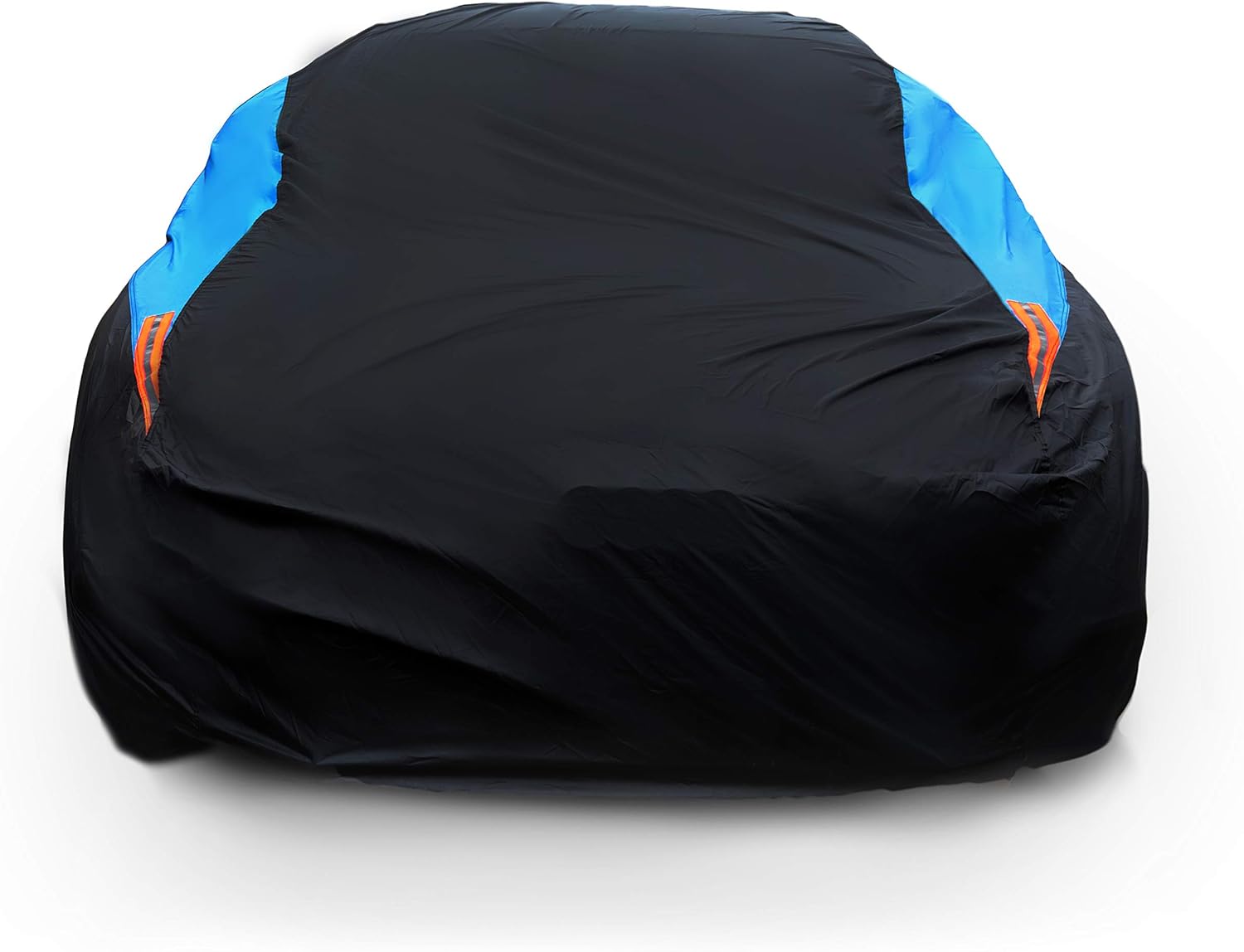
How to Prevent Car Cover Theft — 7 Proven Security Methods
⚡ Quick Answer
To prevent car cover theft, thread a vinyl-coated braided steel cable through the cover’s grommets, run it under the car, and secure it with a padlock. Add a car alarm with motion sensors and park in well-lit areas for a full layered defense that most thieves won’t bother challenging.
How to secure your car cover right now:
-
1
Thread a steel cable through the cover’s grommets and under the vehicle -
2
Secure both ends with a padlock at the cover’s hem -
3
Write your name visibly on the cover’s front panel -
4
Add a motion sensor alarm for a second layer of deterrence
Mistakes that make theft easy:
-
✓
Never skip a cable lock on an outdoor-parked cover -
✓
Don’t rely on cover weight alone — it takes 30 seconds to pull off -
✓
Avoid parking in isolated dark spots with no foot traffic
You walk out to your driveway, and your car cover is gone. Just the bare car sitting there, exposed. It’s a frustrating moment — especially when a quality outdoor cover costs $80 to $300 or more. I’m Daniel Brooks, and I’ve spent years covering car protection topics, including how simple security habits can save you from this exact situation.
Car covers are a common target for opportunistic thieves. They’re lightweight, easy to grab, and quick to resell. The good news is that a $15 cable lock can make your cover nearly impossible to steal without tools or serious effort.
Here’s exactly what you need to do to lock down your car cover — and keep it secure long-term.
📌 Key Takeaways
-
→
A cable lock kit is the single most effective way to physically secure a car cover to your vehicle. -
→
Marking your name on the cover is a stronger deterrent than writing the license plate number. -
→
Layered security — cable lock + motion alarm + smart parking — stops both casual and determined thieves. -
→
Covers with built-in grommets and reinforced hem loops are far harder to remove quickly than standard covers.
Why Do Thieves Target Car Covers?
Car covers are an easy, low-risk target. A thief can pull one off in under 30 seconds, tuck it under an arm, and walk away. There’s no alarm, no ignition to fight, and no VIN to trace.
Premium covers — especially outdoor weatherproof covers made from multi-layer fabric — resell quickly at second-hand markets. A cover that cost you $200 can be resold for $40 to $80 with almost no effort.
48 sec
One vehicle stolen every 48 seconds in the US
30 sec
Time to remove an unsecured car cover
$300
Maximum cost of a premium outdoor car cover
So if you’re wondering whether car covers really get stolen — yes, they do. It happens most often on quiet streets, overnight, and in areas with low foot traffic. The solution isn’t to stop using a cover. It’s to make yours harder and slower to take. For context on how common opportunistic vehicle-related theft is, vehicle theft prevention tips from NHTSA make clear that thieves always move to easier targets when deterred.
That’s the core principle behind every method below — add friction, and most thieves will walk away.
How to Lock a Car Cover with a Cable and Padlock
A braided steel cable threaded through your cover’s grommets and secured with a padlock is the most direct, proven way to prevent car cover theft. It takes about 2 minutes to install and turns your cover from a 30-second grab into a multi-minute chore that no casual thief will attempt.
Here’s exactly how to do it, step by step:
🔢 Step-by-Step: Car Cover Cable Lock Installation
-
1
Place the cover on your car fully
Make sure the cover is fitted correctly before threading the cable. Grommets should sit at the lower side hem, near the front and rear wheels.
-
2
Feed the cable through the driver-side grommet
Push the narrow terminal end of the cable through the grommet hole at the lower hem. Let it hang below the car.
-
3
Run the cable under the vehicle to the passenger side
Pull the cable under the car’s belly. Keep it away from hot exhaust components. Use a vinyl-coated cable to protect your undercarriage finish.
-
4
Thread the cable through the passenger-side grommet
Push the end up through the grommet on the opposite side. Both ends of the cable should now be visible on each side of the car’s lower hem.
-
✓
Loop the cable end back and lock it with the padlock
Thread the looped cable end back on itself at one side and click the padlock shut. Your cover is now anchored under the car’s own weight — a thief can’t pull it off without cutting steel.
⚠️ Warning
Never attach cable locks to soft bumper clips, plastic fascia attachments, or any moving parts. Only anchor to structural points — tow hooks, axle ends, or rigid chassis loops — to avoid vehicle damage.
Use a vinyl-coated cable, not bare metal. Bare steel cables can scratch your paint and corrode quickly. A 7-foot vinyl-coated cable fits most standard sedans and SUVs without leaving excess slack.
Recommended Product
Outdoor Car Cover Lock & Cable Security/Locking Kit (Cover-Zone)
★★★★☆ Highly rated on Amazon
A soft-coated braided steel cable with a padlock and non-scratch outer sleeve — threads through grommets and runs under the car to anchor your cover against theft and wind.
As an Amazon Associate, we earn from qualifying purchases.
Once your cable lock is set up, you’ve already solved the core problem. But a cable alone won’t stop every scenario. Next, let’s look at what to check when buying a new cover — or upgrading your current one.
What Features Should an Anti-Theft Car Cover Have?
Not all car covers are built with security in mind. If you’re buying a new cover — or looking to upgrade — these are the features that make a genuine difference when it comes to stopping theft.
A cover without grommets can’t accept a cable lock at all. That’s the first feature to check before you buy anything.
📋 Anti-Theft Car Cover Features to Look For
-
Reinforced metal grommets: Steel or brass grommets at the lower hem let you thread a cable lock without the fabric tearing under tension. -
Under-car strap system: An interior strap that clips under the vehicle traps the cover beneath the car’s own weight, resisting quick grabs. -
Fabric loops at the rear hem: Many premium covers include sewn-in strap loops that accept a padlock directly, giving you a second anchor point. -
Heavy multi-layer fabric: A cover that’s difficult to fold quickly is harder to remove fast. Thin covers come off in seconds; thick ones resist rushed removal. -
Custom fit vs. universal fit: Custom-fit covers hug the car tightly and are harder to pull off in a hurry. Universal covers slip off much more easily.
You might be thinking: “Can’t a thief just cut the fabric?” Yes — but that destroys the resale value of the cover instantly. Most opportunistic thieves won’t bother. They want the cover intact to sell it. A cable lock protects the cable attachment points; thick fabric adds time and noise to any removal attempt.
Once your cover has the right features, the next step is building the security layers around it.
6 More Ways to Stop Your Car Cover from Being Stolen
A cable lock is your first line of defense. These 6 methods build the layers around it — turning your cover from a soft target into one that most thieves will simply skip.
1. Mark Your Name Visibly on the Cover
Write your name in large, permanent marker letters on the front panel of your cover. Use your name — not your license plate number. Your name is personal, recognizable, and harder to pass off when reselling.
Some car cover brands allow you to add custom embroidery or labels during purchase. That’s even better. A marked cover signals to any thief that this item is traceable — and that removes a big part of the appeal.
2. Add a Car Alarm with Motion Detection
Most people think car alarms only protect the vehicle. Modern systems can be triggered by any tampering near the car — including someone pulling on a cover. A motion sensor set to detect nearby movement at night can trigger a loud alarm before a thief even touches the cable.
This works especially well when you’re parked overnight in a driveway or quiet street. The sound draws attention, and most thieves will abort immediately.
3. Install a Motion-Activated Security Light
Darkness gives thieves cover. A motion-activated floodlight mounted near your driveway eliminates that advantage instantly. When someone approaches your car at 2 AM, the light floods the area — and they know they’re visible.
This is one of the cheapest deterrents you can add. Basic motion flood lights cost $20 to $40. The psychological effect on would-be thieves is significant.
4. Park in High-Visibility, High-Traffic Areas
Where you park matters as much as what you lock. Aim for spots near security cameras, under bright streetlights, or near high foot traffic. Thieves target isolated, dark, and quiet locations where they won’t be observed.
According to car theft prevention advice from Cotati City Police, the more time-consuming a theft becomes, the more likely a thief will move on to an easier target. Visible parking creates that pressure.
5. Check and Tighten Security Regularly
A cable lock that’s gone slack, a padlock hasp that’s corroded, or a grommet that’s torn won’t protect anything. Check your cable tension and lock condition every 2 to 4 weeks. Vinyl-coated cables can crack in extreme cold or heat, reducing their strength over time.
Replace a worn cable before it fails — not after. Security that looks intact but isn’t offers zero real protection.
6. Use a GPS Tracker Under the Cover
A small GPS tracker hidden under the cover — attached to a magnetic mount under the wheel arch or chassis — won’t stop theft, but it gives you recovery power if the worst happens. Trackers like this cost $25 to $50 and sync with your phone.
This is especially worth doing for expensive custom-fit covers. If the cover is stolen and the tracker goes with it, you have a real chance of locating and recovering it.
💡 Key Insight
Layered security is the real answer. A cable lock alone is a good deterrent. A cable lock plus motion alarm plus smart parking turns your cover into a target almost no casual thief will choose — because there are always easier targets nearby.
What Most People Get Wrong About Car Cover Security
Most car cover owners make one of 3 security mistakes without realizing it. Each one leaves the cover more vulnerable than they think.
Myth 1: “A heavy cover is hard enough to steal.” Weight does slow removal slightly. But a practiced thief can strip even a heavy 5-layer outdoor cover in under 90 seconds. Weight is not security. A cable lock is security.
Myth 2: “Writing the license plate on the cover is enough identification.” License plates change with ownership. Your name does not. Industry experts and cover manufacturers confirm that a name on the cover is a more effective deterrent than a plate number — because it’s personal and harder to explain away during a resale.
Myth 3: “The cable only needs to go on when parked overnight.” Most car cover thefts happen during the day — in parking lots, driveways, and quiet side streets — when no one is watching. A 30-second snatch-and-walk doesn’t need darkness. Use your cable every time you leave the car covered and unattended.
✅ Tip
Keep the cable and padlock inside the cover’s storage bag. That way, every time you put the cover on, the lock is right there — no excuse to skip it.
What to Do If Your Car Cover Gets Stolen
Even with good security, theft happens. Here’s what to do immediately if your cover goes missing:
✓ Car Cover Theft Response Checklist
-
✓
Check nearby streets, dumpsters, and alleys — covers are sometimes dumped nearby after a thief decides it’s too bulky to carry -
✓
File a police report — if your cover had your name on it, it becomes a traceable item, and officers can look for it at local secondhand markets -
✓
Check local Facebook Marketplace and Craigslist listings — stolen covers often appear within 24 to 48 hours of theft -
✓
Check your home security or dashcam footage — parking mode dashcams record disturbances even when the engine is off -
✓
When replacing, buy a cover that includes grommets and order the cable lock kit at the same time — don’t wait
For broader guidance on reporting and follow-up steps, auto theft prevention guidelines from DC Metro Police outline how local authorities handle theft reports and what documentation helps recovery.
Conclusion
Stopping car cover theft comes down to one thing: adding friction. A $15 cable lock turns a 30-second snatch into a multi-minute task — and most thieves won’t bother when there are easier targets around them.
Combine that cable lock with visible name marking, a motion sensor alarm, and smart parking choices, and you’ve built a layered defense that covers nearly every realistic theft scenario.
Start right now: grab your car cover, thread a cable through the grommets, and lock it. That one action, done today, is worth more than every security tip you’ll read this week.
Frequently Asked Questions
Can you lock a car cover onto your car?
Yes. Thread a vinyl-coated braided steel cable through the grommets in the cover’s lower hem and run it under the vehicle. Secure both ends with a padlock. This anchors the cover under the car’s own weight and makes quick removal impossible without cutting the cable.
Do car covers actually get stolen?
Yes, car covers are a frequent target for opportunistic theft. A premium outdoor cover can be pulled off an unsecured car in under 30 seconds and resold at secondhand markets. They’re lightweight, easy to carry, and hard to trace — which makes them appealing to casual thieves.
What is the best way to secure a car cover?
The best method is a layered approach: a cable lock through the grommets as your primary anchor, your name written visibly on the front panel, and a motion sensor alarm as a backup deterrent. Parking in well-lit, high-traffic areas adds further protection with zero cost.
How do I keep a car cover from blowing off in wind?
Use the same cable and padlock system used for theft prevention — it also anchors the cover against wind. Under-car strap systems tighten the cover below the vehicle’s belly. A snug, custom-fit cover is far more wind-resistant than a loose universal-fit model.
Will a cable lock scratch my car’s paint?
A bare metal cable can scratch paint and corrode over time. Always use a vinyl-coated or plastic-sleeved cable, which protects both the vehicle’s undercarriage and any painted surfaces the cable might contact. Never attach the lock hardware directly to painted panels.
Is writing my name on the cover better than writing the license plate?
Yes. Car cover manufacturers and security experts both recommend using your name rather than your license plate. A personal name is harder to dismiss during resale and signals directly to thieves that the item is traceable to a specific person — which eliminates much of the appeal.
Does a motion sensor alarm work for car cover theft protection?
Yes. A motion sensor alarm triggers when someone approaches or touches your vehicle, drawing attention before the thief even reaches the cover. Modern car alarms can be set to detect cover tampering specifically. Pair this with a visible alarm indicator light to deter thieves before they get close.

Daniel Brooks is an automotive writer and product researcher focused on car accessories, car tech, maintenance, and practical driving guides. At Plug-in Car World, he helps drivers make smarter automotive decisions through honest reviews and research-driven content.