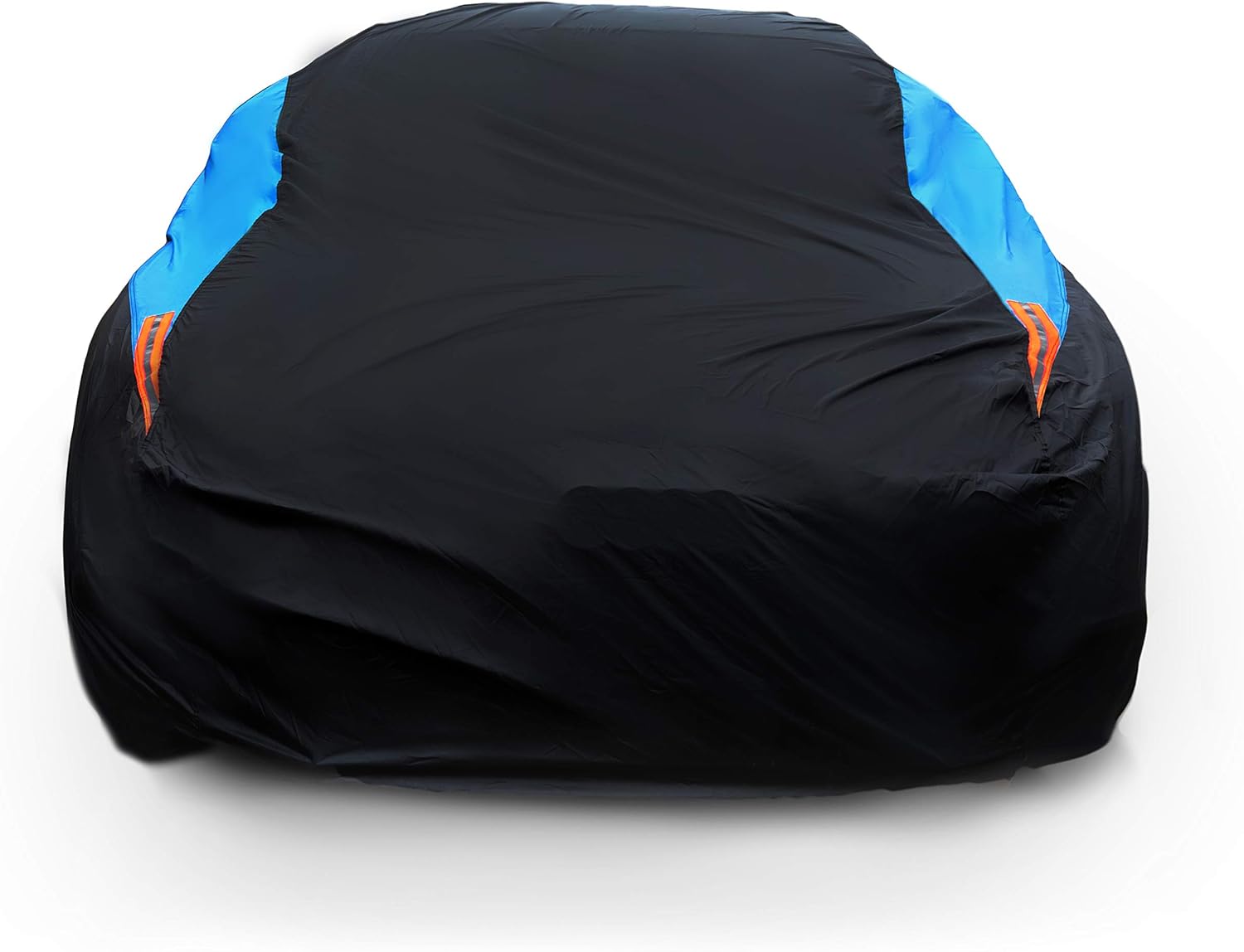
How to Remove Mildew Stains From a Car Cover (Step-by-Step Guide)
⚡ Quick Answer
Remove mildew stains from a car cover by spraying a 1:1 white vinegar and water solution directly onto the stain, letting it sit 15–20 minutes, then scrubbing with a soft brush and rinsing thoroughly. For stubborn stains, use a fabric-safe mildew remover. Always air dry completely before storing.
Steps to remove mildew stains from a car cover:
-
1
Shake off loose debris, then lay the cover flat outdoors -
2
Spray stained areas with equal parts white vinegar and water -
3
Wait 15–20 minutes, then scrub gently with a soft brush -
4
Rinse thoroughly with a garden hose until no residue remains -
5
Air dry fully in a shaded, breezy spot before storing
Critical mistakes to avoid:
-
✓
Never use straight bleach — it strips fabric coatings and colors -
✓
Never put the cover in a machine dryer — it causes shrinkage -
✓
Never store the cover even slightly damp — mildew returns within hours
You pull back the car cover and catch that smell — damp, musty, unmistakable. Dark spots have crept across the fabric. Mildew has moved in. I’m Daniel Brooks, and I’ve cleaned more mildewed car covers than I’d like to admit. The good news? You can fix this today with items you likely already own.
📌 Key Takeaways
-
→
White vinegar (1:1 mix) removes most fresh mildew stains without damaging car cover fabric. -
→
Bleach damages fabric fibers, strips protective coatings, and causes discoloration — avoid it completely. -
→
Complete drying before storage is the single most important step to prevent mildew from returning. -
→
Stubborn stains respond to baking soda paste or an outdoor-rated fabric mildew remover product.
What Causes Mildew Stains on a Car Cover?
Mildew stains on a car cover are caused by mold spores landing on damp fabric and growing. The cover traps moisture — from rain, dew, or humidity — and holds it against the fabric. Mold can begin growing in as little as 12 hours in warm, humid conditions.
Car covers are especially at risk because they’re often folded and stored before they fully dry. Mildew appears as dark gray, black, or greenish spots and carries a musty odor. It’s not just a surface stain — the spores embed into the fabric fibers.
But here’s the thing: the stain and the living spore are two different problems. The stain is what you see. The spore is what grows back. You need to address both.
📋 Common reasons mildew grows on car covers:
-
Stored damp: Folding the cover before it fully dries creates a sealed, moist environment mildew loves. -
Heavy rainfall: Water soaks through seams and pools inside the cover against the car’s surface. -
High humidity: Parking in a humid garage or under trees keeps the fabric damp for long periods. -
Worn fabric coating: Old or washed-out protective coatings let water soak in rather than bead off.
Now you know why it happened. Let’s fix it.
What Supplies Do You Need to Remove Mildew From a Car Cover?
You don’t need a lot of supplies. Most effective mildew removal uses items you already own. The right tools protect the fabric while still getting the stain out. Using harsh tools or the wrong chemicals makes the damage worse.
Check the care label on your car cover first. Polyester and polypropylene covers handle gentle cleaning well. Multi-layer waterproof covers need extra care to preserve their protective coating.
The EPA confirms that bleach does not kill mold — it only changes its color. It also damages fabric dyes and protective coatings, making it the wrong tool for car cover fabric.
⚠️ Warning
Wear rubber gloves, a face mask, and eye protection before handling a mildewed car cover. Mold spores become airborne when disturbed and can irritate your lungs, skin, and eyes.
Next, let’s walk through the full cleaning process from start to finish.
How Do You Remove Mildew Stains From a Car Cover Step by Step?
Removing mildew stains from a car cover takes 30–45 minutes and works best done outdoors on a dry day. The key is letting your cleaning solution dwell long enough to break down the mildew before you scrub. Rushing this step leaves stains behind.
Here’s the complete process that works for polyester, polypropylene, and most outdoor fabric car covers.
🔢 Step-by-Step: Removing Mildew Stains From a Car Cover
-
1
Shake off loose debris and inspect the stains
Remove the cover from the car. Shake it firmly to dislodge loose dirt, dust, and dry mildew. Lay it flat on a clean, hard surface outdoors. Note which areas have stains so you can target them directly.
-
2
Mix your cleaning solution
Combine equal parts white vinegar and lukewarm water in a spray bottle. For stubborn stains, use vinegar at full strength. White vinegar is acidic enough to kill mildew spores without harming fabric fibers or washing out protective coatings.
-
3
Spray and let the solution soak in
Spray the solution directly onto each stained area. Make sure the fabric is thoroughly wet, not just misted. Let it sit for 15–20 minutes. This dwell time is what breaks down the mildew bond with the fabric fibers.
-
4
Scrub gently with a soft brush
Use a soft-bristle brush in circular motions over the stained areas. Apply light pressure — you’re lifting loosened mildew, not scrubbing paint. Avoid stiff wire brushes or abrasive pads, which fray the fabric and damage coatings.
-
5
Rinse thoroughly with a garden hose
Rinse the entire cover, not just the stained areas. Leftover soap or vinegar residue attracts more dirt and can break down the fabric over time. Use gentle water pressure — not a pressure washer — to avoid damaging the material.
-
6
Flip and clean the other side
Turn the cover over and repeat steps 2–5 on the inner side. Mildew often grows on the inner surface where it stays in contact with damp car paint. Don’t skip this side.
-
✓
Air dry completely in the shade
Hang or drape the cover over a railing or clothesline in a shaded, breezy spot. Avoid direct sunlight, which fades colors and weakens fabric. Do not fold or store the cover until it feels bone dry — inside and out. This step is the difference between mildew gone for good and mildew coming back in 48 hours.
💡 Key Insight
Bleach-based products only change the color of mildew stains — they don’t kill the spores. The US EPA confirms this. For lasting results, use vinegar or an enzyme cleaner to actually break down the mildew at the source.
Still seeing stains after one pass? Move on to the solutions for stubborn cases in the next section.
How Do You Remove Stubborn Mildew Stains That Won’t Come Out?
Some mildew stains have been embedded in fabric for months. They’ve had time to bond deep into the fibers. A single vinegar pass won’t be enough — but a few upgraded techniques will handle even the worst cases.
Try these methods for stains that survive the basic cleaning process above.
Baking Soda Paste for Deep Stains
Mix 2 tablespoons of baking soda with just enough water to form a thick paste. Apply it directly to the stain and press it into the fabric. Let it sit for 20–30 minutes. Scrub gently, then rinse. Baking soda lifts stains, kills odor, and is completely safe on all car cover fabrics.
Baking Soda and Vinegar Combination
Spray the stain with full-strength white vinegar first. Immediately sprinkle baking soda over the wet area. You’ll see it fizz — that reaction is helping to loosen the mildew from the fibers. Wait 10 minutes, scrub, then rinse completely. This combination is stronger than either ingredient used alone.
Fabric-Safe Mildew Stain Remover Product
For stains that still won’t budge, an outdoor-rated mildew remover is your best option. Look for products with buffered-bleach or enzyme-based formulas designed specifically for outdoor fabrics — not standard household bleach cleaners.
Recommended Product
STAR BRITE Outdoor Collection All Surface Mold Stain & Mildew Stain Remover Spray – 32 OZ
★★★★☆ Highly rated on Amazon
This buffered-bleach gel formula is specifically designed for outdoor acrylic fabrics and marine upholstery — making it one of the safest and most effective options for car cover fabric that won’t respond to vinegar alone.
As an Amazon Associate, we earn from qualifying purchases.
✅ Tip
Always test any mildew remover product on a small hidden spot first. Wait 5 minutes and check for color change before treating the full stain. This applies to both DIY and commercial solutions.
Once the stain is gone, the drying process is what locks in your results. Don’t skip that step — it’s next.
How Do You Dry a Car Cover After Cleaning Mildew?
Drying is the most skipped step — and the one that matters most. A car cover that goes back into storage even slightly damp will grow mildew again within 24–48 hours. All that cleaning work means nothing if moisture stays trapped in the fabric.
Here’s how to dry a car cover the right way after mildew treatment.
✓ Car cover drying checklist:
-
✓
Hang the cover over a railing, clothesline, or large drying rack in open air -
✓
Choose a shaded, breezy spot — not direct sun, which fades color and weakens fabric -
✓
Flip the cover halfway through so the inner side dries fully, not just the outer surface -
✓
If drying indoors, use a fan and open windows for airflow — avoid machine dryers -
✓
Feel both sides — if any part feels cold or damp, keep drying before folding
Machine dryers are a firm no. The heat causes shrinkage, delamination of waterproof layers, and can melt the stitching on multi-layer covers. Air drying always. No exceptions.
So what’s the best way to make sure this never happens again? The next section covers that.
What Most People Get Wrong About Removing Mildew From Car Covers
Most mildew cleaning attempts fail because of a small number of very common mistakes. These mistakes either make the stain worse or guarantee the mildew comes right back.
📋 The 3 biggest mistakes car cover owners make:
-
Using bleach directly on fabric: Bleach does not remove mold — it only lightens the stain. Worse, it strips the water-resistant coating from the fabric and fades the color permanently. The US EPA explicitly warns against bleach as a routine mold cleaning method because dead spores still cause allergic reactions and the stain often returns. -
Not letting the solution dwell: Spraying and immediately scrubbing gives the cleaning agent zero time to penetrate the stain. You need a minimum of 15 minutes of soak time. Skipping this turns a 5-minute soak into 20 minutes of hard scrubbing — and often worse results. -
Storing the cover before it’s fully dry: This is the single most common reason mildew returns within days of cleaning. Even slightly damp fabric in a sealed bag or folded in a bin recreates the exact environment mildew needs to grow. Feel every part of the cover — not just the outside — before storing.
You might be thinking: “I used bleach before and the stain disappeared.” Here’s why that happened — bleach oxidizes the dark pigment in mildew, making it look lighter or gone. The spores are still there, still embedded. When conditions turn damp again, growth resumes from exactly where it left off.
How Do You Prevent Mildew Stains From Coming Back on a Car Cover?
Cleaning mildew is reactive. Preventing it is much easier. A few simple habits stop mildew from ever getting a foothold on your car cover in the first place.
The core rule is simple: moisture is the problem. Remove it, and mildew cannot grow. Regular inspection and proper storage are your first line of defense for keeping a car cover in top condition.
✅ Do this
-
+
Let the cover air dry fully before folding or storing -
+
Store in a breathable bag in a cool, dry location -
+
Clean the cover every 2–3 months to remove spores -
+
Choose a breathable cover material for long-term parking
⚠️ Avoid this
-
−
Storing in a sealed plastic bag that traps humidity -
−
Parking under trees with heavy leaf and sap drip -
−
Ignoring small stains — they spread fast in warm weather -
−
Using a non-breathable vinyl cover on a car parked long-term
You can also re-treat a clean, dry cover with a waterproofing spray after washing. This restores the hydrophobic layer that repels water and makes future mildew growth much harder to start. Consumer Reports recommends addressing moisture at the source as the most effective long-term approach.
Conclusion
Mildew stains on a car cover are easy to fix when you use the right solution and give it time to work. White vinegar handles most cases. Baking soda or an outdoor-rated mildew remover handles the stubborn ones. Complete drying before storage is what stops it from coming back.
The one thing to do right now: take your car cover outside, shake it out, and inspect it closely. If you see dark spots or smell mustiness, spray those areas with a 1:1 vinegar-water mix today. The longer mildew sits, the deeper it embeds.
Frequently Asked Questions
Can you machine wash a car cover to remove mildew stains?
Some lightweight polyester car covers are machine washable on a gentle cold cycle with mild, bleach-free detergent. However, multi-layer waterproof covers should be hand-washed only — machine washing strips the protective coating. Always check the care label before using a washing machine. Never use a dryer.
Does vinegar remove mildew stains completely or just lighten them?
White vinegar removes both the mildew stain and the living spores when allowed to dwell for 15–20 minutes. Fresh mildew stains come out fully. Very old, deep-set stains may lighten significantly but not disappear entirely — those require a fabric-safe commercial mildew remover or a baking soda paste treatment.
Is it safe to use bleach on a car cover?
No. Bleach damages fabric fibers, strips water-resistant coatings, and fades the color of your car cover. It also doesn’t kill mold spores — it only changes their color. The US EPA recommends against bleach for routine mold cleanup. Use white vinegar, baking soda, or a bleach-free fabric mildew remover instead.
How long does it take for mildew to grow on a car cover?
Mildew can begin growing on damp fabric in as little as 12 hours in warm, humid conditions. You may smell a musty odor within 6–10 hours. This is why complete drying before storage is critical — even a slightly damp cover folded overnight can develop visible mildew growth by the next morning.
How do you get the musty mildew smell out of a car cover after cleaning?
Sprinkle baking soda over the clean, damp cover and let it sit for 20 minutes before rinsing. Baking soda neutralizes odor at the source rather than masking it. After rinsing, air dry the cover in a breezy spot. The vinegar smell from cleaning fades completely within an hour of air drying.
Can mildew on a car cover damage the car’s paint underneath?
Yes, it can. Mildew on the inner surface of a car cover traps moisture directly against the paint. Over time, this causes water spots, oxidation, and in severe cases, paint damage. Remove and clean a mildewed cover promptly — don’t leave it on the car with active mold growth on the inner surface.
When should you replace a car cover instead of cleaning it?
Replace your car cover if the mildew stains cover more than 30% of the fabric, if the material is torn or thinning, or if the inner lining is damaged. Also replace it if mildew keeps returning within days of cleaning — this means the spores are too deeply embedded in degraded fabric to fully remove.

Daniel Brooks is an automotive writer and product researcher focused on car accessories, car tech, maintenance, and practical driving guides. At Plug-in Car World, he helps drivers make smarter automotive decisions through honest reviews and research-driven content.