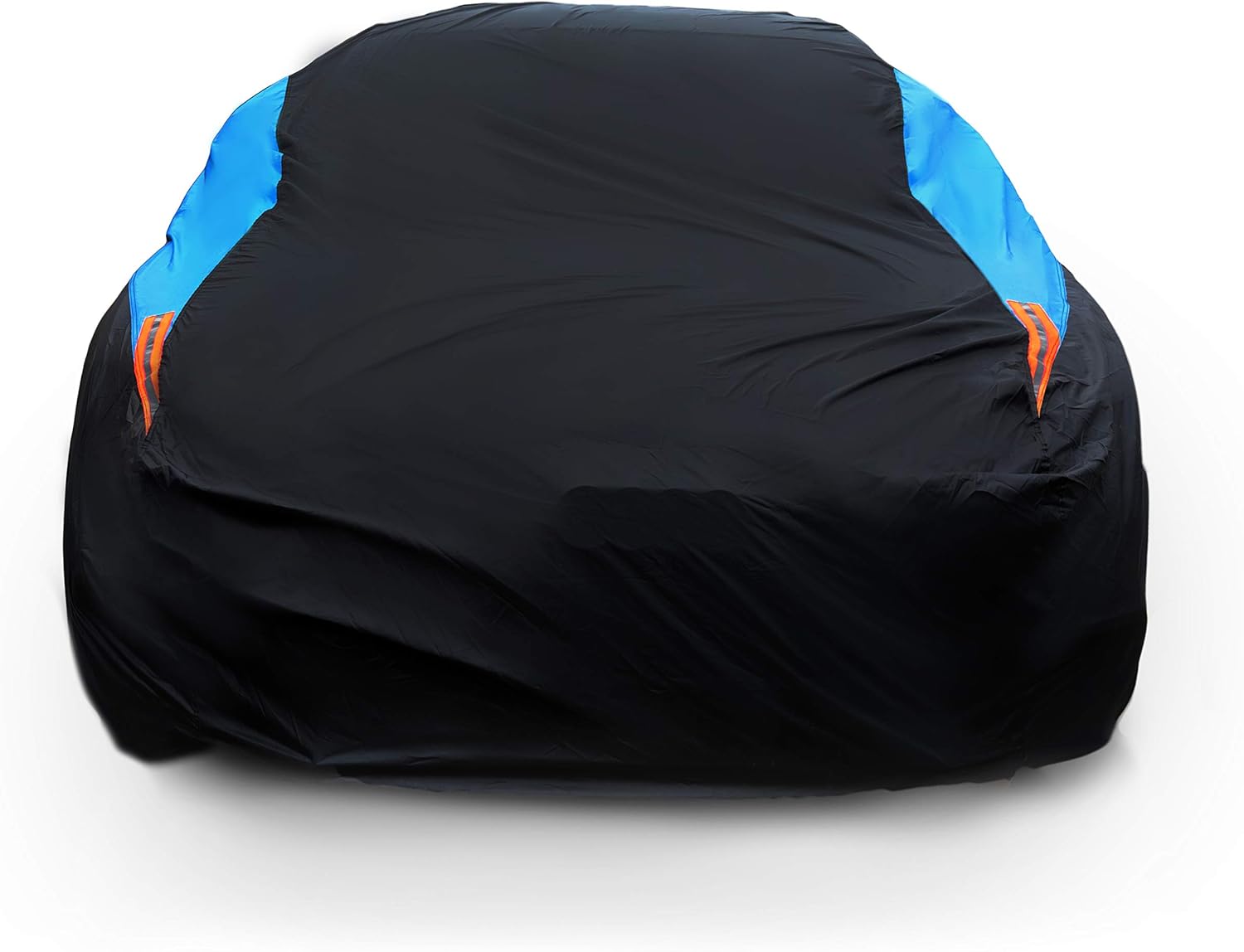
Coverking vs CarsCover — Which Car Cover Brand Is Better?
Quick Answer
Coverking wins on build quality and fabric choice. It engineers its own fabrics, cuts custom patterns in a California factory, and backs every cover with a lifetime repair-or-replace policy. CarsCover wins on price. Its 5-layer Ultrashield line uses the same basic layered-fabric approach at a lower cost, with test-fitted patterns for thousands of vehicles. If you keep a car outdoors year-round and want the toughest fabric options (hail, sun, coastal salt air), Coverking is the safer buy. If you want solid everyday protection without the custom-fabric price tag, CarsCover gets you there for less.
The real difference between Coverking and CarsCover:
- Coverking custom covers start around $190; CarsCover custom covers typically run lower
- Coverking designs and engineers its own fabrics in-house
- CarsCover’s Ultrashield line adds a fleece lining and UV stabilizer at a budget price point
⚡ Quick Verdict — Coverking vs CarsCover
CarsCover
~$70–$180 (varies by vehicle size)
✅ Best for:
Budget-conscious owners who want custom fit without the premium fabric price.
Coverking
~$110–$190+ (universal to custom fit)
✅ Best for:
Long-term outdoor storage where fabric quality and warranty matter most.
| Category | CarsCover | Coverking |
|---|---|---|
| Overall Winner | — | 🏆 |
| Best Value | ✅ | ❌ |
| Fabric Quality | ❌ | ✅ |
| Warranty Strength | ❌ | ✅ |
| Fit Options Available | ✅ | ✅ |
Bottom line: Coverking wins for owners who store a vehicle outdoors long-term and want the strongest fabric and warranty backing. CarsCover is worth it only if your budget is the deciding factor and you don’t need Coverking’s heavier weather-rated fabrics.
Standing in front of two car cover listings that both promise custom fit and full weather protection is confusing. I’m Daniel Brooks, and I cover car accessories for a living, which means I spend a lot of time reading fabric spec sheets other people skip.
Coverking and CarsCover both sell layered, custom-shaped covers, and on paper they look close. The gap shows up in the fabric itself, in who engineers it, and in what happens if a seam fails two years in.
Below, I compare both brands on fabric, fit, price, and long-term durability so you know exactly which one fits your garage — or your driveway.
Coverking Overview
| ✅ Best for | Vehicles stored outdoors year-round in harsh sun, hail, or coastal air |
| ❌ Not ideal for | Buyers who just want a basic dust cover for a garage — CarsCover or a simple universal cover costs less |
| 💰 Price | Universal fit starts near $110; custom fit starts near $190 (check for latest price) |
Coverking designs and cuts its own fabrics in a California factory instead of buying off-the-shelf material.
That in-house control is why the brand offers so many distinct fabric tiers — Triguard for light, occasional use, Coverbond 4 for thicker hail and dent protection, Mosom Plus for heavy-duty all-weather coverage, SilverGuard for desert-climate UV reflection, and Satin Stretch for indoor storage.
Custom-fit Coverking covers are made to order using CAD/CAM-cut patterns matched to your exact year, make, and model, with mirror and antenna pockets built in where applicable.
Universal-fit Coverking covers exist too, sized to a length range rather than an exact vehicle, and they cost noticeably less than the custom line.
Coverking backs its covers with a repair-or-replace policy that continues even after the standard warranty period ends, which is unusual in this category and worth factoring into the price gap.
Coverking Coverbond 4 Universal Fit Sedan Cover
A solid entry point if your car falls within Coverking’s sedan length range and you don’t need a custom pattern.
CarsCover Overview
| ✅ Best for | Everyday drivers who want custom fit without paying premium fabric prices |
| ❌ Not ideal for | Harsh climates with severe hail or year-round intense sun — Coverking’s heavier fabrics hold up better there |
| 💰 Price | Typically $70 to $180 depending on vehicle size (check for latest price) |
CarsCover’s main product is the Ultrashield line: a 5-layer fabric with a fleece inner lining and a UV stabilizer treatment.
Every cover is built for a specific year, make, and model, with the company describing each pattern as test-fitted rather than generically sized.
The covers ship with a tie-down strap and buckle, plus a storage pouch, and CarsCover positions itself as a US-based, family-run company with direct customer support.
Pricing lands well below Coverking’s custom-fit line for most common sedans and coupes, which is the brand’s main selling point.
Where CarsCover pulls back is fabric depth and warranty language: it doesn’t publish the same tiered fabric system or the extended repair policy that Coverking does, so the lower price reflects a simpler build.
CarsCover Custom Fit Toyota Corolla Ultrashield Cover
A good example of CarsCover’s standard sedan pricing and 5-layer build for one of the most common vehicles on the road.
Full Spec Comparison: Coverking vs CarsCover
Coverking leads on fabric engineering, with in-house designed materials across five distinct tiers.
CarsCover leads on price and catalog breadth, covering more budget-friendly vehicle-specific listings.
| Spec | Coverking | CarsCover | Winner |
|---|---|---|---|
| Starting Price | ~$110 universal / ~$190 custom | ~$70–$180 custom | CarsCover |
| Fabric Layers | 3 to 5, depending on tier | 5 (Ultrashield) | Tie |
| Fabric Source | In-house engineered | Proprietary Ultrashield blend | Coverking |
| Fit Options | Custom and universal | Custom (vehicle-specific) | Coverking |
| Mirror Pockets | Yes, on applicable models | Yes, on applicable models | Tie |
| Tie-Down System | Yes | Yes, with strap and buckle | Tie |
| Warranty | Repair/replace, continues past warranty | Standard manufacturer warranty | Coverking |
| Manufacturing | California, USA | Not specified by brand | Coverking |
Which Fabric Holds Up Better: Coverking or CarsCover?
Coverking wins on fabric depth. Its five distinct fabric tiers let you match material thickness to your actual climate instead of getting one generic layup.
Triguard is a light three-layer option for carports, while Mosom Plus stacks five layers with fleece lining for heavy outdoor exposure including light hail. CarsCover’s Ultrashield line takes a one-size approach: 5 layers with a fleece liner and a UV stabilizer additive, on every listing regardless of climate.
That one-tier approach works fine for moderate weather, but it means CarsCover shoppers in extreme sun or hail-prone regions don’t have a heavier option to step up to the way Coverking buyers do.
If you’re in a region with regular high UV Index readings, prioritize a fabric tier built for sun exposure over one built for general moisture protection.
Winner: Coverking, for buyers who need to match fabric to a specific climate risk rather than accept one general-purpose layup.
Which Fits Better: Coverking or CarsCover?
Both brands cut custom patterns by vehicle, and both include mirror pockets where the vehicle calls for them, so fit quality comes down to execution rather than approach.
Coverking uses CAD/CAM cutting on covers made to order in its own factory, which tends to produce a consistent, tight pattern. CarsCover describes its patterns as test-fitted to the exact vehicle model, and its catalog covers an enormous number of year/make/model combinations, including some older and less common vehicles that Coverking doesn’t list.
Owner reports for both brands occasionally mention a loose or tight mirror pocket on specific models — this is common across the custom-cover category, not unique to either brand, since fit tolerance depends heavily on the individual vehicle trim.
Winner: Tie, with a slight edge to CarsCover for vehicle coverage breadth and Coverking for cutting precision.
Is CarsCover Worth It for the Price Gap?
Yes, for most everyday sedans and coupes. CarsCover typically costs less than a comparable Coverking custom cover, and for moderate climates that price gap buys you a very similar level of day-to-day protection.
The gap matters more once you factor in Coverking’s repair-or-replace policy, which can offset the higher upfront cost over several years of ownership. If you replace car covers every few seasons anyway, CarsCover’s lower price is the better math. If you want one cover to last a decade, Coverking’s warranty terms change the calculation.
Winner: CarsCover on upfront price, Coverking on long-term cost when the warranty is factored in.
Safety, Weather Extremes, and Unique Features
Coverking wins for severe weather exposure. Its Coverbond 4 and Mosom Plus fabrics are built to absorb minor hail impact, something CarsCover’s single Ultrashield tier isn’t specifically marketed to handle.
CarsCover’s unique advantage is its included storage pouch and strap-and-buckle tie-down system bundled as standard on most listings, which some competing brands sell separately.
No fabric car cover is rated to stop large severe hail — golf-ball size or bigger. Padded fabrics like Mosom Plus reduce minor dings but won’t prevent damage from a serious hailstorm.
Winner: Coverking, for buyers whose main concern is hail, wind-driven debris, or extreme UV.
Real-World Use Cases: Which One Wins?
Matching the cover to how and where you actually park makes this decision easier than comparing spec sheets alone. Here’s how the two brands stack up by right car cover size and situation.
- Daily-driven sedan, garage most nights: CarsCover wins. You don’t need premium hail-rated fabric for occasional outdoor exposure.
- Classic or collector car, stored outdoors year-round: Coverking wins. The extended warranty and heavier fabric tiers protect a higher-value asset.
- Desert climate with intense year-round sun: Coverking wins, specifically with its SilverGuard fabric built for UV reflection.
- Hail-prone region (Plains states, Rocky Mountain corridor): Coverking wins with Mosom Plus or Coverbond 4.
- Tight budget, common vehicle model: CarsCover wins on price with minimal trade-off in everyday protection.
- Older or less common vehicle: CarsCover’s broader catalog is more likely to have your exact fit listed.
Is the Price Difference Between Coverking and CarsCover Worth It?
It depends on your climate. For moderate weather and a daily-driven car, the extra cost of a Coverking custom cover buys you a stronger warranty more than it buys meaningfully better everyday protection.
For harsh sun, hail, or long-term outdoor storage, the price gap is worth paying because Coverking’s heavier fabric tiers and repair policy directly address the risks that cause covers to fail early. Watch for seasonal pricing on both brands — Amazon and manufacturer sites both run periodic discounts, so it’s worth checking current pricing before ordering rather than assuming list price.
Value verdict: Pay the Coverking premium if your car sits outside in tough conditions. Save with CarsCover if your situation is closer to average.
Who Should Buy Which?
Buy Coverking if you store a vehicle outdoors long-term in a harsh climate and want the strongest warranty backing. Buy CarsCover if you want solid custom-fit protection for a daily driver without paying a premium fabric price. Before deciding, it also helps to review common car cover buying mistakes that trip up first-time buyers.
- Store your car outdoors year-round
- Live somewhere with hail or intense sun
- Want a fabric tier matched to your climate
- Value an extended repair policy
- Garage your car most of the time
- Want the lowest reasonable price for custom fit
- Drive a common daily vehicle
- Don’t face extreme hail or UV exposure
- You need indoor-only dust protection — a basic Classic Accessories cover costs far less
- You want a hard-shell carport instead of fabric — neither brand makes that
- Your vehicle isn’t listed in either catalog — check fitment before ordering, not after
What Owners Say About Coverking and CarsCover
Amazon lists both brands across thousands of vehicle-specific listings, so ratings vary by exact model rather than by brand as a whole — check the review section on your specific vehicle’s listing rather than relying on a brand-wide average.
⭐ What Owners Commonly Mention
Coverking
- Snug, accurate custom fit
- Fabric feels noticeably thicker than budget covers
- Responsive customer support for warranty claims
- Higher price than most competitors
- Longer lead time on made-to-order covers
CarsCover
- Price relative to a custom-fit cover
- Soft fleece lining on the inside layer
- Wide vehicle catalog, including older models
- Mirror pocket fit runs tight on some models
- Less climate-specific fabric guidance than Coverking
Bottom line from owners: Most buyers of both brands report satisfaction with fit and protection; the recurring complaints are price for Coverking and mirror-pocket tightness for CarsCover, both of which are worth checking against your specific vehicle listing before ordering.
How to Maintain Your Car Cover
Never fold and store a car cover while it’s still wet — trapped moisture leads to mildew on both Coverking and CarsCover fabrics within days.
Wash either brand’s cover by hand or on a gentle machine cycle with mild detergent, then air dry completely before folding it away. Skip fabric softener, which can break down the water-repellent coating over time.
Re-apply a UV-protectant spray periodically if you’re in intense sun, especially with lighter fabric tiers like Coverking’s Triguard. For full seasonal steps, see our long-term storage guide before parking a vehicle for an extended stretch.
Check tie-down straps and grommets each season for fraying, and store the cover in its included pouch or bag rather than loose, which prevents dust and pests from getting into the fabric between uses.
Final Verdict — Coverking or CarsCover: Which Should You Buy?
Coverking is the stronger overall pick for anyone storing a vehicle outdoors long-term, thanks to its in-house fabric engineering and repair-or-replace policy. CarsCover is the smarter buy for a daily-driven, garage-kept vehicle where a lower price doesn’t cost you meaningful protection. If your car sits outside in hail country or blistering sun, spend the extra money on Coverking — if it’s mostly garaged and you just want solid everyday coverage, CarsCover gets the job done for less.
Coverking Coverbond 4 Universal Fit Sedan Cover
Best choice if you need stronger weather protection and a backed warranty.
CarsCover Custom Fit Toyota Corolla Ultrashield Cover
Best choice if you want custom fit on a budget for a daily driver.
Frequently Asked Questions
Is Coverking better than CarsCover?
Coverking is better for harsh climates because of its multi-tier fabric system and repair-or-replace warranty. CarsCover is better for everyday budget buyers. Neither is universally “better” — it depends on how and where you park.
What is the difference between Coverking and CarsCover?
Coverking engineers its own fabrics in five distinct tiers and backs covers with an extended repair policy. CarsCover uses one 5-layer Ultrashield fabric across its catalog at a lower price point with a standard warranty.
Are CarsCover car covers waterproof?
CarsCover’s Ultrashield line is marketed as weatherproof with a water-repellent outer layer. Like most fabric covers, it resists rain rather than surviving full submersion, and performance can vary by specific vehicle listing.
Does Coverking make covers for every vehicle?
No. Coverking’s custom-fit catalog covers popular and many enthusiast vehicles, but CarsCover’s catalog is broader for older or less common models. Always check your exact year, make, and model before ordering either brand.
How long does a Coverking or CarsCover cover last?
With regular cleaning and proper storage, both brands typically last several years. Heavier Coverking fabrics tend to hold up longer under constant outdoor exposure, while lighter fabrics on either brand wear faster in intense sun.
Is a custom-fit car cover worth the extra cost over a universal cover?
Yes, in most cases. A custom-fit cover from either brand seals tighter around the body, which reduces wind flap and water intrusion compared to a universal cover sized only to length.
Affiliate Disclosure: As an Amazon Associate, I earn from qualifying purchases. Links on this page may earn me a small commission — at no extra cost to you.
Daniel Brooks is an automotive writer and product researcher focused on car accessories, car tech, maintenance, and practical driving guides. At Plug-in Car World, he helps drivers make smarter automotive decisions through honest reviews and research-driven content.