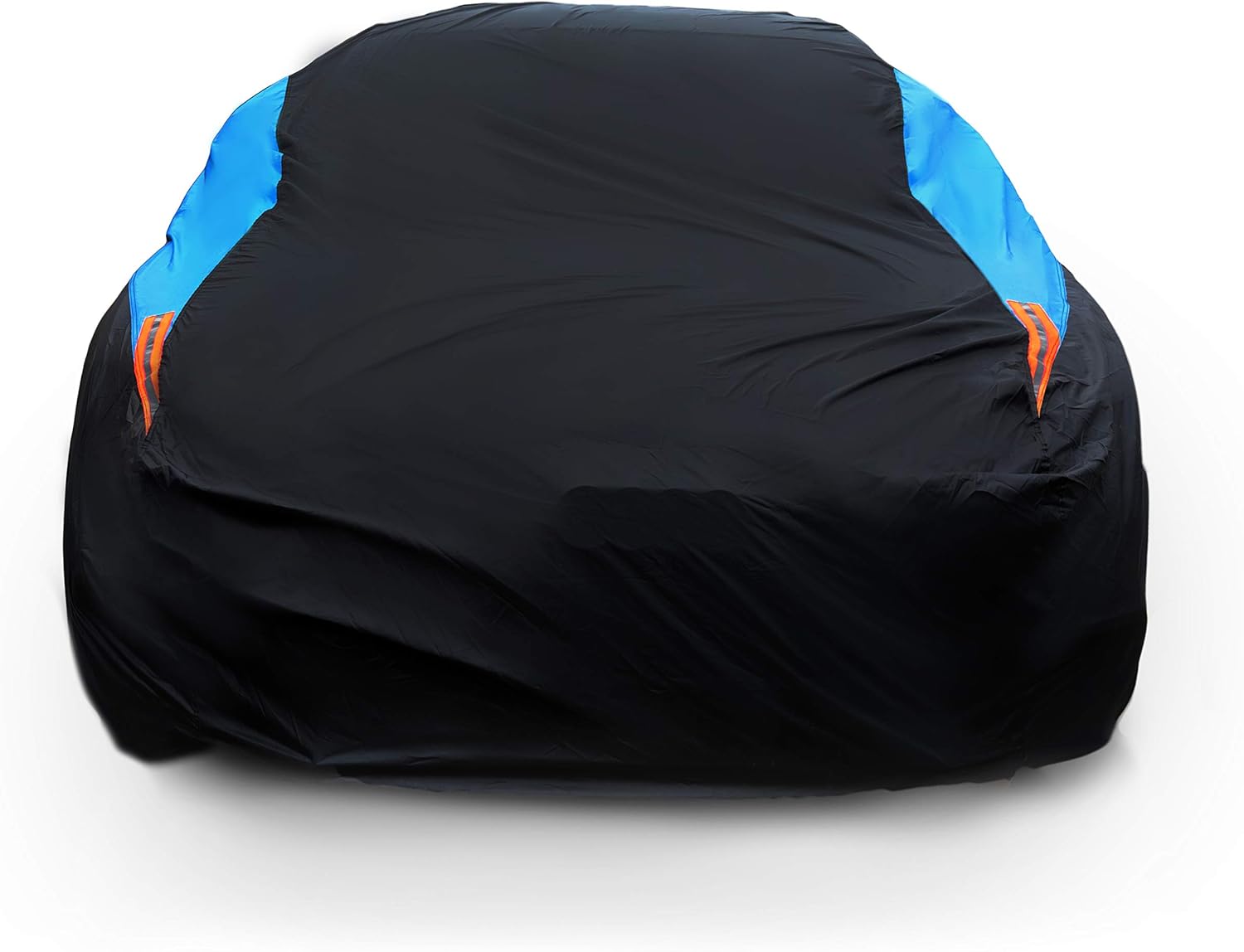
Are Cheap Car Covers Worth It? What You Need to Know Before You Buy
⚡ Quick Answer
Cheap car covers are worth it only for short-term, low-stakes use, like blocking dust in a garage. For daily outdoor parking, they often fail within months and can scratch your paint.
What a cheap cover usually skips:
- Inner lining: No soft layer means the fabric rubs your paint directly.
- Sealed seams: Water leaks in through the stitching during rain.
- Custom fit: Loose covers flap in the wind and cause micro-scratches.
Your car sits outside all week, exposed to sun, sap, and bird droppings. You’re standing in the store aisle holding a $25 cover, wondering if it’ll actually do anything.
Daniel Brooks here. I’ve tested both budget and premium covers on daily-driven cars, and the honest answer is: it depends on what you’re protecting against, and for how long.
Below, you’ll see exactly when a cheap cover makes sense, when it backfires, and how to tell the difference before you spend a dime.
📌 Key Takeaways
-
→
Custom-fit covers cost more but prevent the flapping that causes scratches. -
→
Single-layer fabric rarely blocks UV rays, even when labeled “UV protection.” -
→
Non-breathable covers trap moisture underneath, which can cause water spots or mold. -
→
Indoor, short-term use is where a cheap cover performs almost as well as an expensive one.
When a Cheap Car Cover Actually Makes Sense
A cheap cover earns its price in a few specific situations. Garage storage is the biggest one.
If your car sits indoors and you just want a barrier against dust and minor scuffs, a thin universal-fit cover does the job. There’s no rain, no UV exposure, and no wind to test its weak points.
✅ Tip
If you’re covering a car for under a month indoors, almost any cover will hold up fine. Save the budget for outdoor protection instead.
It also works for short-term outdoor use, like a weekend at a relative’s house or a few days while you’re traveling. The cover doesn’t need to survive months of sun and rain. It just needs to survive a few days.
Where Cheap Covers Fall Apart
Daily outdoor parking is where budget covers struggle most. Three problems show up again and again: poor fit, weak waterproofing, and no breathability.
A loose, universal-fit cover flaps every time the wind picks up. That flapping rubs the fabric against your clear coat, and over weeks, it can dull the finish or leave fine scratches.
Waterproofing is the second issue. Many budget covers use a sprayed-on coating instead of a true waterproof layer. That coating wears off after a handful of washes or a few months in the sun, and once it’s gone, rain soaks straight through.
So if you park outside every day in a rainy or snowy climate, a cheap cover will likely need replacing within a season.
Here’s how budget and premium covers typically compare on the factors that matter most.
If you park outside year-round, the gap in lifespan usually outweighs the upfront price difference.
Can a Cheap Cover Damage Your Paint?
Yes, and this is the part most buyers don’t expect. A cover should protect paint, not harm it.
The damage usually comes from friction, not the cover material itself. A loose cover moves with every gust of wind. That movement grinds dust and grit against the clear coat, creating tiny scratches you won’t notice until they catch the light.
Trapped moisture is the second risk. If the cover can’t breathe, condensation builds up underneath overnight. Left there for days, it can leave water spots or, in humid climates, encourage mold on the paint or trim.
⚠️ Warning
Never put a cover on a wet car. Trapped water under a non-breathable cover is worse than no cover at all.
How to Choose a Cheap Cover That Won’t Let You Down
If your budget is fixed, you can still get more out of a cheap cover by checking a few things before you buy.
🔢 Before You Buy a Budget Cover
-
1
Check the size chart, not the photo
Measure your car’s length and match it exactly to avoid a loose fit.
-
2
Look for an elastic hem or straps
These cut down on flapping, even on a universal-fit cover.
-
✓
Confirm it’s labeled “breathable”
This single word matters more than any UV claim on the package.
What Most People Get Wrong About Cheap Car Covers
The first myth: a cover is a cover. People assume any cover stops sun damage, but most thin, single-layer fabrics let UV rays through over time. The label says “UV protection,” but that often just means the fabric won’t fade, not that your paint is shielded.
The second myth: more layers always means safe to leave on indefinitely. Multi-layer covers still need to breathe. Leaving any cover on a wet car for days, cheap or expensive, can trap moisture against the paint.
The third myth: a cover replaces a garage. A cover reduces exposure. It doesn’t eliminate it. Hail, falling branches, and extreme heat can still affect a covered car parked outside.
Conclusion
A cheap car cover works well for short trips and indoor storage, but it struggles with daily outdoor weather. Fit and breathability matter more than price tag claims.
If you park outside year-round, the math usually favors a higher-quality, custom-fit cover over the long run.
Do this right now: measure your car’s exact length and compare it against the size chart of any cover you’re considering, before you add it to your cart.
Frequently Asked Questions
Are car covers actually worth it?
Yes, for cars parked outdoors regularly. A good cover protects against UV rays, sap, bird droppings, and storm debris, which can otherwise damage paint and lower resale value over time.
Do cheap car covers scratch paint?
They can, mainly when the fit is loose. Wind makes a loose cover flap against the body, and that repeated friction can leave fine scratches in the clear coat over weeks or months.
Is it bad to leave a car cover on indoors?
No, indoor use is one of the safest scenarios. Without rain or direct sun, even a basic cover does a fine job keeping dust and minor scuffs off your car.
How long do budget car covers usually last outdoors?
Most budget covers used outdoors daily last around three to twelve months before the waterproofing wears off or the seams start leaking, depending on your climate and sun exposure.
Should I put a cover on a car that’s still wet?
No. Covering a wet car traps moisture underneath, especially with non-breathable fabric. Dry the car first, or the trapped water can cause water spots or mold over time.
What’s the difference between a universal and custom-fit cover?
A universal cover fits a size range loosely across many models. A custom-fit cover is shaped for one specific make and model, which reduces flapping, gaps, and exposed body panels.
Do car covers protect against hail?
Standard covers offer little protection against hail. They’re built for sun, rain, and debris, not impact. For hail-prone areas, look for a padded or heavy-duty cover instead.
“`

Daniel Brooks is an automotive writer and product researcher focused on car accessories, car tech, maintenance, and practical driving guides. At Plug-in Car World, he helps drivers make smarter automotive decisions through honest reviews and research-driven content.