
Do Steering Wheel Covers Protect the Original Steering Wheel?
Quick Answer
Yes, a properly fitted steering wheel cover can protect your original steering wheel from scratches, surface wear, sweat, dirt, and some sun-related deterioration. It works best when the factory wheel is still in good condition and the cover fits securely. However, it cannot repair existing damage, prevent every form of aging, or guarantee protection against heat and moisture.
What protection can you expect?
- Surface protection: Reduces direct contact with fingernails, rings, and other everyday sources of abrasion.
- Sweat and dirt: Creates a removable barrier against many contaminants transferred by your hands.
- Sun exposure: Shields the covered grip area from some direct sunlight, although it cannot eliminate heat damage.
- Material preservation: Helps slow visible wear on leather, synthetic leather, and plastic steering wheels.
- Fit and safety: A correctly sized cover should stay firmly in place without interfering with steering control.
- Regular cleaning: Removing and cleaning the cover periodically helps prevent trapped grit and moisture from damaging the original surface.
One important precaution
- Choose a snug, compatible cover that does not slip or obstruct steering controls, and follow your vehicle manufacturer’s safety guidance.
A steering wheel cover is a simple way to preserve the part of your car’s interior you touch almost every time you drive. If you’re wondering whether steering wheel covers protect the original steering wheel, the answer depends on the cover’s fit, material, and maintenance.
In this guide, I’ll explain what a cover protects against, which materials work best, how to avoid damage underneath, and when leaving the factory steering wheel uncovered makes more sense.
In This Guide
- How do steering wheel covers protect the original wheel?
- What damage can a steering wheel cover prevent?
- Which steering wheel cover material offers the best protection?
- Can a steering wheel cover damage the original wheel?
- How do you choose, install, and maintain a protective cover?
- Is a steering wheel cover worth it compared with replacement?
- Frequently asked questions
How Do Steering Wheel Covers Protect the Original Wheel?
A steering wheel cover is a removable layer fitted over the steering wheel’s outer rim to protect its surface and change its feel. Depending on the design, it can reduce abrasion, limit direct contact with contaminants, and help preserve the factory finish.
The original wheel takes repeated contact from your hands, jewelry, fingernails, and clothing. Over time, this friction can polish, scratch, discolor, or wear down its outer coating.
They create a barrier against everyday wear
A snug cover takes much of the direct rubbing that would otherwise affect the factory surface. This is especially useful for drivers who commute daily, drive long distances, or frequently enter and exit their vehicles.
Consider a car with a leather-wrapped steering wheel that sees several hours of use each day. A suitable cover can reduce direct contact with the leather at the main gripping points, where shiny patches and surface wear often become noticeable.
The benefit depends on fit and construction. A cover that shifts against the wheel can introduce friction rather than prevent it.
They help keep sweat and grime away
Hands transfer sweat, skin oils, dust, sunscreen, and residue from hand products onto steering wheel surfaces. A cover creates a buffer between these contaminants and the original material.
That buffer is useful, but it isn’t a substitute for cleaning. Dirt can collect around seams, and moisture trapped between two surfaces can cause problems if you never remove the cover.
They offer limited protection from sunlight and heat
A cover shields the covered portion of the rim from some direct sunlight. Depending on its material and thickness, it may also change how hot or cold the steering wheel feels when you first touch it.
However, the cover doesn’t keep the entire wheel cool or stop the cabin from heating up. High temperatures can still affect the steering wheel through the surrounding air and exposed areas.
Section takeaway: A good cover works as a sacrificial protective layer, but its value depends on secure fitment, suitable material, and periodic cleaning.
What Damage Can a Steering Wheel Cover Prevent?
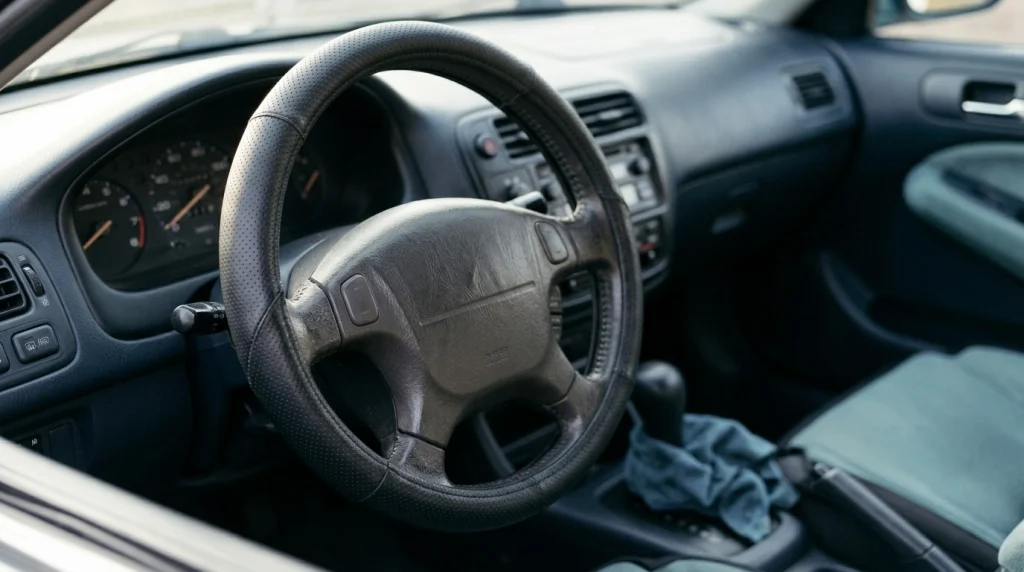
A steering wheel cover offers the most practical protection against everyday surface wear and contamination. It is less effective against deep damage, prolonged heat exposure, or deterioration already present beneath the cover.
Knowing which problems a cover can and cannot prevent helps you choose one for the right reason.
| Type of damage | Protection level | What to know |
|---|---|---|
| Minor scratches and scuffs | Good | A fitted cover reduces direct contact with abrasive objects. |
| Sweat and skin oils | Good, with maintenance | The cover must be cleaned, and moisture underneath must not accumulate. |
| Leather surface wear | Moderate to good | Protection depends on coverage, fit, and the condition of the original leather. |
| Fading from sunlight | Partial | Exposed areas remain vulnerable to light and cabin heat. |
| Cracking or peeling already present | Limited | A cover conceals damage but does not repair the underlying material. |
| Damage caused by a loose cover | None if poorly fitted | Movement can rub against the factory finish and compromise grip. |
Protection against scratches and abrasion
Small scratches can come from rings, rough fingernails, keys held in the same hand, or repeated rubbing from dry hands. A cover separates these sources of abrasion from the original surface.
Thicker materials may provide more cushioning against incidental contact, but thickness alone doesn’t guarantee better protection. A bulky cover that reduces grip or shifts during steering is a poor trade-off.
Protection against wear, fading, and peeling
Leather and synthetic leather can deteriorate for different reasons, including friction, contamination, heat, and aging. A cover reduces some direct exposure but cannot stop the underlying material from aging indefinitely.
If the original steering wheel already feels sticky, has peeling coating, or shows cracked leather, inspect it before covering it. A cover may hide the symptoms while leaving the cause untreated.
Section takeaway: Covers are best at preventing new surface wear, not reversing old damage or providing complete environmental protection.
Which Steering Wheel Cover Material Offers the Best Protection?
The best steering wheel cover material balances abrasion resistance, grip, comfort, and easy cleaning. Genuine leather, synthetic leather, microfiber, and silicone each offer different advantages, so the right choice depends on your driving habits and factory wheel material.
Compare the main cover materials
| Material | Main advantage | Main limitation | Best suited for |
|---|---|---|---|
| Genuine leather | Natural feel and refined appearance | Needs suitable cleaning and care | Drivers wanting a leather-like finish |
| PU or synthetic leather | Easy everyday wipe-down | Coating can crack or peel over time | Daily commuting and straightforward maintenance |
| Microfiber or suede-style fabric | Soft, tactile grip | Can retain dust, oils, and stains | Drivers prioritizing texture and feel |
| Silicone or rubber-like material | Often easy to wipe clean | Texture and heat comfort vary by design | Practical, low-fuss maintenance |
| Fabric or woven material | Comfortable texture and varied styles | May absorb moisture and dirt | Drivers who can clean it regularly |
These are general material characteristics, not guaranteed performance ratings. Construction quality, stitching, backing, surface texture, and fit can matter as much as the material name.
Is leather better than synthetic leather?
Genuine leather may appeal to drivers who want a natural texture and a premium appearance. Quality varies, and leather still requires appropriate care to prevent contamination and surface deterioration.
PU leather often costs less and is easy to wipe clean. However, lower-quality coatings can peel, particularly after prolonged exposure to heat, friction, or unsuitable cleaning products.
For protecting an original leather steering wheel, either option can work if the cover fits correctly. I would prioritize secure fitment and a comfortable grip over choosing a material simply because it sounds more expensive.
What about suede, microfiber, and silicone?
Microfiber and suede-style surfaces offer a textured feel, but they can hold oils and fine dust. They work best when the manufacturer provides clear cleaning instructions and you are willing to maintain the surface.
Silicone and rubber-like covers can be practical for quick cleaning, although some designs feel tacky or slippery under certain conditions. Test the grip with dry hands before committing to regular use.
Section takeaway: Choose a material for reliable grip, appropriate care, and compatibility with your original wheel rather than appearance alone.
Can a Steering Wheel Cover Damage the Original Wheel?
Yes, a steering wheel cover can damage the original surface if it fits poorly, traps grit or moisture, or uses materials that react with the wheel’s finish. A well-fitted cover that you remove and clean periodically is much less likely to cause these problems.
How a loose cover causes wear
A cover should remain stable against the rim during normal steering. If it rotates or shifts, the inner lining may rub against the original finish every time you turn the wheel.
That repeated movement can leave scuffs, polish certain areas, or create uneven wear. More importantly, a slipping cover can interfere with precise steering inputs.
Stop using it if you notice movement. Replace it with a correctly sized design rather than trying to compensate for a poor fit with improvised adhesives or loose ties.
Can moisture and trapped dirt cause problems?
Dust and fine grit can work like abrasives when the cover moves against the rim. Sweat or water trapped underneath may also affect certain finishes, especially if the area remains damp for extended periods.
To reduce this risk, follow a simple maintenance routine:
- Remove the cover periodically according to its installation instructions.
- Inspect the inner lining and the factory wheel for dust, dampness, discoloration, or scuffing.
- Clean both surfaces with products suitable for their respective materials.
- Allow the wheel and cover to dry completely before reinstalling.
- Check that the cover fits tightly and does not twist under firm hand pressure.
Can a cover affect steering-wheel airbags?
A steering wheel cover must not obstruct the driver’s airbag, which is generally housed in the central steering wheel assembly. A cover that crosses the airbag module, interferes with its designed opening path, or is not approved for the vehicle can introduce a serious safety risk.
Choose a design specifically compatible with your vehicle, and never modify the airbag module or its trim to accommodate an accessory. If the cover’s construction or compatibility is unclear, leave it off until the manufacturer or a qualified technician confirms suitability.
Pro tip: Read your vehicle owner’s manual and consult the manufacturer’s accessory guidance. For general background on airbag operation and safe use, see the NHTSA airbag safety guidance.
Section takeaway: A cover should protect the wheel without introducing friction, trapping contamination, reducing grip, or interfering with safety equipment.
How Do You Choose, Install, and Maintain a Protective Cover?
Choosing the correct steering wheel cover starts with accurate measurements and vehicle compatibility. Proper installation and regular inspection then help preserve both the cover and the original steering wheel.
Measure your steering wheel before buying
Don’t assume every car uses the same steering wheel size. Many passenger vehicles use wheels around 14–16 inches (35.6–40.6 cm) in diameter, but this is only a general guide, not a fitment specification for your vehicle.
Check the owner’s manual, the vehicle manufacturer’s accessory information, or the cover maker’s sizing instructions. If you measure the wheel yourself, follow the manufacturer’s specified measurement method rather than relying on a visual estimate.
Before buying, check these details:
- Diameter: Confirm the wheel size falls within the cover’s stated range.
- Grip thickness: Check whether the cover accommodates the rim’s cross-section.
- Material compatibility: Avoid linings or cleaning treatments that may react with the original finish.
- Control clearance: Ensure the cover does not obstruct steering-wheel buttons, paddles, or other controls.
- Safety compatibility: Verify that the design is suitable for your specific vehicle and airbag arrangement.
Install the cover without damaging the wheel
Most slip-on covers need no tools, but a tight fit can require careful positioning. Always follow the supplied instructions rather than stretching the material beyond its intended limits.
- Park safely with the vehicle switched off and the steering wheel stationary.
- Clean and dry the original wheel using a suitable product.
- Check the cover for damaged seams, sharp edges, or a distorted inner lining.
- Align the cover with the wheel and work it into place gradually, following its instructions.
- Inspect the full circumference to confirm that the cover sits evenly without folds or exposed sections that compromise fit.
- Apply firm hand pressure at several points to check for unwanted rotation or movement.
Do not drive with a cover that slips, bunches up, or changes your ability to grip the wheel. Remove it and correct the fit first.
Maintain the cover and original surface
Cleaning frequency depends on how often you drive, the material, and the conditions inside the cabin. As a practical starting point, inspect the cover every few weeks and check it sooner if your hands are sweaty, the car gets dusty, or you notice a change in grip.
Use this maintenance checklist:
- Wipe down compatible surfaces with the cleaner recommended by the cover manufacturer.
- Avoid harsh solvents, abrasive pads, and unapproved conditioners.
- Remove the cover when needed to inspect for trapped debris and moisture.
- Check seams, stitching, and inner backing for wear or separation.
- Replace the cover if it becomes loose, cracked, sticky, or difficult to clean.
As of 2026, the basic principle remains the same: fit and condition matter more than decorative features. A cover that looked protective when new can become a liability if its material deteriorates or its grip changes.
Section takeaway: Measure carefully, install according to the instructions, and inspect the original surface regularly to catch problems before they worsen.
Is a Steering Wheel Cover Worth It Compared With Replacement?
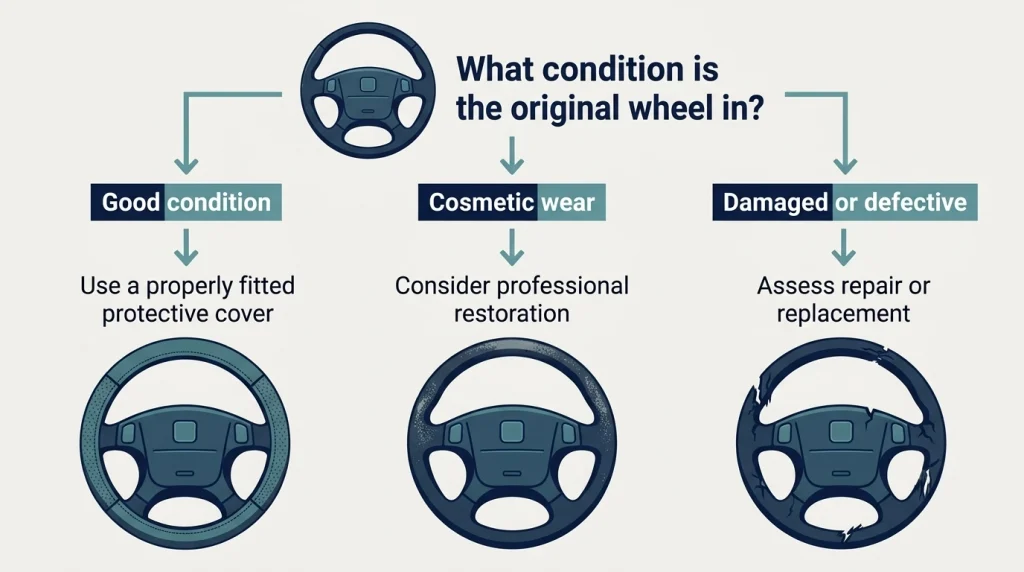
A steering wheel cover is usually worth considering when your original wheel remains structurally sound and you want to preserve its appearance. Replacing or professionally restoring the wheel makes more sense when the existing surface is badly damaged or the wheel itself has a safety-related defect.
When is a cover the better choice?
A cover is a practical option for a newer car, a well-maintained used vehicle, or a daily driver whose original steering wheel still looks good. It can also make sense when you want a different texture without permanently changing the factory component.
Consider a few common situations:
- New or nearly new wheel: A protective cover can help reduce everyday wear from the beginning.
- Older wheel with a sound surface: A cover can help preserve the remaining finish and improve comfort.
- Hot or dusty driving conditions: A suitable, easy-to-clean cover may make routine maintenance more manageable.
- Car you plan to sell: Preserving the original surface may help maintain the interior’s appearance, although it does not guarantee a higher resale price.
When should you repair or replace the wheel instead?
A cover won’t fix a damaged rim, a loose steering component, or a deteriorating surface that continues to shed material. If the factory wheel has significant peeling, deep damage, or an unpleasant sticky finish, investigate the cause before covering it.
Professional restoration may be suitable for cosmetic damage, while replacement may be necessary if the wheel or its components are damaged. Airbag-related work requires particular care because the steering wheel may contain critical safety equipment and electrical connections.
For a replacement, use the correct vehicle-compatible component and qualified installation where necessary. Never assume that an aftermarket steering wheel is safe simply because it fits the steering shaft.
Pro tip: Check your vehicle’s recall status using the NHTSA recall lookup if you suspect a steering or airbag problem. A cover is not a repair for a safety defect.
Compare the options
| Option | Main benefit | Best time to choose it |
|---|---|---|
| Protective cover | Helps prevent everyday surface wear | Original wheel is in good condition |
| Professional restoration | Addresses certain cosmetic defects | Surface is worn or discolored but repairable |
| Wheel replacement | Replaces a damaged or unsuitable wheel | Repair is unsuitable or the component is defective |
Actual costs depend on the vehicle, material, labor, and whether the replacement includes switches, trim, or airbag components. Get a vehicle-specific quote before deciding, rather than assuming replacement will always cost more than restoration.
Section takeaway: Use a cover to preserve a good wheel, not to conceal damage that needs repair or replacement.
Frequently Asked Questions
Do steering wheel covers prevent leather from cracking?
They can reduce direct friction and some sunlight exposure on the covered areas, helping limit certain causes of surface deterioration. However, they cannot stop leather from aging or prevent all heat-related damage. Proper cleaning and care remain important, even when a cover is installed.
Can a steering wheel cover scratch the original steering wheel?
Yes. A poorly fitted cover can move against the original surface, while trapped dust and grit can create abrasion. Remove the cover periodically, inspect the lining, and clean both surfaces using suitable products. Replace the cover if it becomes loose or develops damaged seams.
Should I put a cover on a brand-new steering wheel?
You can, provided the cover fits securely and is compatible with your vehicle’s safety requirements. Installing one early may help reduce everyday wear and contamination. However, some drivers prefer the original grip and feel, so a cover is optional rather than essential.
Do steering wheel covers protect against heat damage?
They provide some shielding from direct sunlight on the covered portions, but they cannot prevent the cabin from heating up or eliminate heat exposure. The cover itself can also become hot. Parking in shade when possible and following your vehicle manufacturer’s care recommendations provide additional protection.
How often should I remove a steering wheel cover for cleaning?
Inspect it every few weeks as a practical starting point, and remove it sooner if you notice dirt, moisture, odor, or changes in grip. Your driving conditions and the cover material determine the ideal cleaning schedule. Always let both surfaces dry fully before reinstalling the cover.
Can a steering wheel cover affect the airbag?
Yes, an unsuitable design may interfere with the steering wheel airbag’s deployment path. Use only a compatible cover that does not obstruct the airbag module, and follow vehicle-specific safety guidance. If compatibility is uncertain, consult the manufacturer or a qualified technician before installing it.
Is a steering wheel cover better than replacing a worn steering wheel?
A cover is generally the simpler option when the original wheel is still sound and needs protection from everyday wear. A worn, peeling, sticky, or damaged wheel may need professional restoration or replacement instead. A cover hides some defects but does not repair them.
Final Takeaway: Protect Your Original Wheel the Right Way
A steering wheel cover can be a worthwhile investment if you want to keep your original steering wheel cleaner and reduce everyday scratches, grime, and surface wear. The key is choosing a suitable material, confirming the correct size, and keeping the cover securely fitted.
Don’t overlook maintenance. Inspect underneath periodically, remove trapped dirt, and replace a cover that slips or deteriorates.
If your factory wheel is already badly damaged, address the underlying problem before adding a cover. And if you have any doubt about airbag compatibility, put safety ahead of appearance.
For most drivers, the best approach is straightforward: preserve a healthy original wheel with a well-fitted cover, maintain it regularly, and repair genuine damage rather than hiding it.

Daniel Brooks is an automotive writer and product researcher focused on car accessories, car tech, maintenance, and practical driving guides. At Plug-in Car World, he helps drivers make smarter automotive decisions through honest reviews and research-driven content.
