
Do Steering Wheel Covers Damage the Original Steering Wheel?
Quick Answer
Yes, steering wheel covers can damage the original steering wheel, but a properly fitted, well-made cover usually poses little risk when installed and maintained correctly. Problems can develop when dirt, moisture, abrasive backing, trapped heat, or color transfer affects the factory surface. Check your vehicle manufacturer’s guidance before covering leather, heated steering wheels, or wheels with driver-assistance sensors.
What can damage the original steering wheel?
- Friction and movement: A loose cover can rub against the factory finish and create scuffs or polished patches.
- Trapped moisture: Sweat, spills, and condensation can affect some leather coatings and other surface materials.
- Heat and sunlight: High temperatures can worsen material deterioration or cause certain cover materials to stick or transfer color.
- Incorrect sizing: A cover that’s too tight may strain seams, while one that’s too loose can shift during steering.
- Harsh materials: Rough inner linings, dye transfer, and unsuitable adhesives can leave marks or damage delicate finishes.
How to prevent damage
- Clean and completely dry the original wheel before installation.
- Choose the correct diameter and follow the cover manufacturer’s fitting instructions.
- Remove the cover periodically to inspect the surface, provided the vehicle manual permits its use.
- Never drive with a cover that slips, twists, or interferes with steering-wheel controls.
Steering wheel covers can improve grip, refresh a worn interior, and protect the factory finish from everyday contact. However, the wrong cover can create the very damage you’re trying to prevent.
When evaluating steering wheel accessories, I focus on fit, inner material, heat compatibility, and how easily the original surface can be inspected. These details matter whether your steering wheel has leather, synthetic leather, rubber, or a heated rim.
This guide explains the main damage risks, which cover materials deserve extra care, how to install and maintain a cover safely, and when leaving the original steering wheel uncovered makes more sense.
In This Guide
- How can steering wheel covers damage the original wheel?
- Which steering wheel materials are most at risk?
- How do you choose a cover that won’t damage the wheel?
- How should you install and maintain a steering wheel cover?
- What are the warning signs of steering wheel damage?
- Is a steering wheel cover better than leaving the wheel uncovered?
- Frequently asked questions
How Can Steering Wheel Covers Damage the Original Wheel?
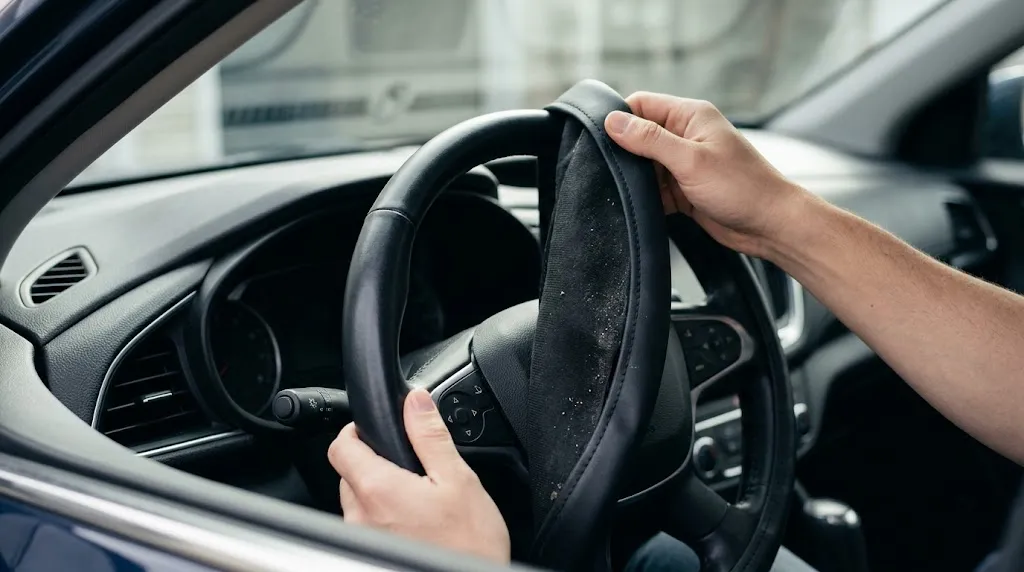
A steering wheel cover can damage the original rim through friction, trapped contaminants, material transfer, or an unsuitable fit. The risk depends on the cover’s construction, the wheel’s finish, and how the vehicle is used and maintained.
1. Friction from a loose or poorly fitted cover
A steering wheel cover should stay firmly in place as you turn the wheel. If it shifts or rotates, its inner surface can repeatedly rub against the factory finish.
Over time, that movement may leave scratches, scuff marks, shiny patches, or uneven wear. The risk increases when dust and grit collect between the two surfaces.
A cover that feels slightly loose after installation isn’t something to ignore. Replace it with the correct size rather than trying to secure it with improvised glue or tape.
2. Moisture, sweat, and trapped dirt
Hands leave behind sweat, skin oils, lotion, and everyday grime. When a cover traps these contaminants against the steering wheel, they can remain in contact with the finish for extended periods.
Leather and coated synthetic surfaces deserve particular attention because their protective finishes can deteriorate through unsuitable chemicals, abrasion, or prolonged contamination. Dirt trapped underneath can also create friction when the cover moves.
For example, installing a cover over a damp leather wheel after cleaning can trap moisture instead of allowing the surface to dry. The better approach is to clean the wheel with an approved product, dry it fully, and then install the cover if the vehicle manufacturer permits one.
3. Heat, color transfer, and material breakdown
A parked car can become extremely hot in direct sunlight. Depending on their composition and quality, some covers may soften, become tacky, release dye, or deteriorate under repeated heat exposure.
Material transfer can be especially frustrating on a light-colored or textured steering wheel. A dark cover may leave discoloration that ordinary cleaning cannot safely remove.
Don’t assume every cover will melt or every leather wheel needs to breathe freely. The actual risk depends on the materials and the vehicle manufacturer’s instructions.
4. Excessive installation tension
Many universal covers require firm stretching to fit around the rim. A correctly sized model should install according to its instructions without forcing the cover beyond its intended limits.
Excessive force can damage the cover’s seams or lining. Using screwdrivers, sharp tools, excessive heat, or lubricants to force it into place may also damage the steering wheel or compromise the cover’s grip.
Section takeaway: A cover is most likely to cause trouble when it moves, traps contaminants, transfers material, or requires excessive force to install. Correct sizing and regular inspection reduce these risks.
Which Steering Wheel Materials Are Most at Risk?
The original steering wheel’s surface determines how it responds to contact with a cover. Leather, synthetic leather, rubberized finishes, and heated steering wheels each have different care requirements.
Leather steering wheels
Leather steering wheels often have a protective coating that provides a consistent feel and helps resist everyday wear. That coating can still suffer from abrasion, contamination, unsuitable cleaning products, and repeated rubbing.
Some manufacturers explicitly warn against covering leather steering wheels with certain materials. Volvo, for example, advises against covering the leather steering wheel in applicable owner guidance.
Before installing a cover, consult the owner’s manual for your exact model and year. If the manufacturer prohibits covers, leave the wheel uncovered.
Synthetic leather and vinyl
Synthetic leather and vinyl can be practical, easy-to-clean finishes, but they aren’t immune to damage. Friction may wear the surface, while heat and chemical exposure can affect some coatings.
Inspect the wheel for peeling, cracks, or loose material before covering it. A cover won’t repair damaged material, and continued movement can make the condition harder to assess.
Rubberized and textured steering wheels
Rubberized surfaces and textured plastic can provide useful grip without leather upholstery. Their texture may also make dust and small particles harder to remove from the contact area.
A cover with a rough backing may rub against raised patterns or textured sections. Choose a compatible inner surface and avoid covers that compress or distort the original grip.
Heated steering wheels and driver-assistance sensors
Heated steering wheels need special consideration because an added layer can change how heat reaches your hands. A cover may also interfere with temperature sensing or heating performance, depending on the vehicle’s design.
Some newer vehicles use capacitive sensors to detect hands on the steering wheel for driver-assistance features. An incompatible cover can affect that detection, so check the owner’s manual before fitting one.
Pro tip: Follow your vehicle’s owner manual for heated-wheel and driver-assistance compatibility. If the guidance is unclear, ask the manufacturer’s service department before installing an accessory.
The following table summarizes the main concerns.
| Original wheel type | Main concern | Best approach |
|---|---|---|
| Coated leather | Abrasion, contamination, finish damage | Check manufacturer guidance and keep the surface clean and dry. |
| Synthetic leather or vinyl | Peeling, discoloration, surface wear | Avoid rough backings and unsuitable cleaning chemicals. |
| Textured rubber or plastic | Scuffing and trapped grit | Choose a compatible fit and inspect the texture underneath. |
| Heated steering wheel | Heat performance and compatibility | Use a cover only if the vehicle manufacturer permits it. |
| Sensor-equipped wheel | Potential interference with hand detection | Confirm compatibility with the specific driver-assistance system. |
Section takeaway: The safest choice depends on your original steering wheel, not just the cover’s advertised material. Leather, heated wheels, and sensor-equipped systems may require extra precautions or no cover at all.
How Do You Choose a Cover That Won’t Damage the Wheel?
A safe steering wheel cover should match the original wheel’s size, stay securely in place, and use materials compatible with the factory finish. Don’t choose one based on appearance or price alone.
Check the steering wheel size
Measure the outside diameter of the steering wheel and check the manufacturer’s fitment guidance. Many passenger-car wheels measure approximately 14–16 inches (35.6–40.6 cm) across, but you should measure your own wheel rather than assume it fits a standard size.
Also consider rim thickness. A cover designed for a thinner rim may stretch excessively over a thicker wheel, while an oversized cover may shift during turns.
Compare cover materials
The material touching your original steering wheel matters as much as the outer finish. Look for a smooth, compatible lining without exposed rough edges, loose stitching, or unexplained adhesive surfaces.
| Cover material | Potential advantage | What to check |
|---|---|---|
| PU leather | Smooth feel and easy surface cleaning | Dye transfer, coating quality, and heat compatibility |
| Genuine leather | Traditional appearance and a natural feel | Lining texture, fit, and care instructions |
| Microfiber or suede-style fabric | Soft, textured grip | Lint, moisture retention, and abrasive backing |
| Silicone or rubberized material | Grippy surface and simple cleaning | Fit, heat resistance, and compatibility with the original finish |
No material is automatically safe for every steering wheel. A well-made cover can still be unsuitable if the vehicle manufacturer prohibits it or its inner surface damages the original finish.
Look for clear product instructions
Choose a cover with specific sizing information, installation instructions, and cleaning guidance. Avoid products that recommend permanent adhesive, excessive heating, or improvised modifications to achieve a fit.
Be cautious of covers with decorative studs, hard protrusions, or poorly secured parts. Anything that changes how you grip or turn the wheel deserves extra scrutiny.
Section takeaway: Prioritize correct sizing, compatible materials, and a secure fit. If the manufacturer doesn’t clearly explain how the cover fits your type of steering wheel, choose a better-documented option.
How Should You Install and Maintain a Steering Wheel Cover?
Proper installation starts with a clean, dry steering wheel and a cover designed for that wheel. Routine inspection then helps catch movement, trapped dirt, and early signs of damage before they worsen.
How to install a steering wheel cover safely
You generally don’t need to remove the steering wheel or disconnect the battery to fit a simple rim cover. Never remove the steering wheel, airbag module, or other steering components as part of an ordinary cover installation.
Follow these steps for a conventional slip-on cover, provided your owner’s manual allows its use:
- Inspect the original rim: Look for peeling, cracks, loose stitching, sticky patches, or existing discoloration.
- Clean the surface: Use a soft cloth and a cleaning product approved for the original material.
- Dry the wheel completely: Don’t trap cleaning moisture beneath the cover.
- Check the cover: Examine its inner lining, seams, and edges for rough spots or damage.
- Fit it evenly: Follow the supplied instructions without forcing the material or using sharp tools.
- Check its stability: With the vehicle safely parked, confirm the cover sits evenly and doesn’t rotate or interfere with controls.
Stop if the cover requires unusual force or refuses to sit evenly. A different size or design is safer than improvising a repair.
How often should you inspect the wheel underneath?
There isn’t one universal inspection interval for every cover and vehicle. As a practical routine, inspect the contact surface after the first few drives and then periodically, especially following hot weather, spills, or heavy use.
If the cover is removable and approved for your vehicle, take it off carefully according to its instructions. Check for the following signs:
- Dampness, sweat deposits, or accumulated grit.
- Dark or colored marks that weren’t present before.
- Scuffing, peeling, or changes in the leather’s texture.
- A loose lining, stretched seam, or cover that has started slipping.
How should you clean the original steering wheel?
Use the cleaning method recommended for your specific steering wheel material. Some leather coatings require only a soft, slightly damp cloth, while other finishes may allow approved automotive interior cleaners.
Avoid aggressive scrubbing, household solvents, abrasive pads, and unapproved conditioners. These products can damage a coating even when the steering wheel has no cover installed.
For more specific guidance, consult the vehicle manufacturer’s care instructions or a qualified automotive interior specialist. If the surface starts peeling, don’t assume it needs stronger cleaning; the finish may already be deteriorating.
Section takeaway: Clean and dry the rim before fitting a cover, install it without forcing it, and inspect the hidden surface regularly. Stop using any cover that moves or leaves marks.
What Are the Warning Signs of Steering Wheel Damage?
Changes in texture, discoloration, sticky patches, and peeling can indicate that a cover is affecting the original steering wheel. Remove a suspect cover when it’s safe to do so, then assess the damage before driving again if grip or control has been affected.
| Warning sign | Possible cause | Recommended action |
|---|---|---|
| Shiny or scuffed patches | Repeated rubbing or surface abrasion | Remove the cover and inspect the finish. |
| Dark or colored stains | Dye transfer, dirt, or skin products | Test only a manufacturer-approved cleaning method. |
| Sticky or tacky surface | Material breakdown, residue, or contamination | Stop using the cover and identify the cause before cleaning. |
| Peeling or loose surface material | Coating deterioration, abrasion, or an existing defect | Arrange a suitable repair assessment. |
| Cover rotates or bunches | Incorrect sizing or worn attachment points | Stop driving until the cover is removed or correctly replaced. |
Can you repair a damaged steering wheel?
Minor surface contamination may respond to appropriate cleaning, but scratches, transferred dye, peeling coatings, and damaged leather require different solutions. Trying to polish away every mark can remove more of the original finish.
Don’t apply household glue, permanent adhesive, or an aggressive solvent to hide the damage. These quick fixes can make professional repair more difficult.
If the wheel has extensive peeling or worn-through material, consult an automotive upholstery specialist or the vehicle manufacturer’s service department. They can assess whether refinishing, re-covering, or replacement is appropriate.
Factory warranties may exclude damage caused by accessories or outside influences. Check the warranty terms before attempting a repair, particularly if the vehicle is relatively new.
Pro tip: Manufacturer service bulletins document steering-wheel finish problems and approved care methods for specific vehicles. Check applicable guidance before assuming the cover caused the damage.
Is a Steering Wheel Cover Better Than Leaving the Wheel Uncovered?
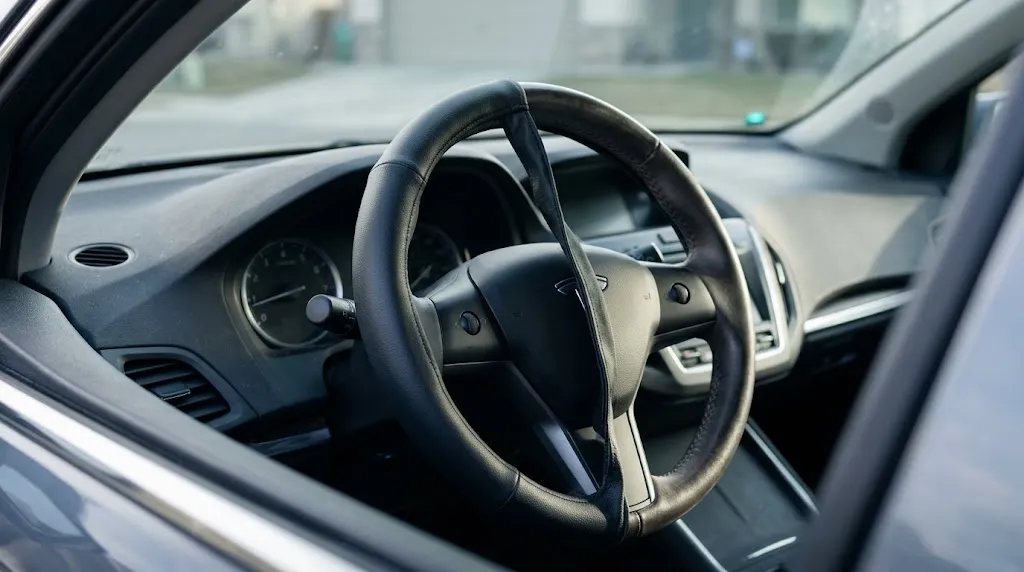
A steering wheel cover can protect against everyday contact and improve comfort, but leaving the factory wheel uncovered avoids cover-related friction, trapped moisture, and compatibility concerns. The better option depends on the original finish and your vehicle’s requirements.
When a cover makes sense
- Protecting a compatible finish: A secure cover can reduce direct contact with sweat, skin oils, and everyday grime.
- Improving comfort: Some drivers prefer a different grip texture or a slightly thicker rim.
- Refreshing the appearance: A cover can change the interior’s look without replacing the steering wheel.
When leaving the wheel uncovered is better
- Factory guidance prohibits covers: Follow the vehicle manufacturer’s instructions rather than risk damaging the finish.
- The wheel has heating or sensing features: An added layer may interfere with designed performance.
- The existing surface is already damaged: Inspect and address peeling, cracks, or loose material instead of concealing it.
- The cover cannot fit securely: A cover that twists or slips is not worth the risk to steering control.
Steering wheel covers are different from decorative center emblems and airbag-cover accessories. The center of the steering wheel houses safety equipment on many vehicles, and additions there can create serious hazards.
The National Highway Traffic Safety Administration’s airbag guidance explains why steering-wheel airbag areas must remain compatible with the vehicle’s safety system. Never attach decorative items over the airbag cover or alter the airbag assembly to accommodate an accessory.
Section takeaway: Use a cover only when it is compatible with your vehicle and remains secure. If the original wheel is in good condition and the manufacturer advises against covering it, leaving it uncovered is the better choice.
Frequently Asked Questions
Can a steering wheel cover scratch leather?
Yes. A cover can scratch leather if it shifts against the rim, traps grit, or has a rough inner lining. Clean and dry the wheel before installation, choose a compatible cover, and inspect the leather periodically for new marks.
Can a steering wheel cover ruin a brand-new steering wheel?
It can damage a new wheel if its material transfers dye, its backing abrades the finish, or it traps moisture and contaminants. Check the owner’s manual first, especially while the vehicle remains under warranty, and use only an approved cover.
Can a steering wheel cover melt in a hot car?
Some materials may soften, become tacky, or deteriorate in high temperatures, but this does not happen to every cover. Choose a product with suitable heat-resistance information and follow the vehicle manufacturer’s guidance for hot-weather parking and heated steering wheels.
Should I remove my steering wheel cover at night?
Usually, you don’t need to remove a compatible cover every night. Regular inspection matters more than a fixed daily removal schedule. However, remove it when you notice slipping, moisture, staining, or surface damage, and follow any specific instructions from the vehicle manufacturer.
Can a steering wheel cover damage a heated steering wheel?
A cover may affect heat transfer or conflict with the manufacturer’s operating instructions. Compatibility depends on the vehicle and cover design. Check the owner’s manual before installation and don’t use a cover if the manufacturer prohibits it.
Will a steering wheel cover hide existing damage?
It may conceal cosmetic wear, but it won’t repair peeling leather, damaged coatings, or structural problems. Inspect the wheel before covering it, and arrange appropriate repairs if the surface is deteriorating or the grip has become unreliable.
How do I know if my steering wheel cover is too loose?
If the cover rotates independently, bunches up, shifts position, or changes your grip while turning, it isn’t secure enough. Stop driving, remove it safely, and replace it with a correctly sized model rather than trying to compensate with glue or tape.
Final Takeaway: Protect the Original Wheel Without Creating New Problems
Steering wheel covers don’t automatically damage the original wheel, but poor fit, rough backing, trapped contaminants, and incompatible materials can shorten the life of its finish. Choosing the right cover and inspecting it regularly are the most practical ways to reduce those risks.
Before buying, check your steering wheel’s material, measure its diameter, and confirm that your vehicle manufacturer permits a cover. If your wheel has heating or driver-assistance features, verify compatibility first.
For more car-accessory and maintenance guidance, explore the relevant guides on PluginCarWorld when available. A little attention before installation can help preserve your original steering wheel without compromising comfort or control.

Daniel Brooks is an automotive writer and product researcher focused on car accessories, car tech, maintenance, and practical driving guides. At Plug-in Car World, he helps drivers make smarter automotive decisions through honest reviews and research-driven content.
