
Can a Steering Wheel Cover Prevent Steering Wheel Wear?
Quick Answer
Yes, a properly fitted steering wheel cover can prevent or slow wear on your car’s original steering wheel by reducing direct contact, friction, sweat exposure, and surface abrasion. It works best when installed on a clean, undamaged wheel and kept free of trapped grit. For the best long-term results, combine a suitable cover with regular cleaning and follow your vehicle manufacturer’s guidance on steering wheel accessories.
What protection can you expect?
- Less surface friction: A cover takes much of the rubbing from your hands instead of the original leather, vinyl, or plastic.
- Reduced sweat exposure: The cover helps limit direct contact with moisture, skin oils, and everyday grime.
- Fewer cosmetic marks: It can help prevent minor scuffs, discoloration, and surface polishing from frequent use.
- Limited heat exposure: A cover may shield the underlying surface from some direct sunlight, depending on its material and fit.
- No repair of existing damage: It won’t restore cracked leather, peeling coatings, or worn-through material.
- Fit matters: A loose cover or one with trapped dirt can create new wear and interfere with confident steering.
One important precaution
- Choose a cover that fits the wheel precisely, does not slip during turning, and does not obstruct controls or interfere with any airbag-related components.
A steering wheel cover is a protective layer fitted over the original steering wheel to reduce everyday contact and surface wear. If you want to preserve your car’s interior, the right cover can help keep the wheel looking better for longer.
I’ve approached steering wheel care from a practical ownership perspective: prevention is usually easier than repairing a worn finish. In this guide, I’ll explain which types of wear a cover can prevent, which materials work best, and how to avoid making the problem worse.
In This Guide
- How does a steering wheel cover prevent wear?
- What types of steering wheel wear can a cover prevent?
- Which steering wheel cover material protects best?
- How do you choose and install a protective cover?
- How should you maintain a covered steering wheel?
- Is a steering wheel cover better than leaving the wheel uncovered?
- Frequently asked questions
How Does a Steering Wheel Cover Prevent Wear?

A steering wheel cover protects the original surface by taking the direct contact that would otherwise occur between your hands and the factory steering wheel. It creates a replaceable barrier against everyday friction, skin oils, and minor abrasions.
It reduces friction from daily driving
Every steering correction creates some movement between your hands and the wheel’s surface. Over months and years, repeated contact can polish textured finishes, wear through coatings, or contribute to deterioration in vulnerable areas.
A cover absorbs much of this contact instead. This can be especially useful for drivers who commute daily, make frequent turns, or regularly drive in stop-and-go traffic.
It limits contact with sweat and skin oils
Hands naturally transfer sweat, oils, lotion, and dirt to the steering wheel. Over time, this residue can leave the surface shiny, sticky, discolored, or harder to clean.
A removable cover catches much of that contamination before it reaches the original finish. However, the cover itself needs cleaning because accumulated grime can transfer through seams or reach the underlying surface.
It adds a barrier against minor abrasion
Small particles of dust and grit can scratch or wear a steering wheel when they become trapped between the surface and your hands. A cover can reduce direct abrasion, provided the inside remains clean.
The protection isn’t automatic. Dirt trapped underneath a poorly maintained cover may rub against the original material whenever the wheel moves or the cover shifts.
It can help preserve the original appearance
Factory steering wheels may develop glossy patches, faded sections, peeling coatings, or cracks as they age. A cover can reduce exposure to some causes of this deterioration, helping the wheel retain a cleaner appearance.
It won’t stop every form of aging. Heat, material quality, previous damage, and the vehicle’s storage conditions still influence how the original wheel holds up.
Section takeaway: A steering wheel cover helps prevent contact-related wear, but it works best when it fits securely and stays clean underneath.
What Types of Steering Wheel Wear Can a Cover Prevent?
A cover can reduce several common forms of cosmetic wear, but it cannot prevent every type of damage. Understanding the difference helps you decide whether a cover is enough or the original wheel needs repair.
Shiny and worn patches
Leather and some synthetic finishes can become smooth and glossy where your hands grip the wheel most often. A cover reduces direct rubbing on those areas and may slow further surface polishing.
If the wheel already has shiny patches, the cover can hide them. Removing the cover later may reveal the same marks because it hasn’t restored the underlying finish.
Discoloration and surface grime
Light-colored steering wheels often show grime more readily than dark ones. Regular contact with dirty hands, sunscreen, and other skin products can gradually change the appearance of the surface.
A washable or cleanable cover helps keep much of that residue away from the original wheel. It still needs periodic cleaning to prevent dirt from building up.
Minor scuffs and scratches
A cover provides a sacrificial outer layer that can take some everyday scuffs from rings, fingernails, or incidental contact. The amount of protection depends on the cover’s thickness, material, and fit.
It isn’t designed to withstand sharp tools, severe impacts, or deliberate cutting. Deep scratches already present on the original wheel also remain underneath.
Cracking, peeling, and heat-related deterioration
A cover may reduce direct sunlight exposure on the covered surface, but it cannot guarantee protection against heat damage. High cabin temperatures can still affect the wheel, and the cover itself can become hot.
Cracked leather, peeling synthetic coatings, and brittle plastic generally require assessment or repair rather than preventive accessories. Covering the damage may conceal its progression without addressing the cause.
What a cover cannot protect against
- Structural damage: It cannot repair a bent, broken, or otherwise damaged steering wheel.
- Mechanical steering faults: It does not fix steering vibration, excessive play, or power steering problems.
- Internal electrical issues: It cannot protect or repair a faulty clock spring, wiring, or steering-wheel controls.
- All environmental damage: Heat, aging, and poor-quality materials can still deteriorate underneath the cover.
Section takeaway: Covers are most useful for preventing everyday surface deterioration, not repairing damage or solving mechanical problems.
Which Steering Wheel Cover Material Protects Best?
The best material depends on how often you drive, how much grip you prefer, and how much maintenance you’re willing to do. A secure fit and regular cleaning matter just as much as the material itself.
Leather and synthetic leather
Genuine leather covers offer a familiar feel and can provide a durable protective layer when properly cared for. They suit drivers who want a traditional interior appearance and a comfortable grip.
PU leather, also called synthetic leather, usually costs less and is easy to wipe clean. Its lifespan varies with the quality of the surface coating, stitching, and backing material.
Microfiber and suede-style materials
Microfiber and suede-style covers can offer a soft, tactile grip. They may suit drivers who prefer a less slippery surface, although textured materials can collect dust, lint, and skin oils.
Some suede-style materials are intended for performance driving rather than low-maintenance daily use. Check the manufacturer’s cleaning instructions before using water or cleaners.
Rubber and silicone-style covers
Rubberized and silicone-style covers often prioritize grip, straightforward cleaning, and resistance to moisture. Their texture can help some drivers maintain a comfortable hold, but an unsuitable design may feel bulky.
Check the actual material composition instead of relying on a product’s marketing label. Not every rubberized or silicone-style cover offers the same durability, surface texture, or heat resistance.
Material comparison at a glance
| Material | Protection and feel | Maintenance | Best suited to |
|---|---|---|---|
| Genuine leather | Comfortable barrier; premium feel | Periodic material-appropriate care | Drivers who prefer a traditional finish |
| PU leather | Smooth barrier; easy to wipe | Routine gentle cleaning | Everyday commuting |
| Microfiber or suede-style | Soft, textured grip | More attention to dust and oils | Drivers who prioritize tactile feel |
| Rubber or silicone-style | Textured, practical barrier | Often simple to wipe clean | Drivers seeking easy-care grip |
These are general material characteristics, not guaranteed performance rankings. Construction, temperature exposure, compatibility, and product quality can make two covers made from similar materials perform differently.
Section takeaway: Choose a cover for its secure fit, comfortable grip, and cleaning requirements rather than material claims alone.
How Do You Choose and Install a Protective Cover?
A protective cover should fit your exact steering wheel, remain stable during turning, and feel natural in your hands. Choosing the wrong size can undermine both protection and driving confidence.
Measure the steering wheel correctly
Measure the outside diameter of the steering wheel across its center, from one outer edge of the rim to the opposite edge. Measure the rim thickness too, because covers vary in the range of wheel sizes and rim profiles they accommodate.
Many passenger-car steering wheels fall around the 14–16-inch diameter range, but this is only a general guide. Use your vehicle’s specifications and the cover manufacturer’s fitment chart rather than assuming a universal size.
Check compatibility before buying
Before purchasing, confirm these details:
- Diameter: The cover must match the wheel’s measured outside diameter.
- Rim thickness: Check that the cover accommodates the wheel’s cross-section.
- Material compatibility: Make sure the inner lining won’t damage or react with the original finish.
- Grip and bulk: Confirm that the additional thickness doesn’t make steering uncomfortable or difficult.
- Controls and special features: Check compatibility with heated steering wheels, unusual rim shapes, and any manufacturer restrictions.
Install the cover without damaging the original finish
For a typical slip-on cover, you usually won’t need tools. Allow around 10–20 minutes as a practical planning estimate, although tight-fitting covers can take longer.
- Park safely: Park on level ground, engage the parking brake, and switch off the vehicle.
- Clean the wheel: Remove dust and residue using a cleaner approved for the original steering wheel material.
- Inspect the surface: Look for cracks, peeling, sticky patches, and loose trim before covering the wheel.
- Check the orientation: Align the cover according to its instructions before stretching it into position.
- Fit it gradually: Work around the rim evenly without using sharp tools that could cut the cover or scratch the wheel.
- Inspect the fit: Check the entire circumference for bunching, gaps, twists, or exposed sections.
- Check steering operation: Confirm that the cover stays firmly in place and doesn’t interfere with controls or the driver’s grip.
Never use a cover that moves independently of the steering wheel during normal hand pressure. Remove it and correct the fit before driving.
Pro tip: Follow your vehicle owner’s manual for accessory restrictions, particularly for heated steering wheels and airbag-equipped vehicles. Do not attach anything over the airbag cover or modify the steering wheel’s safety components.
What about heated steering wheels?
A cover can change how quickly heat reaches your hands and how evenly it feels across the rim. Thick or insulating materials may reduce the sensation of the heating system, and compatibility varies by product.
Use only a cover explicitly approved for your vehicle’s heated wheel when the manufacturer requires one. Don’t assume a product is safe for heated use simply because it stretches over the rim.
Section takeaway: Measure first, clean carefully, and prioritize a secure fit that preserves normal steering control and vehicle-specific features.
How Should You Maintain a Covered Steering Wheel?
Regular cleaning helps a steering wheel cover protect the original surface instead of trapping contaminants against it. A quick inspection every few weeks is a sensible starting point for a frequently driven car.
Clean the cover and inspect underneath
Wipe the outer surface according to the cover manufacturer’s instructions. If the material allows it, use a slightly damp microfiber cloth and dry the surface before driving.
Remove the cover periodically when its design allows safe removal and reinstallation. Check for accumulated grit, moisture, discoloration, and abrasion on the original wheel.
Drivers who regularly carry passengers, work outdoors, or use the car for long commutes may need to clean the cover more frequently. Adjust the schedule to how quickly dirt and sweat accumulate.
Avoid cleaners that damage the finish
Strong solvents, abrasive pads, and unsuitable household cleaners can strip coatings, discolor leather, or damage synthetic materials. Check your vehicle manual and the cover’s care instructions before applying any cleaning product.
For manufacturer-approved interior care guidance, start with your vehicle brand’s official owner resources. General automotive advice cannot replace instructions specific to your wheel’s materials and finish.
Watch for these common mistakes
- Leaving dirt underneath: Fine grit can abrade the original surface as the cover shifts.
- Ignoring a loose fit: Movement can reduce grip and create uneven wear.
- Using excessive moisture: Water trapped beneath a cover may encourage staining or affect vulnerable materials.
- Overlooking damage: A cover can hide cracks, peeling, and deteriorating surfaces that need attention.
- Using incompatible products: Some cleaners and conditioners can leave residues or damage coatings.
When should you replace the cover?
Replace a cover if its seams split, its surface becomes slippery, its backing deteriorates, or it no longer stays firmly attached. Don’t wait for visible failure if you notice movement while steering.
If the original wheel becomes sticky, develops cracks, or sheds material, inspect it rather than simply installing another cover. Persistent deterioration may call for a suitable repair or replacement assessment.
Section takeaway: Clean both surfaces when appropriate, check the fit regularly, and replace any cover that becomes loose or damaged.
Is a Steering Wheel Cover Better Than Leaving the Wheel Uncovered?
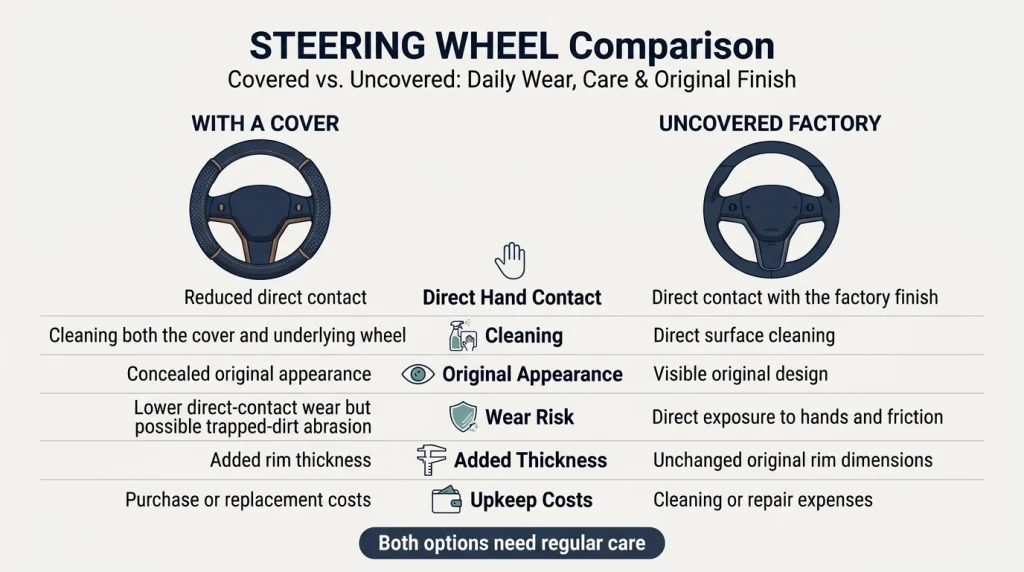
A cover is often worthwhile if your main goal is to preserve a good original steering wheel. However, an uncovered wheel can also last well when you clean it correctly and protect the car’s interior from excessive heat.
Compare the two approaches
| Consideration | With a cover | Without a cover |
|---|---|---|
| Direct hand contact | Reduced on the original surface | Direct contact with the factory finish |
| Cleaning | Cover and underlying wheel may need attention | Clean the original surface directly |
| Original appearance | Hidden while the cover remains installed | Factory design remains visible |
| Wear risk | Lower direct contact, but trapped dirt can cause abrasion | Direct wear from hands, dirt, and friction |
| Added thickness | May change grip and steering feel | Retains the original rim dimensions |
| Upkeep costs | Purchase and possible replacement costs | Cleaning supplies and any needed repairs |
When does a cover make the most sense?
Consider one if your car has a clean factory wheel that you want to preserve, especially if you drive frequently or notice wear where your hands rest. A removable cover can also be useful if you prefer a different grip texture.
If your steering wheel already has a comfortable, durable finish, you may prefer to keep it uncovered. Consistent cleaning and sensible interior care can still help maintain its condition.
What if you plan to sell your car?
A well-maintained original steering wheel can contribute to a tidy-looking interior, but a cover does not guarantee a higher resale value. Buyers may want to inspect the factory surface, so remove the cover before presenting the car when appropriate.
As of 2026, the practical decision remains the same: choose a cover for genuine protection and comfort, not as a substitute for maintenance. Keep the original wheel in good condition either way.
For broader car-care guidance, consult established automotive resources such as Edmunds and Car and Driver. For safety-related concerns, refer to the National Highway Traffic Safety Administration (NHTSA).
Section takeaway: A well-fitted cover offers an extra layer of protection, while careful cleaning remains important whether you use one or not.
Frequently Asked Questions
1. Does a steering wheel cover prevent leather from cracking?
A steering wheel cover can reduce direct friction, sweat exposure, and some sunlight exposure, which may help limit certain forms of wear. However, it cannot guarantee that leather won’t crack. Material quality, heat, aging, and previous damage still affect the wheel’s condition.
2. Can a steering wheel cover damage the original steering wheel?
Yes, it can if dirt or moisture becomes trapped underneath, the cover slips, or its inner material reacts with the original finish. Choose a compatible cover, clean the wheel before installation, and inspect both surfaces periodically to reduce these risks.
3. How often should I remove my steering wheel cover for cleaning?
There is no universal interval because driving conditions and cover materials vary. Inspect it every few weeks as a starting point, and remove it when the manufacturer’s instructions permit if you notice dirt, moisture, or movement underneath.
4. Is a leather steering wheel cover better than a rubber one?
Neither material is universally better. Leather covers offer a traditional feel, while rubberized options often emphasize grip and easy cleaning. The right choice depends on material quality, fit, comfort, maintenance needs, and compatibility with your vehicle.
5. Can I put a cover over a cracked steering wheel?
You may be able to fit a compatible cover over cosmetic damage, but it won’t repair the original surface. Inspect the wheel first, particularly if material is peeling or breaking away. Seek professional advice if the damage affects secure grip or the wheel’s structural condition.
6. Will a steering wheel cover protect my wheel from sunlight and heat?
A cover may reduce direct sunlight exposure on the area it covers, but protection depends on the material and design. It cannot prevent cabin heat from affecting the wheel, dashboard, or other interior components. Parking in shade and using appropriate sun protection can help limit exposure.
7. Can a steering wheel cover affect driving safety?
Yes, an incorrectly sized or loose cover can shift under your hands and compromise control. Choose the correct fit, ensure the cover does not obstruct controls, and follow vehicle-specific restrictions. Never attach accessories over the steering wheel airbag cover or interfere with safety components.
Final Takeaway: Protect Your Steering Wheel Before Wear Starts
Yes, a steering wheel cover can help prevent steering wheel wear by reducing direct contact, friction, and everyday grime. Its effectiveness depends on a compatible material, a secure fit, and consistent maintenance.
For a wheel in good condition, prevention is usually simpler than repairing a worn finish. Choose a cover that feels comfortable, inspect the surface underneath, and clean both according to their manufacturers’ instructions.
If you prefer the original steering wheel’s feel, leaving it uncovered is also reasonable. Regular cleaning and sensible interior care remain the foundation of long-term protection.

Daniel Brooks is an automotive writer and product researcher focused on car accessories, car tech, maintenance, and practical driving guides. At Plug-in Car World, he helps drivers make smarter automotive decisions through honest reviews and research-driven content.
