
Are Plush Velvet Steering Wheel Covers Comfortable?
Quick Answer
Yes, plush velvet steering wheel covers can feel soft, cozy, and comfortable, especially during cold-weather drives. However, thick or slippery fabric may reduce grip, trap heat, and make steering less natural, so comfort depends on the material, fit, and construction. Before buying, compare the texture and thickness with a conventional steering wheel accessory safety guidance approach that prioritizes secure control.
What Determines Comfort?
- Softness: Plush fibers feel gentler against bare hands than hard, worn steering wheel surfaces.
- Temperature: Velvet-style fabric can reduce the cold sensation of a parked steering wheel during winter.
- Grip: A secure inner lining and a stable outer texture matter more than softness alone.
- Thickness: Excess padding can make the rim harder to hold, particularly for drivers with smaller hands.
- Fit: The cover must match the wheel diameter and remain firmly in place during turns.
- Climate: Thick plush can feel warm and cozy in cool weather but uncomfortable in a hot cabin.
Before You Install One
- Measure your steering wheel, check the cover’s grip, and confirm that it cannot rotate independently of the wheel.
- Check your owner’s manual before using a cover on a heated steering wheel, and avoid anything that obstructs controls or airbag deployment.
Plush velvet steering wheel covers offer a simple way to change how your car feels without replacing the original steering wheel. Their appeal is easy to understand: a soft surface can make everyday driving feel more comfortable while adding a distinctive look to the interior.
But a steering wheel isn’t an ordinary touchpoint. You need to hold it securely, make quick adjustments, and maintain consistent control in changing traffic conditions.
In this guide, I’ll explain how velvet covers compare with leather and silicone alternatives, how to choose the right fit, and which comfort trade-offs deserve attention before you buy.
In This Guide
- What is a plush velvet steering wheel cover?
- What makes plush velvet covers comfortable?
- Do velvet steering wheel covers provide enough grip?
- How does velvet compare with leather and silicone?
- How do you choose and install the right cover?
- How do you maintain a plush cover, and what are its drawbacks?
- Are plush velvet steering wheel covers worth buying?
- Frequently asked questions
What Is a Plush Velvet Steering Wheel Cover?
A plush velvet steering wheel cover is a removable fabric sleeve that fits around a car’s existing steering wheel rim. Manufacturers may use polyester velvet, velour, faux fur, or similar soft-touch materials, sometimes combined with foam padding and a rubberized inner lining.
Despite the name, not every product advertised as velvet uses traditional woven velvet. Some use synthetic pile fabric designed to imitate velvet’s smooth, soft surface.
How is plush velvet different from ordinary velvet?
Automotive covers need to stretch around a curved rim and withstand repeated handling. Their construction therefore matters as much as the fabric’s appearance.
- Short-pile velvet: Offers a relatively smooth, soft surface without excessive fluff.
- Velour: Provides a soft, fabric-like feel and may have a flatter finish than long-pile plush.
- Faux fur: Creates a thicker, fluffier surface that emphasizes warmth and decoration.
- Padded plush: Adds a layer of cushioning, increasing the steering wheel’s overall thickness.
The inner layer also varies. Some covers use elastic material, while others include rubber or silicone patterns intended to resist movement.
Why do drivers choose velvet covers?
Most buyers want a softer hand feel, a warmer surface during cold weather, or a decorative interior upgrade. A cover can also hide some cosmetic wear on the original rim, although it won’t repair damaged steering wheel material.
In 2026, the sensible approach remains the same: choose a cover for its actual fit and grip rather than its appearance alone. A soft exterior cannot compensate for a loose fit or a bulky shape.
What Makes Plush Velvet Steering Wheel Covers Comfortable?

Plush velvet covers can improve tactile comfort by softening contact with the steering wheel and reducing the sensation of a cold rim. Their benefits depend on cabin temperature, hand size, fabric thickness, and how securely the cover fits.
Do velvet covers make a steering wheel warmer?
Yes, a thick fabric cover can make a cold steering wheel feel less harsh against your hands. The fabric traps some air and reduces direct contact with the original rim’s surface.
This is particularly appealing when a car sits outside overnight. A plush cover may feel more welcoming during the first few minutes of a chilly morning drive.
However, warmth can become a disadvantage in a hot cabin. Thick synthetic fabric may feel stuffy against sweaty palms, especially during long journeys or in warm, humid weather.
Can a velvet cover reduce hand fatigue?
A comfortable cover may help if your original steering wheel feels hard, rough, or unpleasant to hold. Light padding can spread pressure across your palms, while a soft surface reduces direct rubbing.
That doesn’t mean thicker is always better. A bulky cover may force your fingers into a less natural position, particularly if you have smaller hands or your car already has a thick steering wheel.
Does plush fabric feel comfortable during long drives?
It can, provided the material stays dry and the rim remains easy to grip. Short-pile fabric usually feels less cumbersome than deep, fluffy material when you hold the wheel continuously.
For example, imagine commuting for 45 minutes in a compact car with a relatively slim steering wheel. A thin velvet cover may soften the surface without dramatically changing the way your fingers wrap around it.
Now imagine fitting a thick, padded cover to an already bulky SUV steering wheel. The extra circumference could make tight turns and repeated parking maneuvers feel less natural.
My practical rule is to prioritize a comfortable hand position over maximum cushioning. Your fingers should close around the rim without strain, and the cover shouldn’t change your normal steering technique.
Do Velvet Steering Wheel Covers Provide Enough Grip?
Some plush velvet steering wheel covers provide a stable hold, but softness alone doesn’t guarantee secure grip. The fabric’s surface, the backing material, the cover’s fit, and moisture on your hands all influence how confidently you can steer.
Why does grip matter more than softness?
Your steering wheel transmits your hand movements to the steering system. If a cover shifts independently of the rim, your hands may move the cover before the wheel responds as expected.
That can interfere with precise steering, particularly during emergency maneuvers. A cover that rotates, bunches up, or slips under pressure isn’t suitable for driving.
Look for these features before choosing a plush cover:
- Secure backing: An inner lining designed to resist movement against the original rim.
- Close fit: The correct diameter and shape, without loose sections or wrinkles.
- Controlled thickness: Enough cushioning for comfort without making the wheel difficult to hold.
- Stable surface: Fabric that doesn’t become excessively slippery when your palms sweat.
- Clear construction details: Product information explaining the material, dimensions, and intended fit.
Can plush covers become slippery?
They can, depending on the fabric and finish. Long, smooth fibers may feel less secure than textured synthetic leather or a purpose-designed grip surface, especially when moisture accumulates.
Don’t assume that a seller’s “anti-slip” description proves the cover will remain secure on your particular wheel. Check the construction, fit it carefully, and inspect it for movement before driving.
What about steering wheel controls and airbags?
A properly fitted rim cover should not obstruct the horn, steering-wheel buttons, paddle shifters, or other controls. Never stretch a cover over the center airbag module or add decorations that could interfere with its deployment.
Pro tip: Check your vehicle owner’s manual for steering wheel and airbag warnings. NHTSA also provides safety guidance on aftermarket steering wheel decorations; its warnings about loose decorative objects reinforce why secure installation matters.
Although a rim cover is different from a decorative decal, neither comfort nor appearance should take priority over safe steering and unobstructed airbag operation.
How Does Velvet Compare With Leather and Silicone?
Velvet is usually the better choice for a soft, cozy feel, while leather and silicone-style covers may suit drivers who prioritize a more defined grip. The right material depends on your climate, driving habits, hand size, and tolerance for extra maintenance.
Steering wheel cover material comparison
| Material | Comfort | Grip and feel | Main drawback |
|---|---|---|---|
| Plush velvet | Soft and warm | Depends on pile and backing | Can trap heat and dirt |
| Genuine leather | Firm, premium feel | Often consistent when maintained | Can feel hot or cold |
| PU leather | Smooth and lightly padded | Varies with surface texture | May crack or peel over time |
| Silicone | Flexible, less plush | Textured versions can feel secure | May feel tacky or bulky |
| Microfiber suede | Soft with a flatter finish | Often offers a more tactile hold | Can show wear and collect oils |
These are general material characteristics, not laboratory test results. Actual grip, durability, and comfort vary with the manufacturer’s design, fabric quality, and installation.
Is velvet better than leather for everyday driving?
Velvet may be more appealing if you dislike the firm feel of a leather steering wheel or want extra warmth during cool weather. Leather or textured PU leather may be preferable if you want a flatter surface that’s easier to wipe clean.
Genuine leather can also provide a premium feel, but its performance depends on the finish and condition. Worn, polished leather can become slick, so material alone never guarantees good grip.
Is velvet suitable for a heated steering wheel?
Not automatically. Thick velvet can insulate your hands from the steering wheel’s heating element, slowing heat transfer and changing how the system feels.
Before installing any cover on a heated steering wheel, consult your vehicle’s owner’s manual. If the manufacturer prohibits covers or doesn’t approve the accessory, don’t use it.
Section takeaway: Choose velvet for softness and warmth, but favor a secure, slim design over thick padding. For hot climates, frequent cleaning, or a more defined grip, compare flatter materials before deciding.
How Do You Choose and Install the Right Cover?
The most comfortable plush velvet steering wheel cover is one that fits your exact steering wheel and stays firmly in place. Measure the wheel rather than relying on a universal-fit claim, because diameter and rim thickness both affect the finished feel.
How do you measure steering wheel size?
Most conventional passenger-car steering wheels fall around 14–15 inches in diameter, although sizes vary by vehicle. Some covers target approximately 14.5–15.5 inches, but that range isn’t universal.
To check your wheel, follow these steps while the car is parked safely:
- Switch off the vehicle and make sure the steering wheel is stationary.
- Measure straight across the outside of the rim from one edge to the opposite edge, passing through the center.
- Record the diameter in inches or centimeters.
- Check the product’s stated size range and any instructions for rim thickness or wheel shape.
- Confirm that the cover suits your specific wheel, including any flattened-bottom or unusual rim design.
For reference, a 15-inch diameter equals 38.1 centimeters. A listing that specifies a 38-centimeter wheel is therefore describing a similar nominal diameter, not a guarantee of universal compatibility.
How do you install a plush velvet cover correctly?
Most stretch-on covers install without tools, but the process can require firm, even pressure. Follow the manufacturer’s instructions instead of forcing a cover that’s too small.
- Park securely, switch off the engine, and straighten the steering wheel.
- Inspect the cover for torn seams, damaged elastic, or a loose inner lining.
- Align the cover’s top center with the steering wheel’s top center.
- Stretch the upper section over the rim, then work evenly down both sides.
- Fit the lower section without twisting the fabric or trapping folds.
- Check the entire circumference for gaps, bunching, and uneven tension.
A straightforward stretch-on cover may take only a few minutes to fit, depending on its stiffness and design. A difficult installation isn’t a reason to pull harder indefinitely; an incompatible cover may damage the material or fit poorly.
How can you tell whether the fit is safe?
Inspect the cover with the vehicle stationary before driving. It should remain aligned with the original rim rather than slipping independently or creating loose sections.
- Check that the cover doesn’t rotate around the rim when you apply moderate hand pressure.
- Make sure no fabric blocks steering-wheel buttons or the horn.
- Confirm that the center airbag cover and its deployment area remain unobstructed.
- Check for folds or raised seams where your hands normally rest.
- Remove the cover if it shifts, bunches up, or prevents a secure grip.
Never test an uncertain fit by driving at speed or making sudden turns. If the cover won’t sit securely while stationary, choose a different size or design.
Section takeaway: Measure before buying, install evenly, and reject any cover that moves independently of the wheel. A secure fit matters more than a snug-looking appearance.
How Do You Maintain a Plush Cover, and What Are Its Drawbacks?
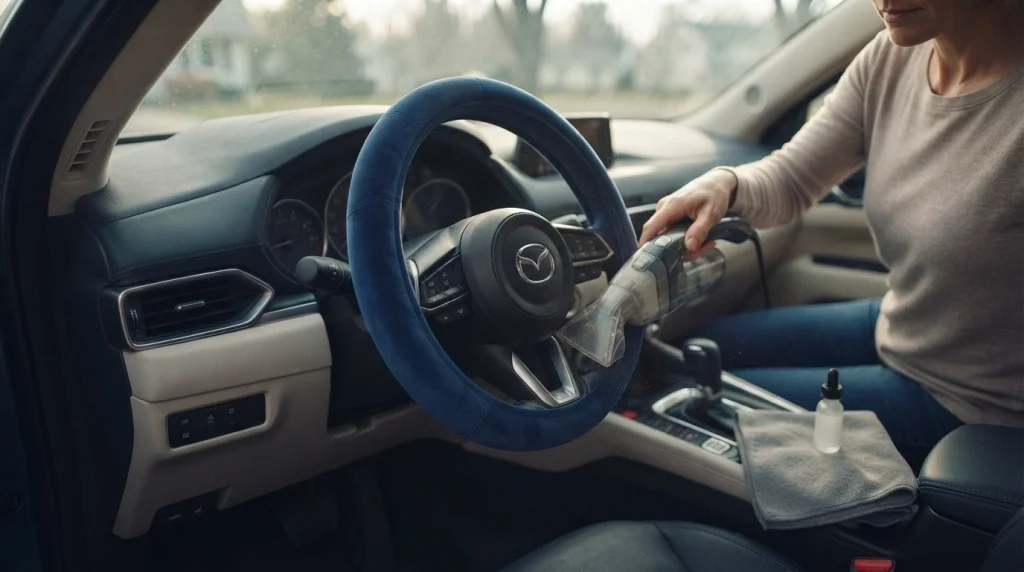
Plush velvet steering wheel covers need regular cleaning because the fabric can collect skin oils, dust, food particles, and moisture. Careful maintenance helps preserve the texture and prevents accumulated grime from making the surface unpleasant to hold.
How often should you clean a velvet steering wheel cover?
There’s no single cleaning interval that suits every driver. Check the cover weekly for visible dirt and clean it when the surface feels oily, smells unpleasant, or develops stains.
Drivers who commute daily, share their cars, or frequently eat inside the vehicle may need to clean theirs more often. Dusty roads and humid conditions can also increase maintenance demands.
How do you clean velvet without damaging it?
Start with the manufacturer’s care instructions, especially if the cover includes foam padding, elastic, adhesive decorations, or a rubberized backing.
- Remove the cover only when the vehicle is parked and the wheel is stationary.
- Shake off loose dust or gently vacuum the fabric with a suitable attachment.
- Spot-clean stains using a method approved for the specific fabric.
- Blot gently instead of scrubbing aggressively, which may distort the pile.
- Allow the cover to dry completely before reinstalling it.
- Inspect the lining and seams for stretching, cracking, or deterioration.
Don’t soak a cover or put it in a washing machine unless its manufacturer explicitly permits that method. Moisture trapped inside padding or a rubberized lining can affect the fit and material condition.
What are the main disadvantages?
Velvet’s softness comes with trade-offs that aren’t always obvious from product photographs. Consider the following before choosing one for daily use.
- Heat retention: Thick pile may feel uncomfortable in a warm cabin.
- Cleaning demands: Fibers can collect dust, lint, oils, and debris.
- Wear: Repeated rubbing may flatten the pile or expose weak seams.
- Moisture: Damp fabric can feel unpleasant and may take time to dry.
- Added thickness: Padding may change the natural hand position.
- Fit limitations: Universal designs may not suit every steering wheel shape.
When should you replace a plush cover?
Replace it if the fabric tears, the lining deteriorates, the cover stretches excessively, or the material begins slipping. Don’t wait for a serious steering problem to develop.
Also remove a cover that develops a persistent odor or remains damp after cleaning. Those issues may indicate that the material needs replacement rather than another round of surface cleaning.
Section takeaway: Plush covers can stay pleasant with gentle cleaning and regular inspections. Replace one as soon as damage or looseness affects your ability to hold the steering wheel securely.
Are Plush Velvet Steering Wheel Covers Worth Buying?
Plush velvet steering wheel covers are worth considering if you want a softer touch, a warmer-feeling rim, and a decorative interior upgrade. They’re less appealing if you need a cool surface, minimal maintenance, or the most direct tactile feedback from the original wheel.
Who should consider a velvet cover?
- Cold-weather commuters: Drivers who dislike touching a cold steering wheel may appreciate the softer surface.
- Comfort-focused drivers: People who prefer a gentle fabric texture over firm leather may enjoy a short-pile design.
- Interior styling enthusiasts: Drivers who want a coordinated color or plush finish may find the look appealing.
- Owners protecting a worn rim: A well-fitted cover can hide cosmetic wear, provided the original wheel remains structurally sound.
Who should choose another material?
- Drivers in hot climates: A thinner, breathable-feeling or easy-clean surface may be more comfortable.
- Drivers with sweaty palms: Compare materials with a stable, textured grip rather than relying on fluffy fabric.
- Drivers who prefer a slim rim: A thin cover avoids significantly changing the wheel’s circumference.
- Owners of heated steering wheels: Follow the manufacturer’s guidance before fitting any insulating cover.
- Drivers with unusual steering wheels: A vehicle-specific design may fit more securely than a generic stretch-on cover.
What should you check before paying?
Don’t judge a cover by softness or color alone. Review the listing for measurable dimensions, material details, installation instructions, and cleaning requirements.
Use this checklist to compare options:
- Does the listed diameter match your steering wheel?
- Is the inner lining designed to resist slipping?
- Does the cover add too much thickness for your hands?
- Can you clean the fabric without damaging its backing?
- Does the manufacturer address compatibility with your wheel’s shape and features?
- Can you return the product if the fit is incorrect?
Price alone doesn’t establish quality, and a higher price doesn’t guarantee better grip. Favor clear product specifications and a dependable return policy over exaggerated comfort claims.
For broader automotive safety information, consult NHTSA. For vehicle-specific compatibility, your owner’s manual and the accessory manufacturer’s instructions should guide the final decision.
Section takeaway: Buy a plush velvet cover for the feel you want, not simply for its appearance. A properly sized, secure, easy-to-maintain cover is a better choice than a thicker or fluffier design that compromises control.
Frequently Asked Questions
1. Are plush velvet steering wheel covers comfortable for everyday driving?
Yes, plush velvet covers can feel soft and pleasant during everyday driving, particularly in cooler weather. Comfort depends on fabric thickness, wheel size, and grip. Choose a cover that fits securely and doesn’t make the rim difficult to hold.
2. Do velvet steering wheel covers make your hands sweat?
They can, especially when the fabric is thick and the cabin is warm. Plush materials may retain heat and moisture more than some thin, smooth covers. If your hands sweat easily, compare flatter materials and choose a surface that remains comfortable when your palms become damp.
3. Do plush velvet steering wheel covers improve grip?
Not necessarily. Some covers have a secure, textured backing, but a soft outer surface doesn’t automatically provide better grip. Choose the correct size, check the lining, and remove any cover that shifts or rotates independently of the steering wheel.
4. Will a plush velvet steering wheel cover fit every car?
No. Many covers target common steering wheel diameters, but rim thickness, wheel shape, and product construction vary. Measure your steering wheel and compare the result with the manufacturer’s specifications. A universal-fit label isn’t proof of compatibility with every vehicle.
5. Can I use a velvet cover on a heated steering wheel?
Only if your vehicle manufacturer’s instructions permit it and the cover is compatible. Thick fabric may reduce heat transfer or alter the way the heated wheel performs. Check the owner’s manual before installation, and avoid covers that the manufacturer prohibits.
6. How do I clean a plush velvet steering wheel cover?
Follow the care instructions supplied with the cover. Gentle vacuuming and approved spot-cleaning methods can remove ordinary dirt, but washing and soaking aren’t suitable for every construction. Dry the cover completely before reinstalling it, and inspect the backing for damage.
7. Are velvet steering wheel covers better than leather covers?
Neither material is universally better. Velvet emphasizes softness and warmth, while leather provides a firmer, more traditional feel and may be easier to wipe clean. Compare fit, surface texture, thickness, maintenance, and compatibility with your vehicle before choosing.
Final Takeaway: Comfort Should Never Come Before Control
Plush velvet steering wheel covers can make a car’s interior feel softer, warmer, and more personal. They’re a reasonable option for drivers who value comfort and enjoy a fabric-covered steering wheel.
Still, the best cover isn’t necessarily the fluffiest one. Look for a secure fit, manageable thickness, suitable material, and straightforward cleaning requirements.
Before buying, measure your steering wheel and check your vehicle manufacturer’s guidance. If the cover slips, interferes with controls, or isn’t approved for your heated steering wheel, choose a safer alternative.
For more practical automotive advice, explore reliable vehicle documentation and established safety resources before modifying anything that affects steering or driver protection.

Daniel Brooks is an automotive writer and product researcher focused on car accessories, car tech, maintenance, and practical driving guides. At Plug-in Car World, he helps drivers make smarter automotive decisions through honest reviews and research-driven content.
