
Can a Steering Wheel Cover Improve an Old Steering Wheel?
Quick Answer
Yes, a steering wheel cover can improve an old steering wheel by hiding worn surfaces, adding grip, and making the interior look cleaner. It works best when the original wheel remains structurally sound, and it won’t repair cracked material, loose components, or underlying steering problems. For safety guidance, check your vehicle manufacturer’s instructions and the NHTSA vehicle safety resources.
What a steering wheel cover can improve
- Appearance: Conceals faded finishes, minor scuffs, and cosmetic discoloration.
- Grip: Adds a different surface texture to a smooth or worn rim.
- Comfort: Changes the rim’s thickness and feel, depending on the cover material.
- Protection: Helps shield the original surface from additional hand oils, friction, and everyday wear.
- Limitations: Won’t fix a loose rim, damaged steering mechanism, or deep structural cracks.
Before installing one
- Choose the correct steering wheel diameter and a snug, vehicle-compatible fit.
- Reject covers that rotate, slip, obstruct controls, or interfere with the driver’s grip.
- Inspect serious damage before covering it, and never treat a cover as a steering repair.
An old steering wheel can make an otherwise tidy car feel tired, even when the engine and mechanical systems still run well. I’ve found that the right cover can be a practical cosmetic upgrade, but choosing one depends on the wheel’s condition, your grip preferences, and how much of the original finish has deteriorated.
This guide explains which types of wear a cover can improve, which materials make sense, how to choose the right size, and when restoration or replacement is the better option.
In This Guide
What Can a Steering Wheel Cover Improve?

A steering wheel cover is a removable or fitted layer that wraps around the steering wheel’s outer rim to change its appearance, surface feel, or grip. Depending on the design, it can also help protect the original finish from further everyday wear.
It is a useful option for older cars with cosmetic deterioration, especially when the wheel still feels secure and operates normally. The important distinction is between a worn surface and a damaged component.
Can it hide fading, peeling, and scratches?
Yes, a cover can conceal many surface-level imperfections without requiring you to refinish the original wheel. A dark cover, for example, can make a faded black rim look more uniform and give an aging cabin a cleaner appearance.
It works particularly well for:
- Faded plastic or leather finishes that look uneven.
- Minor scuffs and superficial scratches around the rim.
- Light discoloration caused by years of handling.
- Smooth, shiny patches where the original finish has worn down.
- Cosmetic differences between frequently handled and less-used sections.
However, a cover doesn’t restore the material underneath. If the original leather is peeling badly or the rim has deep cracks, the damage remains hidden rather than repaired.
Can it improve grip and driving comfort?
A well-fitted cover can improve the way an old steering wheel feels in your hands. Textured synthetic leather, genuine leather, and some microfiber surfaces offer different levels of softness and friction compared with a smooth, worn factory finish.
Thickness matters, too. A slightly thicker rim may feel more comfortable if the original wheel is narrow, but an oversized cover can make precise steering inputs awkward for drivers with smaller hands.
In my view, the best upgrade is the one that feels natural during ordinary driving, not the one that looks most impressive in a product photo. You should be able to grip the rim confidently without squeezing harder or changing your usual hand position.
Can it protect the original steering wheel?
Yes, a cover can reduce direct contact between your hands and the original surface, helping limit additional wear from friction, sweat, and skin oils. It can also shield the rim from minor cosmetic scuffs during everyday use.
Protection depends on fit and maintenance. Dust trapped between a loose cover and the original rim can cause abrasion, so remove and clean the cover periodically if its design allows it.
Section takeaway: A steering wheel cover is most useful for cosmetic wear, surface feel, and ongoing protection. It cannot reverse damage that has already weakened the original wheel.
When Is a Steering Wheel Cover Not Enough?
A cover is not the right solution when an old steering wheel has structural damage, loose components, or an underlying mechanical fault. In those cases, hiding the problem can make it harder to notice and may create an unsafe driving condition.
Which steering wheel problems can a cover not fix?
- Deep cracks: A cover may conceal them, but it doesn’t establish whether the rim remains structurally sound.
- Loose or moving components: A cover cannot secure a wheel that moves abnormally on its shaft or has a damaged attachment.
- Steering vibration: A cover will not correct wheel imbalance, tire problems, worn suspension components, or other causes of vibration.
- Excessive steering play: Unusual looseness needs diagnosis rather than a cosmetic accessory.
- Sticky or deteriorating material: A cover can mask the surface, but it won’t stop the underlying material from breaking down.
- Damaged controls: Broken horn switches, buttons, or wiring require appropriate inspection and repair.
Pay attention to changes in steering behavior as well as the rim’s appearance. If the wheel suddenly feels loose, binds, makes unusual noises, or becomes difficult to turn, stop somewhere safe and arrange an appropriate inspection.
What about peeling leather and crumbling rubber?
Lightly worn leather or rubber may be suitable for a cover, provided the underlying rim remains sound and the cover fits securely. Heavy peeling, loose fragments, or crumbling material deserve closer inspection before installation.
A damaged surface can create an uneven fit or allow debris to collect underneath. If you cannot determine whether the rim is intact, have a qualified mechanic or automotive interior specialist inspect it first.
Does a cover affect steering wheel airbags?
Most steering wheel covers fit around the outer rim, but compatibility still matters in modern vehicles. The steering wheel’s central airbag module must remain unobstructed, and any cover must not interfere with controls, sensors, or other vehicle-specific safety equipment.
Never modify the airbag cover, stretch material across its deployment seams, or install an accessory that the vehicle manufacturer prohibits. A steering wheel cover also cannot make an incompatible aftermarket steering wheel or airbag setup safe.
Pro tip: Check your owner’s manual and the cover manufacturer’s fitment instructions. For questions about airbag compatibility or suspected steering damage, consult a qualified technician rather than relying on a universal-fit label.
Section takeaway: Cover only a wheel that is safe to use and compatible with the accessory. Mechanical looseness, serious cracking, and airbag interference require proper attention first.
Which Steering Wheel Cover Material Is Best?
The best material depends on the original wheel’s condition, the climate you drive in, and the grip you prefer. For most aging factory wheels, a properly fitted synthetic leather or genuine leather cover offers a useful balance of appearance, comfort, and everyday practicality.
Compare the main cover materials
| Material | Main benefit | Potential drawback | Best suited to |
|---|---|---|---|
| Genuine leather | Natural feel and a refined appearance | Costs more and needs suitable care | Restoring a premium-looking cabin |
| PU or synthetic leather | Leather-like finish at a generally lower price | Quality and long-term durability vary | Everyday cosmetic upgrades |
| Microfiber or suede-style material | Soft, tactile surface | Can collect dirt and require careful cleaning | Drivers who prefer a softer, textured grip |
| Rubber or silicone | Practical surface with easy-care options | May feel bulky or less refined | Utility-focused vehicles and simple upkeep |
| Fabric or padded covers | Can soften a hard rim and change its appearance | May retain moisture, dirt, or odors | Drivers prioritizing a softer feel |
These are general material characteristics, not guaranteed performance results. Construction, stitching, surface coatings, and fit can matter as much as the material name.
Is leather or synthetic leather better for an old wheel?
Genuine leather is worth considering when appearance and a natural hand feel are priorities. Synthetic leather can be a sensible alternative when you want a coordinated interior without spending as much.
For an older daily driver, I’d prioritize a smooth inner lining, durable stitching, a consistent grip surface, and a secure fit over decorative trim. Those details matter more than a premium-sounding label.
Should you choose a padded or thick cover?
A padded cover can make a hard, thin rim more comfortable, but excessive thickness may reduce your control and make the wheel harder to hold naturally. Choose a profile that preserves a comfortable grip around the entire circumference.
In hot or humid conditions, consider how the material handles perspiration and how easily you can clean it. A breathable or textured surface may suit some drivers better than a smooth, heavily padded design.
Section takeaway: Choose a material for grip, fit, cleaning, and comfort rather than appearance alone. A quality, correctly sized cover is more useful than a premium material that feels slippery or bulky.
How Do You Choose and Install the Right Cover?
The right steering wheel cover should match the wheel’s measured size, fit securely, and leave all safety-related features unobstructed. Installation is usually a straightforward DIY task, provided you follow the cover manufacturer’s instructions.
How do you find the correct steering wheel size?
Measure the outside diameter of the steering wheel from one outer edge of the rim to the opposite outer edge, passing through the center. Also check the manufacturer’s stated fitment range because rim thickness and shape can affect compatibility.
Many passenger cars use steering wheels around 14–15 inches (approximately 36–38 cm) in diameter, but this is only a general reference. Your specific vehicle may require a different size.
Before buying, check these details:
- Diameter: Match the measured wheel size to the cover’s stated range.
- Rim thickness: Confirm that the cover accommodates the wheel’s grip profile.
- Shape: Check for flat-bottomed wheels, unusual contours, or nonstandard designs.
- Compatibility: Review the vehicle-specific fitment notes and any restrictions for heated wheels or integrated controls.
- Construction: Look for even stitching, durable edges, and an interior that will not damage the original finish.
How do you install a steering wheel cover?
Most slip-on covers need no special tools, battery disconnection, or steering wheel removal. Installation time varies with the cover’s design and how tightly it fits, so follow the supplied instructions rather than forcing it into place.
- Inspect the wheel. Look for deep cracks, loose components, peeling material, and contamination that could affect fit.
- Clean the rim. Use a cleaner suitable for the original surface, then let it dry fully.
- Check orientation. Position the cover’s seams, markings, and decorative sections as directed.
- Fit the upper section. Center the cover at the top of the wheel and work gradually around the rim.
- Seat the lower section. Stretch or secure the remaining material only as the manufacturer directs.
- Inspect the fit. Check for twisted seams, exposed gaps, bunching, or uneven edges.
- Test securely before driving. With the vehicle stationary, confirm that the cover does not rotate or slip and that your grip feels natural.
Do not use tools, lubricants, adhesives, or excessive force unless the manufacturer explicitly permits them. These can damage the cover, the wheel’s finish, or other components.
How can you tell whether the cover fits safely?
A properly fitted cover stays in position instead of moving independently of the wheel. If it twists under firm hand pressure, slides around the rim, or creates a grip that feels unnatural, remove it and reassess the size or design.
Check the horn, steering wheel buttons, and other controls according to the vehicle manufacturer’s instructions. Never drive with an accessory that obstructs controls or interferes with the steering wheel’s intended operation.
Pro tip: You generally do not need to remove the steering wheel to fit a conventional cover. If a proposed installation requires removing the wheel or airbag, stop and consult the vehicle’s service manual or a qualified technician; airbag systems can cause serious injury if handled incorrectly.
Section takeaway: Accurate sizing and a secure fit are essential. If the cover needs force beyond its intended installation method or moves after fitting, choose another compatible design.
Is a Cover Better Than Restoring or Replacing an Old Steering Wheel?
A steering wheel cover is usually the simplest option for cosmetic wear, while restoration is more appropriate when you want to renew the original finish. Replacement makes more sense when the wheel has serious damage or needs to be changed for a specific vehicle-compatible repair.
Which option makes the most sense?
| Option | Best use | Main trade-off |
|---|---|---|
| Steering wheel cover | Faded finishes, minor scuffs, or a worn grip surface | Changes the feel and thickness; hides rather than repairs the original finish |
| Professional restoration or rewrapping | Worn leather, damaged surface coatings, or a desire to retain the original wheel | Requires suitable materials, workmanship, and sometimes specialist labor |
| Steering wheel replacement | A damaged wheel that requires replacement or an approved compatible upgrade | Fitment, electronics, airbag compatibility, and installation can complicate the job |
When is restoration worth considering?
Restoration can be attractive when the original wheel has a desirable shape, factory stitching, or integrated controls that you want to retain. A specialist may be able to repair the finish or rewrap the rim, depending on the material and condition.
For example, if an older leather wheel has worn smooth at the 10 o’clock and 2 o’clock positions but remains structurally sound, a professional rewrap may provide a more factory-like result than adding a thick cover. The right choice depends on the wheel’s condition and your budget.
When should you replace the wheel instead?
Replacement deserves consideration when an inspection identifies damage that cannot be safely corrected through surface restoration. It may also be appropriate when the wheel’s controls or mounting components have sustained damage that requires a compatible replacement assembly.
Modern steering wheels can contain an airbag, wiring, switches, sensors, and other vehicle-specific equipment. An aftermarket steering wheel must be compatible with the vehicle’s safety systems and applicable requirements, not merely fit the steering shaft.
Pro tip: Before buying a replacement wheel or hub adapter, check the vehicle’s service information and applicable safety requirements. Use a qualified technician for airbag removal, clock spring work, or any repair that requires disconnecting safety-system wiring.
Section takeaway: A cover is the practical starting point for cosmetic wear, restoration can preserve the original wheel’s character, and replacement is for cases that justify a complete component change.
How Do You Maintain an Old Steering Wheel After Fitting a Cover?
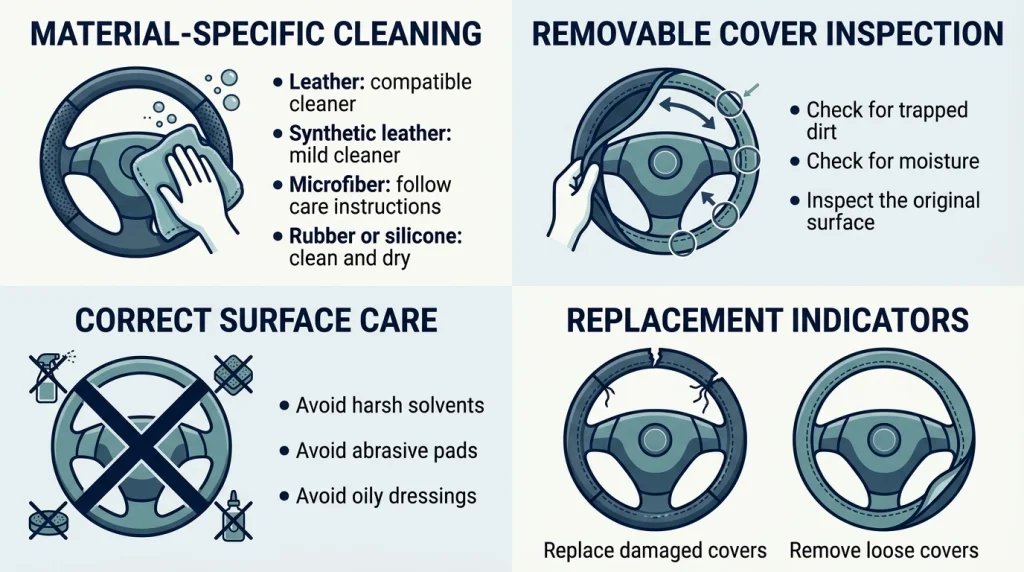
Regular cleaning and occasional inspection help keep both the cover and the original wheel in better condition. The exact routine depends on the cover material, the manufacturer’s care instructions, and how frequently you drive.
How often should you clean the cover?
There is no universal cleaning interval for every material or vehicle. Wipe away visible dirt when needed and clean more thoroughly when the surface feels greasy or begins collecting residue.
- Leather: Use products approved for the specific leather finish, and avoid soaking the material.
- Synthetic leather: Use a compatible mild cleaner and a soft cloth unless the manufacturer specifies otherwise.
- Microfiber or suede-style surfaces: Follow the care instructions closely to avoid flattening the texture or leaving residue.
- Rubber or silicone: Use a suitable cleaner and dry the surface completely before driving.
Avoid harsh solvents, abrasive pads, and oily dressings that can change the surface friction. Never leave a wet or slippery steering wheel surface in service.
Should you remove the cover to inspect the original wheel?
Yes, periodic inspection is useful when the cover’s design allows safe removal and reinstallation. Check for trapped dirt, moisture, unusual odors, material breakdown, and new damage to the underlying rim.
Do not repeatedly stretch a cover beyond its intended fit or reinstall one that has lost its grip. Replace a worn cover if its stitching fails, its material splits, or it starts moving around the wheel.
What if the steering wheel still feels uncomfortable?
Reassess the cover’s thickness, surface texture, and fit before assuming the original wheel needs replacing. A cover that feels too bulky or slippery can make an otherwise sound wheel less comfortable to use.
If discomfort comes from abnormal steering effort, vibration, unusual play, or noise, investigate the vehicle rather than changing accessories. The cover affects the driver’s contact with the rim; it does not repair the steering system.
Section takeaway: Keep the surface clean and dry, inspect the fit regularly, and remove a cover that becomes loose or damaged. Comfort improvements should never come at the expense of reliable grip.
Frequently Asked Questions
Can a steering wheel cover make an old car look newer?
Yes. A well-chosen cover can make a faded or scuffed steering wheel look cleaner and coordinate better with the rest of the interior. For the best appearance, match the color and finish to the dashboard and seats, and choose a cover that fits without wrinkles or bulky edges.
Will a steering wheel cover hide peeling leather?
A cover can hide some peeling leather, but it will not repair the underlying material. If the leather is severely deteriorated or the rim has deep cracks, inspect the wheel before covering it. A professional restoration or suitable replacement may be a better long-term solution.
Can a steering wheel cover improve grip on a slippery wheel?
Yes, if the cover provides a secure, suitable surface and fits correctly. Textured synthetic leather or another grip-focused material may feel more secure than a smooth, worn finish. Avoid covers that rotate, bunch up, or feel slippery when your hands are damp.
Do steering wheel covers damage the original steering wheel?
A correctly fitted, well-maintained cover generally helps protect the original finish, but problems can occur. Dirt trapped underneath, moisture, an abrasive lining, or an overly tight fit can contribute to surface wear. Inspect the wheel periodically and follow the cleaning instructions for both materials.
How do I know which size steering wheel cover to buy?
Measure the wheel’s outside diameter through its center and compare that measurement with the cover manufacturer’s fitment range. Check rim thickness and shape as well. Do not assume every passenger car uses the same size, even if the wheels look similar.
Can I put a steering wheel cover on a heated steering wheel?
Only if the vehicle and cover manufacturers permit that combination. A cover can change how heat reaches your hands, and some materials or designs may be unsuitable for heated wheels. Check the product instructions and vehicle manual before installation.
Should I cover or replace a cracked steering wheel?
It depends on the crack’s location, depth, and cause. Superficial finish damage may be suitable for cosmetic restoration or covering after inspection, but structural cracks or loose components require professional assessment. Do not use a cover to conceal damage that could affect safe steering.
Final Takeaway: Is a Steering Wheel Cover Worth It?
A steering wheel cover can be an affordable, practical way to improve an old steering wheel without replacing the original component. It can hide cosmetic wear, change the grip texture, improve comfort, and help protect the remaining finish.
For the best result, choose a cover that matches your wheel’s dimensions, suits your preferred grip, and stays firmly in place. If the original wheel has serious damage, or the steering feels abnormal, address the underlying problem before making cosmetic changes.
My recommendation is simple: inspect the wheel first, choose the cover for fit and function rather than looks alone, and keep it clean. When the wheel is sound, a good cover can make an aging interior feel fresher without an unnecessary replacement.
Safety note: Always follow your vehicle owner’s manual and the accessory manufacturer’s instructions. Steering and airbag-related repairs should be assessed by a qualified professional when required.

Daniel Brooks is an automotive writer and product researcher focused on car accessories, car tech, maintenance, and practical driving guides. At Plug-in Car World, he helps drivers make smarter automotive decisions through honest reviews and research-driven content.
