
Are Sheepskin Steering Wheel Covers Good for Winter?
Quick Answer
Yes, sheepskin steering wheel covers are good for winter for most drivers. They feel warm on first touch, insulate your hands from a cold wheel, and add a soft, thick grip for short winter trips. They work best with a snug fit and dry wool, and you should still check your owner’s manual and official winter-driving guidance before adding any cover near controls or airbag areas.
Why they work in cold weather
- Warm first touch: Wool does not pull heat from your hands like cold leather or plastic does.
- Natural insulation: The fibre layer traps air and keeps the rim feeling warmer between drives.
- Softer thick grip: The pile cushions your hands and can ease fatigue on a cold commute.
- Better cold comfort: You are less likely to grip too hard just to cope with a freezing wheel.
- Simple winter upgrade: Most slip-on covers fit in minutes, with no wiring or tools needed.
Watch out for
- Keep the wool dry, since wet sheepskin feels heavy and takes time to dry.
- Check the fit each week, since a loose cover can shift during a turn.
- Skip a very thick cover if you already use a heated steering wheel.
I’ve fitted more winter covers than I can count, and sheepskin is the one friends ask about first. It looks cosy, feels warm, and promises an end to that first icy grab of the wheel.
This guide goes deeper than that first impression. You’ll get the real winter pros, the wet-weather limits, sizing help, care tips, and a clear verdict for your car.
In This Guide
- What Is a Sheepskin Steering Wheel Cover?
- Are Sheepskin Steering Wheel Covers Good for Winter?
- How Does Sheepskin Compare With Other Winter Cover Materials?
- What Are the Downsides in Winter?
- How Do You Choose the Right Sheepskin Cover for Winter?
- How Do You Care for a Sheepskin Cover Through Winter?
- Who Should — and Shouldn’t — Buy One?
- Frequently Asked Questions
What Is a Sheepskin Steering Wheel Cover?
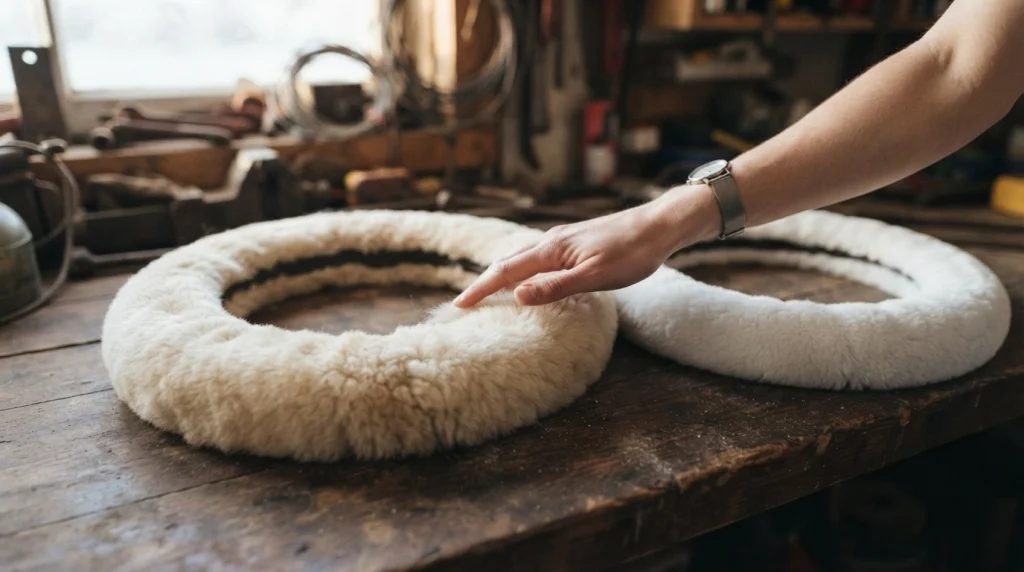
A sheepskin steering wheel cover is a slip-on cover with a wool pile face and a stretch backing that wraps around the rim. The wool sits where your hands rest, while the backing grips the wheel underneath.
Real sheepskin uses natural lambskin wool, and faux sheepskin copies that look with synthetic fibres. Both can feel warm, but they age, clean, and breathe in different ways.
- Real sheepskin: Softer, more breathable, and often pricier, with a natural wool pile that can mat over time.
- Faux sheepskin: Cheaper, easier to wash in many cases, and more consistent in colour and pile length.
- Short pile: Easier to grip and clean, and less likely to feel bulky with gloves.
- Long pile: Warmer and plusher, but thicker and harder to keep neat in wet weather.
Thickness matters as much as material here. A thin cover may feel warm yet still let cold seep through on a long frosty drive.
A thick cover can change how your hands judge small steering inputs. That change is small for most drivers, but it matters if you drive with thick gloves.
Section takeaway: A sheepskin cover is a wool-pile slip-on cover, and the choice between real and faux, short and long pile, shapes warmth, grip, and care.
Are Sheepskin Steering Wheel Covers Good for Winter?
Yes, for most everyday winter drivers, a well-fitted sheepskin cover is a good choice. It solves the worst winter problem first: a cold, hard wheel at the start of a drive.
I fitted one to my small hatchback on a frosty January morning. The wheel still felt cool through the wool, but it never had that sharp, icy bite.
That first-touch difference is the main win. Leather and hard plastic pull heat away fast, while wool insulates and feels kinder to cold fingers.
Sheepskin also helps on short trips, when a heated steering wheel may not have time to warm up fully. Your hands get comfort right away, without waiting for the car to heat up.
- Cold starts: Wool softens the shock of a wheel left overnight in cold air.
- Short commutes: Warmth is instant, even before the cabin heater catches up.
- Dry winter air: The soft pile can feel gentler than dry, cracked leather.
- Older wheels: A cover hides worn, cold, or slippery spots on an ageing rim.
- Glove-free driving: Many drivers can skip bulky gloves for short, dry trips.
Winter comfort is not the same as winter safety, though. A cover must stay put, leave buttons clear, and never block your view of warning lights.
Check the fit after the first week, since wool can settle and stretch slightly. A cover that felt tight on day one can feel looser after a few cold drives.
Section takeaway: Sheepskin is good for winter comfort, especially on cold starts and short trips, but only when the fit stays snug and controls stay clear.
How Does Sheepskin Compare With Other Winter Cover Materials?
Sheepskin wins on warmth and softness, but it is not the best choice for every winter condition. The right pick depends on rain, snow, gloves, and how much care you want to do.
Leather feels premium and lasts well, yet it starts cold and can feel slick with damp hands. Microfiber is grippy and easy to clean, but it gives less insulation than wool.
| Material | Winter warmth | Grip when cold or damp | Winter care | Best for |
|---|---|---|---|---|
| Sheepskin | High | Good when dry, weaker when soaked | Brush and air-dry; avoid soaking | Cold, dry commutes |
| Genuine leather | Low at first touch | Good when dry, slick when wet | Wipe and condition as needed | Drivers who want a slim, firm grip |
| Microfiber | Medium | Strong in most conditions | Easy to wipe clean | Wet or muddy winter use |
| Neoprene | Medium | Strong, even with damp hands | Wipe clean and air-dry | Snow, rain, and work use |
| Heated cover | Very high, when powered | Depends on outer material | Follow maker care and wiring rules | Very cold climates, if wiring is safe |
Use the table as a trade-off guide, not a ranking. Sheepskin leads on comfort, while neoprene and microfiber lead on wet-weather grip and easy care.
If you face slush most days, a sheepskin cover can still work. You just need a second plan for wet hands, such as drying the cover indoors overnight.
For a deeper material check, read durability and comfort guides from Consumer Reports before you pay for a premium wool cover. Their general car-care coverage helps you judge claims about wear and cleaning.
Section takeaway: Sheepskin is the warmest, softest option in the table, but microfiber and neoprene beat it for wet grip and low care.
What Are the Downsides in Winter?
Sheepskin has clear winter limits, and most of them come from water. Snow on your coat, damp gloves, and wet hands can all soak into wool.
Wet wool feels heavy, loses some insulation, and can smell if it stays damp. It also takes longer to dry than a wipe-clean cover.
- Wet weather: Wool absorbs moisture and needs time to air-dry fully.
- Bulk: Long pile can make the wheel feel thicker and less precise.
- Glove grip: Smooth gloves can slide on long wool, especially when damp.
- Heated wheels: Thick wool can dull heat from a built-in heated steering wheel.
- Cleaning: Mud, salt, and road grit show up fast in light wool.
- Fit drift: A stretched cover can shift and distract you at the wrong moment.
Bulk is the downside drivers notice next. A thick pile changes rim thickness, and that can matter on a small wheel or for smaller hands.
Try the cover with your normal winter gloves before a long trip. If your hands feel clumsy or your grip slips, choose a shorter pile or a different material.
Pro tip: Check your vehicle owner’s manual for cover, airbag, and control guidance, and get a certified mechanic to check any fit or safety doubt.
Also watch for loose threads near spokes and buttons. Trim stray fibres with care, and remove the cover if it starts to bunch or block a control.
Section takeaway: The main winter risks are wet wool, added bulk, and loose fit, so test the cover with gloves and check it often.
How Do You Choose the Right Sheepskin Cover for Winter?
Start with size, not colour or pile length. Most car steering wheels measure about 14.5 to 15.5 inches across, but trucks and older cars can differ.
Measure across the centre of the wheel, from outer edge to outer edge. Then check the maker’s size chart for both diameter and grip thickness.
- Measure first: Use a tape across the wheel and note the grip thickness too.
- Pick a snug size: A cover should need a firm pull to fit, not slide on freely.
- Choose short pile for gloves: Short wool keeps grip closer to the rim.
- Check the backing: A grippy inner lining helps stop slip in cold weather.
- Look at the seams: Neat, strong stitching lasts longer than loose, bulky seams.
- Think about colour: Dark wool hides salt and road grime better than cream wool.
Real sheepskin suits drivers who want the softest feel and can brush it now and then. Faux sheepskin suits drivers who want lower cost and simpler care.
Price is a rough guide here, not proof of quality. Many good faux covers cost less than real wool, while premium real covers often cost $50 or more as of 2026.
Before you buy, compare fit and comfort notes in general buying guides from Edmunds. Their car-accessory coverage can help you spot vague sizing claims.
Section takeaway: Measure your wheel, choose a snug short-pile fit for winter gloves, and pick real or faux wool based on care, not looks alone.
How Do You Care for a Sheepskin Cover Through Winter?
Winter care is simple if you keep the cover dry and clean little and often. Salt and grit do more harm when they sit in wool for weeks.
Brush the pile gently once a week to lift dust and stop matting. Use a soft brush, and work in one direction so the wool stays even.
- Shake it out: Remove loose dust and grit before it works deep into the pile.
- Spot-clean fast: Dab spills with a damp cloth, then blot dry at once.
- Air-dry only: Dry a damp cover indoors, away from direct heat or radiators.
- Skip soaking: Do not soak real sheepskin unless the maker clearly says it is safe.
- Store it dry: In spring, clean it, dry it fully, and store it in a breathable bag.
Never use a hair dryer on high heat to rush drying. Heat can stiffen wool, shrink backing, and change the fit.
If the cover smells damp after a day indoors, it needs more air time. A second dry cover, or a wipe-clean spare, can help on very wet weeks.
Check the inner lining when you clean the wool. A worn lining is often the first sign that the cover will start to slip.
Section takeaway: Brush weekly, spot-clean fast, and air-dry fully, since dry wool stays warmer, cleaner, and safer to grip.
Who Should — and Shouldn’t — Buy One?

A sheepskin cover suits drivers who hate cold wheels and drive mostly in dry winter weather. It also suits drivers with an older, worn wheel that feels hard or slippery.
It suits short commutes, school runs, and town driving best. Those trips get the most benefit from instant warmth, with less time for wool to get soaked.
- Buy it if: Your wheel feels icy each morning and you drive short, mostly dry trips.
- Buy it if: You want a soft, thick grip and do not mind weekly brushing.
- Buy it if: Your car has no heated steering wheel, or heat is slow to arrive.
- Skip it if: You work outdoors and bring snow, mud, or wet gloves into the car daily.
- Skip it if: You need a slim, precise grip or drive with thick, smooth gloves.
- Skip it if: You want a heated wheel to work at full strength through a thick cover.
Think about your worst winter week, not your best one. If that week means slush, salt, and wet hands, choose microfiber or neoprene instead.
If your worst week is just cold and dry, sheepskin is hard to beat for comfort. The right fit and a little care will do most of the work.
Section takeaway: Buy sheepskin for dry, cold comfort and short trips, and choose a wipe-clean material for wet, muddy, or glove-heavy winter work.
Frequently Asked Questions
Do sheepskin covers work with heated steering wheels?
They can work, but thick wool dulls the heat and slows warming. A short-pile cover is a better match, and you should test heat output before a long cold drive.
Are real sheepskin covers better than faux for winter?
Real sheepskin often feels softer and breathes better, while faux sheepskin costs less and can be simpler to clean. The best winter pick depends on your budget, care time, and how wet your drives get.
Do sheepskin covers slip when wearing gloves?
A snug, short-pile cover usually grips well, but long wool can feel slippery with smooth gloves. Test your normal gloves first, and remove the cover if it shifts during turns.
Can a sheepskin cover damage a leather steering wheel?
A clean, well-fitted cover should not damage leather, but trapped grit and moisture can mark the surface over time. Remove the cover now and then, wipe the wheel, and check for wear.
How do I clean a wet sheepskin cover in winter?
Blot water at once, brush the pile lightly, and air-dry the cover indoors away from direct heat. Do not soak real sheepskin unless the maker says it is safe, and do not refit it while damp.
Are sheepskin steering wheel covers safe with airbags?
A rim-only cover should not cover the airbag hub, but any loose, bulky, or poorly fitted cover can still create a risk. Check your owner’s manual, keep spokes and controls clear, and remove a cover that shifts or bunches.
If your mornings start with an icy wheel, a snug sheepskin cover is a simple, low-cost winter comfort upgrade. Measure your wheel, choose short pile for gloves, and keep the wool dry.
Your hands will thank you on the first cold start, and your grip will stay safer when the cover fits right.

Daniel Brooks is an automotive writer and product researcher focused on car accessories, car tech, maintenance, and practical driving guides. At Plug-in Car World, he helps drivers make smarter automotive decisions through honest reviews and research-driven content.
