
What Is an Anti-Rebound Bar on a Car Seat? A Complete Safety Guide
Quick Answer
An anti-rebound bar on a car seat is a rigid safety feature designed to limit a rear-facing child seat’s backward rotation during the rebound phase of a crash. It usually sits near the foot end of the car seat or its base, facing the vehicle seatback. By controlling that movement, it helps manage crash forces. The American Academy of Pediatrics’ car seat guidance explains how anti-rebound bars contribute to rear-facing protection.
Key Things to Know
- Main purpose: Limit rebound rotation after the initial crash movement.
- Seat compatibility: Found on certain rear-facing infant, convertible, and all-in-one car seats.
- Safety benefit: Helps control car seat movement during a crash.
- Installation: Must follow the specific car seat manufacturer’s instructions.
- Important limitation: It never replaces a correctly installed seat, suitable harness, or approved anchoring system.
Safety Reminder
- Never improvise: Only use a bar supplied or explicitly approved for your exact car seat model.
If you’ve been comparing infant car seats, you’ve probably noticed some models feature a curved bar near their base. It might resemble a handle or footrest, but its actual purpose is crash protection.
I consider the anti-rebound bar one of those car seat features worth understanding before purchasing. In this guide, I’ll explain how it works, how it differs from other safety features, and what to check during installation.
In This Guide
What Is an Anti-Rebound Bar on a Car Seat?
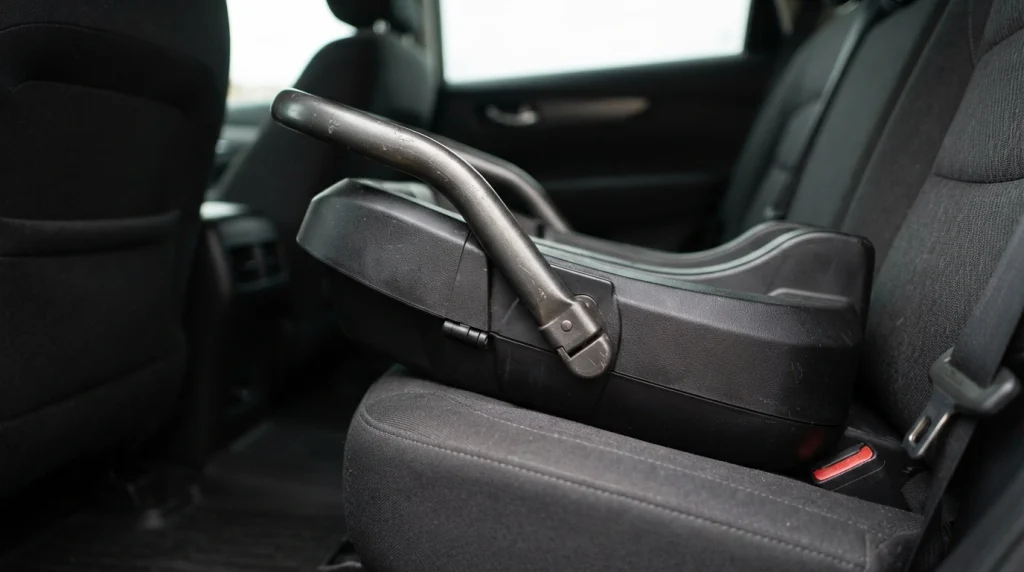
An anti-rebound bar is a rigid component that helps control the movement of a rear-facing child restraint during a collision. Manufacturers may integrate it into the car seat base, attach it to the seat shell, or supply it as a compatible accessory.
Definition: An anti-rebound bar, sometimes called an ARB or anti-rebound stability bar, is a structural car seat feature designed to reduce rebound rotation following the initial impact in a crash.
Where Is the Anti-Rebound Bar Located?
On many rear-facing car seats, the bar extends from the foot end of the seat or base toward the vehicle seatback. Its curved or raised shape allows it to engage with the vehicle seating surface during rebound.
Common designs include:
- Integrated bars: Built into the infant car seat base or restraint structure.
- Removable bars: Attach to designated connection points on compatible convertible or all-in-one seats.
- Anti-rebound panels: Broader structural surfaces designed to manage similar movement.
- Specially designed carry handles: Some infant seat manufacturers approve specific carrying-handle positions to manage rebound.
Not every bar serves as a carrying handle. Some anti-rebound bars must never be used to lift the car seat.
What Is an Anti-Rebound Bar Made Of?
Construction varies by manufacturer, but the bar generally uses a rigid structural material capable of carrying crash-related forces. Some designs include protective padding or a removable fabric cover.
Typical construction features include:
- Structural core: Metal or another engineered rigid material, depending on the model.
- Attachment points: Dedicated fittings that connect the bar to the car seat.
- Protective covering: Optional padding or fabric around the exposed bar.
- Locking mechanism: Model-specific hardware that secures a detachable bar.
The outer appearance doesn’t establish the bar’s crash performance. What matters is the tested design and its compatibility with the child restraint.
Which Types of Car Seats Have Anti-Rebound Bars?
You’ll most commonly encounter these features on rear-facing child restraints. However, the feature isn’t limited to one seat category.
- Rear-facing-only infant seats: Some models incorporate a bar into their detachable base.
- Convertible car seats: Certain models use a built-in or detachable bar during rear-facing installation.
- All-in-one car seats: Some include a bar or support a manufacturer-approved accessory.
A seat’s forward-facing or booster mode may have different requirements. Always check whether the bar must be removed, retained, or repositioned before changing modes.
How Does an Anti-Rebound Bar Work During a Crash?
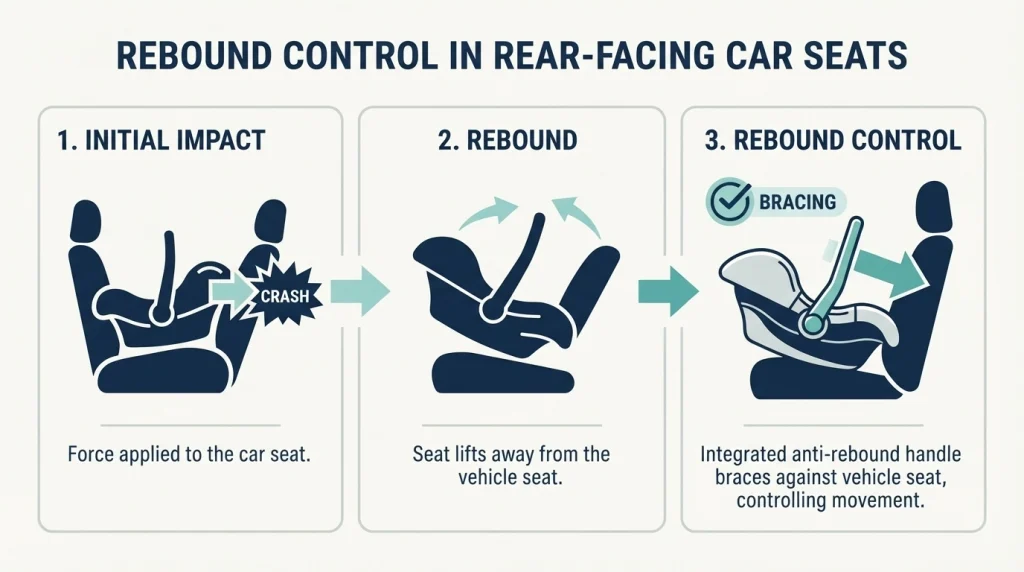
An anti-rebound bar helps manage the second phase of movement in a frontal crash. Understanding that sequence explains why the feature exists.
What Happens to a Rear-Facing Car Seat During Impact?
In a frontal collision, a rear-facing child restraint initially rotates toward the front of the vehicle. The restraint and its installation system manage that movement while supporting the child.
Afterward, the car seat can rotate back toward the vehicle seatback. That reverse motion is called rebound.
The anti-rebound bar helps limit this rebound movement by providing a designed contact structure. Its effect depends on the complete restraint system, not the bar alone.
The Three Phases of Car Seat Movement
- Initial impact: A frontal collision causes the rear-facing restraint to rotate toward the front of the vehicle.
- Rebound: The restraint moves back in the opposite direction as the crash forces change.
- Rebound control: The anti-rebound bar helps resist or manage that reverse rotation.
The bar works together with the car seat shell, base, harness, and installation hardware. It is not an independent crash restraint.
Does an Anti-Rebound Bar Make a Car Seat Safer?
An anti-rebound bar is intended to improve control of rebound movement during a crash. However, that doesn’t establish that every seat with a bar outperforms every seat without one.
Crash protection also depends on several important factors:
- Correct installation in a compatible vehicle seating position.
- Proper harness adjustment for the child’s size.
- The seat’s overall design and crash performance.
- Correct recline angle for rear-facing travel.
- Compliance with applicable child restraint safety standards.
For a family comparing two seats, I would prioritize the one that fits the child and vehicle correctly. An anti-rebound bar is a useful additional feature, not a substitute for those fundamentals.
It’s also important not to confuse controlled rotation with a completely motionless seat. Child restraint systems manage crash energy through their overall design, and some movement is expected.
Section Takeaway: An anti-rebound bar manages reverse rotation after an initial impact. Its contribution is part of the complete car seat safety system.
Anti-Rebound Bar vs. Load Leg vs. Top Tether: What’s the Difference?
Anti-rebound bars, load legs, and top tethers all help manage movement, but they work differently. They also serve different seating configurations.
Anti-Rebound Bar
An anti-rebound bar primarily manages the reverse rotation of a rear-facing restraint. It typically engages with the vehicle seatback or another manufacturer-specified contact area.
Load Leg
A load leg is a support that extends from certain car seat bases toward the vehicle floor. It primarily helps limit forward rotation during the initial phase of a crash.
Some rear-facing seats feature both a load leg and an anti-rebound bar. Neither feature should be installed or adjusted contrary to the manufacturer’s instructions.
Top Tether
A top tether is a strap that connects an approved car seat tether attachment to a designated vehicle tether anchor. It primarily limits forward movement of a forward-facing child restraint.
Some rear-facing restraint systems have their own approved tether arrangements. Those instructions are model-specific and must not be generalized.
Safety Feature Comparison
| Feature | Primary Function | Common Application |
|---|---|---|
| Anti-rebound bar | Limits rebound rotation after the initial impact. | Rear-facing infant, convertible, and all-in-one seats. |
| Load leg | Helps limit forward rotation during the initial impact. | Certain rear-facing car seat bases and restraint systems. |
| Top tether | Restricts forward rotation and movement of the child restraint. | Primarily forward-facing harnessed car seats. |
Think of these as different tools for controlling crash movement. They aren’t interchangeable, even when their safety goals overlap.
For a broader explanation of the restraint systems and their approved uses, see the NHTSA car seat safety guide.
Does Every Car Seat Need an Anti-Rebound Bar?
No. A car seat does not automatically need an anti-rebound bar to provide appropriate crash protection.
Some approved seats have anti-rebound bars, while other models use different engineering solutions. The correct configuration depends on how the manufacturer designed, certified, and instructed users to install the restraint.
Is an Anti-Rebound Bar Required by Law?
In the United States, a separate anti-rebound bar is not universally required on every child restraint. Applicable federal child restraint safety standards establish performance requirements rather than requiring every model to have identical hardware.
Rules and certification requirements may differ between countries. Always use a car seat approved for your market and follow its exact instructions.
As of 2026, the practical rule remains straightforward: a model’s stated requirements matter more than assumptions about a particular accessory.
Should You Choose a Car Seat With an Anti-Rebound Bar?
It’s a feature worth considering when comparing suitable rear-facing car seats. However, I wouldn’t make it the only buying criterion.
Before selecting a seat, check:
- Child fit: The approved height and weight range accommodates your child.
- Vehicle compatibility: The restraint installs correctly in an appropriate rear seating position.
- Installation method: The seat works with the vehicle’s approved seat belt or lower-anchor system.
- Recline adjustment: The required angle can be achieved correctly.
- Harness usability: The straps and buckle can be adjusted securely.
- Rebound protection: The seat includes any features you specifically want.
- Long-term fit: Its size limits support the expected period of rear-facing use.
The American Academy of Pediatrics recommends keeping children rear-facing until they reach their seat’s maximum rear-facing height or weight limit. An anti-rebound bar doesn’t change those limits.
Can You Buy an Anti-Rebound Bar Separately?
Some manufacturers offer model-specific anti-rebound bar accessories. However, this does not mean a universal aftermarket bar is safe to attach to any child restraint.
For example, Britax offers an anti-rebound bar designed for compatible One4Life car seats. The manufacturer’s compatibility instructions determine which exact seats can use it.
Never attach a homemade metal bar, generic bracket, or unapproved component. Even a sturdy-looking addition can change how the seat behaves during a collision.
What About Car Seat Covers and Padding?
An anti-rebound bar may have a manufacturer-supplied protective cover. That covering is different from a decorative seat cover or aftermarket cushion.
Avoid adding padding, thick fabric, or other material around the bar unless the manufacturer approves it. Likewise, unapproved covers or inserts must not interfere with the harness, shell, belt path, or approved contact points.
Section Takeaway: Not every approved car seat needs an anti-rebound bar. If your model requires one, use the exact approved part and configuration.
How Do You Install and Check an Anti-Rebound Bar?
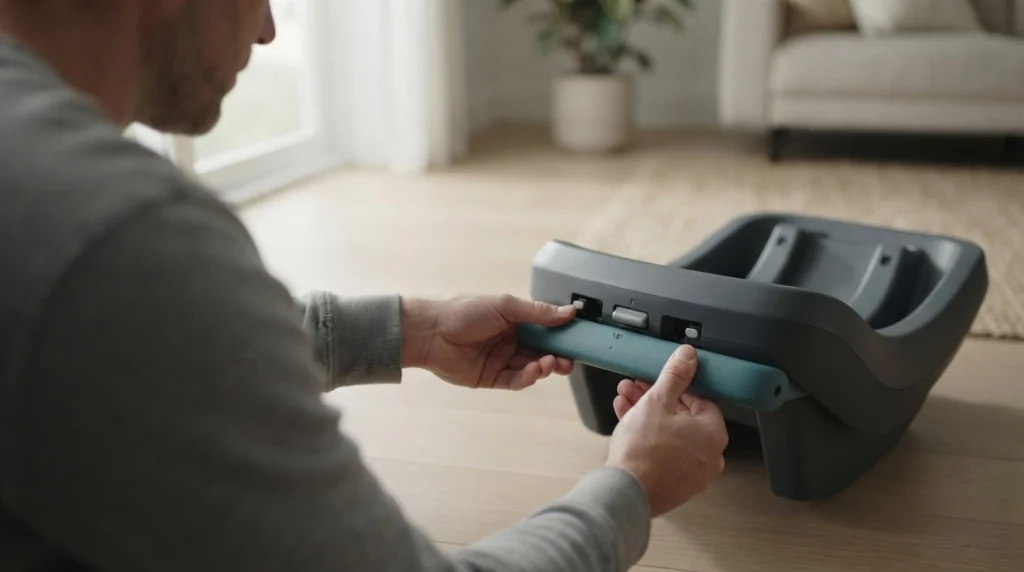
The installation process depends on whether the anti-rebound bar is integrated, removable, or supplied as an approved accessory. Always consult the model-specific manual before attaching or adjusting anything.
Some bars click into sockets, while others form part of the base itself. The following steps are a general inspection framework, not a replacement for manufacturer instructions.
Step 1: Identify Your Exact Car Seat Model
Start by checking the manufacturer’s label on the seat or base. Record the model name and number before looking up the instructions.
Confirm these details:
- The car seat’s model number and version.
- Whether an anti-rebound bar is included or available.
- Whether the bar is required in rear-facing mode.
- Whether installation differs by seating mode or country.
Step 2: Inspect the Bar and Attachment Points
Examine the bar and its connection areas for visible damage. A cracked mounting point, damaged latch, or bent component deserves immediate attention.
Do not attempt to straighten, drill, glue, or modify any structural car seat component. Contact the manufacturer if a part is damaged or missing.
Step 3: Attach the Bar as Directed
If your model has a removable bar, follow the manufacturer’s assembly sequence. A design may require the ends to enter designated sockets until the locking mechanism engages.
After attachment, use the prescribed method to confirm that both sides are secured. Do not treat an audible click alone as proof of proper installation unless the manual says so.
Step 4: Install the Rear-Facing Car Seat Correctly
Position the restraint in an approved rear seating location, then follow the seat belt or lower-anchor installation instructions. Set the proper recline angle using the seat’s indicator or approved adjustment method.
The NHTSA rear-facing installation instructions explain the general procedure for both installation methods.
For most conventional installations, the restraint should move no more than 1 inch (2.5 cm) side-to-side or front-to-back when checked at the belt path. Do not assess installation tightness by pushing or pulling the anti-rebound bar itself.
Step 5: Check Bar Position and Vehicle Contact
Some anti-rebound bars are designed to contact the vehicle seatback in a particular position. Others have different requirements for their shape, angle, or surrounding clearance.
Never force the bar against the vehicle seat or change the vehicle seat angle without checking both manuals. Proper positioning matters more than making the installation look tight.
Step 6: Secure the Child Properly
The anti-rebound bar does not replace the child’s harness. For rear-facing seats, harness straps generally belong at or below the child’s shoulders, following the manufacturer instructions.
Use the pinch test to check harness snugness and position the chest clip at armpit level. Do not place bulky coats underneath the harness.
Common Installation Mistakes to Avoid
- Skipping a required bar: Some models require the component for rear-facing use.
- Using the wrong accessory: A bar made for another model may not be compatible.
- Ignoring the locking mechanism: Incomplete attachment can compromise the intended configuration.
- Using the bar as a handle: Only lift the seat using manufacturer-approved carrying points.
- Incorrect seat installation: A properly attached bar doesn’t correct a loose belt or lower-anchor installation.
- Leaving a rear-facing-only bar attached in another mode: Follow the manufacturer’s instructions when switching modes.
- Adding unapproved accessories: Extra padding or brackets may interfere with the restraint’s operation.
Pro tip: If the bar is loose, damaged, or difficult to position, consult the manufacturer’s manual or a certified Child Passenger Safety Technician before using the seat. Never assume a modified installation is acceptable.
How Should You Maintain an Anti-Rebound Bar?
Routine inspection is simple, and it doesn’t require disassembling the car seat. Focus on the manufacturer’s approved cleaning instructions and visible condition.
- Inspect the bar and attachment points during routine car seat checks.
- Clean any removable fabric covering only as the manufacturer directs.
- Avoid harsh solvents or modifications to structural parts.
- Confirm that detachable connections remain properly engaged.
- Follow the manufacturer’s instructions after any crash involving the restraint.
It’s also worth checking your seat for safety recalls. The NHTSA recall lookup allows U.S. consumers to search for car seat recalls by manufacturer and model.
Section Takeaway: Correct installation and manufacturer-approved parts are essential. The anti-rebound bar must work as part of the complete restraint system.
Frequently Asked Questions
1. Is an anti-rebound bar necessary on an infant car seat?
Not every infant car seat requires an anti-rebound bar. Some models include one, while others use different designs to meet applicable safety requirements. If your particular car seat requires the bar, you must follow that instruction for approved use.
2. Can I add an anti-rebound bar to an existing car seat?
Only if the car seat manufacturer explicitly approves a compatible bar for your exact model. Never use a generic, homemade, or unverified aftermarket bar. An accessory designed for another restraint may change crash performance and create a safety hazard.
3. Does an anti-rebound bar replace a load leg?
No. An anti-rebound bar primarily manages backward rotation during rebound, while a load leg generally limits forward rotation during the initial crash phase. Some car seats include both features, but they are not interchangeable.
4. Can you use an anti-rebound bar when the car seat faces forward?
Many detachable anti-rebound bars are intended only for rear-facing installation and must be removed before forward-facing use. However, instructions differ by product. Always consult the car seat manual before changing the seat’s orientation or removing any component.
5. Does an anti-rebound bar prevent injuries in every accident?
No safety feature can guarantee injury prevention in every collision. An anti-rebound bar is designed to manage a particular type of car seat movement, especially rebound during a frontal crash. Overall protection depends on the complete restraint system and correct use.
6. Is an anti-rebound bar the same as a carrying handle?
No. Some infant car seat manufacturers specifically design their carrying handles to perform an anti-rebound function in approved positions. Other anti-rebound bars must never be used for lifting. Follow the instructions for your exact model rather than judging by appearance.
7. Can I use a car seat without its anti-rebound bar if I lose the part?
That depends on whether your specific car seat requires the component. If the manual states that the bar is mandatory for the intended configuration, do not use that configuration without it. Contact the manufacturer for an approved replacement or instructions.
Final Takeaway: Is an Anti-Rebound Bar Worth Having?
An anti-rebound bar is a useful safety feature designed to reduce backward rotation of certain rear-facing car seats during a crash. It helps manage movement that occurs after the initial impact.
However, the presence of a bar alone doesn’t determine which child restraint is safest for your family. Correct child fit, vehicle compatibility, installation, and harness adjustment remain essential.
My recommendation is to compare the complete car seat rather than focusing on one accessory. Choose a properly approved model, follow both instruction manuals, and keep your child rear-facing within the manufacturer’s stated limits.
Before your next trip: Check your car seat’s model instructions, confirm the anti-rebound bar is installed correctly if required, and inspect the harness and installation tightness. If anything is unclear, ask a certified Child Passenger Safety Technician for help.

Daniel Brooks is an automotive writer and product researcher focused on car accessories, car tech, maintenance, and practical driving guides. At Plug-in Car World, he helps drivers make smarter automotive decisions through honest reviews and research-driven content.
