
Can You Wash a Steering Wheel Cover?
Quick Answer
Yes, you can wash some steering wheel covers, but the correct method depends on their material and the manufacturer’s care instructions. Removable fabric covers may tolerate gentle handwashing, while leather, faux leather, suede, and covers with rubber or foam backing usually need careful surface cleaning instead.
Choose the right cleaning method
- Fabric covers: Handwash only when the label permits it, using mild detergent and cool water.
- Leather covers: Wipe with a slightly damp cloth and a suitable leather cleaner.
- Faux leather: Use a soft cloth and mild, material-safe cleaning solution.
- Suede or microfiber: Follow the specific care instructions and avoid soaking the material.
- Rubber-backed covers: Clean gently without prolonged soaking or harsh chemicals.
- Machine washing: Avoid it unless the manufacturer explicitly approves it.
Before driving again
- Let the cover dry completely, reinstall it securely, and check that it cannot slip or rotate on the steering wheel.
- Never drive with a wet, slippery, loose, or damaged cover.
A dirty steering wheel cover can collect sweat, skin oils, dust, food residue, and grime from everyday driving. Cleaning it properly helps maintain a comfortable grip without damaging the material.
When dealing with car interiors, I recommend starting with the simplest cleaning method rather than immediately reaching for a washing machine or strong household cleaner. The cover’s construction matters just as much as its appearance.
This guide explains how to identify your cover material, choose a safe washing method, remove stubborn stains, dry the cover properly, and decide when replacement makes more sense than cleaning.
In This Guide
- Can you wash every type of steering wheel cover?
- How do you wash a steering wheel cover safely?
- Which cleaning method works for each material?
- How do you remove stains, sweat, and bad odors?
- How should you dry and reinstall the cover?
- What cleaning mistakes should you avoid?
- Frequently asked questions
Can You Wash Every Type of Steering Wheel Cover?
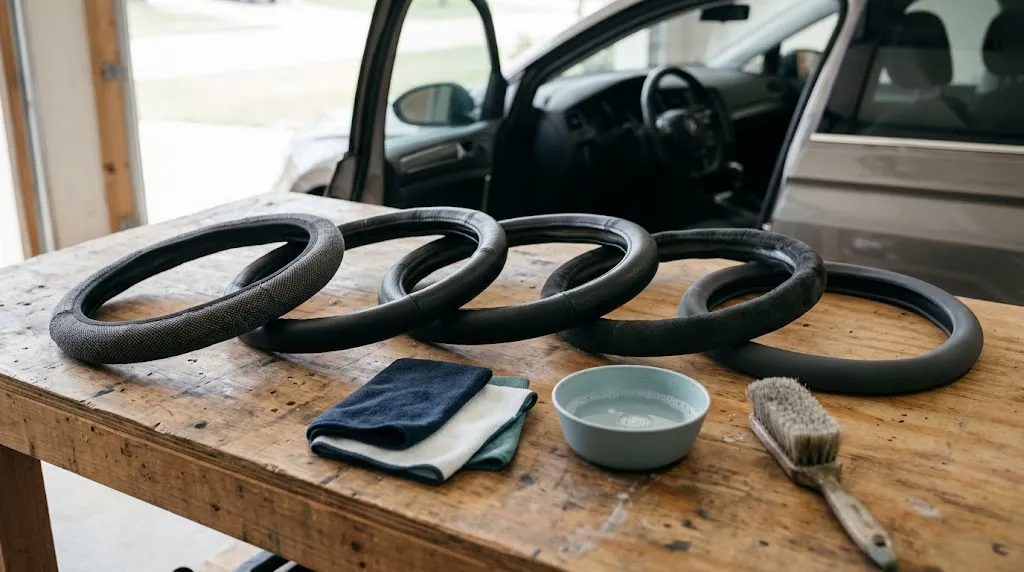
No, not every steering wheel cover can be washed in water. A steering wheel cover is a removable or fitted layer placed over the steering wheel rim to change its grip, comfort, appearance, or protection.
Some covers use washable textile materials, while others combine several layers that can react differently to moisture, heat, and detergent. Checking the care label or manufacturer’s instructions is the safest starting point.
Why does the material matter?
The outer surface is only part of the story. Stitching, adhesive, foam padding, rubber grips, and the backing material can all affect whether a cover tolerates soaking.
- Fabric: Woven covers may tolerate gentle handwashing, but their dyes and backing still need checking.
- Genuine leather: Excess water can affect the leather’s finish, texture, and shape.
- Faux leather or PU leather: These synthetic surfaces usually respond better to gentle wiping than immersion.
- Suede or microfiber: Moisture and rubbing can change the surface texture or leave visible marks.
- Silicone or rubber: Many are easy to wipe clean, although attached fabric or foam may require a different approach.
- Knitted or beaded covers: Their construction may trap water, stretch, or loosen during washing.
Can you put a steering wheel cover in the washing machine?
Only do so if the manufacturer specifically identifies the cover as machine-washable and provides washing instructions. A normal wash cycle can stretch fabric, damage stitching, weaken adhesive, or deform a shaped backing.
For an inexpensive cover without a care label, gentle spot cleaning is generally the more cautious choice. If the material is unknown, avoid soaking it until you can identify its construction.
One more detail matters: a cover that looks clean on the outside may still hold sweat or moisture inside its padding. Thorough drying is essential, especially in warm, humid weather.
Section takeaway: Identify the cover’s material and construction before choosing a washing method. When the instructions are missing, gentle surface cleaning is safer than assuming the cover can be soaked.
How Do You Wash a Steering Wheel Cover Safely?
You can clean most steering wheel covers at home with a few basic supplies and a careful approach. For a removable cover, allow roughly 15–30 minutes for cleaning, plus enough drying time for the material to become completely dry.
These steps cover general cleaning; always follow more specific manufacturer instructions when available.
What supplies do you need?
- A soft, clean cloth or nonabrasive sponge.
- A small bowl of cool or lukewarm water.
- A mild detergent suitable for the material, if needed.
- A soft brush for compatible textured fabric.
- A dry, absorbent towel.
- A clean, well-ventilated place for air-drying.
Avoid preparing a strong detergent mixture. A small amount of suitable cleaner is usually a better starting point than a concentrated solution.
Step-by-step cleaning instructions
- Check the care instructions. Identify the material and confirm whether handwashing or water-based cleaning is permitted.
- Remove the cover if appropriate. A removable cover is easier to clean thoroughly, but check the fit and removal instructions before pulling it off.
- Remove loose dirt. Shake out removable debris or gently brush away dust before adding moisture.
- Test a hidden area. Apply a small amount of the chosen cleaner to an inconspicuous spot and check for color transfer, discoloration, or texture changes.
- Clean gently. Use a damp cloth for leather and synthetic surfaces, or carefully handwash compatible fabric with mild detergent.
- Remove cleaner residue. Wipe the surface with a separate cloth lightly dampened with clean water, if the material allows it.
- Blot away excess moisture. Press a clean towel against the cover instead of twisting, wringing, or aggressively rubbing it.
- Allow complete air-drying. Keep the cover in a ventilated area away from excessive heat and direct high-temperature sources.
- Inspect before reinstalling. Check the stitching, backing, shape, and surface for damage, remaining dampness, or slippery residue.
Should you remove the cover before cleaning?
Removing it is useful when the cover is designed to come off easily and can be reinstalled securely. It also lets you inspect trapped dirt and moisture around the inner surface.
However, you don’t need to remove every cover for routine maintenance. For a tightly fitted cover that resists removal, clean the accessible surface in place with a barely damp cloth and protect nearby buttons and electronic components from moisture.
Don’t force a cover off if it stretches, tears, or requires disturbing the steering wheel itself. You should never remove the steering wheel or its airbag simply to wash an ordinary cover.
Pro tip: For vehicle-specific interior-care restrictions, consult the owner’s manual before applying cleaners near the steering wheel, controls, or airbag cover.
Section takeaway: Use the least aggressive cleaning method that works, and never rush the drying stage. A clean cover is only ready for use when it remains structurally sound and provides a secure grip.
Which Cleaning Method Works for Each Material?
The best way to wash a steering wheel cover depends on its surface, backing, and construction. When choosing between handwashing and wiping, match the method to the material rather than treating every cover alike.
The following comparison summarizes practical starting points, not universal manufacturer instructions.
| Cover material | Recommended method | Main precaution |
|---|---|---|
| Fabric or cotton | Gentle handwash if approved | Check dyes, seams, and backing |
| Genuine leather | Leather-safe cleaner and soft cloth | Avoid soaking and harsh chemicals |
| PU or faux leather | Lightly damp cloth and mild cleaner | Avoid peeling, abrasion, and heat |
| Suede or microfiber | Material-specific spot cleaning | Prevent water marks and flattened fibers |
| Silicone or rubber | Wipe with mild soapy water if compatible | Rinse residue and dry thoroughly |
| Beaded or decorative | Careful surface cleaning | Protect fasteners and decorative pieces |
How do you clean a leather steering wheel cover?
Use a soft cloth and a cleaner approved for the leather’s finish. Wipe gently, remove any permitted cleaner residue, and dry the surface without leaving it wet or slippery.
Leather can lose color or suffer finish damage from unsuitable detergents, solvents, or excessive moisture. The Volvo owner support and care guidance provides a useful example of why leather-specific cleaning instructions matter.
How do you clean a fabric steering wheel cover?
If the label permits handwashing, use cool water and a small amount of mild detergent. Gently work the solution through the fabric without stretching it, then rinse as directed and press out excess water with a towel.
Don’t twist a knitted cover to remove water. Twisting can distort its shape and make it harder to fit securely around the wheel.
What about suede, faux leather, and rubber?
- Suede: Use an appropriate suede brush or cleaner, following the product instructions.
- Faux leather: Wipe lightly and avoid abrasive pads that can scratch or strip the surface.
- Rubber: Use mild soapy water if approved, and remove residue that could make the grip slippery.
- Mixed materials: Treat the most delicate component as the limiting factor unless the manufacturer provides a specific cleaning procedure.
As of 2026, the safest general rule remains simple: use the vehicle or cover manufacturer’s guidance when it differs from generic cleaning advice. A product marketed as washable isn’t necessarily suitable for a washing machine or prolonged soaking.
Section takeaway: Fabric may tolerate gentle washing, but leather, suede, and mixed-material covers generally need more controlled cleaning. The care label should decide the method.
How Do You Remove Stains, Sweat, and Bad Odors?
Sweat, hand oils, food residue, and accumulated dirt can make a steering wheel cover look discolored or develop an unpleasant smell. Most everyday grime responds better to gentle, repeated cleaning than to strong chemicals.
Start by identifying the stain and testing a suitable cleaner on a hidden section. Never assume that a stronger product will produce a better result.
Cleaning common steering wheel cover stains
- Sweat and skin oils: Wipe compatible surfaces with a slightly damp cloth and a material-safe cleaner.
- Dust and dry dirt: Brush away loose particles before applying moisture to avoid rubbing grit into the material.
- Food spills: Blot fresh spills promptly, then clean according to the cover’s care instructions.
- Grease: Use a cleaner approved for the material rather than household degreasers or solvent-based products.
- Color transfer: Stop if the stain spreads during cleaning; additional rubbing can damage the finish or move the dye.
How do you remove a musty smell?
A musty odor often means moisture or organic residue remains in the cover or its padding. Clean the surface appropriately and allow the entire cover to dry in a well-ventilated area.
If a removable cover still smells after thorough cleaning and drying, inspect its underside for trapped dirt, mildew, or deteriorating padding. Persistent odor may indicate that replacement is more practical than repeated washing.
Can you use vinegar, bleach, or disinfectant?
Don’t automatically use vinegar, bleach, rubbing alcohol, or household disinfectants on a steering wheel cover. Their compatibility varies, and some products can fade dyes, damage coatings, weaken adhesives, or alter the surface texture.
Choose a cleaner specifically suitable for the cover material, and follow its label. If you need to disinfect the surface, verify that the product is approved for that material and follow its contact-time and removal instructions.
Also remember that a steering wheel cover needs to provide friction, not just look clean. After cleaning, check that no oily film, soap residue, or cleaning product remains on the gripping surface.
Section takeaway: Treat stains promptly, use material-compatible cleaners, and investigate persistent odors instead of masking them with fragrance. Never sacrifice grip or material integrity to remove a stubborn mark.
How Should You Dry and Reinstall the Cover?
A steering wheel cover must be completely dry and securely fitted before you drive. Moisture trapped in thick fabric, foam, or a layered backing can remain after the outer surface feels dry.
Allow extra drying time when humidity is high or the cover has thick padding. A few additional hours are preferable to reinstalling a damp cover prematurely.
What’s the safest way to dry it?
- Blot gently. Use a clean towel to absorb excess water without stretching the cover.
- Air-dry thoroughly. Place the cover in a clean, ventilated area where air can circulate around it.
- Avoid excessive heat. Keep it away from radiators, hot-air guns, and other intense heat sources that can warp synthetic materials or damage adhesives.
- Inspect the inside. Check seams, padding, and backing for dampness before installation.
- Check the surface. Confirm that the material has retained its original texture and doesn’t feel slick or sticky.
How do you reinstall a removable cover?
Follow the cover manufacturer’s fitting instructions and make sure the cover sits evenly around the wheel rim. It shouldn’t twist, slide, bunch up, or interfere with the driver’s grip.
After fitting, check that the steering wheel turns freely and that the cover doesn’t obstruct the horn, controls, or other equipment. If the cover feels loose or has stretched out of shape, don’t rely on friction alone to keep it in place.
If you cleaned the cover while it remained on the wheel, check for moisture around the spokes, switches, and seams. Avoid spraying liquid directly onto the steering wheel or nearby electronic components.
Pro tip: For airbag-related safety information, consult your vehicle manufacturer’s instructions and the NHTSA airbag safety guidance. Never remove the steering wheel or airbag assembly just to clean a cover.
Section takeaway: Dry the cover completely, reinstall it according to its instructions, and verify a secure, nonslip fit before driving. If cleaning changes the fit, replace the cover.
What Cleaning Mistakes Should You Avoid?
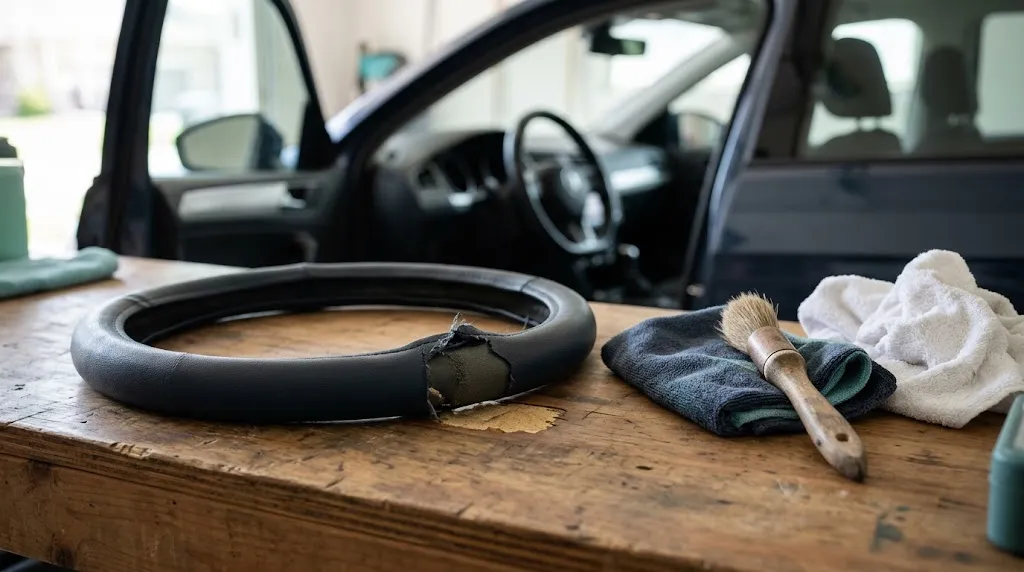
Many steering wheel cover problems happen when people use the wrong cleaner or try to speed up the drying process. A cautious approach helps preserve the material and, most importantly, the driver’s grip.
- Using hot water: Heat may affect adhesives, dyes, foam, or synthetic coatings.
- Machine-washing without approval: Agitation and spinning can distort the shape or damage the stitching.
- Soaking leather or suede: Excess moisture can affect the finish, texture, and shape.
- Using abrasive brushes: Rough bristles can scratch synthetic leather or flatten delicate fibers.
- Applying strong chemicals: Bleach, solvents, and unsuitable disinfectants may cause discoloration or surface damage.
- Drying with intense heat: High temperatures can warp, shrink, or weaken some materials.
- Reinstalling while damp: Trapped moisture can contribute to odor and material deterioration.
- Ignoring a loose fit: A cover that moves while steering can compromise control.
- Leaving residue behind: Soap, polish, or oily cleaners can create a slippery gripping surface.
When should you replace the cover instead?
Cleaning is worthwhile when the cover remains structurally sound and the dirt is removable. Replacement is the better choice when damage affects its fit, grip, or integrity.
- The cover has torn seams or exposed, crumbling padding.
- The backing has become sticky, brittle, or detached.
- The cover stretches out and rotates around the steering wheel.
- The surface remains slippery after appropriate cleaning and drying.
- Mold or persistent odor remains after cleaning, or the material shows substantial deterioration.
Choose a replacement that matches the steering wheel’s measured diameter and the manufacturer’s fitment guidance. A cover that is too large can slip, while one that is too small may be difficult to install or may stretch unevenly.
If the original steering wheel has heated functions, unusual contours, or integrated controls, check compatibility before buying a replacement cover. Don’t assume every universal cover will fit safely.
Section takeaway: Stop cleaning when the cover’s condition or fit becomes unsafe. Replacing a damaged cover is preferable to keeping one that slips or compromises steering control.
Frequently Asked Questions
Can you wash a steering wheel cover in a washing machine?
Only if the manufacturer explicitly approves machine washing and provides the appropriate settings. Otherwise, use gentle handwashing for compatible fabric covers or surface cleaning for materials such as leather, faux leather, and suede.
Can I wash a steering wheel cover without removing it?
Yes, you can clean many installed covers with a slightly damp cloth and a suitable cleaner. Avoid soaking the cover or allowing liquid to enter the steering wheel’s switches, seams, and electronic components.
Can you use dish soap to clean a steering wheel cover?
A small amount of mild dish soap may work on compatible fabric, rubber, or synthetic surfaces when the manufacturer permits it. Test a hidden area first, remove residue carefully, and avoid using dish soap on materials that require specialized cleaners.
How often should you wash a steering wheel cover?
There is no universal washing interval because material, driving conditions, and usage vary. Wipe away visible grime as needed, clean accumulated dirt periodically, and follow the manufacturer’s instructions rather than repeatedly soaking the cover.
Can you dry a steering wheel cover in a dryer?
Avoid tumble-drying unless the manufacturer specifically permits it. Heat and mechanical agitation can shrink fabric, distort the shape, damage adhesives, or weaken the backing, so air-drying is generally the safer option.
How do you clean a steering wheel cover that smells like sweat?
Use a material-compatible cleaner to remove accumulated oils and residue, then allow the cover to dry completely in a ventilated space. If the odor persists, inspect the backing and padding for trapped moisture or deterioration and replace the cover if necessary.
Is it safe to drive with a wet steering wheel cover?
No, you should wait until the cover is completely dry and provides a secure grip. A wet or slippery surface can reduce hand control, and a loose cover can move unexpectedly while steering.
Final Takeaway: Clean Your Steering Wheel Cover Without Damaging It
Yes, you can wash a steering wheel cover when its material and manufacturer instructions allow it. Fabric covers may tolerate gentle handwashing, while leather, faux leather, suede, and many mixed-material designs need controlled surface cleaning.
Start with mild, compatible cleaning products, test a hidden area, and avoid soaking materials that aren’t designed for it. Allow enough time for complete drying before reinstalling the cover.
Most importantly, check the cover’s fit and grip before getting back on the road. A clean steering wheel cover should feel secure in your hands, not slippery, loose, or damaged.

Daniel Brooks is an automotive writer and product researcher focused on car accessories, car tech, maintenance, and practical driving guides. At Plug-in Car World, he helps drivers make smarter automotive decisions through honest reviews and research-driven content.
